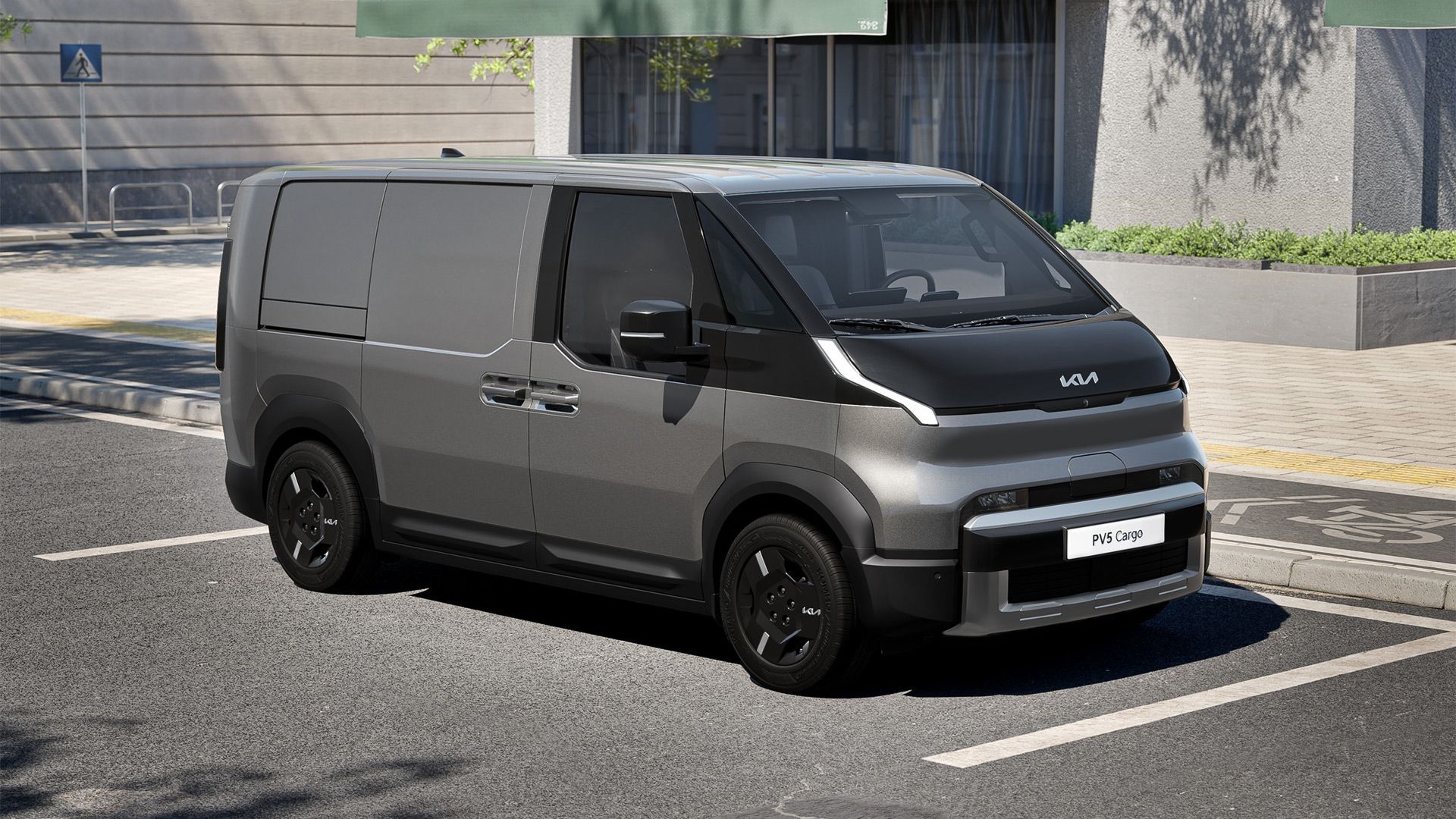


- The Kia PV5 electric van goes into production later in 2025
- Kia hasn't committed yet whether the PV5 will come to the U.S.
- The PV5 will be built in South Korea and available in multiple variants
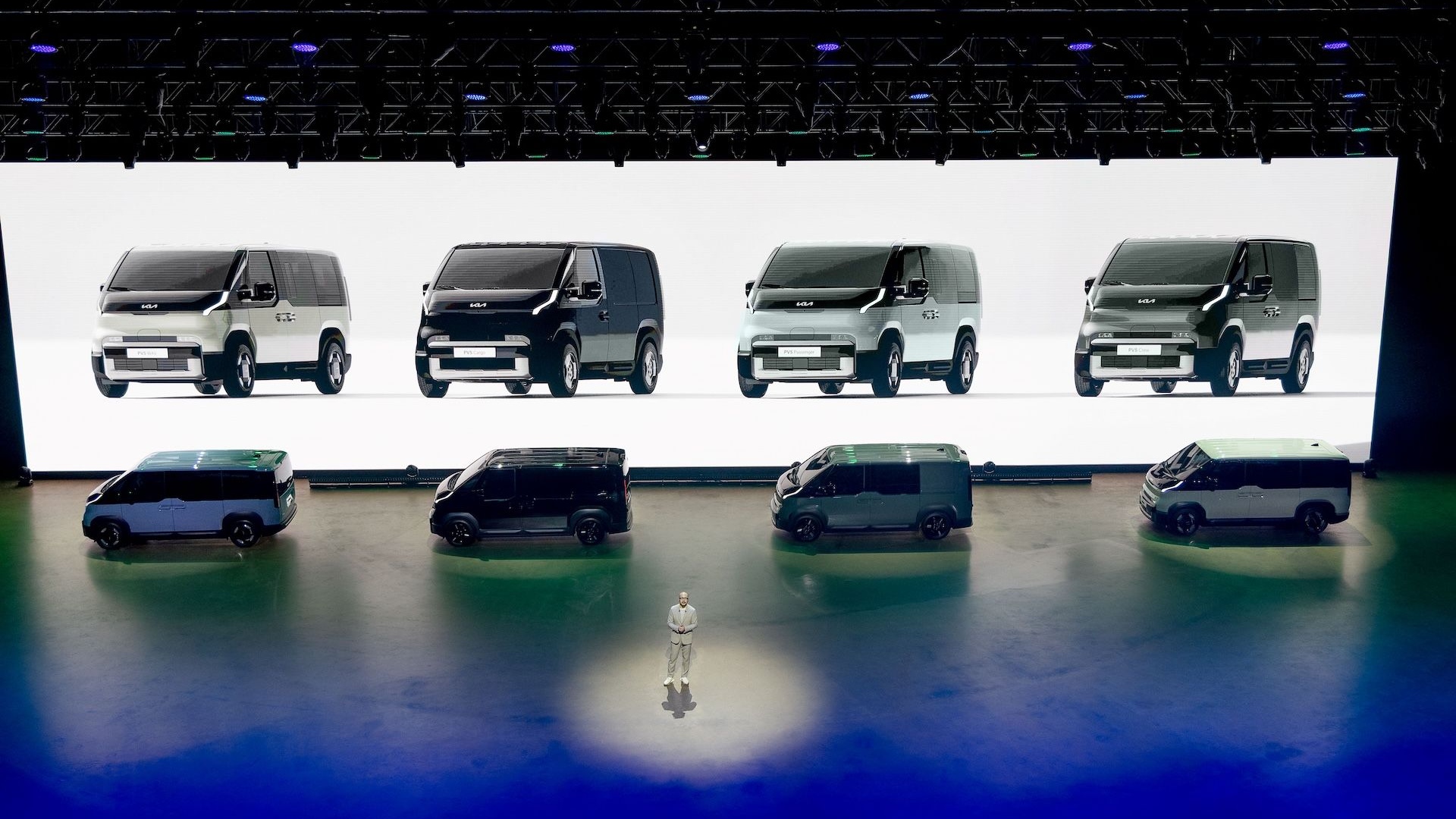
On Thursday, Kia began detailing the PV5 electric van during its EV Day in Tarragona, Spain.
Kia previewed the exterior design of the PV5 and an EV4 sedan and hatchback earlier in the month to build excitement for the automaker's EV Day.
Production of the PV5 is said to commence in the second half of 2025 for Europe and Korea with other markets to come at a later date.
The automaker showed basic passenger, cargo, an chassis cab versions of the PV5, but noted other versions as well as conversion possibilities are all part of the automaker's plans, which include conversion centers to assemble the lego-like vans.
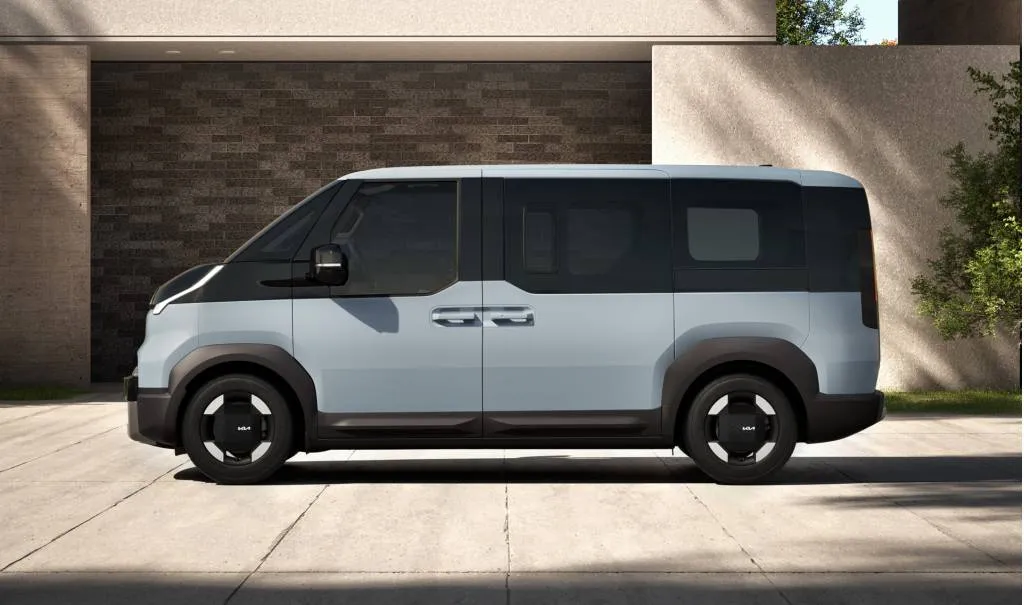
Kia PV5
The PV5 and other PBV-based vehicles were previewed by concepts at the 2024 Consumer Electronics Show (CES), and much of the styling of those concepts seems to have carried over to the production PV5 variants.
The midsize PV5 is one of several flexible electric vans designed for various commercial applications that Kia calls its Platform Beyond Vehicles (PBV). Kia said the PBV-dedicated platform is part of the company's E-GMP family, but is known as the E-GMP.S, with the S standing for Service. The automaker's Ioniq 5 crossover and Ioniq 6 sedan are based on the E-GMP platform.
Kia said the PBV based on the E-GMP.S platform will utilize the automaker's latest skateboard chassis that enables various upper body sections to drop onto the skateboard. The automaker plans to use what it dubs a Flexible Body System to enable modular assembly of the vehicle bodies like Legos. This will ensure Kia can easily build passenger, cargo, chassis cab, along with WAV (wheelchair accessible vehicle), and family variants all on the same line and in the same conversion centers.
The PV5, and other vehicles on the platform, will be built at the automaker's new EVO Plant in South Korea. Kia said it will also create a conversion center for finishing customized vans, and the converted EVs will come with Kia's standard warranty (which varies by region).
All versions will be available with a 51.5- or 71.2-kwh battery pack, while Cargo models will have a 43.3-kwh battery option globally. It's unclear which battery pack options may may be offered in the U.S. market. The two larger battery packs feature NCM chemistry while the smallest pack is an LFP. Kia claimed up to 248 miles of range with the largest battery, but that's on the more generous European WLTP model. The PV5 will fast charge from 10-80% in 30 minutes, according to Kia. Peak charge rates were not provided.
A single front motor is rated at 160 hp (120 kw).
PV5's feature the distinctive headlights with vertical LED daytime running lights and cab-forward profile as the concepts, plus angular wheel arches with a bit of SUV-like cladding. On the off-pavement track, it still hasn't confirmed a version of the PV5 WKNDR camper van concept shown at the 2024 SEMA show.

Kia PV5
Inside the vans are optimized for space, according to Kia. The PV5 passenger van will have three rows of seats that can be optimized for luggage, camping, and ride-hailing uses. The PV5 cargo model features up to 180 cubic feet of cargo space and will be available in standard, long, and high-roof configurations. Kia noted an L-track mounting system would be available and will provide interior mounting points while V2L will provide further functionality for work use. The chassis cab model will be an incomplete vehicle that shares the cabin with the PV5 cargo variant. The chassis cab mode can be setup with a drop side or freezer box in the rear.
Every PV5 will have a 7.0-inch digital gauge cluster paired with a 12.9-inch touchscreen infotainment system. The infotainment system is Android Automotive OS-based, and no mention of Apple CarPlay or Android Auto was made, but Kia does embrace those systems in other E-GMP-based vehicles today.
Last November, Kia America vice president for marketing Russell Wager told Green Car Reports that the automaker was still evaluating the PV5 for the U.S.