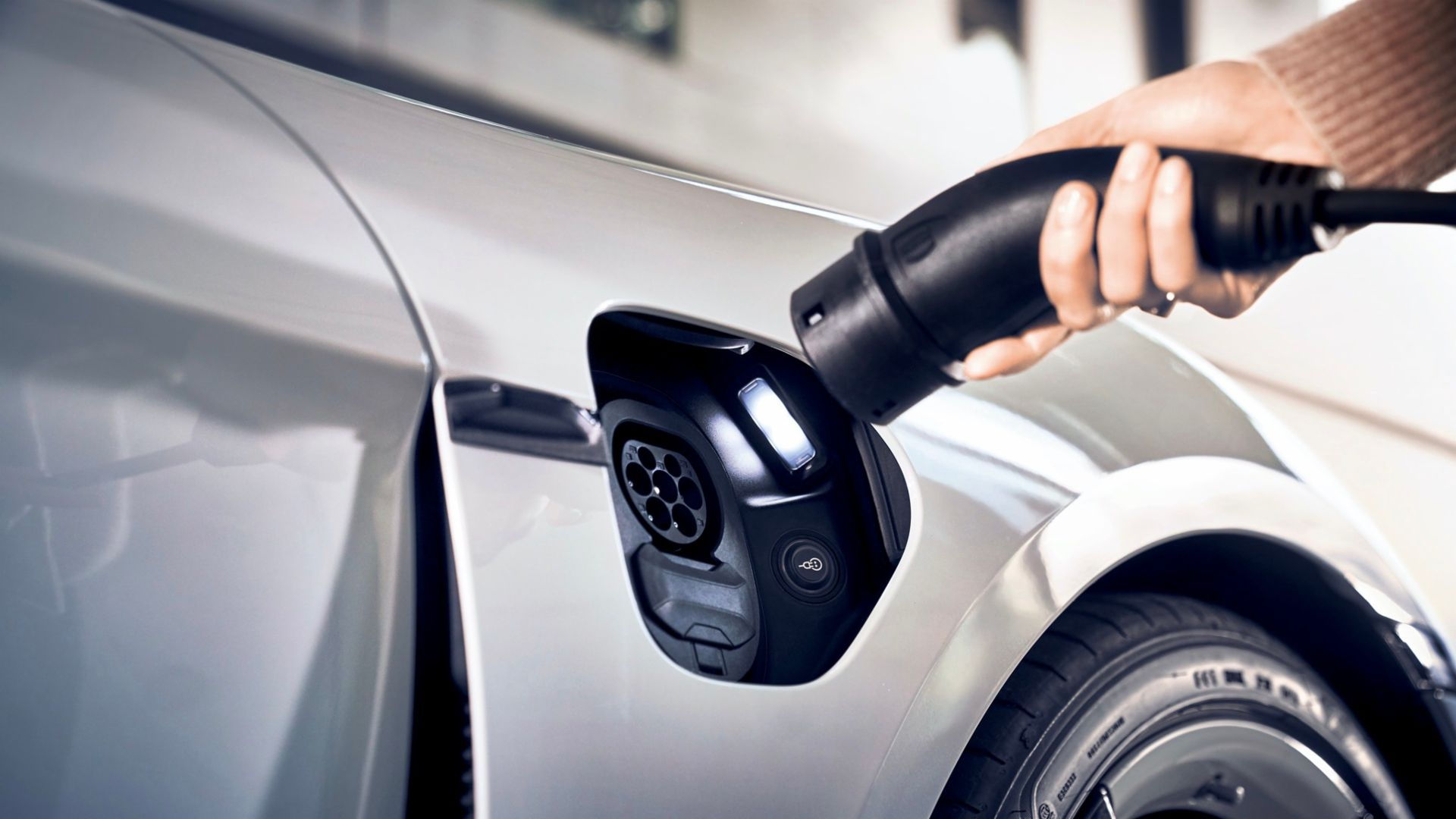

2011 Nissan Leaf and 2011 Chevy Volt, with charging station visible; photo by George Parrott
After several months of using a 2011 Chevy Volt and a 2011 Nissan Leaf as our sole family transport, we have a better understanding of both cars than we did in March, when I first wrote about how they compared.
First to arrive at our West Sacramento home was a beautiful crystal red 2011 Volt. We chose the neutral leather upgraded interior with heated seats and the backup camera option, but did not go for the polished wheels.
We had not driven the Volt before taking delivery of ours, and we hadn't owned an American car at all since 1969. We were immediately impressed with the finish on the Chevy Volt, both inside and out. The paint was smooth and all the body-panel gaps were tight.
Our second initial impression--one that has held up over the 4,200 miles we have now put on the car--was how impressive and detailed the feedback is on the electronic display. The Volt even reports the pressure in each tire, and the door-open display is shown in color to warn even more clearly if a door has been left ajar.
We find ourselves usually driving in the "L" range on the transmission, as this gives the Volt more aggressive regenerative braking, so we use the brakes less in this mode.
MORE: How To Make Your 2011 Chevy Volt Drive Like A Tesla Roadster

2011 Nissan Leaf and 2011 Chevy Volt, with roof solar panels visible; photo by George Parrott
We've always gotten at least the number of miles of electric range displayed after charging. Usually we will get 5 to 10 percent more.
That means we've regularly been getting 40 to 44 miles of pure battery range before the gas engine kicks in. Even for longer road trips, we find that the gas engine delivers 38 or 39 miles per gallon in operation.
The performance and ride of our 2011 Volt feels well-planted, almost European. We've owned several German cars, and the Volt feels German on the road. Acceleration in the Volt is at least as good as in the 2007 Toyota Camry Hybrid that it replaced.
For the first 4,100 miles, our overall gas mileage stands at 97.3 mpg.
The heated seats in the 2011 Chevrolet Volt make my wife much, much happier on the few colder days we have here in California. The car's actual electric resistance heater seems way less effective than regular fuel cars, but the air conditioning is quite good.
The concierge service that comes with three free years of the OnStar service has already been helpful a couple of times.
Our sole gripes are that General Motors missed an obvious feature by not including proximity locking and unlocking (which will be included in the 2012 Volt).
The company also should have made the Volt's gasoline engine meet the tougher California emissions standards. As it is, 2011 Volt owners don't qualify to use the state's High Occupancy Vehicle lanes with only a single driver inside. Nor do we get a state purchase credit as buyers of the 2011 Nissan Leaf do.
2011 Chevrolet Volt summary: GM may have missed a few things, but the 2011 Volt is truly a revolutionary piece of engineering.
+++++++++++
Our 2011 Nissan Leaf SL, in glacier pearl, arrived about a month after the Volt.
I was immediately pleased that we had opted for the quick charge feature ($700), as I had to drive the car 86 miles home from the dealer in Petaluma. I was able to use the DC quick charge station in Vacaville (now shut down for public use) for 27 minutes of recharging, which got me home just fine.
2011 Nissan Leaf and 2011 Chevy Volt, with charging station visible; photo by George Parrott
In that very first drive, on a cold, windy, and wet February day, it was clear that the heater in the 2011 Leaf is nowhere near as strong as one in the Volt (and the Volt's heater is not great).
The Leaf does have a rear window wiper, however, which I put to good use on the first drive and have used regularly in heavy spring rains all across Sacramento.
As a zero-emission vehicle, the Leaf is obviously "cleaner" in operation than the Volt, and we are committed to being green.
We use a 240-Volt Coulomb charging station in our garage to charge up the Leaf every night, and we are get 75 to 80 miles of actual range--despite seeing electric range numbers as high as 121 miles when we leave the garage in the morning.
It has been and continues to be frustrating that the Leaf's digital range display is so optimistic at the start of the day, but drops off so quickly during the first 10 miles. Nissan just doesn't have the range algorithm figured out as well as GM does.
(A software update for the 2011 Nissan Leaf is now available that reportedly makes estimates much more accurate.)

2011 Nissan Leaf Software Update
We now have about 2,800 miles on our Leaf, and it's our "go-to" car for errands and all of our around-town trips. My wife usually has the Nissan Leaf as her commuter car for the 12-mile drive each way to work.
She likes the space, the proximity locking-unlocking, and the visibility the Leaf offers (better than the Volt's). The white car is also better to park in the full sun at her job than the dark red Volt. And the air-conditioning in the Leaf works great.
However, my wife hates the lack of strong heating in the 2011 Leaf. We had a long wet season this winter that lasted long enough to make May more like February. She switched to driving the 2011 Volt just to be able to use its heated seats to feel warm.
We usually drive the Leaf in "Eco" mode, but switch to "D" for freeway on-ramps and to get more response from the go pedal. Driving "feel" in the Leaf offers less feedback, making it more numb than the Volt, and for us it provides less visceral fun.
The Nissan Leaf is our first choice for city driving and local commuting, and it qualifies for special free parking in Sacramento, as well as access to city charging stations in downtown parking structures.
Because of its great visibility and the backup camera that comes on the SL version, it's very easy to park in tight spaces.
2011 Nissan Leaf summary: We appreciate how clean the 2011 Nissan Leaf is in operation, but think it could have been more fully "sorted out" by Nissan prior to customer deliveries.
For the thousands of buyers still waiting for their 2011 Nissan Leaf deliveries, it absolutely is worth the wait.
For electric-car buyers who are still shopping and weighing their options, they may want to look closely at the 2012 Mitsubishi 'i' that will arrive in dealerships this November.
+++++++++++