Some used cars are better bets than others.
And just as new hybrid cars vary in efficiency, driving quality, and sales volume, some used hybrids may be a more conservative bet than others.
A used Toyota Prius is by far the most familiar and most numerous hybrid, with more than 7 million sold globally over the last 18 years.
DON'T MISS: 2016 Toyota Prius 'Coming Soon': 55-MPG Hybrid To Be Sportier
But there are also a growing number of orphan hybrids showing up on used-car lots.
And just because it says "Hybrid" on the badge doesn't mean that it will get particularly good gas mileage or be particularly pleasant to drive.
Perhaps most worrisome, it may also be unfamiliar to your local dealer's service and maintenance staff, because so many hybrid orphans sold in such low numbers.
INSTEAD: Should I Buy A Used Nissan Leaf (Or Another Electric Car)?
So here's our expanded list of used hybrids about which you should think twice before signing on the line and digging into your wallet.
[EDITOR'S NOTE: We originally published this article in July 2012, and it proved surprisingly popular. We've gone back and updated it three years later to reflect the latest crop of orphans, substandard performers, and hybrid vehicles that we're just not all that impressed by. Your mileage may vary.]
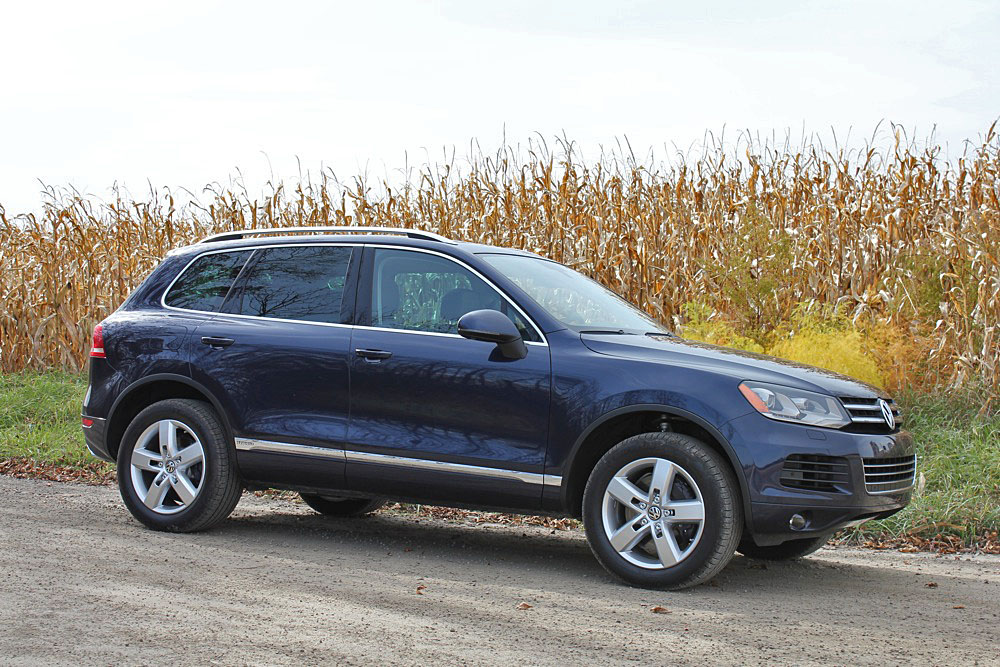
2011 Volkswagen Touareg Hybrid
2011-2015 Volkswagen Touareg Hybrid
The Touareg is a large SUV that sits at the pricey end of Volkswagen's U.S. lineup. And it's hardly a volume vehicle, with fewer than 7,000 sold in all of 2014.
That means the hybrid version of the Touareg is likely to be rarer yet, most likely no more than 15 percent of that number--and perhaps considerably less, considering that a Touareg TDI diesel model sat next to it on showroom floors.
The powertrain was fairly sophisticated, mind you, with a supercharged 3.0-liter V-6 that puts an electric motor between the engine and VW's eight-speed automatic transmission.
Total power output was 380 horsepower and 428 lb-ft of torque, and all-wheel drive was standard in the U.S.
The hybrid Touareg drove nicely enough in our test, and we certainly liked the same powertrain in its Porsche Cayenne Hybrid incarnation as well.
But we worry that down the road, while the Touareg Hybrid was on sale for five model years, its very low volumes will pose service challenges.
We also note that VW Group is now deemphasizing conventional hybrids and moving to a next generation of more powerful hybrid systems with plug-in capability.

2014 Nissan Pathfinder Hybrid information page on Nissan North America website, Jun 2015
2014 Nissan Pathfinder Hybrid
The second addition to our expanded list is a one-year wonder, the unimpressive mild-hybrid version of the Nissan Pathfinder seven-seat SUV.
With its anemic 15-kilowatt (22-horsepower) electric motor sandwiched between a 2.5-liter four-cylinder engine and an adapted version of Nissan's continuously variable transmission (CVT), the hybrid Pathfinder was unable to accelerate on electricity alone.
Instead, its little motor added torque to the engine output and restarted the engine after stops. All well and good, if such systems provide an actual real-world boost in gas mileage over the alternate 3.5-liter V-6 engine.
ALSO SEE: 2014 Nissan Pathfinder Hybrid: Gas Mileage Test Disappointing
In our experience, it didn't. And the buying public apparently wasn't very impressed either.
The Pathfinder Hybrid lasted only a single model year before it was withdrawn from the market, making it the definition of hybrid orphan.
We don't know how many were actually sold; Dan Passe, senior communications manager at Nissan North America, said that number of Pathfinder Hybrids was "unfortunately" not available.
Meanwhile, plans for similar mild-hybrid versions of the Nissan Murano and Nissan Rogue crossover utility vehicles seem to have been filed away in the "Never Mind" drawer.

2014 Infiniti QX60 Hybrid - Driven, August 2014
2014 Infiniti QX60 Hybrid
Then there's the hybrid version of the QX60 (nee JX), the more luxurious seven-seat crossover from Nissan's luxury brand--which uses exactly the same underpinnings as the Pathfinder Hybrid.
This one too has quietly vanished after a single model year, and we suspect its sales numbers were even lower than those for the hybrid Pathfinder.
Last year, about two and a half times as many Pathfinders were sold as QX60s, so if Pathfinder Hybrids are rare, QX60 Hybrids may fall into the "hen's teeth" category.
We'd still suggest that they're another orphan hybrid to avoid.
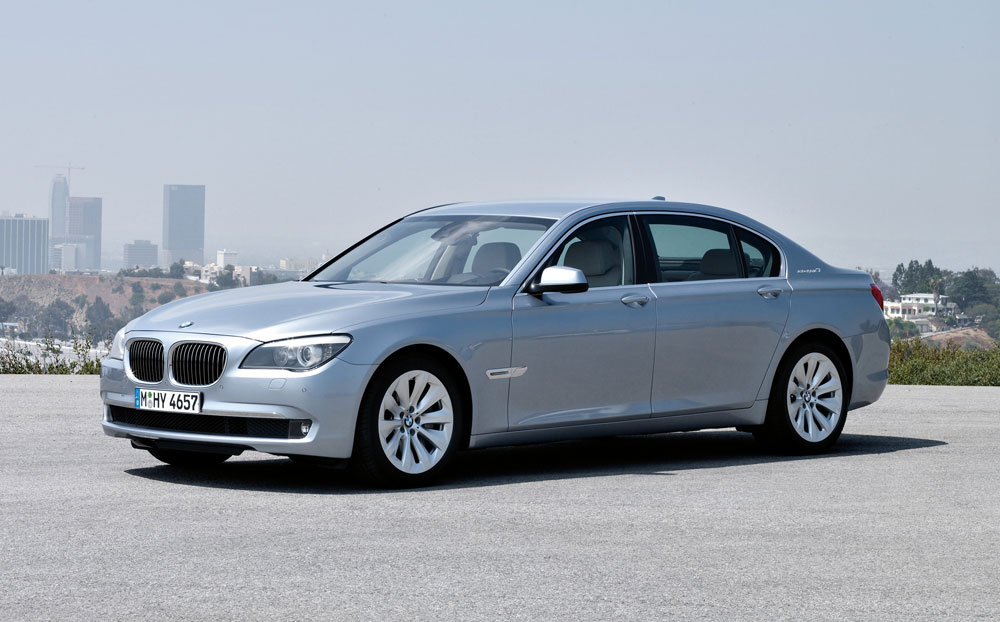
2011 BMW ActiveHybrid 7
2012 BMW ActiveHybrid 7
Both of BMW's first two hybrid efforts show up on this list. The big 7-Series hybrid sedan launched in 2012 suffered from an unwieldy name, marginal gas mileage, and lumpy driving behavior that belied its "ultimate driving machine" image.
This too was a mild-hybrid system, with a 15-kilowatt (22-hp) electric motor that wasn't nearly powerful enough to move the full-size luxury sedan on its own.
The motor only contributed additional torque, restarted the 455-hp 4.4-liter twin-turbo V-8 engine when the car moved away from a stop, and recharged the lithium-ion battery pack under braking.
But BMW skewed its first hybrid system toward boosting power, rather than improving fuel efficiency. The company actually touted the hybrid 7-Series as "the world's fastest hybrid vehicle" at the time, with a 0-to-60-mph time of just 4.7 seconds.
The EPA rated the ActiveHybrid 7Li model at 20 mpg combined--no better than the (less powerful) conventional 740Li model the same year.
When we tested the car, we weren't impressed by the driving experience, which hardly squared with the old "Ultimate Driving Machine" mantra. It just wasn't how a big, expensive BMW should behave.
The car slowed noticeably when lifting off the throttle under 25 mph, "as if it had driven into mud that was dragging it down." Then, there was "a perceptible second phase of recharging in which the car slows even quicker."
For 2013, the ActiveHybrid 7 got an entirely new hybrid powertrain shared with 5-Series and 3-Series hybrids as well. The more powerful 40-kW (55-hp) electric motor can now move the car purely under electric power at low speeds, and rather than a V-8, it's paired to a twin-turbo six-cylinder engine.
The update makes orphans of the 2011 and 2012 BMW ActiveHybrid 7. With fuel economy no better than a non-hybrid 7-Series, and notably worse driving behavior, we see no reason to buy the 2012 model as a used car.
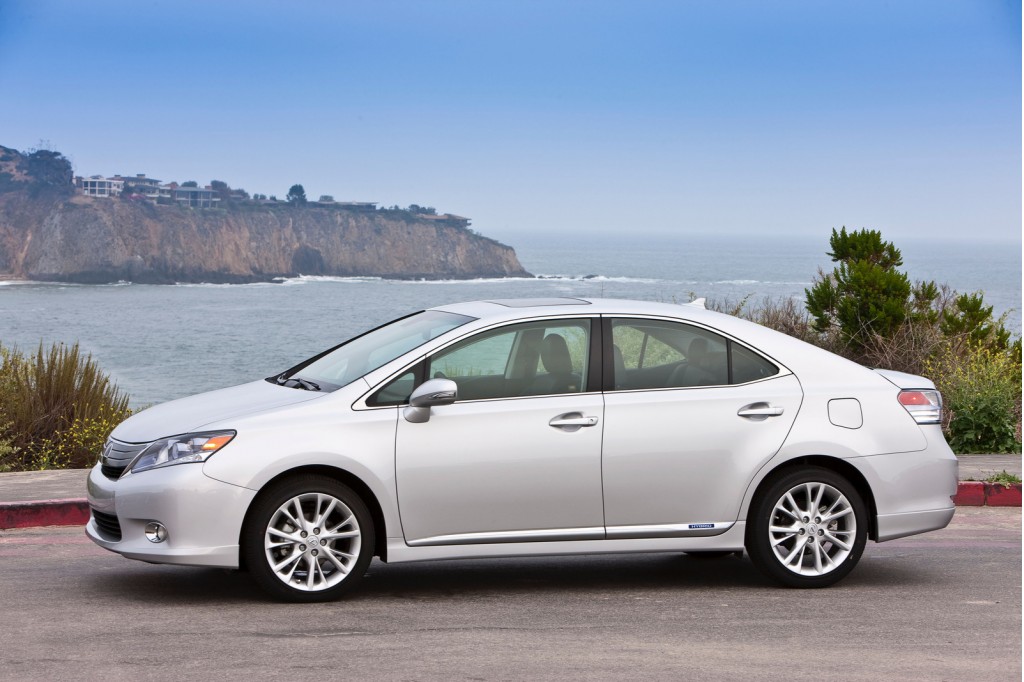
2011 Lexus HS 250h
2010-2012 Lexus HS 250h
Sometimes the market renders an accurate judgment: Cars that sell in low volumes often aren't very good. That's the case with the Lexus HS 250h, which lasted only three model years--and was one of the few Lexus models actually killed off for unpopularity.
It was effectively supplanted by the all-new 2013 Lexus ES 300h, a hybrid version of the brand's mid-size luxury sedan. We've driven that one, and it's far better than the unloved HS.
When it launched, the HS 250h was the first "dedicated" Lexus hybrid--a car with unique styling not shared with a conventional gasoline model. (The Toyota Prius is the prime example of a dedicated hybrid; there's no gasoline-only Prius.)
But awkward styling, mediocre performance, and unpleasant driving characteristics likely doomed it among Lexus buyers looking for smooth, quiet, effortless luxury in reliable packages.
While the HS was quiet inside under most circumstances, the engine howled under full acceleration--not what a mid-size luxury sedan at $37,000-plus should do.
While it used the more powerful 2.5-liter engine and powertrain from the Camry Hybrid, it weighed fully 700 pounds more than a Prius--so the HS was rated at just a 35-mpg EPA combined gas mileage rating, far lower than the 50-mpg Prius.
Sales of the HS 250h never came close to Lexus targets its first year, though they're likely still to be found in the used-car section of your local Lexus dealer.
We can't think of a reason to buy one, though.
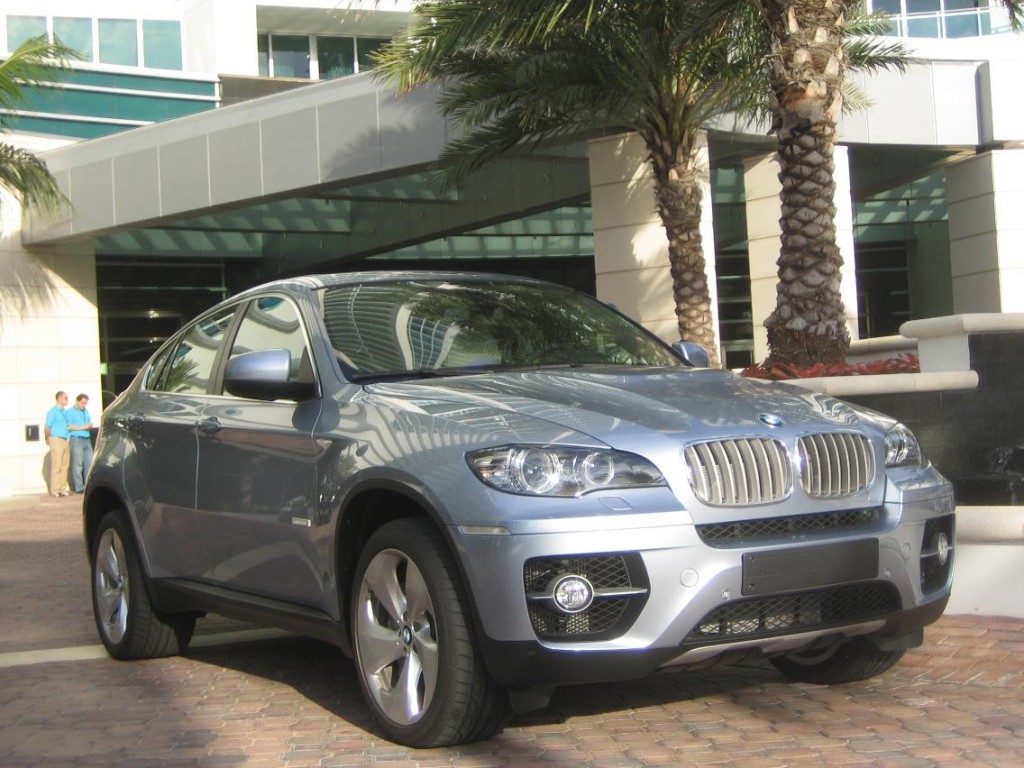
2010 BMW ActiveHybrid X6, Bal Harbour, Florida
2010-2011 BMW ActiveHybrid X6
On the outside, except for a few badges, it looks just like a conventional BMW X6, or as BMW terms it, a "sports activity coupe"--essentially a fastback sport-utility crossover vehicle.
But the now-discontinued ActiveHybrid X6 used a modified version of GM's Two-Mode Hybrid system for large, rear-wheel drive trucks and sport utilities, paired to a modified version of BMW's 4.4-liter twin-turbo V-8 engine putting out 407 hp.
Fuel efficiency? At 19 mpg, considerably better than the conventional 4.4-liter X6, which earned a combined 15 mpg rating. We saw 20.4 mpg during a launch-event driving test.
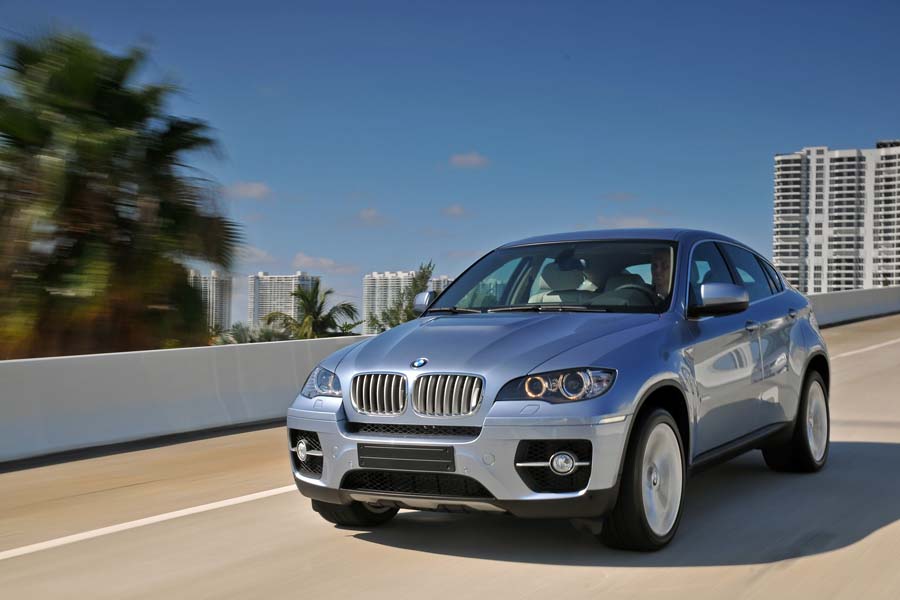
2010 BMW ActiveHybrid X6
The goal was to "build the BMW of hybrids," as one engineer put it at the introduction, with no compromise in power, performance, or driving experience. Total power output from the engine and two motor-generators was 485 hp.
In practice, BMW radically retuned the hybrid control software to mimic the driving experience of a seven-speed automatic transmission, using four direct-drive gears and three different electric assists. Behind the wheel, no one would know there were electric motors providing part of the torque.
The problem with the ActiveHybrid X6 is that it's a very low-volume vehicle only built for two model years, and the Two-Mode Hybrid powertrain was reputed to have cost each maker that used it more than $10,000 per car.
BMW service can be pricey to begin with. Add to that a low-volume, discontinued hybrid system that BMW will never use again, and the risk of pricey repairs and unavailable parts could get high a few years down the road.

2009 Chevrolet Malibu Hybrid
2008-2009 Chevrolet Malibu Hybrid
One of two hybrid systems launched by GM a few years ago, the mild-hybrid Belt-Alternator-Starter system was used on several compact and mid-size models, mostly from Saturn (see below).
The Chevy Malibu was offered with the so-called BAS system for just two years, paired to a 164-hp 2.4-liter Ecotec four-cylinder engine. In 2009, the Malibu Hybrid was sold only to fleets.
The big challenge was that the Malibu Hybrid's EPA ratings--24 mpg city, 32 mpg highway, for a combined rating of 27 mpg--were only slightly better than the same 2.4-liter engine when paired with a then-new six-speed automatic transmission.
That version of the Malibu offered a more familiar driving experience, equivalent highway mileage, and a combined rating of 25 mpg--for about $2,000 less. If the sticker didn't close the deal, the far smoother driving experience did.
The two years of Malibu Hybrid are low-volume models with an unpleasant shudder in the drivetrain as the electric motor switched from providing torque to regenerative battery charging. And their real-world fuel economy was sometimes lower than conventional models.
The Malibu Hybrid quietly went away after the 2009 model year and GM's bankruptcy and restructuring. For the record, the all-new 2013 Chevrolet Malibu Eco uses a thoroughly updated and smoother second generation of the same system.
One final warning: A number of Malibu Hybrids were used as New York City taxi cabs. If you see any yellow paint anywhere on one sitting on a used-car lot, run away.

2009 Dodge Durango Hybrid launch at 2007 Los Angeles Auto Show
2009 Dodge Durango Hybrid / 2009 Chrysler Aspen Hybrid
Well, it must have sounded like a great idea in the heyday of sport-utility vehicles: a hybrid SUV that also had a Hemi!
That's exactly what the pre-bankruptcy Chrysler built, for a few short months in 2008 before it killed off its large SUV line and closed the Delaware assembly plant altogether.
Altogether, fewer than 1,000 Dodge Durango Hybrids--including its upmarket twin, the Chrysler Aspen Hybrid--were built.
And the hybrid-SUV pair are Chrysler's only products ever to use the Two-Mode Hybrid system, originally developed jointly by GM, the then-DaimlerChrysler, and BMW.
Just as on the 2010-2011 BMW ActiveHybrid X6, that system is low-volume and the components were remarkably expensive. Between the large battery pack and the complex two-motor hybrid transmission, it was rumored to cost $10,000 or more per vehicle.
So while the 345-hp, 5.7-liter Hemi V-8 paired with the hybrid system returned a decent 21 mpg combined--far better than the non-hybrid Hemi version, at 15 mpg--it is now very much an orphan for the post-bankruptcy Chrysler.
And that makes it one to consider steering clear of.
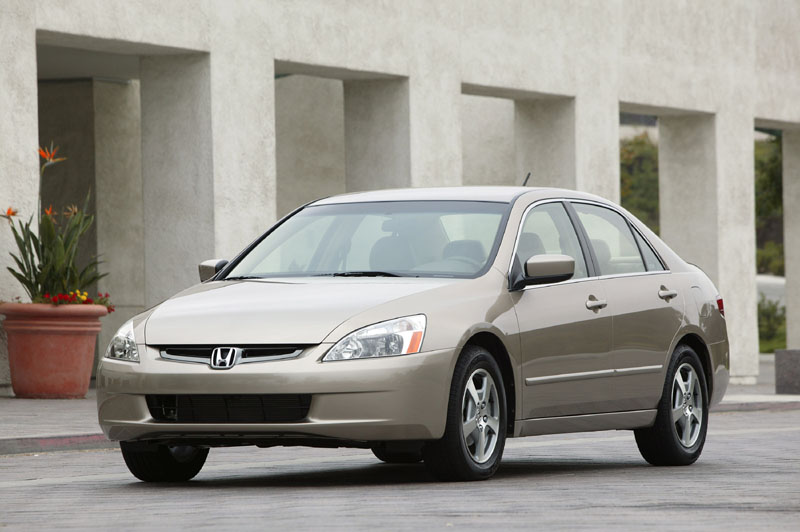
2005 Honda Accord Hybrid
2005-2007 Honda Accord Hybrid
[EDITOR'S NOTE: This entry refers only to the first-generation Accord Hybrid, sold from 2005 to 2007--not to the current Honda Accord Hybrid, which won our Green Car Reports Best Car To Buy 2014 award.]
Though we haven't been able to track down the ad, the first-generation Honda Accord Hybrid was reputedly marketed with the tagline, "Sips Gas. Hauls Ass."
It was, in other words, a performance hybrid--the only time Honda has fitted its Integrated Motor Assist mild-hybrid system to a 3.0-liter V-6 engine, rather than 1.5-liter (or smaller) fours.
The notion of a performance hybrid proved deeply confusing to the market, since the success of the second-generation Toyota Prius had firmly defined "hybrid" as "fuel-efficient."
MORE: Green Car Reports' Best Car To Buy: 2014 Honda Accord Hybrid
After a burst of initial interest, sales of the Accord Hybrid waned significantly, and it was finally withdrawn after three model years and total sales of 28,500 cars.
Its gas mileage, at a combined 25 mpg, was about 20 percent better than the non-hybrid V-6 model's 21 mpg. But the mild-hybrid system didn't let the Accord Hybrid travel only on electric power, so that piece of the hybrid experience was lost.
Honda has made almost 1 million mild hybrids to date, all but the Accord Hybrid being high-mileage compacts or subcompacts.
The Accord Hybrid's role turns out to be serving as a case study of the fact that niche vehicles sometimes simply never find their market.

Saturn Vue Green Line
2008-2009 Saturn Vue Hybrid, 2008-2009 Saturn Aura Green Line, 2007 Saturn Vue Green Line
Finally, we come to three different hybrid models from GM's now-defunct Saturn brand.
The one-year 2007 Saturn Vue Green Line was the first vehicle to receive the mild-hybrid Belt-Alternator-Starter system, which GM proudly pointed out made it the highest-mileage sport-utility on the market for 2007--at a combined 26 mpg.
The BAS hybrid system restarted the 2.4-liter Ecotec four-cylinder engine after the car came to a stop, added electric torque to the engine output, and acted as a generator to recharge the battery pack under braking.
But the system was rough, with shuddering when the engine switched on or the electric motor kicked in, which made the "Green Line" Saturns slightly unnerving to drive.
And a 2008 recall of the first 7,000 nickel-metal-hydride battery packs used in BAS-equipped cars probably sealed the system's fate, given the collapse of the auto market later that year and the subsequent bankruptcies and restructuring of GM (and also Chrysler) in the U.S.
Over a short three years, three Saturns were offered with the BAS system: the 2007 Saturn Vue Green Line compact crossover, its all-new replacement for 2008-2009--first called the Saturn Vue Green Line as well, then changed to Vue Hybrid--and also the 2008-2009 Saturn Aura Green Line sedan.
The same first-generation BAS system was also used in the 2008-2009 Chevrolet Malibu Hybrid (see above).
With an orphaned brand, a recalled high-voltage battery pack, unpleasant driving characteristics, and gas mileage ratings not all that much better than non-hybrid variants, the hybrid Saturns had a rough row to hoe.
Sales of less than 10,000 over three model years testified to their lack of appeal--and we suspect the same may apply when they show up on used-car lots
_________________________________________________