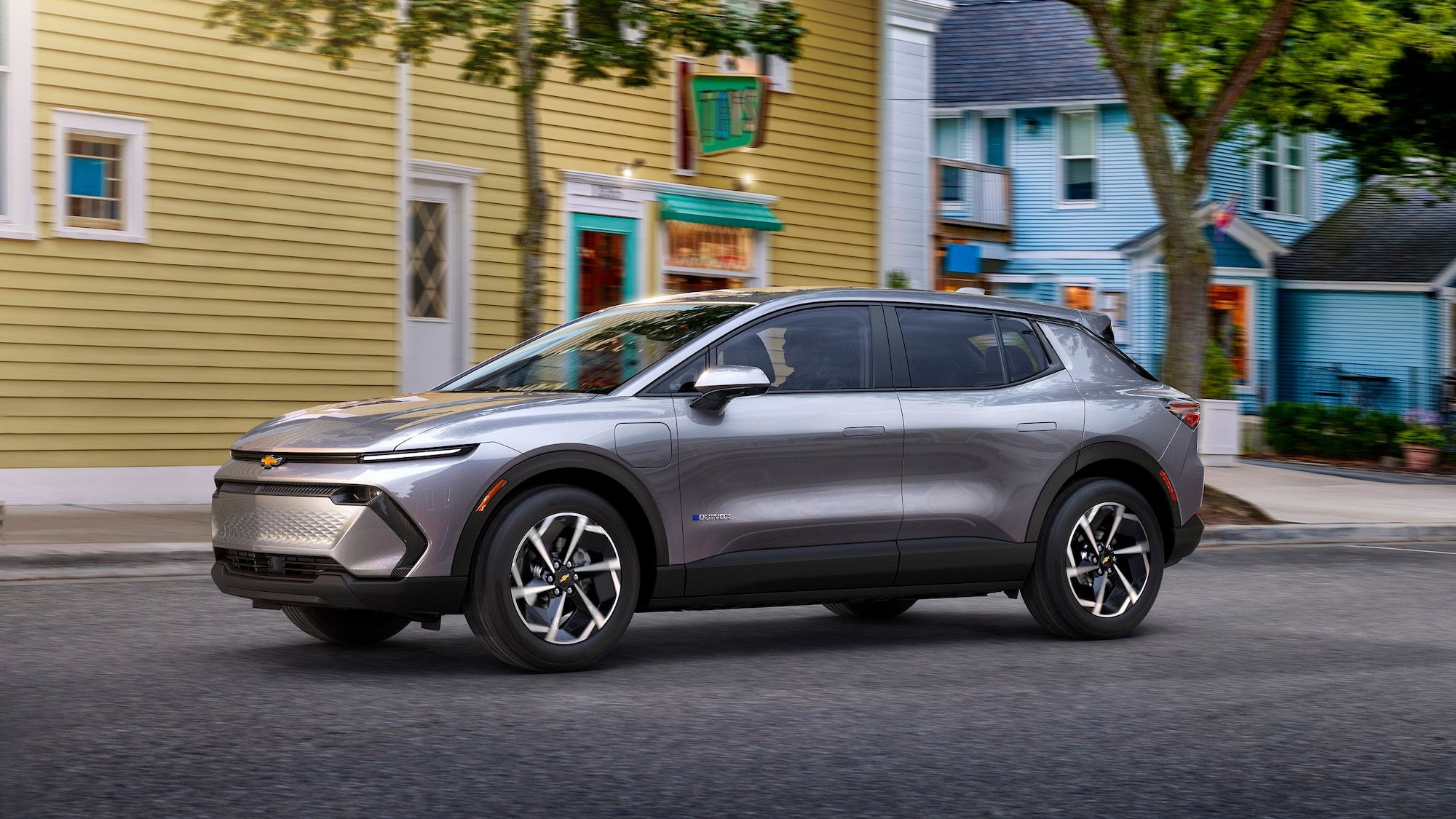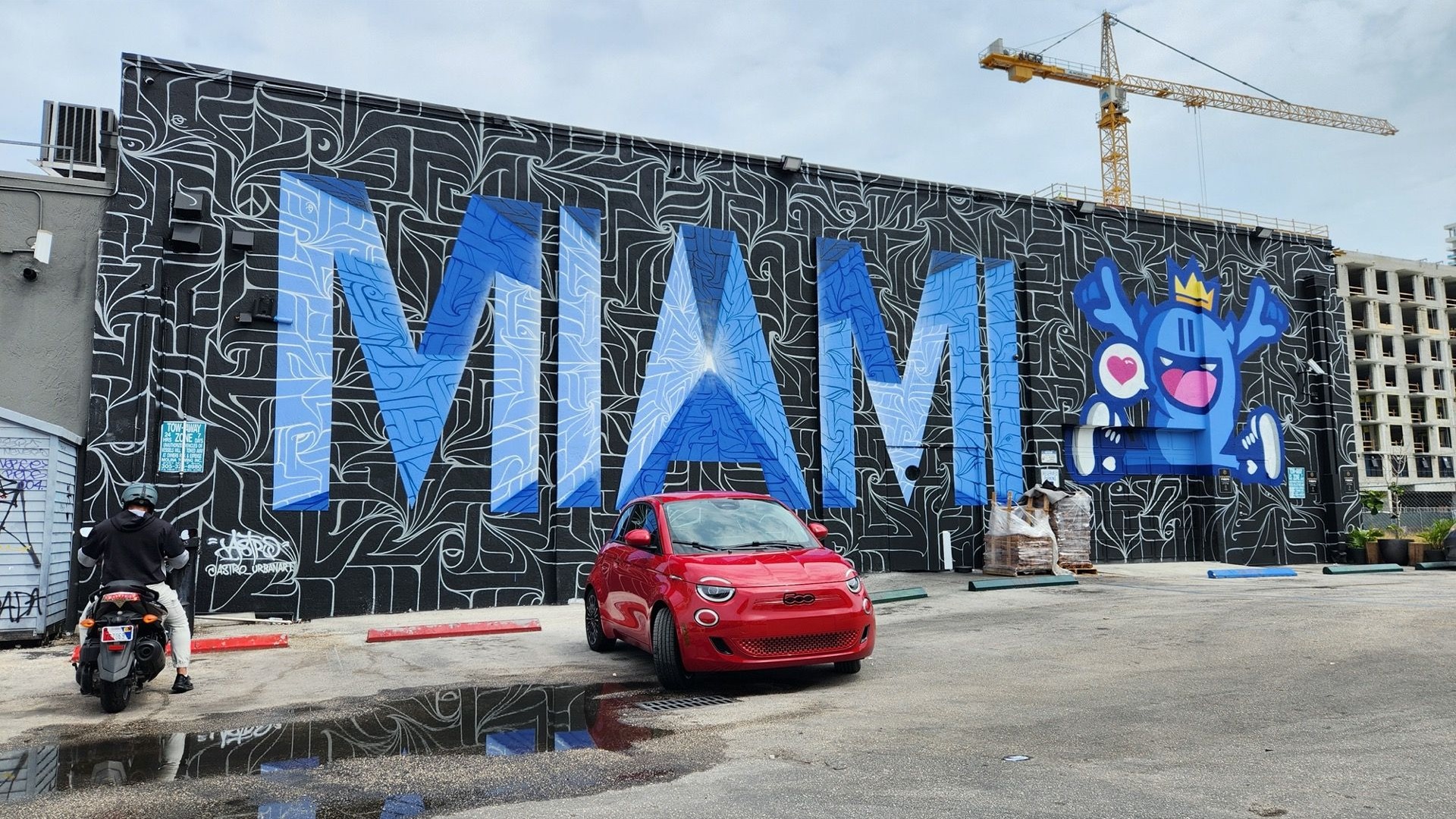
Chevrolet Spark EV Development Testing in Southern California, March 2012
Enlarge PhotoSince last year, you've likely heard a lot about electric cars. You'll hear much more in the years to come.
But whether you're a fan or a foe, understand this: A few of the battery-electric cars you've heard about are "real"--meaning their makers want to sell as many as they can.
But quite a few of them aren't. They're not meant to lure in consumers, or sell in any kind of volume.
They're only built to meet California regulations for zero-emission vehicles--which is why they're called "compliance cars."
It's important for buyers, electric-car fans, and the greater public to know which is which, because the automakers won't tell you.
All about volume
"Compliance cars" will be made in much lower volumes: only up to a few thousand, versus the tens and hundreds of thousands that makers like Nissan hope to sell.
Today, there are three battery electric cars on sale in the U.S.: the Coda Sedan, Mitsubishi 'i', and Nissan Leaf. Later this year, they will be joined by the Ford Focus Electric and the Tesla Model S.
By 2014, we'll see further new plug-in entries from BMW, Chevrolet, Fiat, Honda, Scion, Smart, Tesla, Toyota, and Volkswagen.

Golden Gate Bridge, connecting San Francisco and Marin County, California
Enlarge Photo
Starting this year, California requires that carmakers of a certain size ensure that at least a small portion of their volume comes from zero-emission vehicles--either battery electric cars or fuel-cell electric vehicles.
Carmakers can meet the overall requirement using a combination of car types, including larger numbers of plug-in hybrids with partial electric range.
The first round of requirements applies only to the carmakers with the highest California sales. In order, they are: Toyota, Honda, GM, Ford, Nissan, and Chrysler.
What is real?
So what makes a battery electric car "real," and distinguishes it from a compliance car?
We'd suggest that any plug-in car has to meet the following criteria before it can be considered real:
- It's sold outright to consumers, not only leased; and
- It will sell at least 5,000 or more a year in the U.S. or reach total global sales of 20,000; and
- It's offered outside the 'California emissions' states, or will be within 18 months
Any car that doesn't meet those tests at a minimum isn't a serious volume car; it's either part of a test fleet or it exists just to comply with the ZEV requirement.
Applying that test, we can find only four battery-electric cars that are or may be "real" during 2012. Three are on sale now, one isn't yet:
- 2012 Nissan Leaf
- 2012 Mitsubishi 'i'
- 2012 Coda Sedan
- 2012 Tesla Model S
The Coda Sedan just went on sale in March (and Coda refuses to say how many it's sold), so we're reserving judgement until we see if the company can come anywhere close to its first-year sales goal of 14,000.
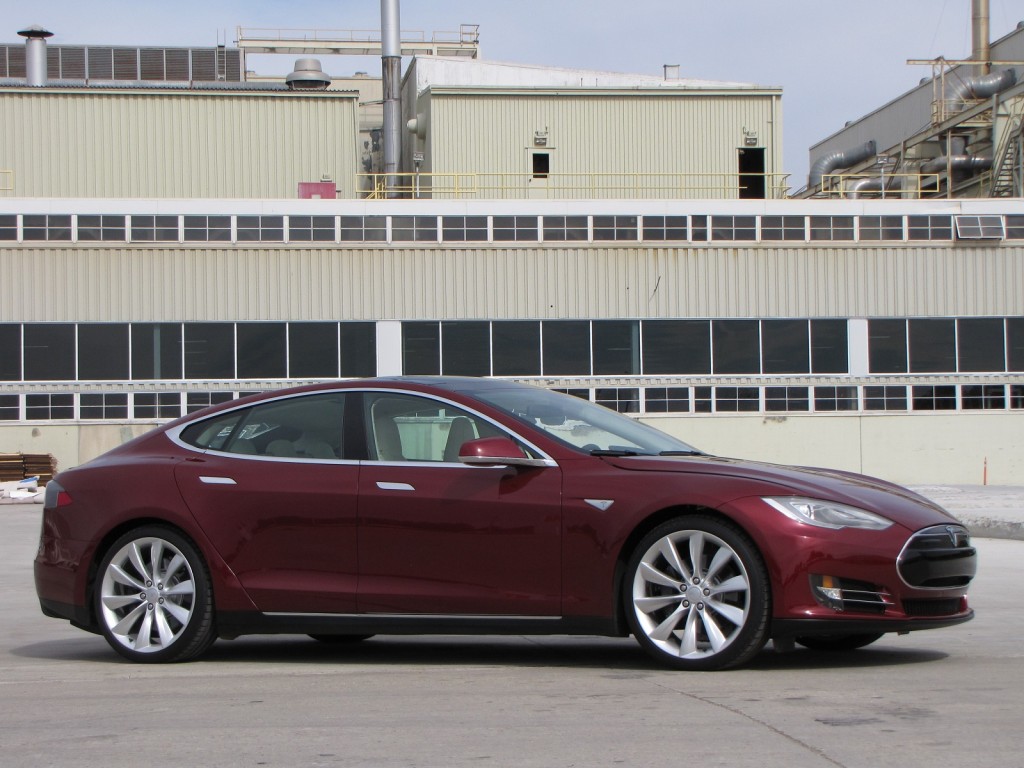
2012 Tesla Model S beta vehicle, Fremont, CA, October 2011
Enlarge Photo
We're also convinced that Tesla intends to sell every Model S it can build, but that car won't arrive on the market until July, so it will take a few months more to verify its "realness."
(By the way, we also consider the Chevrolet Volt , the Fisker Karma, and the Toyota Prius Plug-In Hybrid to be real--but they have gasoline engines as well as plugs, so they don't qualify as pure ZEVs in California--so this article doesn't apply to them.)
Naming names
OK, so which cars aren't real? We believe several battery-electric cars announced for 2012 through 2014 are only "compliance cars."
Not so coincidentally, there's one apiece from each of the five non-Nissan carmakers required to sell ZEVs starting this year:
- Chevrolet Spark EV
- Fiat 500 Elettrica
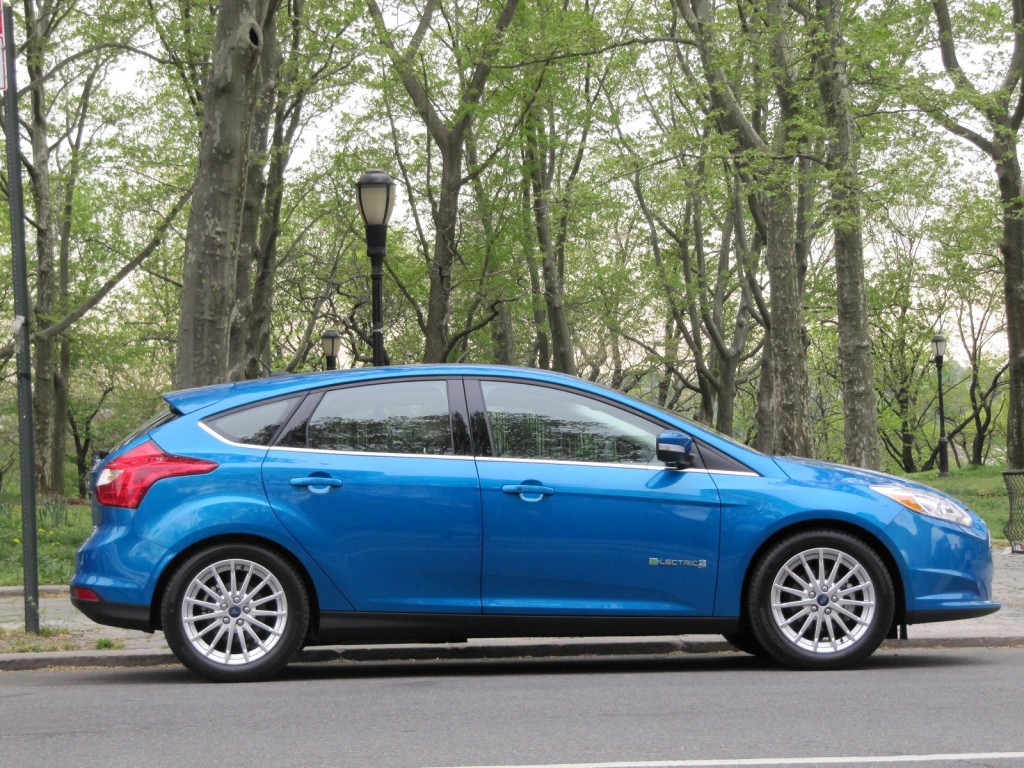
- Ford Focus Electric
- Honda Fit EV
- Toyota RAV4 EV
All are conversions of existing gasoline vehicles, rather than purpose-built battery-electric vehicles like the Nissan Leaf or Tesla Model S. Four of the five manufacturers are consistently opaque--for which read stonewalling--about even the basic details of their cars' technologies, launch plans, and sales areas.
And those are the tipoffs that these are all compliance cars. We'll go through them one by one.
2013 Chevrolet Spark EV
GM confirmed production of the Chevrolet Spark EV last October, and we know:
What GM refuses to say--despite our repeated inquiries--is when it will put the Spark EV on sale, whether it will be sold or just leased, which states it will be offered in, and what it will cost. In fact, the company hasn't even said when or where it will reveal the actual car.
It also won't discuss the car's battery-pack capacity, its electric range, its likely MPGe rating, its recharging time, where the electric conversion will be done, or its production volume.
But the electric conversion of the Spark remains a tiny car--far from the compact segment that's today's sweet spot for electric cars--and GM already has one plug-in halo car, the range-extended electric Chevy Volt.
Our conclusion: The Chevy Spark EV will be a compliance car, nothing more.
Have an opinion?
I don't think it is wise to buy low volume cars. They are more likely to have problems and there is more difficulty in getting service.
The only one that disappoints me is that the Ford Focus is a compliance car. That seems like a great vehicle.
Also, didn't Honda buy up the Tesla Roadster credits? That is another sign of them hedging.
VW does not sell enough cars in CA to fall under the 2012-2014 ZEV rules, so I left them out to keep the article manageable (and it's still 3 pages).
I did consider the Ampera (pretty much a restyled EU versoin of the volt) but wanted pure EV. That left the Nissan leaf as the only "proper" production car in the segment & the one I went with
I did consider hanging on for the focus (I loved my petrol focus) but wasn't convinced my the vibes from ford as to commitment in this space, at least in the near term.
Delighted I must add..
Reading it was a little saddening, but only because it was brutally honest. In California it sounds like the mid 90's all over again.
Going back a couple of years I initially scoffed at Nissan because it only had the option of one mediocre-range battery pack. I felt they weren't really interested in EVs.
Now however I respect them a lot more. The car still isn't everything I want in a vehicle, but they've proved they're properly interested in the market and have taken a big risk in doing it first, and (from what I've heard) making a decent vehicle.
Now let's hope Leaf production ramps up and those prices can start to fall.
They can't keep Chevy Volt on the lot...
The Volt now has the California approved format for the PZEV sticker, which it didn't have before. The old Volts were also all over the lot.
The Leafs are sitting in dealer lots because the dealers marked them up substantially. The dealer we bought our Leaf from marked up the 2012 model $5,000. Yes, an extra $5K. Because they could. If that markup weren't there, there wouldn't be any on the lot, so that's a decision those dealers made, knowing they'd sell slower but at more profit.
One point that is insinuated, but should be spelled out: why volume is so important. Volume is everything in the car business. Automation, supplier discounts, and even supply availability all hinge on volume. Low-volume cars are always more expensive. And more expensive cars end up being low-volume. So it's a self-fulfilling prophecy--if you don't think you will sell many cars, so you build low-volume, guess what--you will be right!
Ford vs Nissan is the best example. The Leaf is purpose-built for volume. The Focus is an outsourced conversion. Ford put a lot less at risk, but per-unit prices are higher, and space is wasted by non-optimized packaging.
But my point was that if they were to plan for high volume, they could make it even cheaper.
If this was a mere compliance car, they would have done it as cheaply as possible.
IMHO, i think they are testing the most favorable market, getting experience, getting road miles and getting technicians trained.
As they learn what it is in reality, they will expand.
I'm disappointed that you think the Focus Electric is a compliance car...I think Ford has put enough R&D into the Focus Electric (and the other electric cars in their pipeline) that it will be a "REAL" electric car when it does finally arrive.
Also, you didn't mention the smart EV, which MUST be a compliance car, because I've seen it advertised as available for lease on their site for two years, but have never seen a single one on the road, nor can i find "REAL" information about it on their media site.
The first Smart Electric Drive (with Tesla-built battery pack) was very low-production; Smart tells me the 2013 model coming at the end of the year will be both faster and cheaper:
http://www.greencarreports.com/news/1075112_2013-smart-fortwo-fresh-styling-new-electric-drive-model
Anyway, I am definitely interested in the i3 if it is real.
I don't get you people? The market has to develop to at least a limited degree before most large-scale launches make sense. In 2-3 years, will Nissan's multi-billion quick investment make a difference if other OEMs are building better EVs and PHEVs? Personally, I doubt it.
I have absolutely no problem with low-volume manufacturing of some EVs if that's what makes sense for the maker. Demanding that every (oh, I mean only D3, right, William?) OEM make large volumes and lose money now isn't realistic.
They're not charities, they're companies
Then automakers can say "see, we tried, but nobody wants them." They might not do that, but that is what happened last time, so you can understand if people are concerned about it happening again.
Of course the whole issue would go away if we got rid of all mandates and subsidies and instead taxed gas at some rate close to what it costs us. Then everybody would want electric, and the automakers would scramble to build them in volume. But no politician (as opposed to leader) will touch that. So we're stuck with this system. Sigh.
Thus Ford using a Focus chassis and shared components will make things much cheaper than any current low-volume EV-specific platform. Tesla can sell every vehicle for a few years and it won't sell more than 500k like the Focus (or other equivalent) sells now in one year globally. More, actually.
OEMs aren't playing the "we tried" game, it's a fact that the demand is not there yet. So most are cautious.
I agree 100% on the gas tax, but it's not happening...
CARB gave the HOV sticker to the regular Prius to help get it established, and it worked. So then CARB pulled that benefit away from the regular Prius and gave it to the plug-in Prius, which, no matter what you think, is greener than the regular Prius, which is, in turn quite green.
CARB (despite its questionable past decisions) is leading the country in the right direction.
I would have to say that ultimately that may come down to sales volume. For something to be "realistic" in needs to be "realized". If the PiP sells a lot more than the Volt, than I think it is more realistically green.
After all bicycles are much greener, but they are not used enough so perhaps, in the end, they are not that realistic.
btw - I had a chance to drive my 1st Leaf. I need to write you about it. B
2. It is absolutely wrong to group Prius Plugin with the Volt. It is clear that Toyota is doing the Plugin just so it can qualify for California Carpool lane to stimulate sales. It has NO true intention of selling anything with EV capabilities. It Plugin is rated for ONLY 6 MILES by EPA. In fact, you won't even get a single mile if you drive it "normally" (unlike a grandma) and cruise at 65mph.
(2) I take your point about the Prius Plug-In *having* to use the engine to get up to speed in the HOV lane. That has to do with how CARB regulates cars. But (a) GM knew those rules and chose not to launch a compliant Volt until this year; and (b) you can expect a lot more of those types of plug-in hybrids in years to come, from Ford, Hyundai, VW, the list goes on...
I do like the Leaf. I think it is fairly priced as well. But the sales are just NOT there to support it. It even has more rebates than the Chevy Volt and cost far less. The issue is still anxiety.
So while the Volt is better for racking up electric miles, it is not that much better.
Also bear in might, the Prius is more efficient (50 mpg) than the Volt (37 mpg) when traveling on gasoline.
So there is a case to be made for the Plug-in Prius. Oh, and it is dramatically less expensive.
Those cars are so expensive that they are largely being bought by affluent families with slightly more than 3 cars per household on average. Either one works fine as a third / commuter / incidental vehicle--and then the owners discover they almost never travel > 70 miles per day anyhow. Experience shows us that with familiarity, range anxiety is somewhat overblown.
That said, yes, a Leaf is not a suitable only car for a household and a Volt could be--if you're OK with a cramped four-seat compact with very little luggage space.
The Plug-in Prius, provides a pathway to electric vehicles and gives some electric range. Recent data from Fuel.ly shows that PiP owners are traveling 30% of their miles on electricity, which is not too bad. Sure it would be nice to have 100% of your miles be EV, but perhaps that is something we should attempt in 5 or 10 years.
PiP Prius is a compromise vehicle from an EV mileage standpoint, but there is no compromise on range, or price really. The Plug-in Prius removes the FUD and lets people buy with confidence.
Sure, a step toward the right direction but Toyota did it with the LEAST amount of effort to maximize tax payer benefit. It is a SCAM.
Admittedly that is better than the 30% of miles traveled electrically on the Plug-in Prius, but not as bad as your impassioned argument suggests.
At that rate, if the PiP outsells the Volt 2:1, then the PiP is doing more good.
The Volt is the car for the opposite of your argument -- where it is one car good enough for all your needs, rather than being really good for the most common requirements and needing another car (or rental) for the occasional requirements.
Second, hooray for stupid, useless government regulations.
Third, the Focus actually seems like it would be a successful EV if it went into full production. But I can understand if they don't want to dive into a small market that hasn't been meeting expectations.
Seems to me there is a lot of BS green vapor coming from Europe.
But I believe both BMW (with planned production of up to 30,000 i3s a year in 2015) & VW Group (with a wide program of hybrids, plug-in hybrids, and battery electrics) are both very serious about electrified vehicles. Daimler I'm less sure about; they still believe in fuel cells. But all Europeans are 5 to 8 years behind Nissan and GM, so their first real plug-ins won't hit showrooms until 2014 or later.
I think the BMW i3 will surprise a lot of people...
Volt is selling decently in Europe.
We need volume! Go drive one!
Like other MINI E drivers, I was surprised how much I liked driving an “expensive, overweight, 2 seat compact CARB play EV”. My “CARB play” taught me that my next EV needs 80+ mile EPA range, 20+ mph on-board charger (so no LEAF or i), in a small hatchback (so no S or Coda). Something like a BMW i3 / Chevy Spark / Fiat 500 / Ford Focus / Honda Fit EV.
Like “CARB play” drivers, “CARB play” manufacturers may come to appreciate EVs with positive experience. Let the sprouts grow.
1. Sold outright to consumers: Check. Purchase price is $39,995 before credits and a lease plan available also.
2. Volume at least 5,000 per year: Check. Ford's CEO says he would be happy with 5,000 in 2012 (launch year). Although Ford hasn't given projected volumes, the motor capacity on two shifts at the new Magna plant in Grand Blanc, MI is 20,000 upa which I believe gives a pretty good indication of Ford's volume expectations.
3. Offered outside of California: Check Ford just presented its rollout plan. 3 states now and will have dealers trained and be available nationwide by year end.
(2) While Ford's CEO says he would be "happy" with 5,000 per year, I am hearing that volumes will be significantly lower than that for 2012, perhaps 2013 as well. I hope I'm wrong, but the vibes on this car from insiders are not good and it is quite clear Ford is not enthusiastic.
Please point me to the source that cites a capacity of 20K motors per annum just for the Focus Electric. Had not heard that before. Interesting.
(3) Ford has presented a rollout plan for just 17 cities "by the end of this fall" and will not discuss any further plans. At least some of those cities are outside states with California emissions rules, however.
http://apps1.eere.energy.gov/news/news_detail.cfm/news_id=18263
(1) A lease plan? Really? Last time I look on Ford's Focus Electric site, the only lease plan they have is to own the vehicle. (And it comes out to like a whopping $700/month!!)
My personal experiences with my local Ford dealer (a qualified Focus Electric dealer, BTW!), I've got nothing but stonewalled regarding this car. And that has me inclining to agree with this article is right and that Ford is just producing this as a "compliance vehicle."
I;m hoping I'm wrong because I really like this car and it seems like it can be a "winner" for me -- IF Ford is really behind this car and can get its act together.
Now, I follow Nissan intently and I recall in early 2000's Nissan made a mission regarding its lineup: that all it's cars and trucks would be segment leaders in horsepower. I don't have anything to back that claim, it's just a vague recollection of mine. Make sense that Nissan would HAVE to go electric, if CAFE standards were increasing to the point that all the hot-rod gas-guzzler cars in their lineup would not be able to change quickly enough to meet CAFE average MPG requirements. But I'm really glad they did!
The auto makers are on a learning curve, the early cars are more research vehicles than anything.
And everything the major auto makers build is a "compliance car" in the sense that they have emissions regulations to comply with.
Only the pure play EV makers (Think, Tesla and Coda in the US) do not build "compliance cars" since they have no emissions regulations to comply with.
Even Nissan needs the emissions credits they get from selling the Leaf. All the others will get more serious about EVs over time.
Do you seriously propose that Nissan, which is building global capacity for up to 250,000 electric cars a year by the end of 2013, is only producing compliance cars--like, say, Honda's 1,100 cars over 3 yrs? And that the Nissan Leaf is only a "research vehicle"? I can't buy that.
Sure, Nissan can use the ZEV credits--but they wouldn't need to sell 20K Leafs to get 'em (their 2012 goal), let alone build up to 150K of them in the U.S. More like 2,500 a year.
As for Think (RIP), Tesla (Model S pending), and Coda (volume very much TBD)--they can and do SELL their ZEV credits. As you know if you're in the regulatory area. [1 of 2]
In that sense, the CARB ZEV rules are doing precisely what they are designed to do: get more plug-ins on the road. (Though they still seem to have an inexplicable bias toward hydrogen fuel-cell vehicles...but that's a different article.)
But while every automaker is on a learning curve, some want to be there--and most are there SOLELY because CARB rules force them to be there. That was the point of the piece.
It is too early to make the call for the Toyota Rav4 EV. It mostly depends on price, if it is aggressively low, then it is not just a compliance car. Certainly there is a lot of similarity between the Ford Focus and the Toyota Rav4. Both electrics are conversions designed by outside companies. The difference is that Toyota is heavily invested in Tesla, and this to me suggests they are a serious player in the EV field.
I waffle a bit on the Spark, as I agree that it is not so suitable for the NA market. I would like to see a Sonic BEV. But GM is committed to electrification and is building the motors and control for the Spark in the USA. This commitment is more than just compliance.
In response to your comments on FFE:
Ford just announced their initial dealers and nationwide rollout plan by year end. There was a post on AutoBlog Green which also includes the Ford press announcement:
http://green.autoblog.com/2012/05/01/ford-taps-its-first-67-dealers-for-focus-electric-sales/
I'm not sure where your negative vibes are coming from. Ford is just now doing their press rollout and we're seeing first drive reviews being published, including the one in Sunday's NYT. Generally they have been pretty favorable except, of course, for the battery packaging.
http://www.greencarreports.com/news/1075861_2012-ford-focus-electric-heres-what-dealers-have-to-do-to-sell-it
Yes, the reviews for the car have been favorable. I quite liked it in my own test drive:
http://www.greencarreports.com/news/1075517_2012-ford-focus-electric-first-drive-review
The issue of whether it's a good car is entirely separate from the issue of whether Ford intends to produce and sell as many as it can, price it aggressively (which they don't appear to have done), or are in fact committed to plug-in vehicles.
Feel free to share info that they are: john (at) highgearmedia (dot) com
Response to the question "How many Focus Electrics does Ford intend to sell?"
Ford hasn't announced, so I approached it from the manufacturing side.
Assembly Plant -- the FFE is produced on line mixed with the IC Focus; the C-Max Hybrid and Energi PHEV will be mixed into the same line soon. Maybe some 2012 issues but no capacity issues ongoing.
Battery Cells -- Will eventually come from Compact Power's new plant in Holland, MI but Korea in meantime. No contraints.
Key Components -- Magna will be supplying from a new plant in Grand Blanc, MI. Here's a Ward's article:
http://wardsauto.com/suppliers/magna-e-car-opens-40-million-michigan-facility
Motor capacity is 10k upa one shift, I assume 2 shift ongoing to estimate 20k upa.
Once again, if you have info that Ford is committed to plug-ins and intends to build and sell more than their minimum legal requirement under CARB ZEV rules, please feel free to share it with me: john (at) highgearmedia (dot) com.
I have spoken with many people who have concluded Ford will only produce the minimum number of Focus Electrics to comply with ZEV rules. Please share any info to the contrary.
The LEAF's total cost of ownership will be similar to the same sized gasoline car, but it much better to drive.
For the planet's sake, we need all housholds with two or more cars to make at least one of them a battery electric, especially in regions that don't use only coal for electricity generation.
Will compliance cars help or hurt in the long run? They help in the short term by giving the appearance that most of the manufacturer's are jumping into the market - so it must be a sound market, right?
But in the long term I fear that reports of "poor sales volume" and abandonment of such models will poison the EV market.
Most of America could not drive an EV, the range is not sufficient and the cost of batteries to provide sufficient range for additional people is still too high.
Car manufacturing, like all businesses, is supposed to be profitable (that's where the money for R&D comes from, profits). EVs are too expensive for prime time right now.
I will gladly drive my Volt each day as it saves me HUGE dollars on gas and is economically sound for me and my driving style. (City commute of 8.3 miles each way)
I'll place a friendly bet that that the Focus Electric is more than a compliance-only play. Specifically:
* It's sold outright to consumers, not only leased
Check. In fact, I've only seen the FFE offered for sale, not lease.
* It will sell at least 5,000 or more a year in the U.S. or reach total global sales of 20,000; and
Hard to predict. But Ford has published a national rollout schedule and has plans to build the FFE in Germany.
* It's offered outside the 'California emissions' states, or will be within 18 month
Yep. In fact the first verified shipments to customers were in New York.
So the FFE is already a "real" car by two out of your three criteria. Let's check back in a year for three out of three.
- ff
It's not. It's pathetic. "Online Journalists: Some are good, most are not. We name names".
I just don't get it. This article is shallow and based on the absence of information jumps to a conclusion with absolutely no mention of perfectly acceptable other interpretations.
Sir, you do more harm to the EV movement than good. This is the EV equivalent of Fox's "Fair and Balanced Reporting".
"Despite repeated requests" the multi-billion dollar car industries didn't give you the answers you wanted.
So what????
To be quite clear, it is not the job of this site to *help* the "EV movement," but to report on it. Note that the site is called Green Car REPORTS. There are a number of other sites that advocate rapid adoption of electric cars, occasionally in an unquestioning fashion.
This site attempts to provide context and perspective for readers interested in understanding the broader picture around the growing number of electric cars being put on sale. Some are serious volume entries, many are not. This article helps readers understand which are which.
I've got an Electric Ford Focus and it's really fun to drive, handles great, looks sporty AND costing only 2 cents a mile to run means that ‘joy riding’ is affordable again. My employer let's me plug in at work so my daily commute costs only 1 cent per mile. I get to use the diamond lane on the interstate and have a dedicated parking spot at work. All just icing on the cake.
Besides that, there is no engine oil to change, no fuel or air filters, no noise. Nothing could be finer than to drive the Carolinas in my Focus Electric.
“OUTOFGAS and loving it”
Auto manufacturers are building compliance cars because the general public is not fired up about electric cars. The slow sales of the Nissan Leaf is all the proof you need. I would consider purchasing an EV but all of them are $20,000 above my price range. (BTW, I don't qualify for the EV tax credit) I'll just keep driving my hybrid until an affordable EV comes along. The Toyota Prius was in production for a very long time before Toyota finally produced an affordable hybrid, the Prius C.
We can always hope for OIL subsidies to stop, gas tax to increase or a middle East interruption to wake the others up.
The new low price on the LEAF improved battery pack and Tesla from deflector shield as more proof they are ready to keep growing.
Have an opinion? Join the conversation!