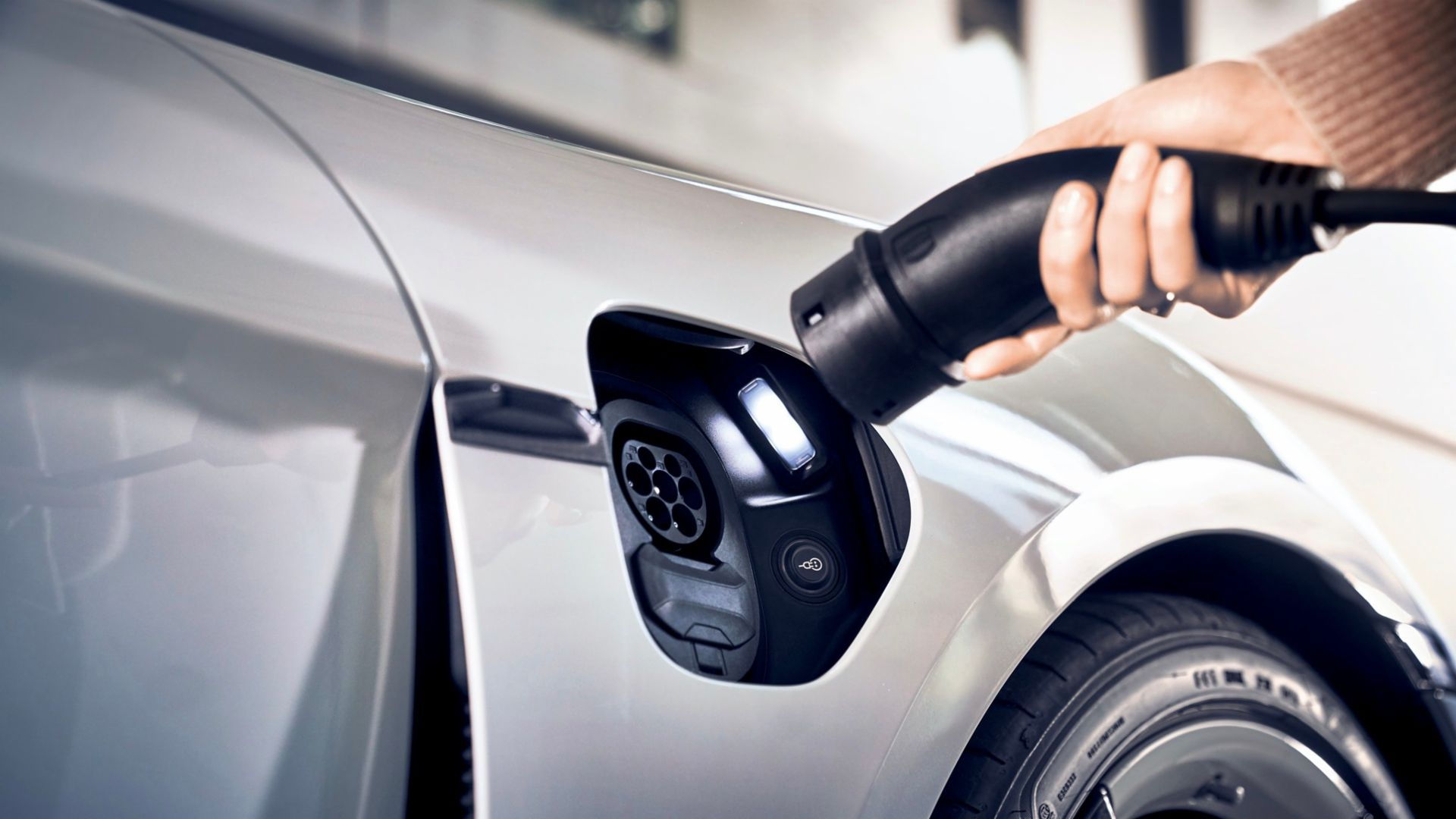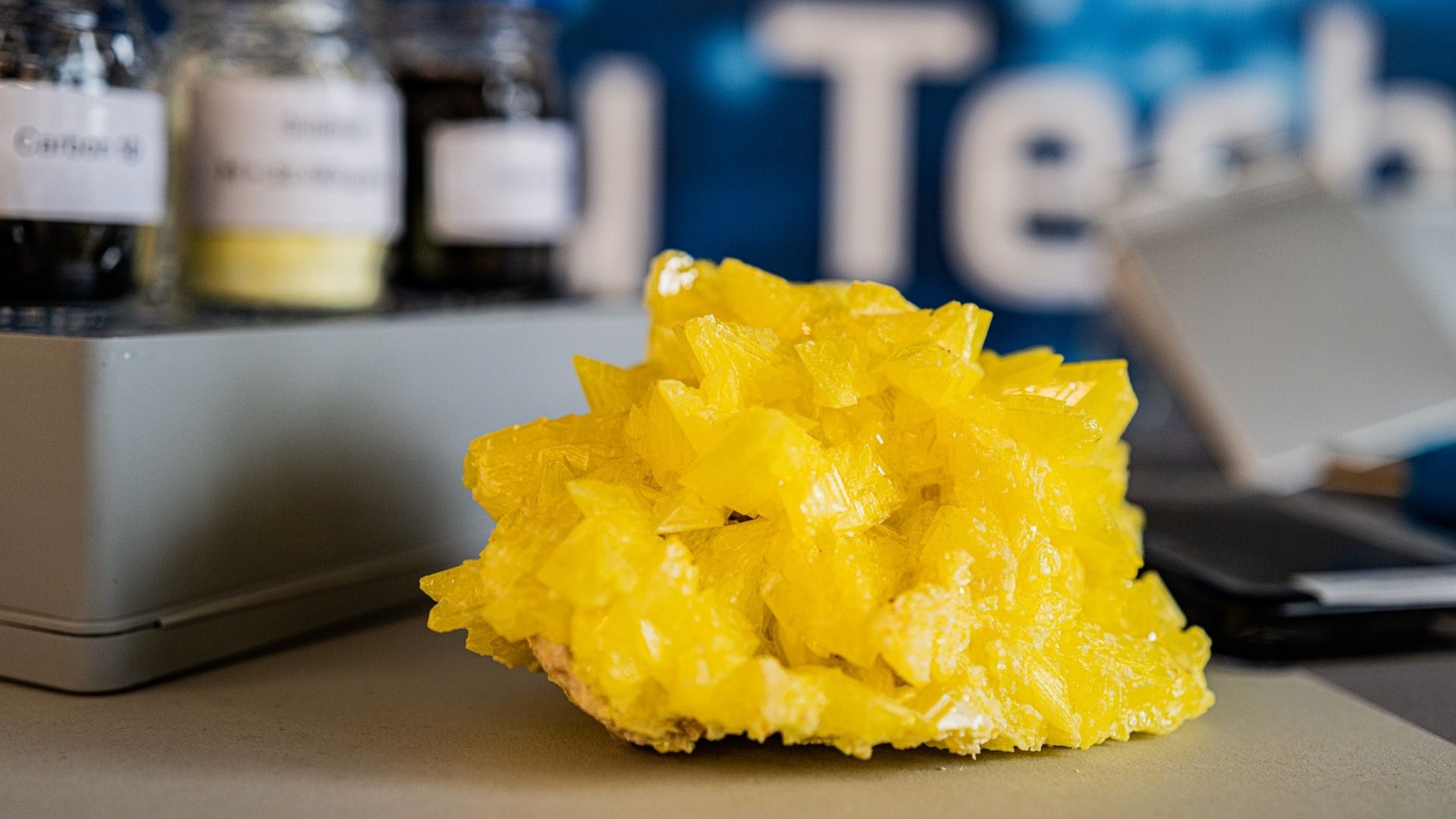
It's almost the size of a misshapen softball, but it may be the charging combo you will have to use for quick charging on future electric cars.
The U.S. Society of Automotive Engineers (SAE) is in the process of expanding its J-1772 standard for an electric-car coupler from the current round plug-and-socket fitting that is now used on every electric cars sold in the U.S. except for the Tesla Roadster.
The goal is to add a standard for higher-voltage DC quick charging, allowing a single socket and plug to be used for anything from 110-Volt AC charging at 15 Amperes all the way up to a high-voltage standard sufficient to recharge 80 percent of an electric car's battery pack in 30 minutes.
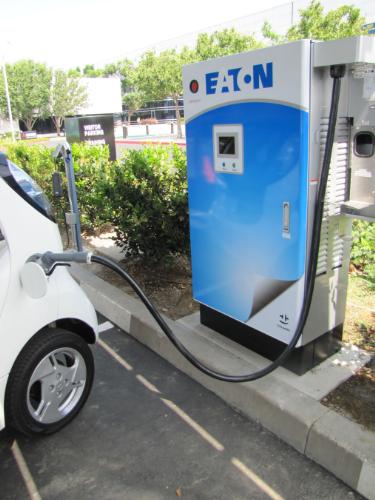
There is, of course, already an existing standard that does exactly that: the Japanese CHAdeMO quick-charge standard, already offered on the Nissan Leaf (the very popular option for 2011 will be standard on the SL trim level for 2012) and soon the 2012 Mitsubishi 'i' as well.
While there's only a single working CHAdeMO charging station in the U.S. at the moment, in Portland, more than 130 have already been installed in Japan and hundreds more are on the way.
Why not simply adopt the CHAdeMO standard, to prevent a VHS vs. BetaMax standoff? The problem, it appears, is that North American automakers don't like the idea of two separate charging ports (one for J-1772, one for CHAdeMO). They want a single, integrated coupler.
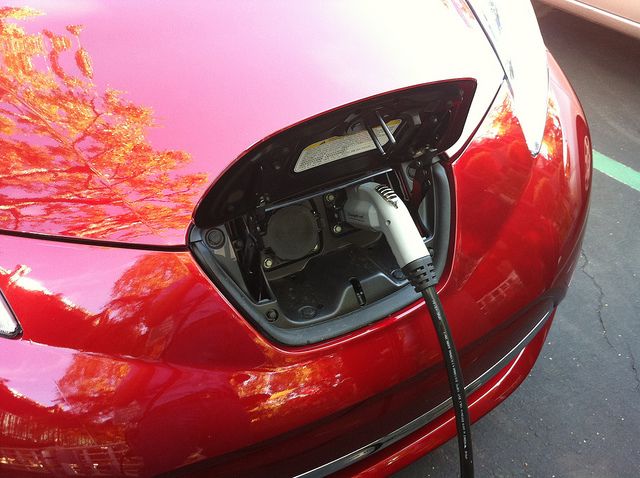
Well, the Nissan Leaf has a single door in the nose that covers its two separate sockets. And as you can see from the photo, the proposed SAE standard is essentially two plugs and sockets welded into single Frankenstein-like contraptions.
Equally as important as the coupler itself are the communications protocols behind it, which the SAE is developing jointly with the Institute of Electrical and Electronics Engineers (IEEE). The professional society defines numerous standards for electrical equipment.
Scenes from dedication of electric-car charging station at Creekside Inn, Palo Alto, CA
Enlarge PhotoAnd, to be fair, those communications protocols build on the existing J-1772 code and messaging, rather than using an entirely different digital "language" as the CHAdeMO standard does.
The SAE hopes to finalize and issue the standard in the first quarter of 2012.
Thus, it appears that the photo above shows the socket you'll get if you buy an electric car in North America in coming model years, and the plug you will have to use if you want to quick-charge.
Elegant, ain't it?
+++++++++++

Follow GreenCarReports on Facebook and Twitter.
Have an opinion?
and sockets. EV proponents haven't done a good job on this.
As a Mini-E driver I think you have it a bit wrong, that "this will be the cord you get" I can't imagine my wife weilding this plug everynight as we plug in our car.
What will happen is that this will become the standard "charge port" that will be in every car after the adoption of the standard. The home owner will continue to use the slimmer level one or level two J1772 charger to plug in.
Only the fast chage level three stations will use this beefy plug to deliver the high octane DC current to this universal dock.
Cheers Peder
Mini-E # 183, 32,000 sunshine powered miles.
This combo plug would only be used on a DC fast-charger, not on all charging stations as your article implies. Level-2 EVSEs would still use the current J-1772 connector.
I hope the Nissan LEAF can be retrofitted or an adapter made to allow DC fast-charging with the new standard.
J1772 Level 2 can handle 15 to 80Amps.. so there is upside for 240V Level2 EVSE to charge up to 19.2kW (240V x 80A) in future premises/EVSEs/PEVs. For eREVs/PHEVs, an 80A @ 240V 19.2kW ac level 2 charge rate is plenty fast.. it will charge a Volt nearly as fast as a ChaDeMo on a Leaf. (20-30 minutes).
So, I think the Combo J1772 will be used in limited applications for DC fast charging of Fleets, and maybe in some paid public charging stations. And yes, the OEMs would seem to not like the much larger doors that 2 connectors require.
Most people, I would venture a guess, have never actually seen the CHAdeMO plug and charger much less used one. I suspect I am one of the very few who have, as a private driver, actually used this technology. Yes, it works, and I don't fully see why it is necessary to "reinvent the wheel," BUT talk about clunky and heavy.
The CHAdeMO handle is much more bulky and clearly from my experience harder to use than this SAE design. I have been a strong critic of the SAE perceived need to develop their own design, but clearly the SAE design would be both easier to use and allow for a single smaller plug opening/port area on the side of the vehicle.
I will reiterate what others have said, you will NOT use this combo cable very often, if at all.
Personally, I like it. Well, at least I like it compared to the LEAF approach to the problem. Over the long term, we will be better off. Charge forward SAE.
Question is, what do the Japanese makers do now? Offer different ports for US cars, or switch over to the SAE standard? Or, fight on with CHAdeMO?
Too bad this couldn't have been settled a few years ago.
Just when folks forget GM's attempt to destroy competition we have the FrankenPlug. 6 decades ago GM (& Firestone) bought up all the electric trollys for the purpose of selling buses. After all, you buy all the trollys and CRUSH them - the public has to ride on GM buses with Firestone tires. Wind forward to the 90's and the early 2000's and GM is at it again trying to destroy the future ah la crushing EV1's. Now GM works to crush the re-introduction of EV's ah la FrankenPlug. The goal is simple. At worst GM/SAE hopes to make the 1st 10,000 new EV's with a REAL working standard, completely incompatible with the non-existent U.S. EV plugs. FrankenPlug; you're kidding. Hey GM: Work on LOAN paybacks & leave working EV's alone! Jerks
Have an opinion?Join the conversation!