Could Small 2015 Chevy City Express Van Offer...
2013 Nissan Leaf: Driven Through Tennessee...
Gasoline, Diesel, Hybrids And Plug-Ins: The...
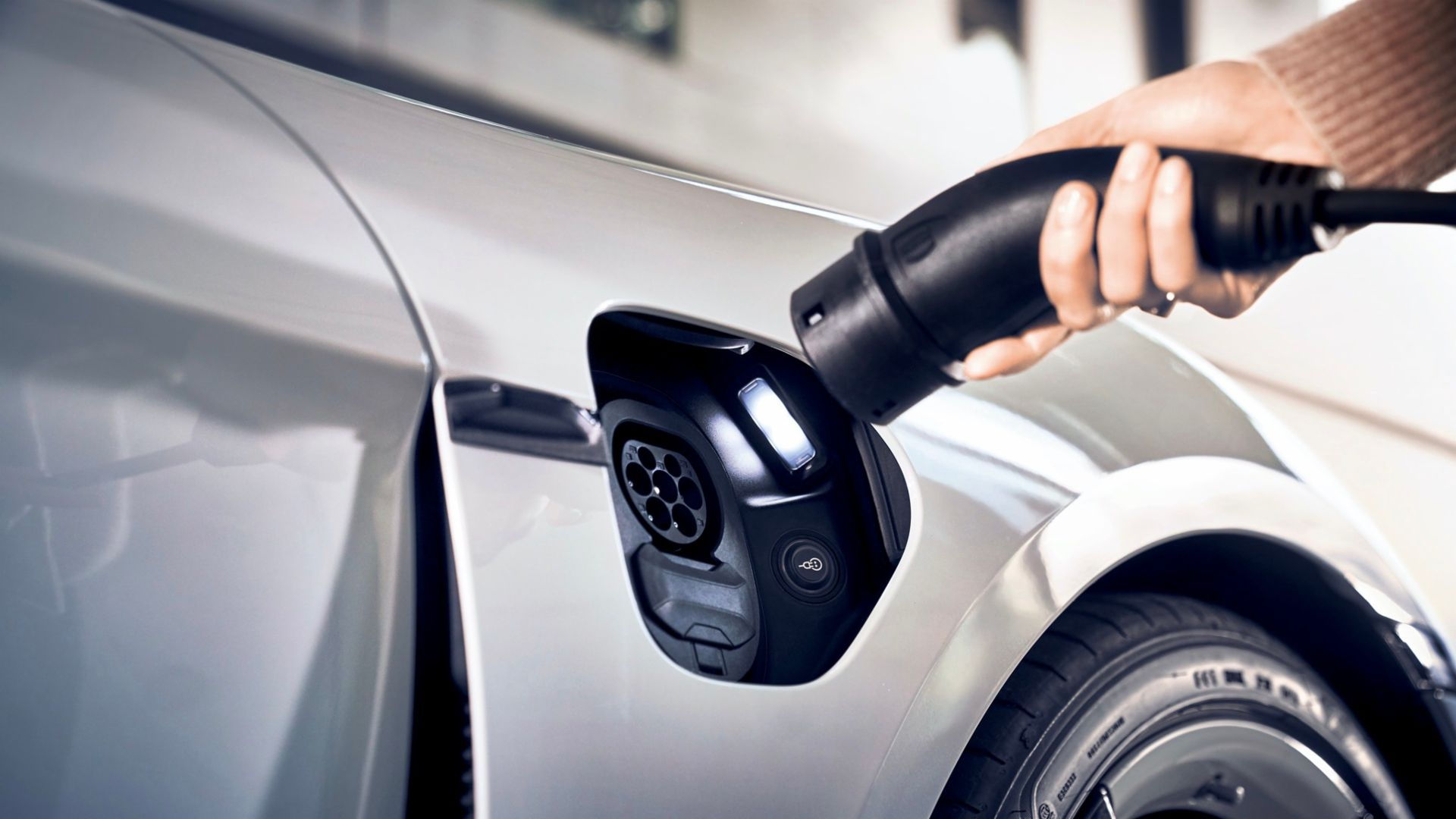
After months of planning, the next-generation J1772 electric car charging standard has been approved by the Society of Automotive Engineers.
As expected, it is based on the current J1772 Level 2 charging connector found on cars like the 2012 Nissan Leaf and 2013 Chevrolet Volt, but adds direct current capability.
Unlike the Chademo rapid charging standard currently found on cars like the 2012 Mitsubishi i and Nissan Leaf, the new ‘combo connector’ combines direct current fast charging and regular level 2 charging in one unit.
The result is a charging plug and socket combination which isn’t exactly pretty, but for the first time officially defines a rapid charging standard for U.S. electric cars.
If you’re confused, you’re not alone.
Although the number of Chademo direct current rapid charging stations in the U.S. has been steadily increasing, the SAE and its members decided the concept of two individual sockets wasn’t a good idea.
According to previous reports, Automakers in the U.S. believed that a single charging connector would allow for cleaner car design, meaning the Japanese Chademo system wasn’t suitable.
The new standard also allows for backward compatibility with existing level 2 charging stations.
In fact, the top half of the new combo connector is identical to existing level 2 charging sockets, allowing car fitted with it to charge at level 2, 240-volts when a rapid charging socket is not available.
The publishing of the new SAE J1772 rapid charge standard marks the third concurrent rapid charging technology now being pushed in the U.S., alongside the Japanese-designed Chademo and Tesla-only Supercharger systems.
Let the battle of rapid charging--and the confusion of regular electric car buyers--begin.
+++++++++++

Follow GreenCarReports on Facebook and Twitter.
Have an opinion?
The first vehicle to use it will be the (compliance car) 2013 Chevrolet Spark EV, and I believe there are at least four other models that have been announced to incorporate it.
http://media.gm.com/content/Pages/news/us/en/2011/Oct/1012_SparkEV/_jcr_content/rightpar/sectioncontainer/par/download_0/file.res/Spark_Cutaway.jpg
I don't think it looks as bad as "some people." :)
https://lh5.googleusercontent.com/-QZEz5X08DUY/TpXrrFjn1xI/AAAAAAAABqs/uFW6Gpzg6-0/s800/sparkJ1772hybrid.JPG
I can't see J1772 being adopted in Europe, where 3-phase AC is ubiquitous (Mennekes anyone?). And why exactly would CHAdeMO deployment be a "big concern"?
"Oh no! Those quick-charging stations are popping up left and right! Quick, let's start designing purposedly incompatible vehicles! Our customers will love that"
And with the combined weight of U.S. and German auto industries behind it, it is likely to pose a formidable threat to the early position established by CHAdeMO.
Now, German vs Japanese: while Nissan's plans are quite clear (in term of volume), I don't know much about BMW's or VW's. Any insight?
To get an idea of market penetration, here are Germans vs Japanese (+Swedish, Volvo is a CHAdeMO member) cars sold in the US in 2012 so far (from www.motorintelligence.com): 875k vs 3.8M, or almost 4 1/2x more.
EVs: 700 leases (non-fast-charge-capable ActiveE) vs 15.5k mostly sales (15k Leafs, 500 Mitsu i).
...Doesn't this put the SAE plug squarely on the same shelve as Betamax from the get-go?
U.S. & German makers take the view that while Nissan may be out in front on battery-electric vehicle volume, they're happy to let Nissan take that risk--as they were with Toyota on hybrids. Opinions will vary, of course, on whether that's wise for the long term.
But they know they have to sell some number of battery-electric cars in the future--for CARB compliance if nothing else--so they have created a fast-charging standard that's technically better (they say) and shares communications protocols with today's J-1772 Level 2 chargers (a plus).
If that ALSO happens to cut Nissan's quick-charging plans off at the knees, well...sometimes that happens to first movers.
Compared to CHAdeMO, the new SAE uses HomePlug power-line communication instead of an automotive-grade fieldbus (CAN), and does away with some isolation requirements, which IMHO makes it inherently more problem-prone and less safe, certainly not superior technically.
Re German manufacturers "swamping" Japanese ones in the US: again, how could they when they sell 4 to 5x less cars?
Toyota, Honda, Mazda, Subaru, Mitsubishi, Volvo are all CHAdeMO members.
Before you buy the SAE spin on all this, check out the other side too:
http://www.chademo.com/pdf/Brochure_SHORT(10.08).pdf
But, again, the sales of plug-in cars in their first 20 months on sale in the U.S. bears little resemblance to the mix in, say, 2020. That's why I say this is a long game. Nissan and GM may have early mover advantage, but there will likely be others--potentially VW, for instance--who are also selling noticeable volumes.
And if I recall correctly, Betamax had an early lead over VHS in the videocassette format wars. We know how that ended up.
[continued ... 1 of 2]
But in talking to companies across the entire industry, I'm hearing some increasingly angry, frustrated Japanese companies convinced they've been ganged up on by the rest of the world.
They feel their early success was deliberately targeted by a competing standard backed by companies who wanted to orphan those first few years' worth of plug-in car adopters.
And I'm hearing quietly confident U.S. and German companies who believe that in the end, their standard will be the dominant one.
Time will tell.
It would seem that clever work would let you get there, and it would be a cheap install, and then make the chargers on the cars smart enough to recognize if they were getting J1772 or 3Phase.
I imagine, eventually, it will come with a "split" configuration where AC and DC are plugged in seperately...
The thing is that the German manufacturers don't consider it their job to provide the charging poles. Where as companies like Nissan are spending millions on placing charging poles with their Chademo connector.
Had just US manufacturers backed the SAE plug I think it would fail. The Germans make it interesting as it gives the SAE standard a foothold in Europe.
The additional cost of AC/DC conversion circuits would likely preclude use of the combo connector with home chargers. Using faster charge DC on-the-road is more pratical, but will public charge stations also support the majority of EVs with existing Type II J1772 plugs?
And the combo connector isn't envisioned for home usage in the short or medium term. It's simply the way that widepread quick charging will be rolled out in the U.S. and Europe over the next decade.
And as I understand it, those will be entirely separate from the Level 2 stations now used with today's plug-in cars with J-1772 connectors.
Have an opinion?Join the conversation!