Advertisement

U.S. Carmakers To Japan: Don't Need Your Stinkin' Fast-Charge

 
Follow George

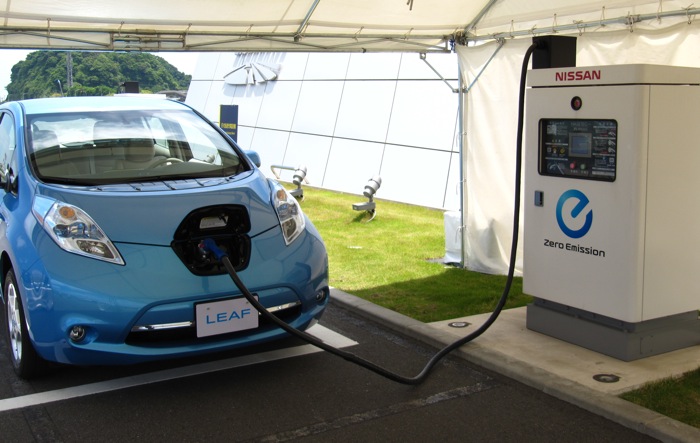
2011 Nissan Leaf at quick-charging station

2011 Nissan Leaf at quick-charging station

Enlarge Photo

Related Photo Galleries


See more photos »

So you bought a 2011 Nissan Leaf, and paid for the optional $700 quick-charge connector.

Now you're able to get an 80-percent battery recharge in just 30 minutes, albeit from very few places right now. Promising, right?


Not so fast, sonny. It appears that U.S. makers of electric cars are likely to adopt a completely different quick-charge standard, one that will be used solely in North America.

The likely standard won't be compatible with the "CHAdeMO" quick-charge hardware in your Leaf, or any of the other Asian electric cars that offer it.

So Nissan Leaf owners and those with other new electric vehicles that contain a CHAdeMO upgrade for fast charging may find themselves locked out of the U.S. rollout of such chargers.

Public Charging Station for electric cars, courtesy Mitsubishi Motors

Public Charging Station for electric cars, courtesy Mitsubishi Motors

Enlarge Photo

Today, the 2011 Nissan Leaf, the 2011 Smart ForTwo Electric Drive, the upcoming 2012 Mitsubishi "i," and the 2011 Coda Sedan are equipped to charge at 110 Volts and 240 Volts with a universal connector.

That connector is usually known as J-1772, for the standard number assigned to it by the U.S.-based Society of Automotive Engineers (SAE).

On the 2011 Nissan Leaf, a second charge port called CHAdeMO is offered that permits DC high power charging, which gets the vehicle up to an 80-percent charge in 30 minutes or less.  

In some areas, the Leaf quick-charge port is provided free as part of a national "EV Project" program. But most buyers pay the standard $700 accessory charge for that upgrade.

As of this month, only a single functional CHAdeMO charger exists anywhere in the United States. It's in Portland, Oregon, as reported by Rick Durst of Portland General Electric.

But in Japan, the CHAdeMO format is a national standard. More than 130 such recharging stations already have been installed (as shown on Google Maps for Japan), while the U.S. is still debating the adoption of a final quick-charge (or L3) format.

Sign on Vacaville, California, DC fast charger for electric cars, May 2011

Sign on Vacaville, California, DC fast charger for electric cars, May 2011

Enlarge Photo

According to Adam Egbert of California electric utility Pacific Gas & Electric, the Underwriter's Laboratory has not yet certified the CHAdeMO charging station as an approved piece of hardware.

That's why the second such charging station in the country, in Vacaville, California, has been taken off-line by PG&E, which installed it just a few months ago as part of an early "test program."

Yesterday, Craig Childers of the California Air Resources Board (CARB), said it appears that the U.S. is strongly leaning toward adopting a non-CHAdeMO charge format quick charging electric and other plug-in vehicles.

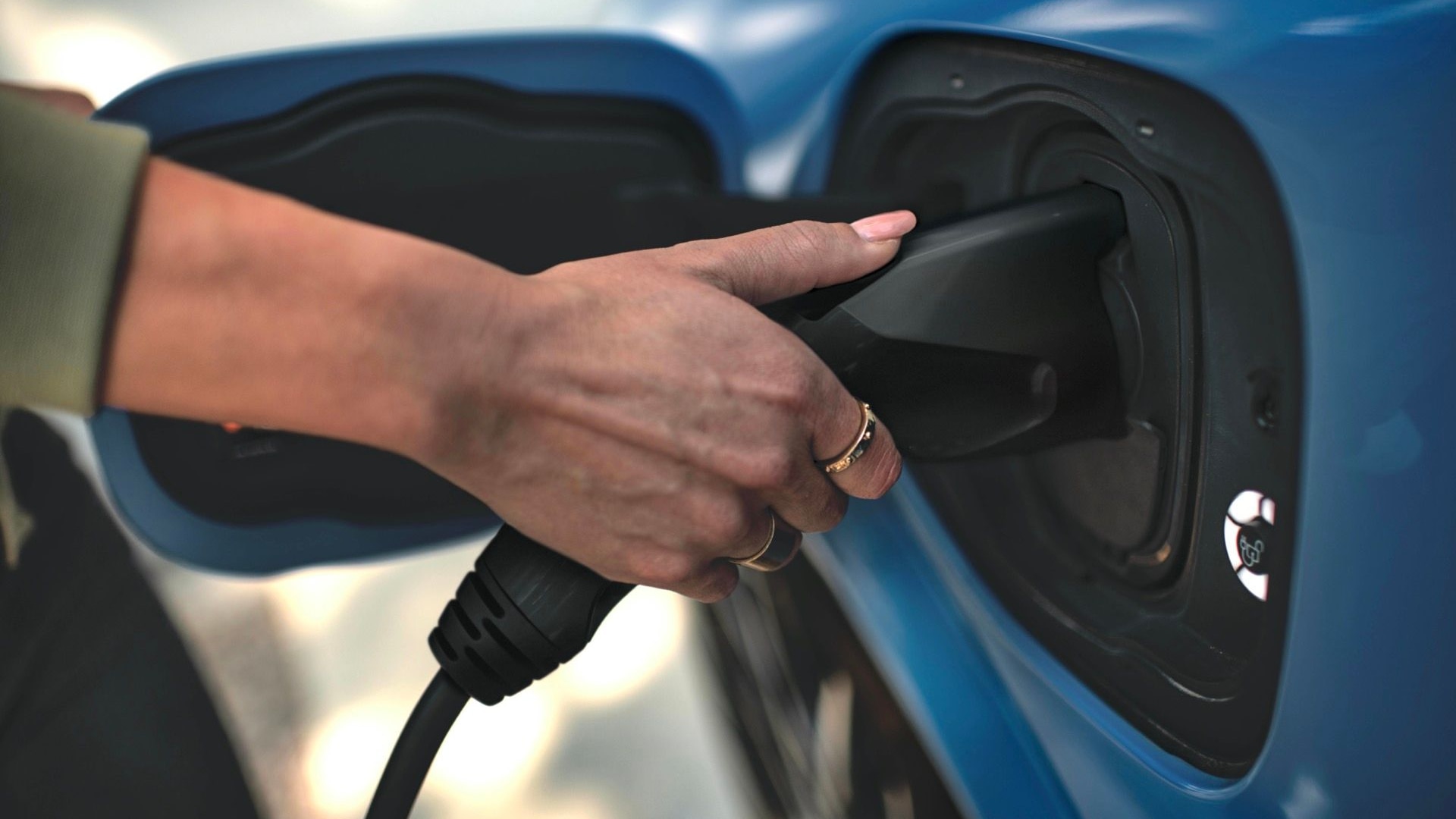
That format will be based on an SAE recommendation that provides for a single, multi-function, interface built into the car, rather than the two separate plugs now present when a car has both the CHAdeMO and J-1772 connectors.

"Automotive companies are lobbying for only one opening for powering the car," Childers said, "to allow for cleaner design."  

The SAE format has a J-1772 connector embedded in the center of a slightly larger array of input pins which would all be enclosed by the fast charge handle surround. It would provide the same 30-minute recharge to 80 percent of battery capacity.

While this is not yet a "done deal," according to Childers, it would mean that early CHAdeMO adopters would have to hope that their automaker would offer a retrofit for their vehicles if the new standard comes to pass.

So, for those Nissan Leaf owners who want to retain the ability to quick-charge their cars as they sit, this is the time to speak up.
 
Follow Us


Have an opinion?

  • Posting indicates you have read this site's Privacy Policy and Terms of Use
  • Notify me when there are more comments
Comments (38)
  1. . More than 130 such recharging stations already have been installed
    Um, according to CHadEMO website, the numbers is way over 600.
     
    Post Reply
    Vote
    Bad stuff?

  2. I wonder if the US Automakers will find it in their convenience to announce their final decision in time for Tesla's Model S to make use of any standard (scheduled to go in production in mid-2012), as there seems to be no published intent to build an EV with fast-charging port by any of the big-three Detroit-based automakers, as far as I have read so far.
    Until recently, it would have seemed that CHAdeMO is a possible choice. Why does this information reach us only from a CARB member?
     
    Post Reply
    Vote
    Bad stuff?

  3. There actually is a lot of similarity between the CHAdeMO plug and the proposed J1772 Level 3, with the exception of less pins (bi-directional communication with the vehicle). It may be nothing more than a receptacle change in the vehicle to switch to it.
     
    Post Reply
    -1
    Bad stuff?

  4. "It may be nothing more than a receptacle change in the vehicle to switch to it."
    Yes, also some of the fast-charger manufacturers have announced that their equipment can be retrofitted. (Although I'm not sure in how far this would apply to others.)
     
    Post Reply
    Vote
    Bad stuff?

  5. FYI, there's also one in Texas: http://tinyurl.com/3b6emqk
    @eletruk "It may be nothing more than a receptacle change in the vehicle to switch to it."
    Unfortunately it's not. CHAdeMO and the SAE proposal use different communication protocols. So some electronics would have to be exchanged as well.
    '"Automotive companies are lobbying for only one opening for powering the car," Childers said, "to allow for cleaner design." '
    Then they should have gone with this for the global standard: http://tinyurl.com/3zd37qw
     
    Post Reply
    Vote
    Bad stuff?

  6. Comm.protocol might be just software... how could you tell with so little known about the SAE internals? Are there new docs?
    For related interest, this appears to be a map for Japan's deployment ("CHAdeMO Nissan")
    http://maps.google.co.jp/maps/ms?hl=ja&ie=UTF8&brcurrent=3,0x34674e0fd77f192f:0xf54275d47c665244,0&msa=0&msid=208935539001080011939.000498d3b0c00da682d39&ll=35.817813,136.362305&spn=19.340313,43.286133&z=5
     
    Post Reply
    Vote
    Bad stuff?

  7. ...especially since communications seem to got through the J1772's AC Level 2 part...
     
    Post Reply
    Vote
    Bad stuff?

  8. First standard to be widely adopted becomes THE standard. SAE had its chance but delayed and now is too late to have any influence. There won't be any US cars with any fast charge port for a few years. Meanwhile $100M DOE grant to EV Project will spread CHadEMO widely, and thousands of Nissans will use them. Finally when Ford and GM produce an EV with fast charge port it will either be CHadEMO or an upward compatible extension of CHadEMO endorsed by SAE.
     
    Post Reply
    +1
    Bad stuff?

  9. I really object to the immature and rude title.
    EVs are a great thing and the coming technology. It will be possible to convert CHadEMO chargers to the J1772 standard as there is no difference in the power capabilities, just the programming and connector. In fact both standards could be supported from one charger.
     
    Post Reply
    Vote
    Bad stuff?

  10. @Roy_H: As the High Gear Media editor who edited George's article, I'll take responsibility for the title. While this site's readers are far more knowledgeable about electric cars than the public at large, we try to make articles more broadly appealing, essentially to make the largest possible audience aware of the many issues around EVs and their rollout. That was the purpose of that particular headline.
    It is, by the way, a reference to a very famous line in "The Treasure of the Sierra Madre" from 1948: http://en.wikipedia.org/wiki/Stinking_badges
     
    Post Reply
    Vote
    Bad stuff?

  11. correction: Rick Durst works for Portland General Electric, not Portland Gas & Electric.
     
    Post Reply
    Vote
    Bad stuff?

  12. Having different connection types in different countries seems to be a waste of money for the car makers which will be passed onto the consumer. . It does seem However that have one connection on the car would make more sense.
     
    Post Reply
    Vote
    Bad stuff?

  13. @Patrick,
    Yes, I got that utility wrong after always seeing it as PGE and then using our California area service as the translation. Thanks for the headsup on that.
    @reader..
    "600" is clearly consistent with "more than 130" as I noted, and in the Google maps representation I counted the locations up to around 80 and then was only about halfway through the country, so projected a "safe number."
    @Roy H.
    As John Voelcker recognizes the form of the headline that appeared was different than what I submitted, but we walk a fine line between getting a potential reader's attention and never having them link to the full article.
    Thanks to all of you for your feedback....and interest.
     
    Post Reply
    Vote
    Bad stuff?

  14. This is from the CHAdeMo website:
    ---
    The number of CHAdeMO DC Quick charger installed up to today is 747
    -- (Japan 656 Europe 87 Other 4) last update 2011.5.12
    ---
    Although I think some percentage of those are not public (but private fleet or so), I think this proves (more or less) that installing such a network is possible and practical, and it was apparently done in a relatively short amount of time.
     
    Post Reply
    +1
    Bad stuff?

  15. @Norbert,
    Wow, that Japanese number certainly makes the US effort even more obviously ineffective and delayed.
    One possible explanation for this US "delay" could well be that the suppliers here are waiting for that actual US final adoption before installing units only to have to retrofit them?
    But as several have observed and my informants also suggest "it should be relatively easy to modify an installed CHAdeMO charger unit to another generally similar standard. But it would sure be nice to have more of those DC quick chargers around for the increasing number of Leaf and soon Mitsubishi "i" drivers.
     
    Post Reply
    +1
    Bad stuff?

  16. electric cars saves earth's environment
     
    Post Reply
    Vote
    Bad stuff?

  17. As long as it take more time, and ridiculously cost more, the standards issue is just about to put a spoke in the EV wheel, IMHO.
    The US car makers are oil sluts.
     
    Post Reply
    +3
    Bad stuff?

  18. Don't you actually have to produce an electric car before you can claim that you are a U.S. maker of electric cars? Seems this is just a way for US manufacturers who have failed to have the guts to jump on the EV bandwagon early on, to try to torpedo those who had the nerve and foresight to get in the game. I bet when those GM execs were hat in hand in front of the US congress asking for a bailout, they didn't mention they had crushed the future of their company along with the EV1. Now they've missed the boat again and are playing a dirty game of catch up.
     
    Post Reply
    +2
    Bad stuff?

  19. People! Do something about this: write to your representative and let them know that the lack of vision for electric cars by US automakers should not be the burden of the american consumers who believe in electric cars.
     
    Post Reply
    +2
    Bad stuff?

  20. Not too worried about it. Won't cost much to retrofit the plug. You can't just add a fast charge capability to a Leaf however. You have to order that as an option because there are too many things that have to be installed to handle that much power besides just a plug.
    I'm having trouble deciding which car to get, Leaf or I.
    http://biodiversivist.blogspot.com/2011/04/leaf-or-miev-which-should-i-buy.html
     
    Post Reply
    Vote
    Bad stuff?

  21. Mr. Parrott, exactly how many "U.S. makers of electric cars" are there? Chrysler? - nope. Ford - has plans to sell Ford Focus Electric with availability by late 2011. That leaves General Motors. While GM would have advertising recipients believe that the Chevrolet Volt is an extended-range electric car, Toyota is calling their upcoming Plug-In Prius a Plug-In Hybrid. The Volt's much smaller battery (than the Nissan LEAF, for instance) is designed to supplement the gas engine - not the other way around, as Chevy would have us believe. It's no wonder that "U.S. makers of electric cars" are in no hurry. They have nothing to offer currently.
     
    Post Reply
    +2
    Bad stuff?

  22. You know, things like this are practically the only good reason for having a government in the first place - but standards have been avoided by govts like the plague, leaving the consumer with Betamaxes, 8 track and 4 track tapes, etc. etc.
     
    Post Reply
    Vote
    Bad stuff?

  23. @Ernie Hernadez: Since Mr. Parrott has a Volt he understands that it's an electric car, which would give him a leg up on. FYI, to date the battery in my Volt -- which you say is designed to "supplement" the gas engine -- has powered my Volt for 138 miles for every one mile powered by the engine. A ratio of 138:1 is one heck of a "supplement", don't you think?
     
    Post Reply
    Vote
    Bad stuff?

  24. @Earnie,
    As DonC has noted, but I will try to make even more clear...The gas engine in the Volt is actually the "supplement" to the battery pack. For almost all of DonC's driving he has been totally electric powered. We make frequent trips between Sacramento and the south side of San Franciso with our Volt, and only the first 40 miles or so of those are fully electric, so we have a bit over 4000 miles on our red Volt and are at a cumulative 98 mpg. Yes, we have used some fuel, but only about half of what we would have used in our previous Prius, and virtually every daily drive around Sacramento is fully electric, so we contribute zip in the way of exhaust emissions into Sacramento's horrible air quality basin.
     
    Post Reply
    Vote
    Bad stuff?

  25. I thought the EvGo stations in Dallas and Houston (only 1 so far) included CHAdeMO as well. If so, then there should be one live at that Walgrens store in Dallas. Anyone know?
     
    Post Reply
    Vote
    Bad stuff?

  26. @SeattleBlueLeaf
    According to Dave Knox of Texas based NRG, neither of the "installed" CHAdeMO units ready to go in Texas are operational, as they are awaiting UL approval, as is the unit in Vacaville, CA. This was as of 5/16/2011 at 9:15am anyway.
     
    Post Reply
    +1
    Bad stuff?

  27. If this would happen here in Europe, we in Portugal would be screwed!!! The government already installed more than 1300 charging points...
    Check it out here:
    http://www.mobie.pt/en/pontos-de-carregamento
     
    Post Reply
    +1
    Bad stuff?

  28. My experience with my Volt has been very similar to DonC's and George Parrott's. My first OnStar report was something like 3300 miles on electricity and 600 miles on gas. Supplement? I don't think so, LOL. That said, this issue is obviously immaterial to me, but 28+ comments is pretty cool anyway. Good job George! #1756 in SoCal
     
    Post Reply
    Vote
    Bad stuff?

  29. I think the wording with "supplement" wasn't quite on the point, which I'd think would be that the Volt can be operated as a fully functional ICE, only from gasoline, but for an EV the range (35 miles EPA) is not good enough to be operated purely from electricity. There may be cases where ratios like 1:138 or 1:98, as above, are achieved, but in those cases one would think that a LEAF might do the job as well, or at least a LEAF with a larger battery for the about $8.000 the Volt costs more. Situations with a ratio of 600:3300 seem a much better application for the Volt, given the current lack of a fast-charging network (and/or the lack of larger range batteries).
     
    Post Reply
    Vote
    Bad stuff?

  30. @J.Alves
    What are the charging plugs in PT? Are they using IEC standard type 2?
    en.wikipedia.org/wiki/VDE-AR-E_2623-2-2#Type_2_-_VDE-AR-E_2623-2-2
    Type 2 provides both simple and fast charge in a single plug design.
     
    Post Reply
    Vote
    Bad stuff?

  31. Hi, all of you wanting all electric now. I have owned my volt for three months now and I have only purchased gas Twice. Total 16 gallon. The tank only holds 9 gals.
    Most all days I drive for $1.90 electric Cost or less.
     
    Post Reply
    Vote
    Bad stuff?

  32. This would be absurd: CHAdeMO is currently the only worldwide standard for DC fast charging.
    The plug is reasonably light and probably a lot cheaper and less bulky than the US design.
    US industry was too slow and has therefore has missed the DC charging train.
    Lets hope it will try to catch up with other innovations, instead of destroying the only workable DC charging standard...
     
    Post Reply
    +1
    Bad stuff?

  33. Re: Ernie Hernandez, the Th!nk is assembled in Indiana with a battery made in the US, no other EV can claim that. There is no wait list, ours arrived in NC three days after we ordered it. It could be argued that TH!nk is a US car maker, although technically the US owners are less than 50%.
    Mr Parrott mentioned four EVs only two of which are actually available in the US. The Leaf has a long waiting list. The 4 year lease on the Smart ED costs more than purchasing the Th!nk outright with only the Federal tax credit. Performance of Smart ED and Th!nk is similar, but Th!nk has a cubic meter of cargo space.
    What is with the omission?
    www.thinkev-usa.com is shipping to all states now (at least the lower 48)
     
    Post Reply
    Vote
    Bad stuff?

  34. @Jim McL
    Scheduled for 2012, the US-delivered Leaf as well as its battery will be assembled in Tennessee, if that matters to you.
     
    Post Reply
    +1
    Bad stuff?

  35. Norbert- yes that matters to me. I had not heard that they were going to assemble the batteries in TN though. But personally I have never liked Japanese cars, and I suspect that Nissan is dumping at that price.
    But after all the problems we had with the Mini E (and don't get me wrong, we LOVED the Mini E) the factor that weighed most heavily was Th!nk's 20 years of experience with EVs and the reports from the thousands of generation 4 Th!nk drivers who say the Th!nk is the most reliable car they ever owned.
    The no rust no dent no scratch plastic body panels made the Th!nk a slam dunk. My 15 year old Saturn has plastic body panels and looks great.
     
    Post Reply
    Vote
    Bad stuff?

  36. "When it opens in 2012, the 475,000 sq.-ft. factory will be the largest of its kind in the United States, with a production capacity of 200,000 batteries per year." (plugincars.com)
    (Personally, I'm interested in Tesla's upcoming cars, but EV is EV. :)
     
    Post Reply
    Vote
    Bad stuff?

  37. I had skipped over that article, I assumed it was talking about the auto factory. I thought Nissan bought batteries from Compact Power or Panasonic or some other supplier who was building a factory in Michigan. My bad.
     
    Post Reply
    Vote
    Bad stuff?

     
  38. Beta or VHS, please just agree so all EVs will have the same L3 Fast Charge port. It's very important to agree and have 1 standard.
    PS I've heard the chademo has a right to use of $2,500 and J plug is only $240 so I go for the no right to use fees!
     
    Post Reply
    -1
    Bad stuff?


Have an opinion?Join the conversation!

Advertisement
Advertisement

Find Green Cars

Go!

Advertisement

 
© 2013 Green Car Reports. All Rights Reserved. Green Car Reports is published by High Gear Media. Send us feedback. Stock photography by Homestar, LLC.