Tesla Road Trip from MD to CT, Feb 2013 - Tesla Model S cars at Delaware SuperCharger location
Enlarge PhotoPoring over monthly sales figures for plug-in electric cars--and our six-month summary--the data points out an unexpected fact.
Did you know that pure battery-electric cars actually outsold plug-in cars that also have engines?
From January through June of this year, the combination of 9,839 Nissan Leafs, 882 Mitsubishi i-MiEVs, and approximately 9,400 Tesla Model S cars (plus 1,700-odd compliance cars and others) exceeds the total of 18,335 plug-in hybrids and Chevrolet Volt range-extended electric cars.
Slightly different six-month sales totals from the Electric Drive Transportation Association tell the same story.
EDTA reports 22,712 battery-electric cars (we presume they use different estimates for the monthly sales that Tesla doesn't report) against the same 18,335 plug-in hybrids and range-extended electrics that we tallied.
2013 changes everything
That wasn't what happened in 2011 or 2012.
And according to market analysts, that wasn't how it was supposed to happen, either.
The long-held assumption has been that the limited range of battery-only electric cars would doom them to permanent second-class citizenship.
To alleviate range anxiety, even the most avid electric-car advocates would opt for a car whose gasoline engine provided the ability to travel hundreds of miles without waiting hours to recharge.
If you simply look at the Nissan Leaf--by far the bulk of the affordable battery-electric cars--that's largely true.
All about Tesla
All of the difference, of course, comes from Tesla Motors [NSDQ:TSLA].
A year ago, the company had barely delivered its first production Model S--and few analysts expected it to achieve its long-held goal of selling 20,000 or so cars a year.
We won't learn the final Model S second-quarter sales total until sometime next month, when Tesla issues its quarterly results.
But the company appears to be on track to hit 20,000 sales globally, once cars now en route to Europe start adding to continuing U.S. sales.
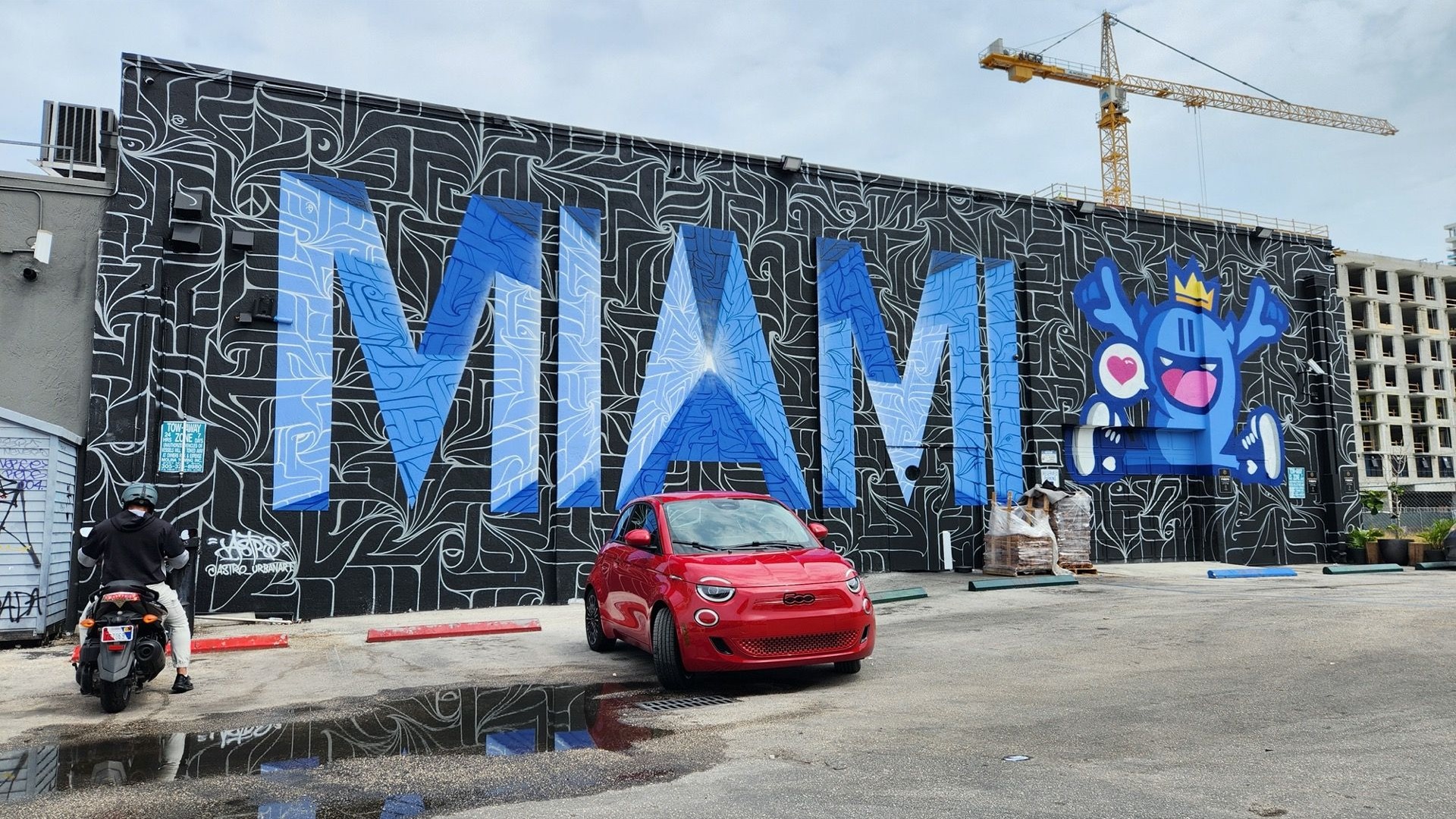
Three new plug-in cars remain to hit U.S. dealers between now and December: the Fiat 500e (this month), and both the 2014 Mitsubishi Outlander Plug-In Hybrid and 2014 Cadillac ELR sometime before the end of the year.
But we don't think any of those three will move the needle appreciably.
Which plug-in predominates?
What will largely determine the ratio of battery-electric to plug-in hybrid vehicles is how aggressive Nissan chooses to be on Leaf sales for the rest of the year.
It has averaged roughly 2,100 sales per month since U.S.-built 2013 Leafs started shipping in volume last March--but could it up that to 3,000?
We're frankly not sure what the balance will be a year from now. But what do you think: Will battery-electric cars (led by Tesla) continue to outsell plug-in hybrids?
Leave us your thoughts in the Comments below.
_______________________________________________

Follow GreenCarReports on Facebook, Twitter, and Google+.
I believe that with the BMW i3 in 2014, Gen 2 cars from Nissan and Chevy in 2015-16, Tesla Model X in 2014 and their gen 3 car in 2016, That I have a cracking good shot at a free dinner in 2020.
I will need a little help on the cost of gasoline side and a minor advance on battery tech but I remain confident in my longshot prediction of 50% hybrid, diesel, plug-ins, and other not gasoline modes by 2020.
Sometimes long held assumptions are wrong. It will be fun to see the next several years role out.
I'm still confident that less than 50 percent of total U.S. vehicle sales in calendar 2020 will be BEVs + EREVs + PHEVs + hybrids + diesels + NGVs. :)
thank goodness for nissan.
here is the event that i think will occur that will get the other car companies on the bev-track.
and that is, i think we will see people buying up as many of nissan's bevs that they can put out. and i think we will see a hesitancy on the part of people in buying new cars.
when gm, ford, etc. realize that they are losing out on new car sales, their cars will become "uncomplianced".
and the population's desire towards bevs will depend very much on the price difference between a bev and its ice equivalent.
something else that mystifies me is why nissan wants to sell bevs, when nobody else does ?
Nissans plan is to be the top seller of BEV's by selling volume which will continue to bring down the price of the leaf. Nissan has already sold about 70,000 leafs worldwide and that number will grow now that Nissan has 3 plants (Japan, USA, England) built to produce the leaf. Nissan wants to try and stay ahead of the competition just the same way Toyota got a jump on the competition with the Prius hybrid. In the beginning Prius didn't sell well because it was pricier than ICE cars of the same size, however when gas prices spiked, Prius sales skyrocketed and the competitors watched as Toyota became the king of hybrid sales globally and stayed there for many years. Nissan has a vision for the leaf, It's already paying off.
i guess what i really meant is "why is nissan not being controlled by oil like everyone else is ?"
i think gm will step in big when they can no longer delay the snowball. and may even figure they can take over ?
ibm played that game with the pc market, and did take over for awhile, until the clones came in.
i actually care just as much globally as i do the usa - because my only interest in bevs is getting us off oil. every bev, wherever it is, helps to accomplish that task.
this point has to be overcome by consumers first, before they flock to buy them.
and if done correctly, the price drop will mirror the ability of nissan to produce them.
but it is good to know that they have or will have a capacity to produce more than they currently do.
because we do not want production capacity to be maxed out at any point in time.
which can only mean that they have definite plans of being able to drop the price enough to sell them.
Problem is, this year Nissan apparently underestimated demand for the Leaf (maybe esp the S trim?), hasn't tooled yet for anywhere near the capacity it could have, and is therefore struggling to maintain inventory.
http://insideevs.com/nissan-needs-more-leafs-now-says-it-will-take-to-late-fall-to-catch-up-to-demand/
thanks for the update.
B/c Nissan's regular ICE car portfolio sucks. It doesn't dominate ANY car segment in any way or form. So, in order to survive for the long term it has to look to the future and EV is naturally the next step.
It is about survive. All the existing automakers who are NOT fully committed to EVs are usually the ones that is doing well in the current market. Toyota is dominating hybrids and many car models. Ford is dominating Trucks. GM is doing well in China and coming back with its luxury division. European brands are all doing okay in their respective segement. Honda is doing well in crossover and sedans. Hyundai/Kia is dominating low price.
Nissan's total sales in the US is fairly lacking(around 7%) and its sales in Asia isn't strong either. It is still behind GM, Ford, Toyota, Honda, Chrysler, Hyundai/Kia. And its growth is stagnent. Comparing to BMW, VW and Mercedez, its profits margin is far lower toward the lower price segment. Infiniti is also lower than Acura, Lexus in sales...
Toyota's domestic rival, Nissan, said it saw a 5.8% y/y rise in global sales to 4.94 million units last year, its all-time high in a calendar year. Nissan's overseas sales increased by 4.9% y/y to 4.28 million units, mainly driven by record sales in one of its key markets, the United States, where sales rose 9.5% y/y to 1.14 million units.
i would guess that is why i see so many nissans, and why you are once again INCORRECT.
Not so sure about that. It is the decision makers in GM and Ford that are dragging their feet and they have already predicted that the EV will fail even so much as making decisions to ensure that result. There will be change in GM and Ford only when these decision maker nay sayers are shoved aside not a likely happening.
the whole point of the volt was to delay the ev.
i stated from day 1 that the volt is not gonna be a long-term car.
i think it is still possible for the bigwigs to kill the ev industry, if enough of them want to.
i dont know what their real long-term goals are.
but my best guess is that the current tactics are more about delay, as opposed to stopping.
but right now, the ev system is pretty much all in one basket - nissan.
it does not matter how many teslas are sold. if the ev market is to take over, it needs to reach the average joe.
we need to wait and see, but i think things look encouraging.
they will likely hit 20K units this year. not bad top line revenue.
In any case it appears that plug in hybrid and all electric are bifurcating markets. Just as we have been saying here all all along, to the wide eyed astonishment of the "mainstream" analysts.
To me it's about getting the right tool for the job. The pure EV Leaf excels in the city and avoids the complexity of a dual drivetrain. The truck is, well, a truck. I wish it were more efficient, but I chose the Frontier as the right fit for our needs. Didn't intend to be a Nissan fan, they just happened to build what I was looking for!
your considerations for a hybrid at this time is quite understandable. It will take a few more years, but battery prices will continue to drop along with all electric ranges being increased. Many people leasing electric cars now will upgrade to something better when the lease is up, then a market for used BEV's will begin to slowly emerge. I only drive 12 miles to work everyday, I would love to get a used Leaf in the future with one or two bars of battery capacity depleted for about $10,000, I could still make it to work and back for years without a recharge in between, not to mention the years of nearly maintenance free driving. Once BEV's can offer the range of a tesla for the price of an electric smartcar say bye to gas.
In my case I needed up to 80 miles per day which is why the EV was not suitable. However it is good to know there will be a resale market when the time comes. :)
Yes, we are at the early adopter part of the technology bell curve and once adoption is not an issue, the technology matures and economy of scale takes hold the prices should drop considerably. My thought is that in the long run an EV can probably be produced as cheap or cheaper than a comparable gasoline car due to the fewer parts and simpler construction. But it will take time. The new BMW EV with an optional generator is probably a potential future direction to satisfy high milers.
I'm probably like many, I would lease an EV for my commute, but I fear that after a couple of years the winter range wouldn't cover my commute. Until the stated EV range is 100 miles, giving a real-world range of around 75 miles in winter with some age on the batteries, I'm waiting.
Range extenders certainly are very effective in solving the important range issue but the dual drivetrain architecture tends to make the cars heavy, cramped on the inside and expensive. So BEVs are going strong with many models on offer, prices dropping quickly and with the mighty Model S in their ranks that doesn't have significant range restrictions.
Two new offerings that could turn things around in favour of PHEVs: Outlander PHEV that promises to be very affordable and roomy for a PHEV and maybe BMW i3 if the rumour that the limp home range extender will only add $2K to its price is correct.
1. Price. On average the price (especially leasing deal) of BEV is much cheaper than a PHEV/EREV (except for Tesla S). Most of the BEVs are sub $20K after incentives and Most of PHEV/EREV are sub $30K. Tesla S is the wild card that helped the sales of BEV due to its superiority. Not to mention that most of the state and local incentives favor BEV over PHEV/EREVs in terms of incentives and perks...
2. Choices. Currently there are more BEV choices than PHEV/EREV, especially in California.
BEV: Leaf, I, FFE, 500e, Spark EV, Tesla S, Smart EV, eRav4, FitEV
PHEV/EREV: Volt, C-Max Energi, Fusion Energi, Accord Plugin, PIP
Back in 2012, it was 5 vs.5. Now it is 9 vs 5. Choices matter.
I predicted BEVs would outsell EREVs and PHEVs when the range hits 200-300 miles. Tesla has figured this out, but other car manufacturers remain clueless. If Tesla can deliver the 1,000 mile range extender battery on the Gen III, combustion range extenders will look pretty antiquated.
The Model X (and S's) will be able to travel 80% of continental U.S. in 2014.
Taveling greater than 98% of U.S. and parts of Canada will occur before 2016. When Gen III appears (est. 2017) it will have access to this already existing range-extending infrastructure.
Nissan is rolling out similar QuickCharge infrastructure, but at a slower pace across the U.S. Oregon, Washington, and Tennessee have substantial "freeway range extenders". In Japan, and Estonia already have range extending coverage to greater than 95% of drivable destinations.
Is that 80% of the major interstate highway system or 80% of the continental US. That is a big difference...
Most of the National Parks aren't still within reach of EVs...
NOT in the national parks itself. More like National Forest or nearby RV camper area. Even those that does are powered off diesel generators which defeat the whole point of BEV and can hardly support the power needed for those.
That said, I think cost is also a major factor in this shift. Earlier this year we decided on a Leaf over a C-Max Energi because a) it was a second/third car and we had other options for long trips, b) it was priced $7K lower and the incentives and tax rebates were nearly double those available on the C-Max, and c) It met 90% or more of our daily driving needs. Surely many others made similar purchase calculations.
most households have multiple cars. you only "need" one of them to make long trips. and unless one does it often, one still may prefer to rent a car for those long trips.
there is simply more complexity in combining gas and electricity.
there are already great numbers of situations for which the current bev would meet the needs of its owner.
all the scare tactics only work at first. once there reaches enough bevs on the road, people will be able to form opinions from real life experiences of those who already own them.
this is part of the snowball process. i am more curious as to how fast the bigwigs want the turnaround to take ?
On the other hand, frankly, the Chrysler-Fiat combination has much bigger challenges than just engineering hybrids. In the U.S. Chrysler's sales are about two-third trucks (pickups, minivans + crossovers) today, so the company has to re-learn how to design, build, and sell actual CARS.
That's its immediate challenge, which will help it to achieve near-term CAFE requirements. Down the road, it will likely move into hybrids--but later than most other makers.
is chrysler one of the 2 companies that the taxpayer kept alive ?
good to know that they feel threatened enough to give my remarks bad ratings !!!
Guess not, you are just a GM hater who is disguised as a BEV supporter...
i use gm, cuz they are the epitome of it.
but if you go back thru all my posts, you will see dozens of times where i state that nissan is the only major car company that currently is pro-active.
Sure, your logic just gets better. Don't try to cover up your hate. We all know how you are. You are the one that judge the auto sales by the car around you. Nuff said there...
Mitsubishi has a 0.4% market share in the States and a vehicle known primarily for quality problems is going to change that? I could not agree less. Will Mitsubishi establish thousands of dealers, too, to actually compete with its rivals?
They were aware of Tesla's growing list of pre-orders, so factored that in but no one predicted Elon's aggressive marketing by free superchargers and unconventional sales methods (virtually no advertising and no dealerships). If you think about it, the superchargers are costing Tesla about the same as most auto companies spend on advertising. Which method generates the most sales?
How do you factor in Tesla's non-dealership direct sales? Ideally, if the government would get out of the business of mandating dealerships, and allow consumers to choose ( it wouldn't make any difference at all.
http://www.energytrendsinsider.com/2013/06/13/electric-vehicle-charging-and-the-range-anxiety-myth/
I don't think plug-in hybrids are going to be the transition car everyone thought they would be.
Owning something Electric will give you real world owner's experience so then you can make a judgement whether something called "range anxiety" affect you or NOT. It is a valid arguement.
After owning a Volt, some Volt owners don't feel range anxiety is all that scary so they are ready to buy a BEV. In a way, Volt helped moving people in BEVs. Some Leaf owners already found themselves to have issues with the range, so they either moved back to a Volt or moved forward to a Tesla.
So, I think it is important. And your naive arguements show the lack of owner's experience...
your range anxiety issue, which is only in the minds of the non-ev owner, will perish along the roadside, as more and more evs are on the road.
read the article above. listen to those who actually own an ev. they seldom, if ever, complain about range anxiety.
Range anxiety is real. There is NO reason to deny it. But as people get more familar with it and depending on the situation, that anxiety will go away.
Some Volt owners are ready to embrace the full BEV with their Volt experience. So, how is that NOT a good thing? Some Leaf drivers are ready to go back to PHEV due to the lack of range. So, it is NOT all that clear cut as you say.
Those people who actually own a BEV has a well defined role for that car that they own. That is a fact of "range anxiety" by definition.
is there anything that the volt cant do ????
I agree with you. But sorry to tell you that many people here and on the internet think that you are lying... They don't think range anxiety exist at all.
Like you said, the fact is that range anxiety is ONLY an issue if no infrastructure is in place. Gas range anxiety exist too when there aren't many gas stations around in the middle of nowhere.
The fact is that we don't have the technology and infrastructure in place for the limited range BEVs everywhere. That is why it is limited to certain "role" use.
I think instead of "denying" it, we should all work together to address the issue. Buying PHEV/EREV is one way of doing that while getting the infrastructure ready. But people like "EV Enthusiast" are still in denial.
Even that Steve Marsh guy is rethinking about his long commute with his high mileage Leaf once the DC chargers are starting to charge money and his Leaf is losing range...
If you don't drive much per day, of course a BEV is okay for most of your driving.
Anxiety is real if don't have regular driving schedule or a high mileage commute.
Everyone's situation is different.
in fact, it boils down to only 2 situations - they can use one or they cant use one.
and most people fit into the situation of CAN USE ONE.
most people also are heavily influenced by their pocketbook, as they struggle to make ends meet.
Haven't we heard about how BEV is cheaper to run. So, if they have problems, then buying a BEV will save them money. Not to mention that the current $199 lease rate will typically cover their monthly gas bill.
In fact, in CA, the state rebates and various local rebates (no income requirement) will more than cover the down payment.
I guess if you are an owner, you would have know that...
As usual, you are either only half baked or like to twist fact to prove that you are just clueless.
" Nissan's overseas sales increased by 4.9% y/y to 4.28 million units, mainly driven by record sales in one of its key markets, the United States, where sales rose 9.5% y/y to 1.14 million units."
So, you are so confident that those "growth" number really shows how Nissan is doing well. Let us look at the actual market%.
GM: 18.5%, Ford: 17%, Toyota 14%, Chrysler 11%, Honda 10%, Hyundai/Kia: 8%, Nissan is ONLY 7.2%.
So, the big six combines for 78% of the market. Nissan might enjoy a 9% growth, but it is ONLY 7% of the market.
i would guess that is why i see so many nissans, and why you are once again INCORRECT. "
For a 15-16 million car market, Nissan is barely over the 1 million market. In the other largest auto market, China, Nissan aren't in the top 6 either...
So, you might think the "growth" rate is good, a low base number should help that. Again, for a large company, Nissan can't even crack the top 6.
There isn't a single segment of the auto segment that is leading in sales by a Nissan model, except for the all electric, Leaf. Now, you know why Nissan is "forced" go all electric, but that is where it can lead.
So, go back to your "half baked" data and do some more research before you post again...
Another illogical comment by some BEV supporters who lack common sense.
Name me another BEV on the market today that cost less than $45k MSRP that can go longer than 150 miles.
It doesn't exist! That is why Volt is there.
Most Volt owners would more than willing to switch to a Tesla Blue Star sedan that can go 250 miles and cost less than $40k, but even Tesla doesn't have one yet...
There is nothing there to delay when the technology is not there. You can blame GM for it if the technology is there and they are NOT doing it.
Last time I looked, people are still whining that GM is losing too much money on the Volt.
Even Tesla doesn't make money on model S yet on per car basis.
you are living in your own dream world regarding gm and the volt.
gm's first marketing ploy for the volt was to scare people that they might get stranded on the highway - a highly anti-ev stance.
motivated by big oil interests, just like they are today.
i am sorry that you cant see the forest thru the trees. but that simply is how it is.
The solution about the Volt is one car that does both. If you require to have two cars, it is already a waste.
If Volt is there to scare people, then those Volt drivers who are switching to BEV after the Volt is certainly NOT doing what GM is intended. Guess what? Experience with the car matters, and you have NONE.
No, I am living in the real world with the REAL car and gaining real EV experience. You, on the other hand, are living in the "dream world" talking behind a login name pretend to know something about EV...
It's an amazing bridge to that Gen III Tesla Xiaolong refers to. We'll probably put 40,000 miles on it during the 3-year lease term and with the gas savings and minimal maintenance costs it's really an exceptional value.
I don't understand how anyone on earth can read GM's Volt as an anti-EV product. Would a 50-mile range battery be that much more extraordinary? Sure and I imagine we'll see one down the road with a simplified range extender. But the Volt is pretty fantastic >today
it was made for the sole purpose of stalling the ev industry. its immediate advertising was how evs would leave you stranded.
gm has a bev that they are only selling, in order to meet some rules.
i dont know how you can get any more obvious than that !!!!!
Despite what you think and your "illogical" reasoning, the fact is that Volt are pushing people for less gas and more electric. You can't deny that fact. Everything else is just your "illogical" reasoning.
i very seldom go more than 30 miles in a day. so if i bought a volt, i might never buy gas. does that mean that now gm's intentions have changed ?
of course not. it simply means that neither you nor me take many trips over 30 miles.
i can say that i havent gone over 100 miles a day in over 30 years.
i have never said that the volt is not a good car. but it certainly was made to slow down the ev growth.
I think your intentions are twisted in terms of your reasoning. Intentions doesn't matter. Action matters. If GM really want to stop the EV thing like you said, why doesn't GM just do what Toyota do with a crappy 11 EV miles? Why bother to offer capacity warranty on the CAR.
In fact, GM was the first COMPANY to ever do that on the battery. Nissan ONLY DID It after all the complains from 2012 and its battery degradation.
Intentions? It looks to me that GM had a great intentions of making its "EV" the best it can be...
here is the spark. it is a wonderful car that can go 100 miles on a charge. we plan to make and sell as many as possible.
for those of you who do not yet feel comfortable with a car that can only go 100 miles before recharging, here is the volt. it will go 30 miles on electricity, and then operate like a gas car, allowing you to stop at a gas station, and fill up, like you are used to doing.
then i would have nothing but praise for gm. but of course they did not do that, cuz big oil still owns them.
GM's approach is different from what you wanted or what Nissan wanted. But it is still a good approach. How you interpret it is another matter. Maybe you should analyze why Nissan was so bad with the Leaf in the first two on the battery...
yep, gm is really showing how much they back electric vehicles.
It is completely BS. You are just so blindly in hate that you can't see straight.
Lame.
Telsa is doing both to fix the issue. 1. It has an awesome BEV with plenty of range for everyone. 2. It is building a fast charging and battery swapping network to solve the infrastructure issue.
Nissan is doing neither. Instead, it is building a substandard BEV and "pretend" to spread a DC charging network with its dealerships who doesn't really provide much coverage.
Please try this: go to http://www.plugshare.com/ or another EV charging stations list, zoom in a bit in the area of your choice, and select first DC quick charge CHAdeMO, then Tesla supercharger (it's in the "more options").
Compare. Also note that quick-chargers at dealerships are the exception, not the rule.
"But Tesla announced..." Yes, and it's great stuff. If we go by announcements only though, Nissan can claim 500 quick-charging stations:
http://nissannews.com/en-US/nissan/usa/releases/nissan-to-triple-electric-vehicle-fast-chargers-partners-with-nrg-energy-to-build-first-fast-charge-network-in-washington-d-c-area
Also, Tesla can use L1/L2 and NEMA14-50 outlets for charging. So, the supercharging network is another bonus.
Now, that is an idea that I can get behind. Maybe that will push me to buy the used Leaf even sooner...
Is that why majority of the Nissan Leaf owners also own a hybrid/ICE vehicle as a "long range" car? Is that why both Nissan and BMW is planning to offer their BEV owners a weekend "gas" car for long range travel?
If those facts aren't the result of "range anxiety" of the limited range and poor infrastructure, then why bother with it? If their BEV (sub 100 miles) is good enough, then why bother with the rental program? Those are the results of lack of range and lack of quick range replenishing...
Do you have "seating capacity anxiety"? No? Same thing.
Next, the majority of US households own two or more vehicles, and their average age is now 11 years. It's therefore very normal that at least one be a regular ICE.
Last, I'm not aware of Nissan lending gas-burners to Leaf owners (if most have access to one already anyway, why bother?).
Anyway, nothing wrong with renting something for a week-end or other non-routine tasks that the regular ride won't do well, e.g. hauling stuff. Keeping all year long a vehicle whose capabilities are grossly underutilized is financially stupid.
not every car in the household needs to be long-range.
we simply need to get them out to the average joe. at the moment, nissan is the only major car company doing this.
it would be great to have even one other major company producing a non-compliance car to compete with nissan, and get the snowball rolling faster.
Plenty of buyers who stayed away from Volt does. That is why they bought a Leaf, PIP or C-max Energi. The lack of 5th seat is a frequent complain.
Yes. I do have seating capacity anxiety. But that won't get me stranded since I am the drivers. One impacts passenger, the other impact the entire car...
If you think that seating anxiety is the same as range anxiety, then you are just clueless.
"anx·i·ety:
an abnormal and overwhelming sense of apprehension and fear often marked by physiological signs as sweating [...]" (m-w.com)
If a simple question like "how many people can fit in my car?" causes you such distress, then I can only empathize with you, and suggest you seek help.
I trust that the rest of us are capable to quickly get a grip on this and similar questions (cargo volume, space required to parallel park, and yes, range), by perusing the vehicle's specs, through experience or measurement. After a little use, this all becomes pretty obvious really.
Do you ever drive your Leaf for more than 70 miles per charge? If so, do you dare to the same trip with heat on max? If not, then you have anxiety. You have avoided that anxiety by NOT using the LEAF for situation that doesn't fit your need.
So, that is a simple proof that you have dealt with the problem. But denying that it doesn't exist is just silly.
The known limited of that range various greatly with speed, loading, temperature and availablility of charging stations.
If there are no issues, why are we keeping talking about "who gets priority" in charging stations? EV Enthusiast has been arguing for BEVs having the priority since they have made committement so they NEED it to get home.
If that is NOT the proof of range anxiety, then what is?
I am sure the number of PHEV sales will greatly exceed the BEVs if Ford and Toyota are matching other automaker's price drop in their PHEV offering. So far, I haven't seen anything from either on that except for the 2014 Focus Electric price drop of $4k.
Only a hater like you would be so blind. At least two other Volt owners on GCR's comment section openly admit that after 2 years of owning the Volt, they really don't need the extra range so a BEV like Leaf or Spark EV is perfect for what they need. Once the lease is up, they will switch.
Like I said, haters like you don't help the EV movement.
You can call yourself "Anti-EV Enthusiast" or "EV pretender Enthusiast".
i know, there are a lot of clueless people here.
well, at least one !!!!!!!!!
I am NOT the person who talk behind a "fake login name", who doesn't own anything electric or determine the auto sales by the number of cars on the road.
I guess you are losing the arguement already when you don't have any more facts to say...
Oh, on the topic of range anxiety, there are at least 2 Leaf owners I know have it and they "avoid" it by limiting the use of the car to short trip. That is the best example of range anxiety. Even James on this comment section admit it too and he is a Leaf owner.
While we appreciate your passion and your frequent comments, please keep it POLITE and avoid rude words. Thanks!
Just so you know. I fully support EVs but I am also pragmatic about the approach. I believe anything electric is better than nothing. NOT every buyer will move straight into BEVs especially with today's price, technology and infrastruture. So, anything that can move us into that direction is good. But we need solid products. BEVs like Tesla S is great but price is bit high. I like Volt b/c there is nothing that get you the range needed for the price under $45k and it is the one that has highest EV range for anything with "extender".
I don't believe your view of "BEV or nothing", or "you can have any BEV as long as it is Leaf" attitude is helping the EV community. Denying "range anxiety" is NOT helping either.
So, to me, you are really wasting time here by polarizing the issue. At least all the plugin owners have done something to address the EV issue in some way or another. And all you have done is "whining" about it.
i am glad that you support evs.
and it is not a bad thing to be pragmatic, at times.
you are blinded about gm and the volt, but that is neither here nor there.
what you fail to understand, and what many do not understand, is that it makes no difference who buys the ev, just that it is bought.
i was a highly paid systems analyst, and i know how to make things work.
it does not matter how many teslas are sold - cuz only 1% of the population can afford to buy them.
as i have said many times, my only desire is to get off oil. and other than nissan, all the other big car companies still have many strings attached to big oil.
the current range is already good enough for most situations. range anxiety is not an issue.
now reread that sentence 10 times - cuz it does not say that no one has range issues. what it says it that range anxiety plays no role whatsoever in holding back the ev industry.
those people who currently have range anxiety simply wont be our first buyers. and many of them will lose that anxiety way before they ever buy an ev, cuz as time goes on, they will be able to talk to many people who already own evs.
part of the snowball rolling down the mountain.
supply and price are the only two factors that are slowing the snowball. and those 2 factors are very much related to one another.
it is from a big car company, motivated to go the ev-route.
and with its latest leasing cuts, it is at least getting close enough to gas car prices (i hope), such that many more people will buy them.
if we want evs to take over, we gotta get them to the masses. i would love it if ford started competing with nissan with their focus. and even gm with their spark.
the more competition, the better the prices, causing more vehicle to be made, etc.
at this point, nissan is doing it all by itself, along with a few smaller companies. we need a gm, ford, toyota, honda, etc. to join in.
this has much to do with my dislike for gm. instead of coming out with a real ev, they came out with a gas car that runs on some electricity, and openly advertised how evs would leave you stranded.
they are doing everything in their might to slow/stop things. and while they do, they will get nothing but disrespect from me.
I remember you now. You are that guy who repeated over and over again but price and EV. You were a Volt basher then and you are still a Volt basher now.
Range anxiety is still a problem. Ask that Leaf owner from Berkeley who got stranded in Si Valley due to lack of available DC quick charger from Blink that he was depending on. He ended up getting towed home. (It was reported by GCR and Plugin.com)
Sure, that is a charging network issue. But the fact is that his Leaf doesn't have the range to get him home without charging.
Story such as that reinenforce the "range anxiety". Lack of Range is a form of range anxiety. Does Volt owner has range anxiety? No. But they have EV range anxiety. They don't want to use gas
But the difference is that Volt owner's EV range anxiety is NOT its range anxiety. But in the case of Leaf owners, its EV range anxiety is its range anxiety.
If ICE cars only have 2 gallon tank and gasoline stations are 100 miles apart and it takes 30 minutes to fill up, ICE owners would have range anxiety too...
You think price is all that matters. Today Nissan can cut another $4k easily from the price to shrink the battery to 16KWh and range will drop to 50 miles or less.
Which one do you think Nissan will sell more? A 50 miles Leaf that goes for $25K or a 200miles Leaf for $38K (pre incentive)?
Have you driven the Leaf? If it is decent, then why is it NOT designed and ready for hot climate?
Also, based on the range and price of the Smart and Tesla, I would say that most EV buyers would pay $10k more for a 150-200 miles Leaf.
Now, let us talk about profit. You rather all the automakers to produce cheap and affordable BEVs than making profit. I don't see car makers doing that for a long term loss. The battery technology is just NOT there yet.
Also, if $18K Leaf (post all incentive) can't sell as well as a $16K Corolla, Versa or Civic, what makes you think it is good enough? $2k is easily saved with ga$ in first 2 year.
If it is a big profit leader, they will all jumping in by themselves...
With today's Battery cost and technology, it just cost way more to produce a decent range EV.
Like I said here many times already, the first company that makes a sub $30k 200 mile BEV is the Model T of electric cars. But it has to be profitable. Also, even all hybrids are only accounting for 3% of the total car sales. What makes you think a Leaf like BEV is going to do better? By what spec and performance do you think a Leaf like car is "good" enough for most people.
with regards to your question about the 50 or 200 mile range car - neither.
adding to the price would kill the ev sale.
while i have stated that 100 mile range is sufficient today, i would not say the same thing if you cut it in half.
then you would start drastically reducing the number of people for which it would be a tool.
but if i had to pick one or the other, i would choose the 50-mile car at a reduced price - cuz that still would fit the needs of quite a few people.
i dont think people would pay the increased price for the leaf that went 200 miles. price is already a huge deterrent.
so i would not have a problem with nissan marketing their car say at the 100-mile range, and giving the consumer a choice as to increasing/decreasing the battery power.
but most people are just gonna buy what is best for them, and their pocketbook.
a 50-mile range car is still a great tool for driving to the store, taking the kids to school, etc. each day. and that fits the bill for many households.
and in the short-term, it could still start the growth of the ev industry, by getting evs to consumers.
and that is what it is all about - getting cars out to the public, that can provide them with something useful in their daily lives.
the more evs, the better the chance for a typical individual to learn about them.
much better to sell a car that some group of people really want, as opposed to a car that appeals to a broader range of people, but possibly not enough for anyone to buy it.
i keep preaching it, cuz it is absolutely imperative - getting evs in the hands of consumers.
Sure. I am even willing to pick up an used Leaf for about $10k that goes 50 miles.
But the fact is that today's battery technology doesn't support that cost of 50 miles range for $10k car. So, pushing EVs into hand of people will end up costing automakers $$$ and lots of it. It doesn't make investment sense.
Sure, when battery improves, it will be easy for automakers to do it. But as of now, it is NOT practical for the long range EV.
You might think that a 50 miles EV is sufficient but most buyers think a $20k 50 miles car is silly. That is what market says.
So, range and price both matters. Good, we finally agree with something here.
If you have to charge a BEV for an hour on quick charge for EVERY 1 HR Of HWY cruising (65mph), then it is a problem.
That is why I don't think GM is wrong on this b/c there are NO technology to offer a 200 mile BEV for under $30k today. So, instead offering a sub $30k car with 70 miles, GM decided to do the other approach with highest EV miles that also has an extender. Of course, extremist like you don't like it.
So, you think the best way to get off is by going extreme to BEV ONLY. But the fact is NOT everyone is ready for that. Going through the other approach is just as fine.
That is why there are choices. But certainly your extremist view shouldn't be the entire EV community's view. It should be more practical and more realistic.
Please don't put Nissan on the EV pedastal. The only company deserving that is Tesla but it has NO ICE offering. Don't be fooled for a second that if Nissan have to choose between selling a Pathfinder or a Leaf, Nissan will be gladly choosing the higher profit Pathfinder. At the end of the day, Nissan choose to sell BEVs b/c it has no other dominating segement and it only did just barely enough in trying to hold a lead in that segement.
If Nissan was "really" fully committed, it would have built enough S trim for the entire country with the price drop announcement. Instead, there is a shortage of the S trim and plenty of inventory glut in the higher end trims. Why? profit and classic low ball marketing strategy.
Nissan has sold far more EVs than all the other companies combined. It has aggressively invested in this technology, as has its ally Renault, so both got to lose big time if it's not successful.
Nissan has also contributed to the infrastructure in ways no other car-maker has, giving away and installing charging stations (both L2 and L3/DCQC) not restricted to their own vehicles.
What have others done?
Nissan has sold more EVs b/c its global presence in ICE sucks. Like I have said before. It has no future in competing against other major 6 automakers. It has TO do something about it and it feels EV is where Nissan can lead. But it is NOT an EV only company. Sure, it invested a lot of money in it, but it is NO more than GM. Its US investment is completely funded by the DOE loans and even the factory itself is a multi-purpose production line that produces FAR MORE ICE than BEVs. And its so called battery capacity warranty didn't exist until the furious owners in hot climate complained and Nissan suffered major setback in both publicity and sagging sales.
Now, let us talk about charging stations. What does Nissan offer that is anything more special than other EV makers. Just about every Ford, Chevy, Honda and Toyota EV qualified dealers offer L2 charging. Sure they don't have DC fast charging so it doesn' offer it. But Nissan's so called wide spread DC charging network is questionable at best.
Most of the Nissan SF Bay Area dealership's charging network aren't available to public outside business hours. Frequently, they are blocked by dealer vehicles or require you be their customer or getting special code to charge. Just do a quick check on the plugshare network and see all the comments.
Most of the DC chargers and public chargers are funded by DOE or so called charger suppliers such as Blink, Clipper creek, chargpoint. How many "public" chargers have Nissan provided?
How many public charging network did Nissan provide so other plugin cars can freely enjoy? With that said, I don't expect it to. It is a business. It is there to make money.
You put Nissan high on the list b/c you own a Leaf and is a die hard fan. That is fine. But don't mistake that Nissan is doing it for the good of the world.
Nissan could have easily offered an range based Leaf option to cover different needs for the good of EV community. Survey after survey, people wanted 150 mile range. Did Nissan offer it?
Go online to Nissan's website and take a look at all the inventory yourself.
Nissan should be praised for coming out with somewhat an affordable and decent option or at least widely available BEV. That alone is an achievement.
But you don't need to think Nissan as an angel. Its CEO openly dissed EVs just few years ago. It is really a "business" decision to force Nissan to "lead" in something new. Telsa does it because it believes in it and it bets its life on it. Nissan did it as investment decision with heavy government assistance behind it.
the peons ?
price and supply are our only 2 issues that need improvement to spur the bev growth.
if we had a bev at the same price as its corresponding ice, they would sell like hotcakes.
and even if they only went 50 miles, they would sell big.
there are lots of people whose total one-day round trip commute is much less that 50 miles. another lots of people whose job is to run errands, take kids to school, pick them up, etc., whose total is much less than 50 miles.
you did not cite what market study you were referring to, but it does not make much difference. most studies are simply forms of advertising.
most households are multiple car families. at 50 miles, it is still useful to a lot of people. at 100 miles, it is useful to almost everyone.
but right now, there is still a big price premium.
and just like every new commodity, the car companies are gonna sock it to the first group of owners, as much as they can.
each year, batteries will increase some in range, price will decrease some, and new consumers will jump into the market, as their needs are met.
someone like you, with a huge range anxiety issue, is not apt to buy a bev for quite awhile, still.
in that sense, the volt is a worthless car. its technology was already dated before it ever came out.
you still dont get "that because some people arent ready" has nothing to do with the issue.
they simply will be the late adopters.
the only reason why the car companies are not doing as i state, is because they have financial ties to big oil.
if oil disappeared tomorrow, you can bet your boots they would be doing exactly as i am stating.
and you could bet your boots that battery technology that was not gonna be ready for a decade, would be available within the year.
with the evidence, it is a slam dunk to understand that the car companies (other than nissan) are deliberately trying to slow things down.
what i cant determine, from the evidence, is whether they will eventually shut things down.
this has much to do with why i would like to see one of the other big car companies jump in and compete with nissan.
if they wanted to shut things down, all they would need to do is threaten the family of the owner of nissan.
the real wealth will get their way, one way or the other. unfortunately, that is how life works. he who owns the gold, makes the rules.
there are 2 ford focuses side by side. one is an ice. one is a bev that only goes 50 miles on a charge.
both are priced the same.
there would be a lot of bev sales.
lets look at a laundry list of advantages/disadvantages.
for the ice, range wins out. so tally one for the ice focus.
for the bev, everything else besides range wins out. tally about 25 for the bev focus.
This sort of paranoid nonsense is what gives electric-car enthusiasts a bad name among auto industry executives. Try to get basic facts straight, hmmmm?
many, if not most, publicly traded companies have a few people who own greater percentages of stock, and control what is going on.
according to the net, microsoft went public in 1986. when it did, do you think that bill gates had no influence in the company ?
now, i dont know the particulars about nissan or most any other company, but your logic about a company being publicly traded, and therefore has no "owner" might also be called nonsense.
there are usually people within a company who wield a lot of control about what happens. these are the people to "influence" in one way or another.
The largest will be mutual funds, retirement plans & so forth--the usual suspects who hold big stakes in global companies.
The people who "wield a lot of control" & "control what is going on" at companies are called the Board of Directors.
I'm a bit unclear as to whether your shadowy evil forces are other car companies, oil interests, or something else. If you want to believe their "master plan" involves targeting the families of shareholders, pension funds, and company directors ... you go right ahead.
As before, that sort of paranoid nonsense gives electric-car advocates a bad name among rational people.
i do think that the wealthy have their ways to get things done.
if we look at life, they almost always get their way.
this is why the saying developed.
if you want to refer to my statements as paranoid nonsense, then i will refer to your statements as "total naivete".
As long as your comments comply with our Terms of Use (link available right below the window to type in your comment), I'll continue to approve them as I moderate site comments in general.
If they contain facts I know to be incorrect, I'll often add a note to point that out. As you know.
DO you honestly, seriously believe that the "vested interests" (whether they're the "wealthy" or other carmakers or Big Oil or something else) plan to threaten the families of Nissan directors and shareholders in order to suppress electric cars?
That was the gist of your comment that kicked off my "paranoid nonsense" label.
Yes or no answer, please.
Without oil, you also don't have plastic and many other chemical products...
A Nissan Leaf cost $28k. If you limit the battery to only 20 miles (good enough for more than half of the 40 miles daily driving). That car will cost only $18k (with about 6 KWh battery). After incentives, the car will cost only $13k.
How many people do you think will pay $13K for a 20 mile BEV?
as i stated, it needs to serve a function.
how many people would take a car for free if you could not put wheels on it ? using your logic, it is wheels and price.
but wait - today's cars do have wheels. so wheels is not a deterrent with today's bevs.
have you gotten it yet ? let me tell you - dont even think about becoming a systems analyst !!
If the range is less, the price can be less. If the range is more , the price will be more.
They are closely related. You can't give more range while dropping price. The technology isn't there yet. Unless you are asking the automakers to "LOSE MONEY" on it for the simple fact of not using oil.
I certainly don't want to become a "highly paid" system analyst like you.
however, i dont disagree with your statement that the more batteries (i.e. further range), the greater the price.
but that has nothing to do with my original statement. what i said was that price and supply are the 2 deterrents with todays bevs. range has nothing to do with growing the bev industry.
there are all sorts of functions that today's bevs can do for people. few people will choose to pay that much of a premium for it.
if you give me a 50 mile bev with the same price tag as its corresponding ice, tons of bevs could and would be sold.
there is no real price for oil, like we think about other commodities. the price of oil is whatever they want it to be.
at least while we are all so heavily dependent on it. it allows the bigwigs the ability to control the peons.
why we go to war over it, etc.
i still recall how we were so concerned about the poor kuwaities when we went to war. at least that is what our politicians were saying.
did even one citizen believe that nonsense ? it was strictly an oil war. young kids lose their lives fighting the battles of the wealthy.
Sure, you might think those majority are "sheep" who can't wake up to see the "obvious". But the fact is that by calling out extreme measures won't change the crowd.
Also, I am still wondering why the highly paid system analyts hasn't done something to get off oil...
i suspect over the past 20 years, i have used less gasoline than 99% of the drivers out there !!
you asked what i did. i told you.
let me repeat - over the past 20 years, i have used less gas than 99% of the drivers out there.
that seems like a very simple statement.
you now have a negative of your own - LOL !!!!!
i dont want to get in a fight with you, and i cant give you a yes/no answer to your question.
i did not say that i thought they would do this, or that they were planning on doing this.
what i said is that they could do this, if they wanted to do so.
i have already stated that i am not privy to the real long-term goals.
about the only thing that is obvious to me is that big oil still has much control over the car industry.
i do think that the bigwigs would resort to physical violence/threats if it was their last resort.
however, i also think it is highly unlikely that it would be their last resort.
and they are already doing a good job at mucking things up, if all they want to do is delay the ev takeover.
to me, it should be extremely obvious to someone with an elementary school education that the actions that have been taken are not those actions that would be taken, if we had an immediate goal of moving off oil.
i have already stated plans for a system that would be much better, if that was our goal.
so i can only hope that our current actions are about delay, as opposed to stoppage.
What kind of "degree" do you need to become your kind of "systems analyst"?
I am just curious. If it is truly "highly paid" as you say, I would like to help other people with that career opportunity...
there can be many types of systems analysts, but it is most commonly used in the computer industry.
one needs to understand what the business wants to accomplish, what they are currently doing, how they can accomplish their task better, and then how to get the computer to do that task as designed.
one is not a good systems analyst (or most anything else, for that matter) simply by getting a college degree in any particular topic.
Now, I understand about you and all your comments.
Also, weren't you the one who commented about the Volt't internal configuration last year combined with someone who claimed to be Volt engineer who also didn't know how the Volt works?
*sigh*. Someone who doesn't even know his/her own post...
only you could tie the volt to a career of systems analysis.
today, our bev runs about 100 miles at its given price.
if we increase that range to 200, it will have almost no effect - because people will still turn away from the price premium.
if we decrease the price to the price of an ice, people would be stampeding the showrooms to buy them.
and that is why i continually state that range has nothing to do with selling our current bevs. it is all about price.
System analyst failed to understand the key engineering link.
Smart EV and i-Miev are the two cheapest BEV there is and they happen to have the shortest EV range and neither is selling well.
Your theroy has been proven wrong.
most people, including myself, would not drive a smart car - they are too darn small. from the picture on the net, the i-mev does not look much bigger.
give me a regular size car at the same price as its ice at 50 miles - something a mom might feel comfortable with to put her 3 children in.
I'm not following your logic. At all. And I daresay that, somewhere out there among hundreds of thousands of Smart owners globally, there are more than a few systems analysts.
3) student going to college, and then to work.
i dont doubt that there are other circumstances, but here are 3 in which many people qualify.
now take an ice that the above people would buy in order to do these things. and then give me the exact car, but as a bev that has a 50-mile range, but costs exactly the same.
they would sell. the typical average joe wants to perform his task. once he finds a solution, he then looks at the cost of his options.
However, most car buyers make their decision based on a mix of rational information--cost, features, specifications--and very individual beliefs and fears about what they want a car to do, what they THINK they'll do with it, and so forth.
Most buyers THINK that 50 miles of range--which means, frankly, 30 to 35 miles on a cold winter day--will not be enough to buy a car on which they must spend $25K to $30K before incentives.
Hence, they will not buy them. At least in the U.S., where there are few to no options in most of the sprawling low-density suburbs we've built than the personal automobile.
obviously, at some range, the average joe can no longer get his job done.
our current bevs get about 100. if you give me the exact price at 50, i could grow the industry.
at anything lower than 50, that starts to be somewhat of a challenge.
a person needs to know that he can get in his car, do his thing, and get home.
give me a toyota camry, a nissan stanza, or some car like this that i see a zillion of on the road. sell it as a bev that has a 50-mile range.
there is a large initial market for this. large enough to have a great growth for the bev market.
It is reality. A BEV today (~ 70miles) with extreme cold weather and hilly terrain, it will be lucky get to 45 miles.
BTW, i-Miev is a "regular" sized car and it is NOT selling well either.
Larger cars will require more weight and more weight will demand more energy with more battery.
You might be a "system analyst" but you are lacking the technical knowledge in engineering details.
when i am given a 50-mile range, you cant cut me down to 35. either it gets 50 or it does not.
with regards to the 25-30k price tag - does the exact corresponding ice car cost that much ?
re-read my last post. give me a toyota camry, nissan stanza, etc. that goes 50 miles and costs the same as its ice.
i am already taking into effect that a typical person wants some "spare" with his 50-mile range. in other words, he is not gonna feel comfortable if he has to travel 48 miles.
but you cant knock the bev down to 35 miles in cold weather, and tell me that i have a 50-mile range bev.
As you know--because even if you don't own one, I presume you've driven electric cars--the range varies to a far greater degree than does that of a gasoline car.
But clearly you choose to believe what you believe, and you do not see consumer behavior, the auto industry, and so forth the same way as most people who comment on the site.
So I will simply step away from this discussion.
As a system analyst, you have failed to understand the detail of the BEVs today and it shows since you aren't an owner.
If your "required" 50 miles is all weather and all terrain and all condition, then today's BEV don't have it. Your failed claim of so called 100 miles EV today don't meet your requirement. The Leaf can't do 50 miles in cold climate with heat blasting going up hill. It can't.
So, your logic of a all weather 50 miles BEV that cost around $20k doesn't exist. With today's technology, it is either higher price for more range or lower price for less range.
Your claim of 50 miles BEV (all conditions) for $20k just doesn't exist yet unless you are assuming that car makers will just lose money on it.
i think it is you who does not understand human behavior, though.
i wish once you would make a correct conclusion. we are not talking about how much profit the car company can make, etc.
i made a very simple statement, that you can take to the bank, to which anyone with a simple understanding of human behavior can see.
and that is - range poses ABSOLUTELY NO HINDRANCE with today's bevs, in regard to growing the bev industry.
the only way to evaluate this statement is to compare 2 exact cars, one an ice, and one a bev.
so for example, take the popular car, the toyota camry. have an ice version and a bev version. if the bev cost the same, you would make almost no ice sales at all. if you bring it down to 50 range, we would each make sales. in both cases, i will have a lot more bevs on the road
it is an entirely SEPARATE DISCUSSION to talk about how the car companies can bring down the prices.
but it is a no-brainer that price is the big deterrent today.
one thing i can tell you about price - is that it wont come down too drastically, for the very reason i have already stated. they would not be able to sell ices.
if the car companies were forced to change because of some calamity, then they would have no choice.
but other than that, we are talking about a huge transformation. only nissan wants to make the change. all the other biggies have their oil apron strings on.
but even if they all wanted to change, it is gonna take some time. we are talking about a humongous industry, making an almost 180 degree turnabout.