Tesla Motors is facing a formidable opponent it may not have sufficiently appreciated: the auto dealers of America, and their state associations.
Tesla, you may remember, is selling its electric cars online, not through franchised, independently owned dealers, and delivering them directly to buyers from the factory.
In doing so, Tesla Motors [NSDQ:TSLA] has removed the two parts of car shopping that customers clearly hate most: haggling and buying.
Its Tesla Stores, it says, are simply educational showrooms where no cars are actually sold.
Dealer groups--who view the approach as a dire threat--do not believe this, and they are both changing state laws and suing Tesla to prevent the company from opening its stores.
By the beginning of this month, Tesla faced lawsuits in four states over its stores.
Conciliatory, polite
On Monday, Tesla CEO Elon Musk weighed in, posting what was for him a relatively polite, conciliatory response to those challenges on the company website.
"In many respects," he wrote, "it would be easier to pursue the traditional franchise dealership model," which would save Tesla money and broaden its distribution much more quickly.
The problem, he argued, is that any conventional dealer has a fundamental conflict in explaining the advantages of battery electric cars when they rely on gasoline vehicles for the bulk of their sales and profits.
The 2012 Tesla Model S is so different from any other car, he said, that consumers require a great deal of education before they can even start to think about buying.
That's what the Tesla Stores do, he wrote: let the public learn about the Model S from product specialists--who are not on commission--and, critically, about electric cars in general.
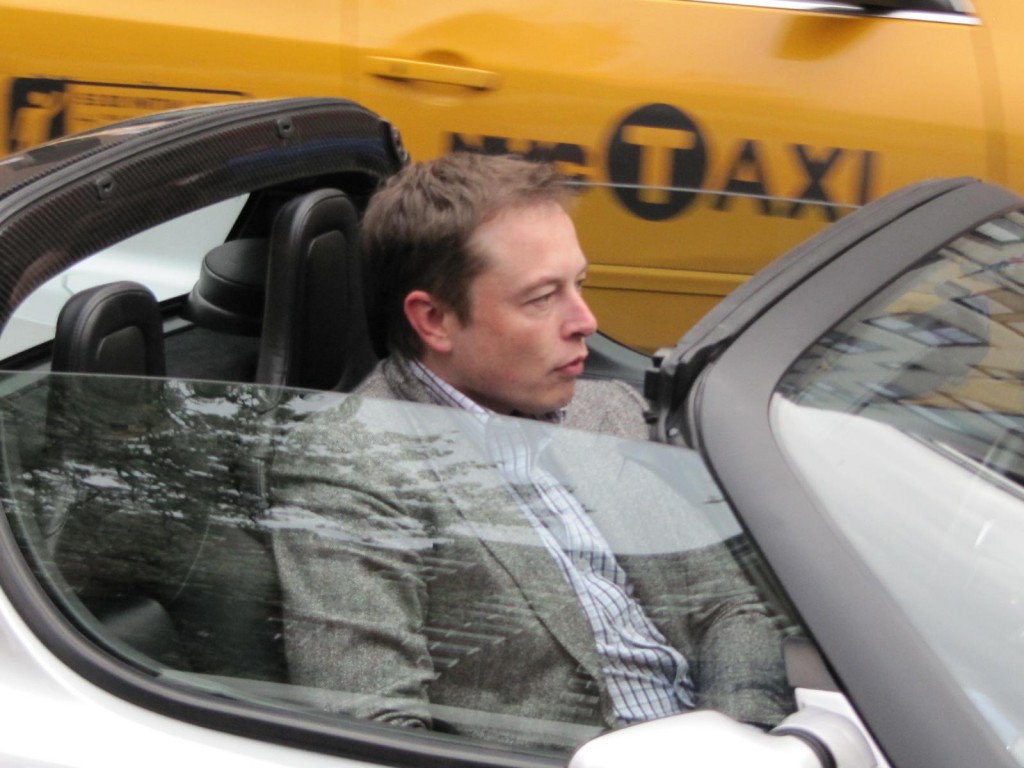
'Revenge of the Electric Car' premiere: Elon Musk arrives in a Tesla Roadster
"Their goal and the sole metric of their success is to have you enjoy the experience of visiting so much that you look forward to returning again," Musk said.
Contrary to spirit of the law?
He acknowledged existing state laws and pledged that Tesla follows them. "We do not seek to change those rules," he wrote, "and we have taken great care not to act in a manner contrary to those rules."
In respect to two lawsuits filed against the company, he said Tesla believes they are "starkly contrary to the spirit and the letter of the law."
Musk noted that they were filed in one case by a Fisker dealer, and in the other, by "an auto group that has repeatedly demanded that it be granted a Tesla franchise."
He also noted that U.S.-style franchise laws do not exist elsewhere in the world, and described Tesla's plans for service facilities in some detail.
Laws in 48 statesIn 48 states, according to the National Automobile Dealers Association (NADA), franchise laws forbid or severely restrict the ability of automakers to sell vehicles directly to the public.
Tesla Store - Portland OR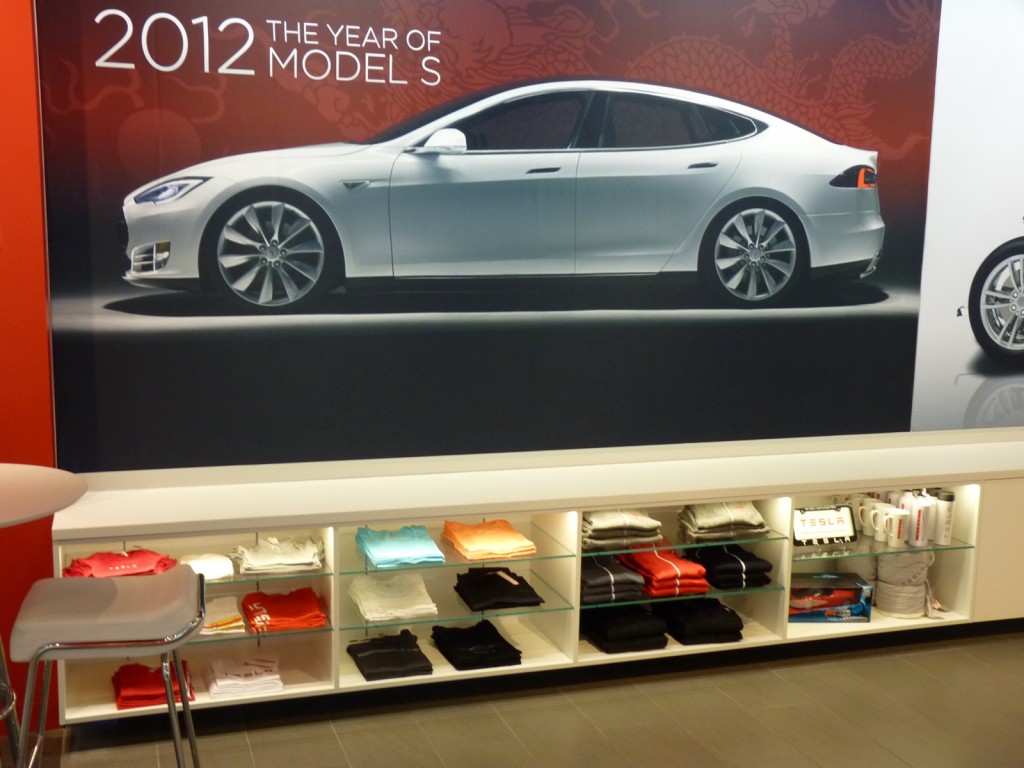
The specific wording of those laws varies from state to state, but most are based on the rationale that letting big automakers sell cars to customers would stifle competition.
And there's some history--from half a century ago--that supports the notion that franchised auto dealers may face unfair competition from factory stores selling the same cars.
Tesla Motors, of course, doesn't have a single franchised dealer.
It has only factory showrooms, and the only way to purchase a Tesla Model S is to order it online.
[UPDATE: Yesterday, NADA upped the ante. It said in an e-mailed statement it was seeking a meeting with the startup automaker to explore "serious concerns about Tesla's intentions."
Its chairman William Underriner told reporters the dealers' group "has 'a whole mess of lawyers in Washington' who work on state franchise laws," which presumably NADA could deploy in every state where Tesla has or seeks to open a store or service facility.]
Changing Colorado law
But dealers insist that Tesla's showroom workers are part of the sales process, even though they can't take money for cars.
They view that as a violation of state laws, and are fighting the company on several fronts.
In Colorado, for instance, the state dealer association got a bill passed in 2010 that amended the laws governing dealer operations and their business arrangements with automakers.
The bill, which was signed on March 22, 2010 and took effect immediately, prohibited Tesla from opening any further stores in the state.
Tim W. Jackson, president, Colorado Automobile Dealers Association
As the association wrote in its 2010 End of Session Report:
An existing provision in Colorado law already prevented a manufacturer from operating a dealership so long as they were not [sic] franchised dealerships. This statue [sic] narrows provision [sic] so a manufacturer that has any dealerships in Colorado, whether franchised or not, is prohibited from operating a dealership.
A Tesla Store in Colorado had opened in 2009, spurred in part by interest in a then-active $42,000 tax credit for the purchase of a Tesla Roadster.
Asked for comment on the 2010 Colorado legislation, Tesla spokeswoman Shanna Hendriks said only:
Tesla’s business model was developed in the best interests of consumers and the advancement of electric vehicle technology. In doing so, we have worked closely with regulators to operate within compliance of all current state and municipal laws.
That's as close to a "no comment" as you'll get. Tesla currently has just one Colorado facility, in Lone Tree, south of Denver.
Dealerships: the best way to protect buyers
Two weeks ago, Tim Jackson, president of the Colorado Automobile Dealers Association, spoke at length with Green Car Reports on dealers' reasons for opposing the Tesla model and fighting its stores.
It's really, he explained, all about protecting consumers. He offered three different reasons for the group's action.
Tesla Motors gallery in Houston Galleria, opened October 2011, with Model S on display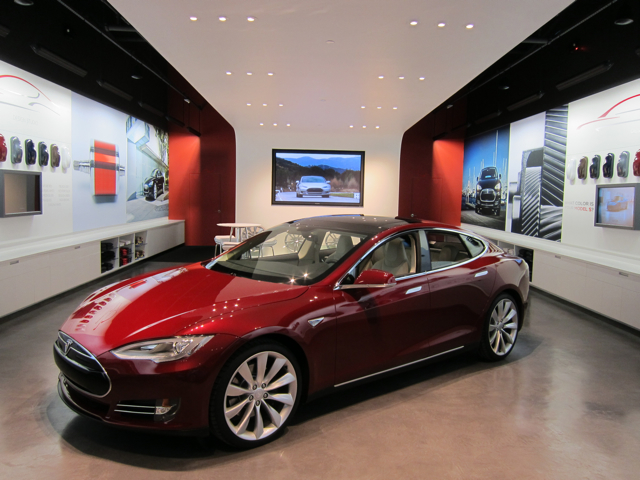
First, he said, independent dealerships usually continue in business to provide service even if an auto company or brand shuts down the supply of new cars.
If Tesla were to fail, he pointed out, it would close all its company-owned stores and service facilities, leaving Tesla owners without recourse.
Owners of Oldsmobiles, Pontiacs, HUMMERs, Saabs, Daewoos, Isuzus, and other vanished makes got varying access to service and parts through independent dealerships long after they disappeared from the market, he maintained.
Second, the dealers feel--as Musk acknowledged in his letter--that Tesla could spend its money much more wisely than on building its own stores.
Imagine, Jackson suggested, what Tesla could do if it applied the money it's now spending on stores and service centers to its product development plans instead.
And third, he argued, all auto dealers will be hurt if Tesla fails.
If that were to happen, and consumers were left high and dry without a place to have their Tesla cars serviced, he said, it would do great damage to the good reputation of all auto dealers.
Jackson acknowledged that most car buyers have no idea automakers are legally forbidden from selling cars to them directly.
He reiterated the association's position that the public is best protected by having independently owned dealerships, rather than direct sales by carmakers.
Like Apple, like Tesla
The model for the Tesla Stores is none other than Apple's outrageously successful chain of retail shops. In fact, both companies' stores have been designed by the same man, George Blankenship.
"The [traditional] model is that [carmakers] do a bunch of research, hold a bunch of focus groups, and they decide that this is a car we should build," Blankenship said at the July opening of the Portland store.
"They design that car, they engineer it and manufacture it, and then they sell it to some dealer who then tries to sell it."
"That’s just not how we’re doing it."
Meanwhile, Tesla has said it had already logged more than 1 million visitors in its various stores by mid-July.
And the company is moving forward with plans to open 10 more stores in high-end locations by the end of this year.
Heading into January, Musk wrote, Tesla will have 19 stores, three galleries, and 26 service centers in the U.S.--including service centers in cities where it has no showrooms.
+++++++++++