Silly Little Electric Cars Doing Damage To The Industry?

 
Follow Antony

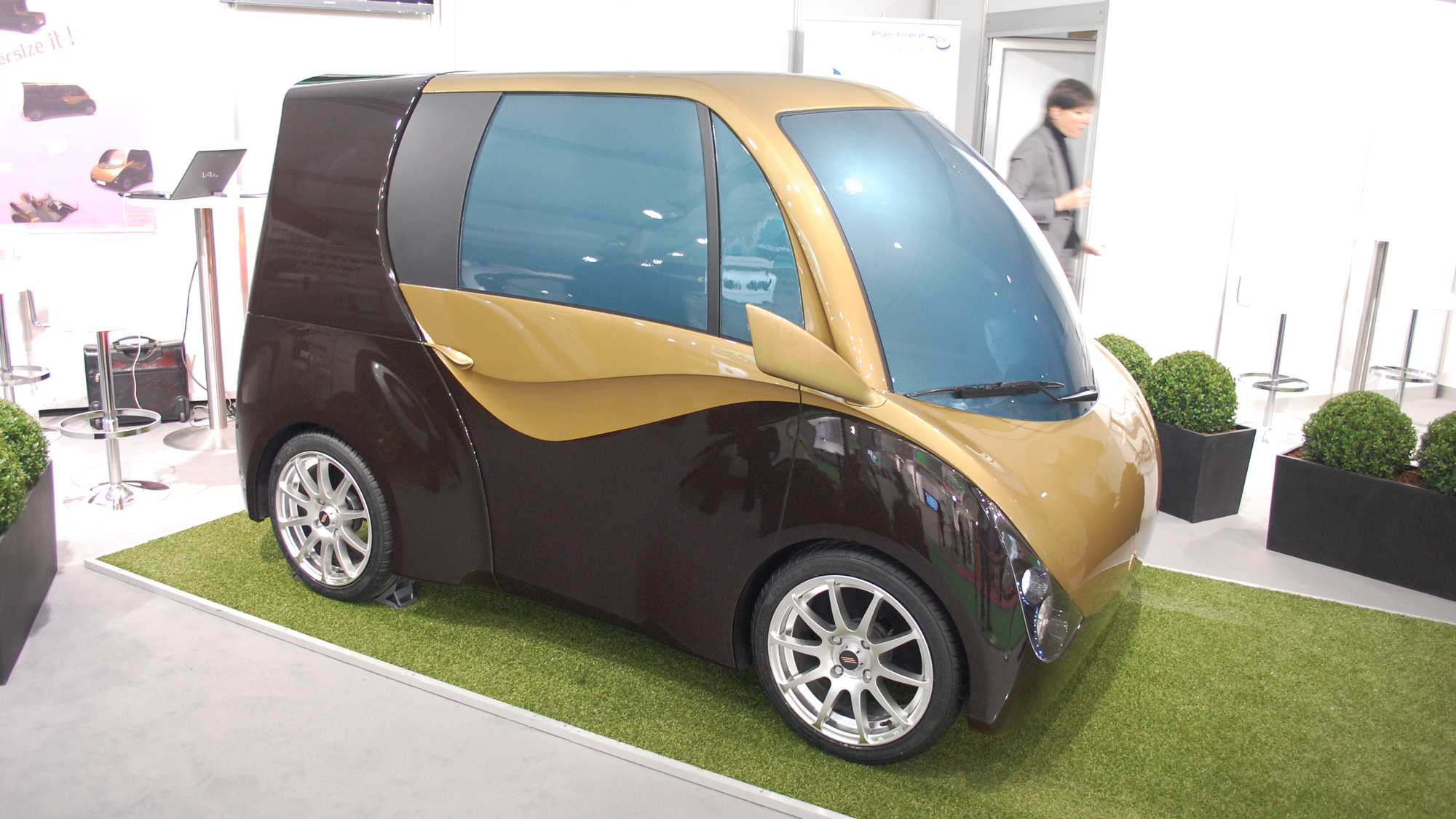
Moduléo adaptable electric car, 2011 Geneva Motor Show

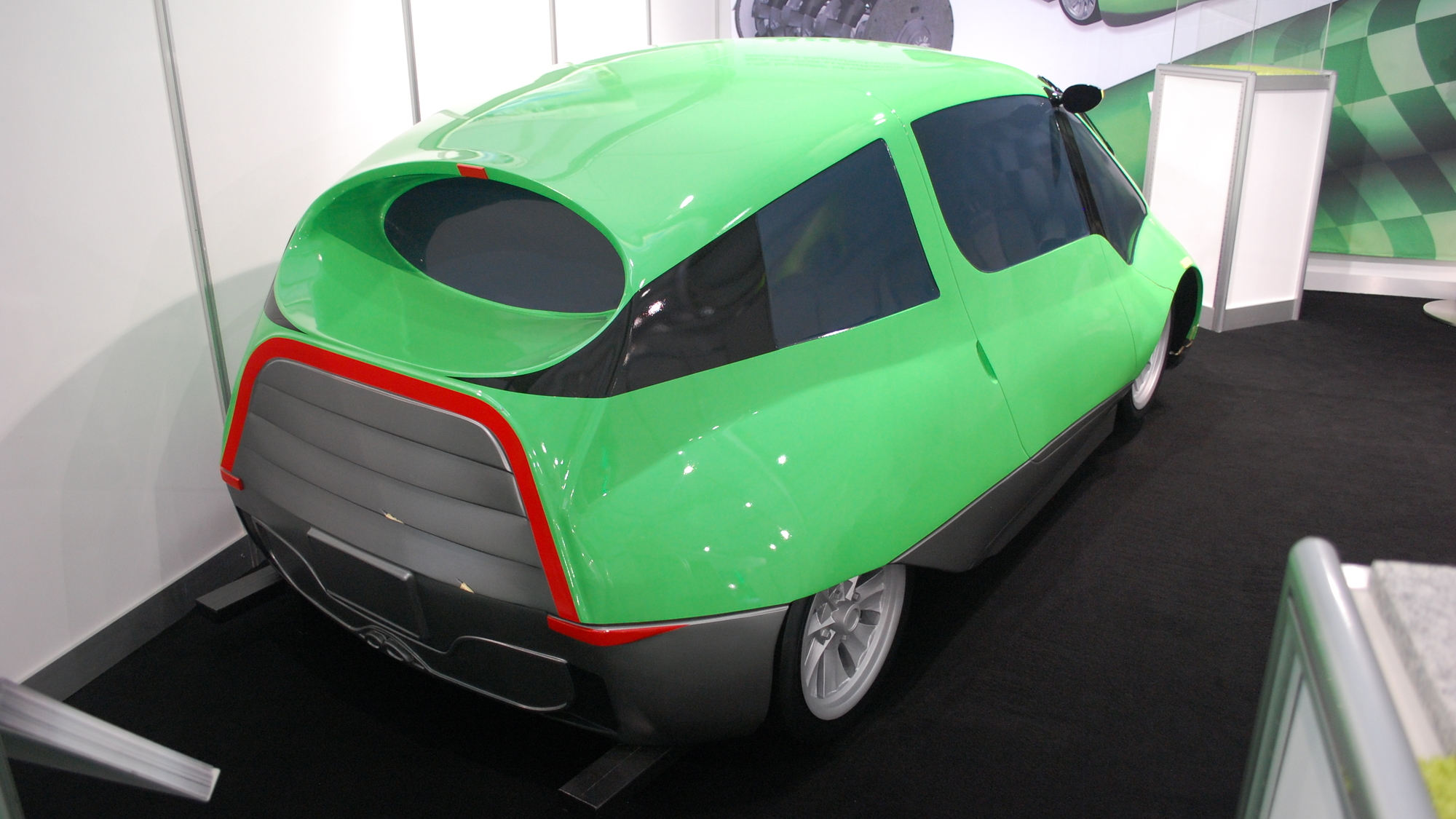
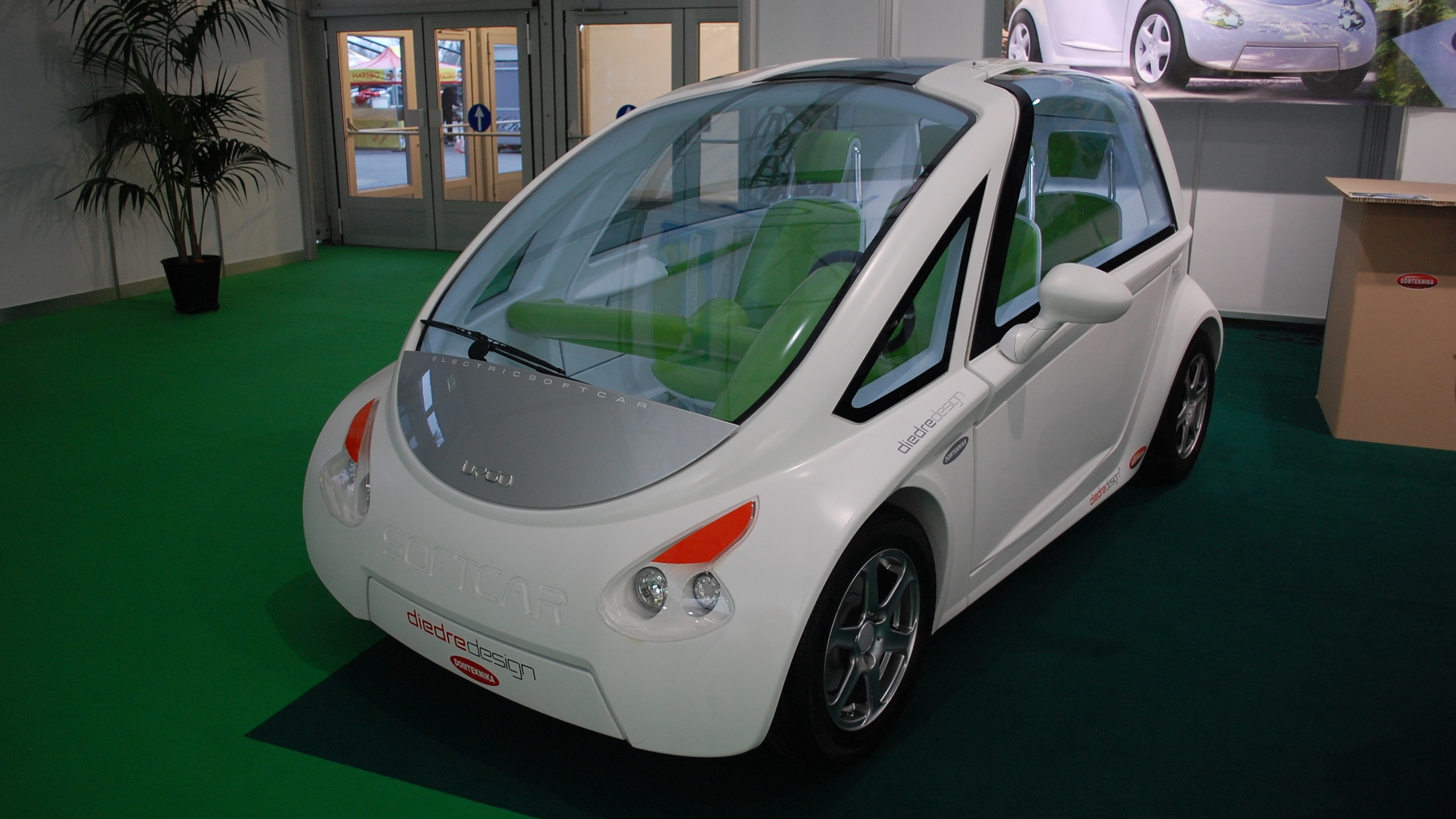
Tucked away in a little corner just off Hall 6 at the 2011 Geneva Motor Show, something weird and frightening lurked. Hiding behind the shiny stands of Kia and Smart and sitting in what looked like a poorly-carpeted entrance foyer, a collection of electric motoring misfits vied for the attention of anyone unfortunate enough to stray too close.

We are of course talking about Geneva's 'Papillon Vert' hall, or 'Green Butterfly' for those of you whose French is a little rusty. The Papillon Vert hall is home to the electric and green vehicles of Geneva, and an outlet for the major manufacturers to sign up people to drive their latest electric cars. The Chevrolet Volt, Renault Fluence Z.E, Mercedes-Benz A-Class E-Cell, Nissan LEAF and many more were available to test.

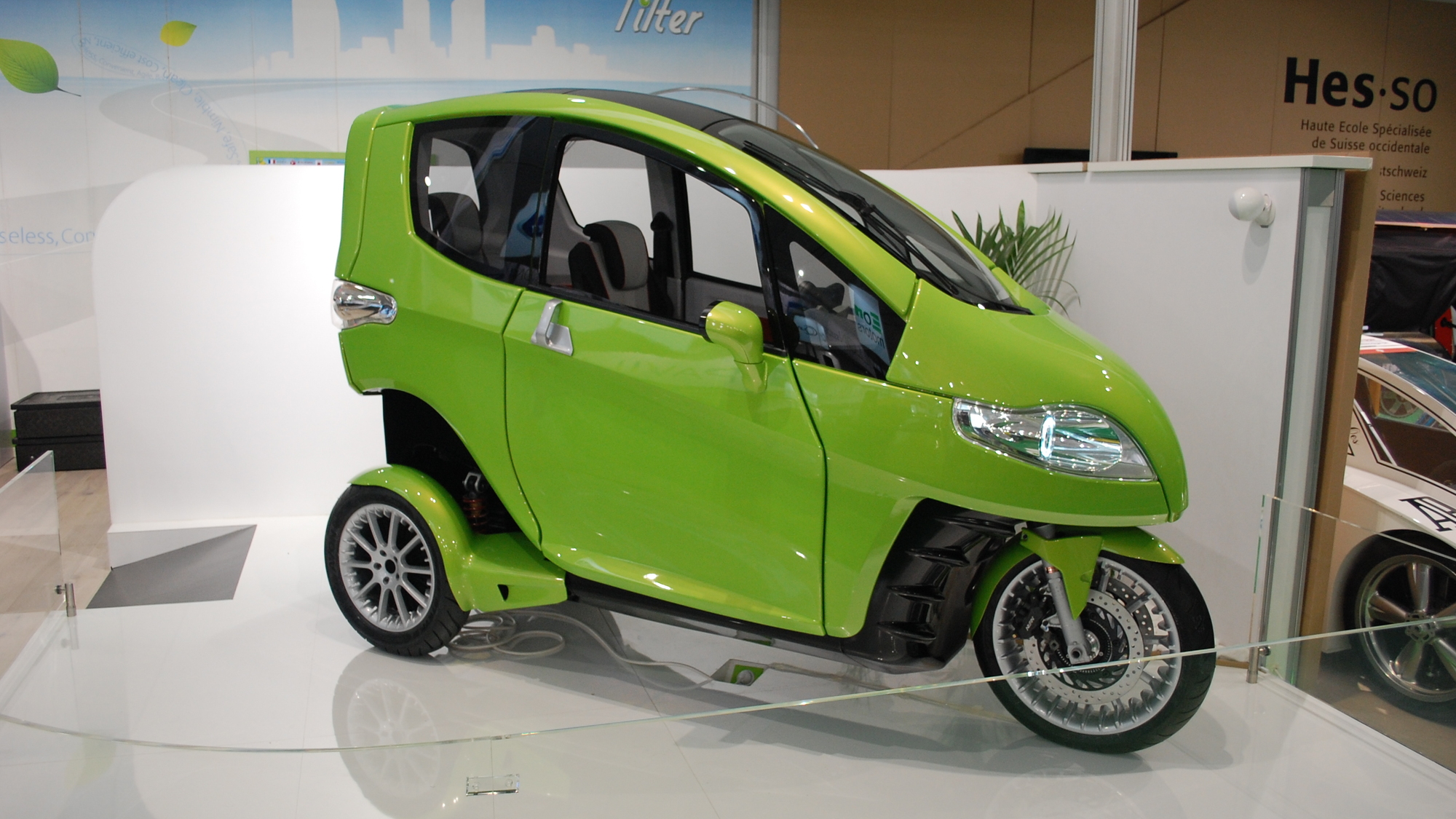
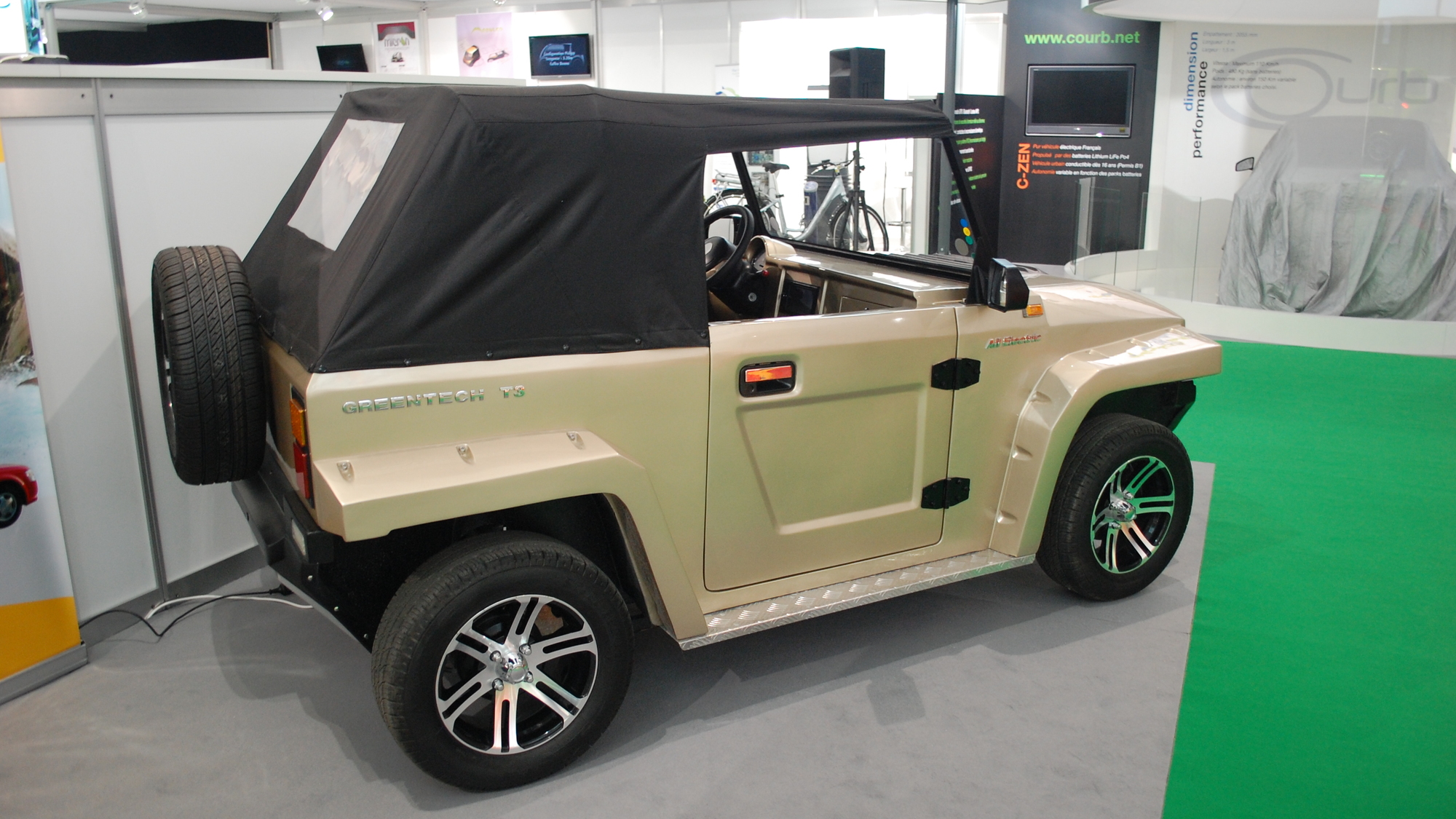
The Papillon Vert hall has a darker side too though - it's where you find several small companies from around the world showing off their latest electric tricycles, quadricycles and neighborhood electric vehicles. And although it's impossible to say this without sounding utterly insincere: with the greatest respect, not one of them was a vehicle you'd actually want to drive.

We've hinted on occasion that buyers should carefully consider whether an electric vehicle such as these is a wise place to put your money, but the question still lingers: Are these small electric vehicle companies doing more harm than good to the electric vehicle industry they're trying so hard to make business in?

At face value, you'd have to say yes.

The electric car is currently undergoing an important transition period, from a rare and under-developed class of vehicle to one that virtually every major car manufacturer is dabbling in at some level or another. These companies are spending millions upon millions of dollars to give consumers a viable alternative to their fossil-fuelled vehicles, ensuring they're desirable, reliable, safe and as usable as possible.

It's taken companies like Tesla with the Roadster and Nissan with the LEAF to drag the electric car kicking and screaming from a concept that nobody could take seriously to the first generation of the cars we'll be driving in the future.

Consumers are only just beginning to come around to the idea of an electric car you'd actually want to own, rather than an ungainly and slow quadricycle like the Reva G-Wiz. The G-Wiz has served a useful purpose for a great many customers over a great many years, but it's also done a huge amount of damage to the image of electric cars and many of the stereotypes levelled at EVs have cars like the G-Wiz to blame.

And at Geneva, there was a hall full of the things. Sitting there forlornly in a corner like the kids who didn't get chosen for the football team, vehicles with kooky styling and dubious engineering were taking people back to that stereotypical view of the ugly, slow and undesirable EV.

It's not easy for us to say that either, as electric car enthusiasts. Geneva was a melting pot of electric and hybrid vehicles on a level we've never seen before, and several of them - the Nissan ESFLOW, the Volkswagen Bulli concept, the Rolls Royce 102 EX Phantom, the BMW ActiveE - were some of the show's biggest stars. They're all cars you'd give your right arm to own, and although some may never see production and others are out of reach of the Average Joe, they at least point to a future of enjoyable EV motoring.


Follow Us


Have an opinion?Join the conversation!

  • Posting indicates you have read this site's Privacy Policy and Terms of Use
  • Notify me when there are more comments
Comments (17)
  1. I like this article very much and agree with it up to a point. Any damage that the small companies have done or are doing will be repaired as more mainstream manufacturers come on stream with plug-in product to sell. There needs to be a critical mass of affordable and attractive vehicles from a number of different manufacturers in order to build the market from what is basically a hobbyist and enthusiast base now. Tesla Roadsters are interesting but too small a niche. Nissan is first to market but can't create much of a market on its own. The other manufacturers will help build interest when each has something to sell.
     
    Post Reply
    Vote
    Bad stuff?

  2. Good article.
    Small, silly looking cars with stupid names won't get the average driver to look at them let alone buy them.
    The Focus, Tesla Roadster...good names. Leaf? C'mon. For the sensitive environmental types, perhaps. People are getting sick of green this and green that.
    Give it a good car name for gosh sakes.
     
    Post Reply
    Vote
    Bad stuff?

  3. Sorry, you are entirely wrong on this one. Last year, 23,000,000 road going electric vehicles were sold around the globe. About half a million of these were in Europe, slightly less in the United States.
    Yet very, very few of these were cars. They were electric bikes, trikes, quadricycles and NEVs.
    Research shows that in the long term, there is going to be an entirely different type of vehicle in the future. It isn't a car, it isn't a motorbike: it is something that as yet does not have a classification. These 'silly' cars that you talk about are the industries first attempt to define what these vehicles shall be.
    Even big manufacturers are getting in on the game: hence the new Renault Twizy and Nissan equivalent, the Infiniti and BMW concepts.
    In London, the G-Wiz is a common sight. Twenty million Londoners see G-Wiz's zipping around the roads every day. Twenty million Londoners can see that electric cars are a practical proposition. They may not like the car itself, but a lot of people see the potential for electric cars who otherwise would never have considered them.
    That is born out in public consultations: in London, over twice the number of people are considering an electric car than in any other major city in Europe.
    So far from being silly, irrelevant and damaging the industry, these new 'personal mobility' vehicles are actually pointing to the future.
     
    Post Reply
    Vote
    Bad stuff?

  4. I've often thought the same thing about micro EVs. How do you expect to get more people interested in EVs if they see little nerdy cars like those in the pictures above? If they want more people to drive EVs they need to design cars that capture the publics imagination, like the Tesla Roadster or the Tesla Model S for example. I do see the need for small city cars, and in that case some of them are cool, BUT in the case of trying to further the reputation of EVs they come off as the pocket protector of the automotive world. People are more likely to see the G-Wiz and say "nerd alert" rather than "wow thats an electric car".
     
    Post Reply
    Vote
    Bad stuff?

  5. Antony, in general I agree with your premise, but would not put the Niama Reisser EV concept in the "silly" category. It has some styling challenges, maybe, but the overall package seems rather sensible to me.
    The challenge for EV's is that they *have* to "break the mold" somewhat in order to get better aerodynamics, so they can get the best range possible from the available batteries. The EV1 has the best range per kWh and the reason is the as yet unsurpassed low drag body in a production vehicle.
    See my Facebook page or my blog (on Blogspot) for a 5-seat electric car design I'm calling CarBEN EV, that should be in the 300-400 mile range on a ~54kWh battery pack. It is unconventional in several ways, but I think it will be very practical.
    Neil
     
    Post Reply
    Vote
    Bad stuff?

  6. Sorry, my Leaf won't save us. If we were serious, and not just in this for fun, vehicles like the French Tilter would be the ultimate personal vehicle. None of us really give a damn about our grandchildren.
     
    Post Reply
    Vote
    Bad stuff?

  7. Warren has it right. As for giving something a name (without any substance), how about the "Reagan", "Clean Cool" or "Rapture"? Probably we were better off back before we domesticated the horse. Then we had those 'duo-ped' speedsters and 'ten-toers' for hauling stuff. No worry about bald tires, just stone bruises and ring-worm. Even so, I applaud the small solutions. Individuals can, and often do, make a difference.
     
    Post Reply
    Vote
    Bad stuff?

  8. This is Geneva, after all. You might not want to drive one of these down the Orange County Expressway, but there are billions of people who live in places where cars much more dubious than these are the norm.
     
    Post Reply
    Vote
    Bad stuff?

  9. If people can't tell the difference between a golf cart and a real car, they deserve what they get.
    These golf carts will have no negative or positive impact upon the sale of actual electric vehicles.
     
    Post Reply
    Vote
    Bad stuff?

  10. I'm glad to see the article is provoking reactions from both camps, keep the comments coming.
    @ Mike - I'm aware that only a small percentage of EVs sold at the moment aren't big production models, but there is a major caveat to your statistic: The large majority of those EVs are sold in developing countries where personal mobility is much more important than image, which simply isn't the case in the West. However, as countries like China become fully capitalist (which is fast becoming the case) then image and brand will start to play a part so those EVs will then have to appeal to heart as well as head. The G-Wiz is no doubt a logical choice for around London but I think you'd struggle to straw-poll the average street to find someone who actually *wants* one. Those 20 million Londoners may see that EVs are a practical proposition but I'd also offer that those 20 million Londoners wouldn't be seen dead in a G-Wiz and so electric cars won't proliferate until they're given something considerably better and more desirable. Practical they may be, but the G-Wiz does absolutely no good for the image of the electric car. It's also missing the point a little comparing them with the Twizy and others, since the Twizy is significantly better engineered and yet will still sell for a similar (if not lower) price than some of these vehicles.
    @ Neil - thanks for raising your CarBEN concept, I'll certainly give it a look.
     
    Post Reply
    Vote
    Bad stuff?

  11. I'm in the market for a third EV to fill the need of the "children's" car; I hope at doesn't sound too pretentious but, in the US the are teenagers (and parents) that can't wait to get their children their own wheels once they pass the test. There is some sense in it, living out in the sticks the teenagers want some mobility and life would be simpler if they could move themselves about... Before you cry environmental disaster, the alternative is that we would be ferrying them about instead creating more miles... Small 1+1 EVs like this are, IMO brilliant. They are capable enough, cheap enough and environmentally responsible.
    My children are going to be scared by public ridicule aren't they? Bugger, the plan was so good up to at point. Oh well, I guess what doesn't kill them will make them stronger.
     
    Post Reply
    Vote
    Bad stuff?

  12. @Kerr
    All automakers dropped the ball on this. None had any idea of the demand out there so no one has any of the facilities to meet them, no doubt because of all the big oil sponsored media spewing no one wanted these cars.
     
    Post Reply
    Vote
    Bad stuff?

  13. I think the article is a little exaggerated. Given time, there will be many practical tiny electric vehicles for running about our neighborhoods. Today these little things are the bikes, trikes, scooters, golfcarts, NEV's and a few nicer ones at "shows". They aren't hurting anything, nor as did the early experimental airplanes around the turn of the century. But the quality of the "Asian" Ecars etc is poor, and I don't want to drive a golf-cart really. Soon though, USA will have a comfortable $10,000, 30mile range, 35mph top speed 2 person Ecar NEV to compliment a families big SUV.
     
    Post Reply
    Vote
    Bad stuff?

  14. Good comment M. Thwaite. You reminded me of a dream I just had, about a Suzuki Maruti that looked like a small Studebaker from the rear.
     
    Post Reply
    Vote
    Bad stuff?

  15. Apparently, the Papillon vert hall's inmates are committing the cardinal sin of showing off electric transportation priced at less than $150,000. That will never do for the snob who wrote the article. Wouldn't it be funny if, 5 years from now, the only EVs left on the market were Papillon vert minis and micros?
     
    Post Reply
    Vote
    Bad stuff?

  16. I'm sorry to disappoint you Marc but I'm far from a snob, and indeed I'm unable to afford virtually every one of the vehicles mentioned. Their price isn't to be sniffed at, but their design and engineering is horrendously below par compared to the larger manufacturers and the simple fact of the matter is that they're exactly the sort of glorified golf-cart like vehicles that have done such damage to the EV's image already.
     
    Post Reply
    Vote
    Bad stuff?

  17. @ Marc - It's possibly also worth noting that the Renault Twizy is a $10k electric car that actually feels like a production car rather than a child's toy, which goes to show that quality and price aren't mutually exclusive.
     
    Post Reply
    Vote
    Bad stuff?


Have an opinion?Join the conversation!

Find Green Cars

Go!


© 2011 Green Car Reports. All Rights Reserved. Green Car Reports is published by High Gear Media. Send us feedback. Stock photography by Homestar, LLC.