
The main thing to understand about the Toyota Prius Plug-In Hybrid is that it's not an "electric car" as many people use the term.
Yes, it plugs in to any electric socket to recharge the 5.2-kilowatt-hour lithium-ion battery pack. And, yes, its Hybrid Synergy Drive system uses electric torque, either by itself or along with the gasoline engine, to turn the front wheels.
But in a four-day test drive over the long holiday weekend, we came to understand one fact clearly: The plug-in Prius is not an electric car in the same sense as the 2011 Nissan Leaf and or the 2011 Chevy Volt.

prototype 2012 Toyota Prius Plug-In Hybrid, April 2010
Still mostly gasoline
While it travels further just on electric power than a standard 2011 Prius, and can do so at higher speeds, the gasoline engine still provides most of the torque to propel the car in mixed duty cycles.
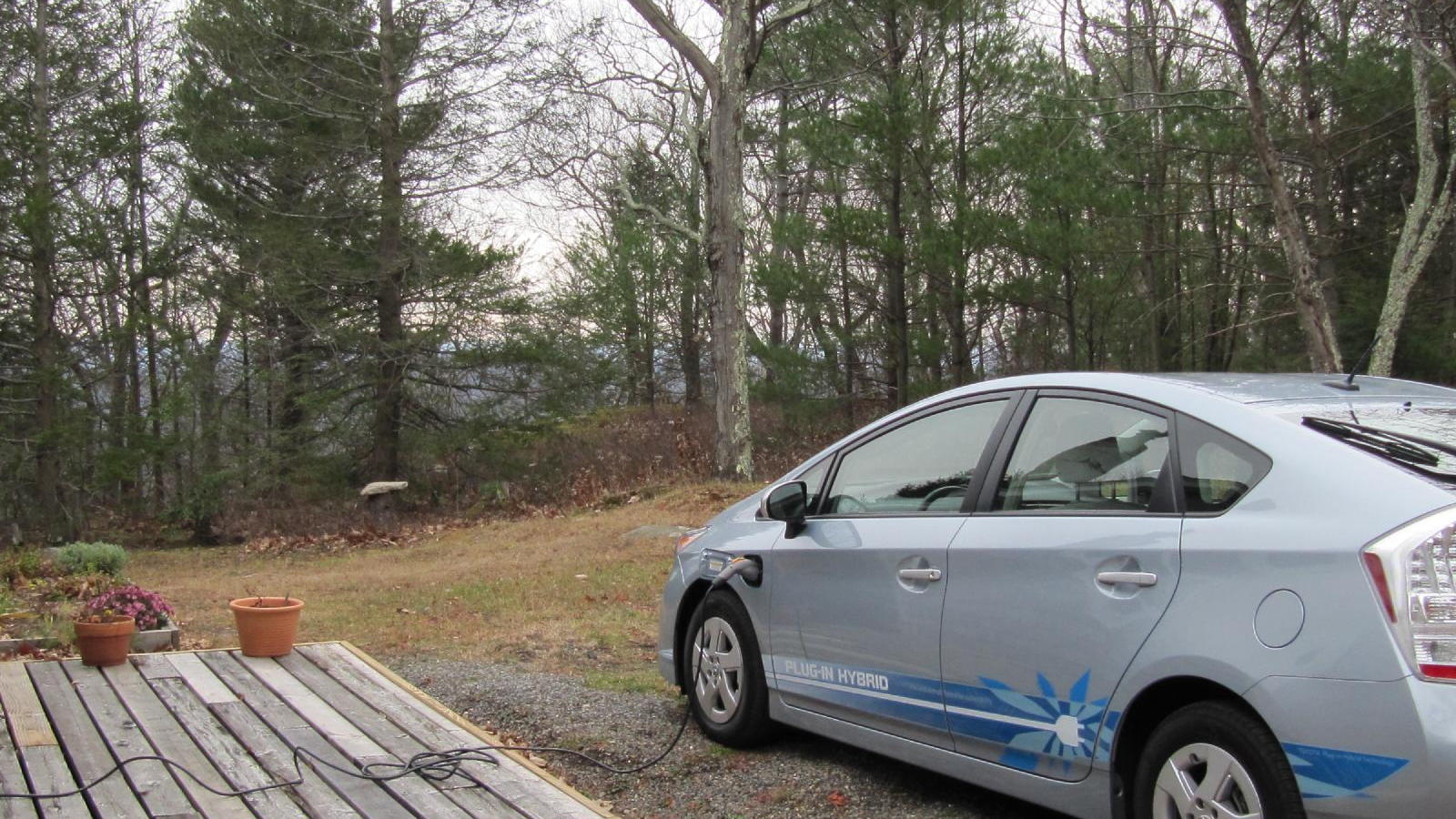
Over 424 miles, we plugged in the car to recharge the pack six times. (A 22-foot-long cable for 120-Volt charging is provided in a bag in the load bay.) Not all of those periods lasted 3 hours, which meant that twice, the pack was only partially recharged.
We were able to run locally on electric power for a few short trips--especially the downhill ones (our house is toward the end of a mountain path several hundred feet above valley level).

prototype 2012 Toyota Prius Plug-In Hybrid, April 2010
Northeastern autumn
But the exterior temperatures of a Northeastern autumn (25 to 40 degrees F), as well as a duty cycle with almost half the miles on Interstates, cut heavily into the car's ideal electric operating range.
Bottom line? Over our entire test, the Toyota Prius Plug-In Hybrid averaged 53.9 miles per gallon.
That's better than the standard 2011 Toyota Prius hybrid, which the EPA rates at 51 mpg city, 48 mpg highway, for a blended average of exactly 50 mpg. In practice, most drivers of third-generation Priuses seem to get in the mid- to high 40s.
But the Prius Plug-In's mileage was lower than the Volt's blended 60-mpg rating under the EPA's standard test assumptions, let alone the Nissan Leaf's slightly ludicrous "99 MPGe" rating (for a car that uses no gasoline at all).

prototype 2012 Toyota Prius Plug-In Hybrid, April 2010
EV mode: 8 percent
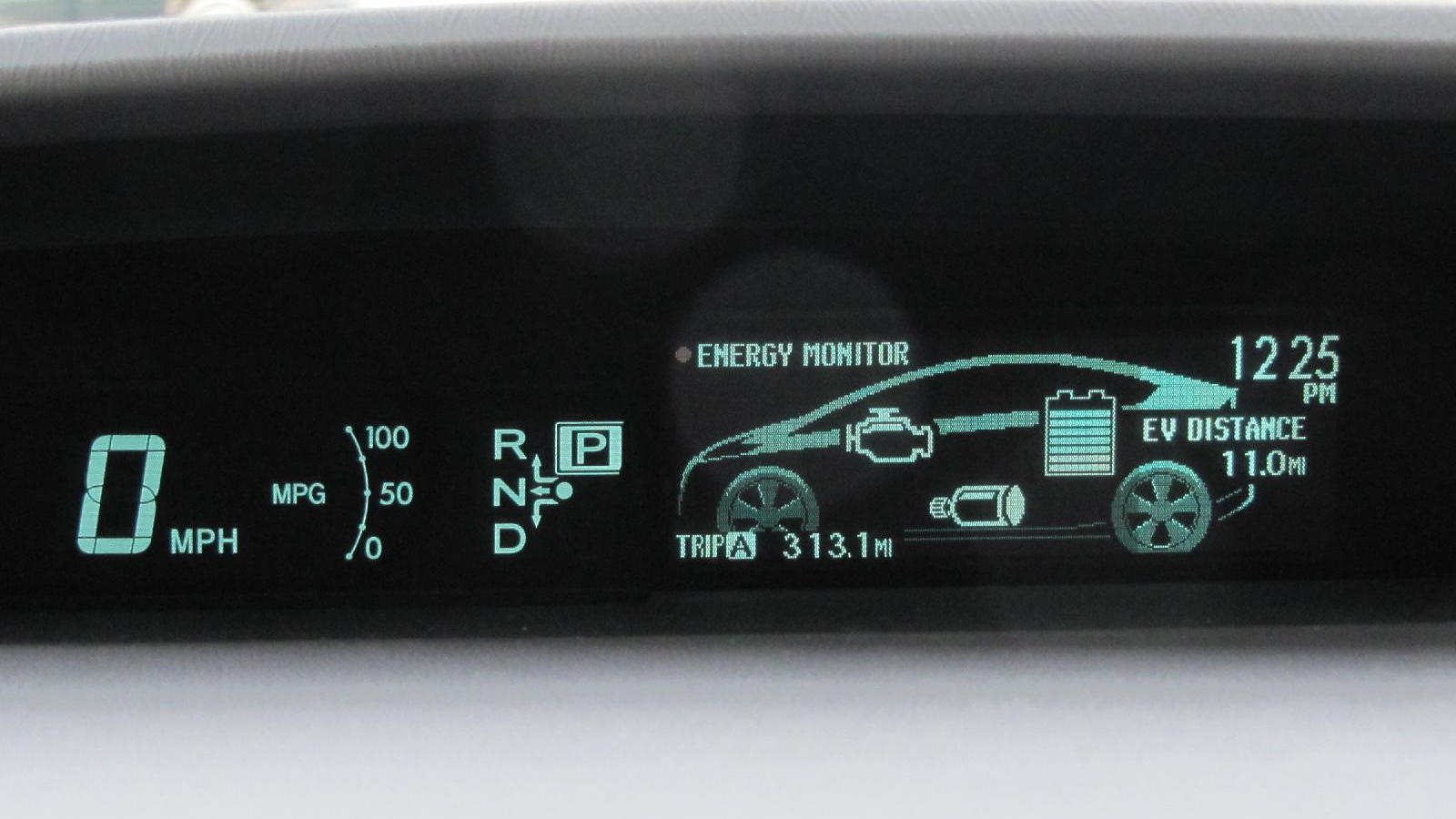
And over a longer 777-mile average (which we retained in the Prius Plug-In's trip computer for comparison), the car operated in EV Mode just 8 percent of the time, and a whopping 92 percent as a standard hybrid.
That can be viewed two ways. It's an endorsement of the fundamental efficiency of Toyota's Hybrid Synergy Drive system, but it's also an indication that the Prius Plug-In's small battery pack only expands incrementally on the standard Prius electric-drive capabilities.
Our recent results also underscore the contrast with our April first test drive of the Prius Plug-In Hybrid, which took place in temperate San Diego.
There, on a 10-mile test route that included low-speed city driving, a 3-mile section of freeway where we hit 86 miles per hour, and a few hills, we obtained "99.9 mpg" and spent 63 percent of our time in EV Mode.
prototype 2012 Toyota Prius Plug-In Hybrid, April 2010
50 to 70 percent of EV range
Over Thanksgiving, in contrast, we achieved between 6 and 10 miles on stated electric ranges of 12.9 to 13.5 miles from a fully charged battery. And after sitting overnight in the cold, the engine switched on as soon as we powered up the car.
To maximize electric range, we used the front seat heaters but not the cabin heater, and accelerated gently. Nonetheless, the battery provided significantly less range in cold weather than it had in San Diego.
Once the EV mode switched off, the Prius Plug-In Hybrid reverted to being a standard Prius with about 100 extra pounds. Our car exhibited a few prototype aspects, including a relay that clicked whenever the brake pedal was pushed or lifted, and a trim buzz under the dash.
Dead ends in the design
Another sign of a prototype: Toyota has decided that the particular lithium -ion cell chemistry used in our prototype is a technical dead end. When the production 2012 Plug-In arrives, it will use a different type of cell in its battery pack.
We also devoutly hope that Toyota enables the production car to use its larger battery pack under all circumstances. To our shock and confusion, we came to understand after our April drive that once the car has used the energy stored in its larger pack, it essentially reverts to being a standard hybrid.
It can't recharge the larger pack using regenerative braking, but only from the grid. Which seems to us to put an artificial constraint on the car's electric capability, since only a fraction of the energy from a several-mile-long downhill road could be captured and stored once the car switches out of EV Mode.
Toyota Prius Plug-In Hybrid prototype, tested in November 2010
Subtle visual cues
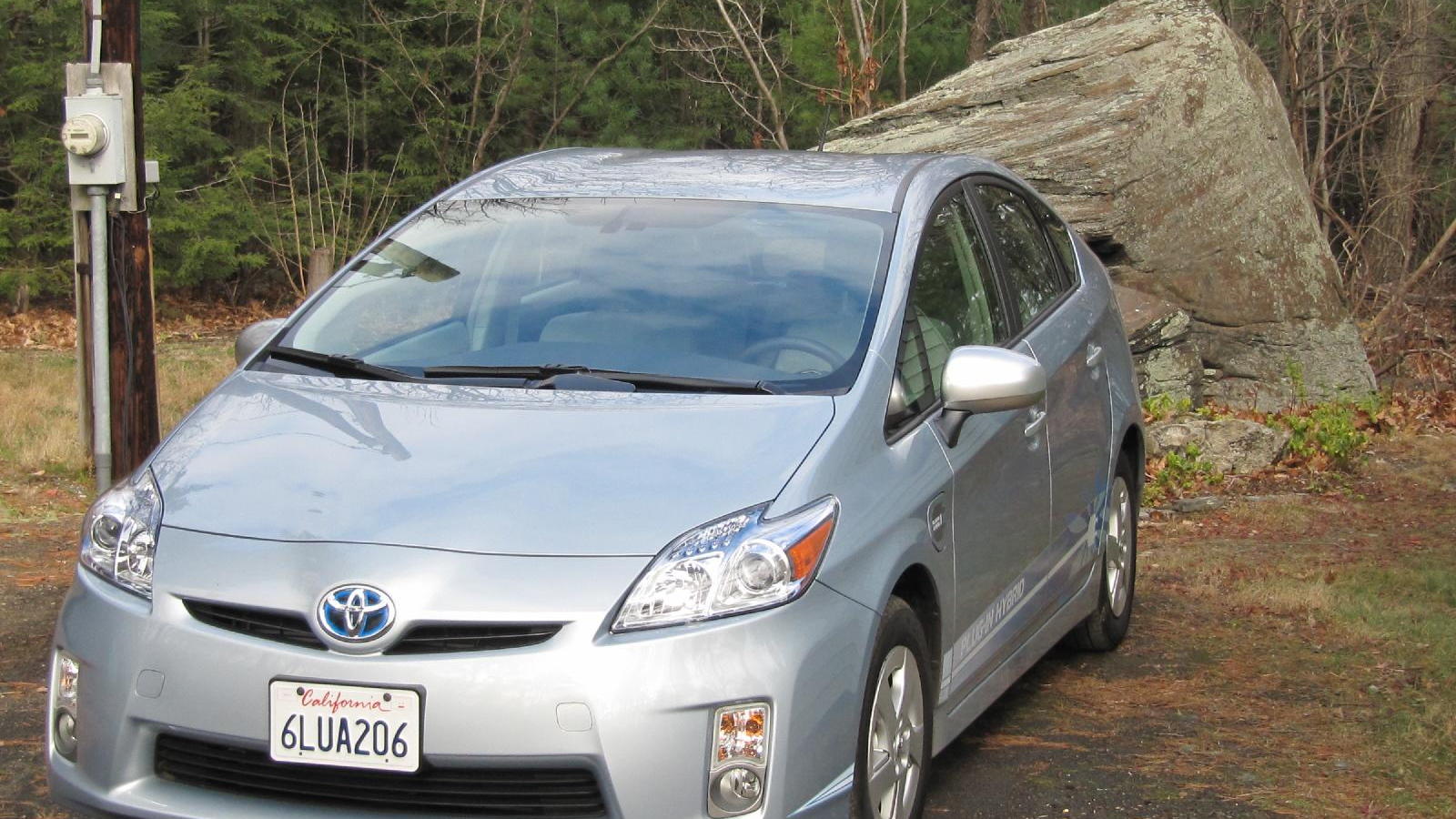
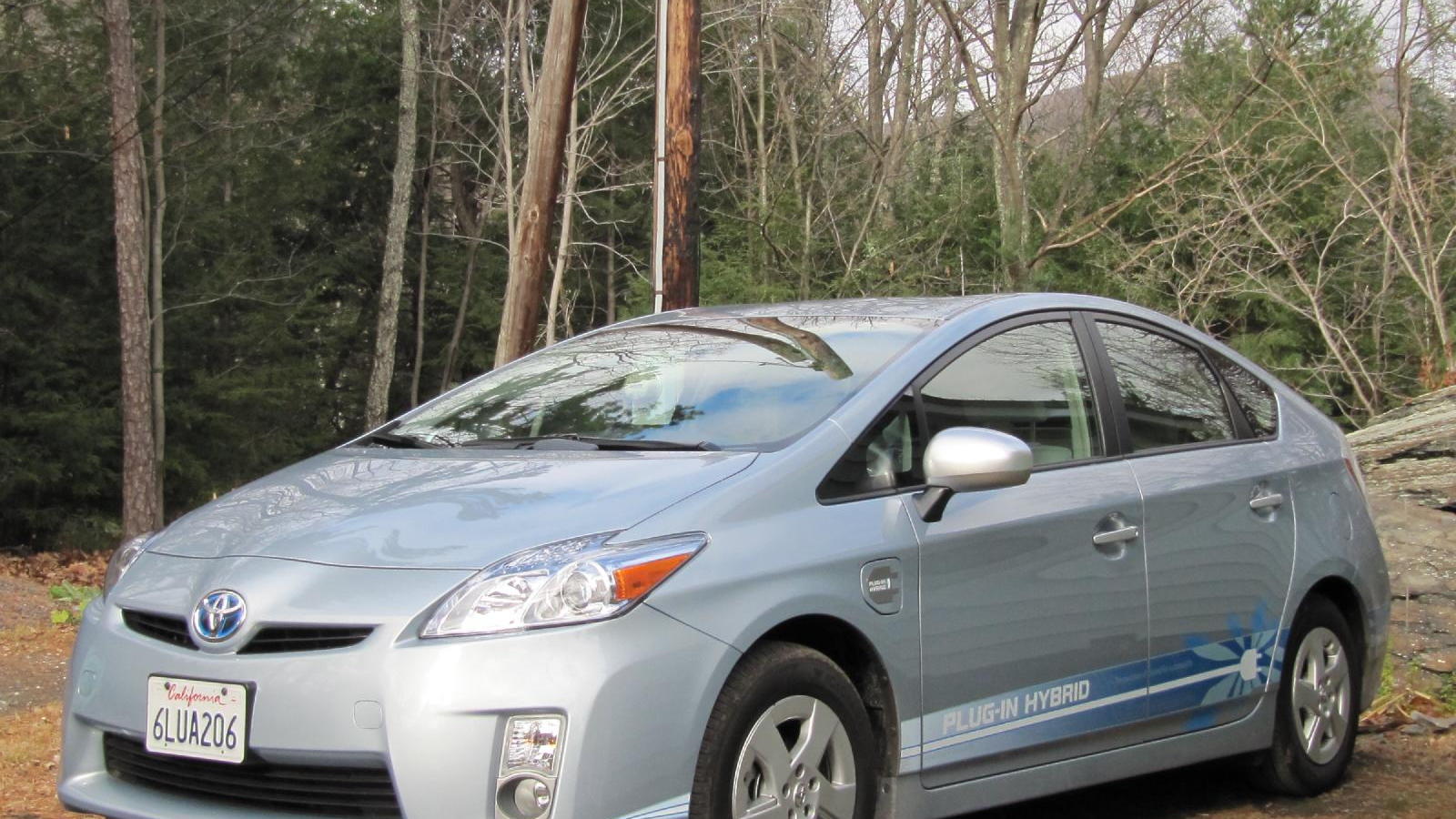
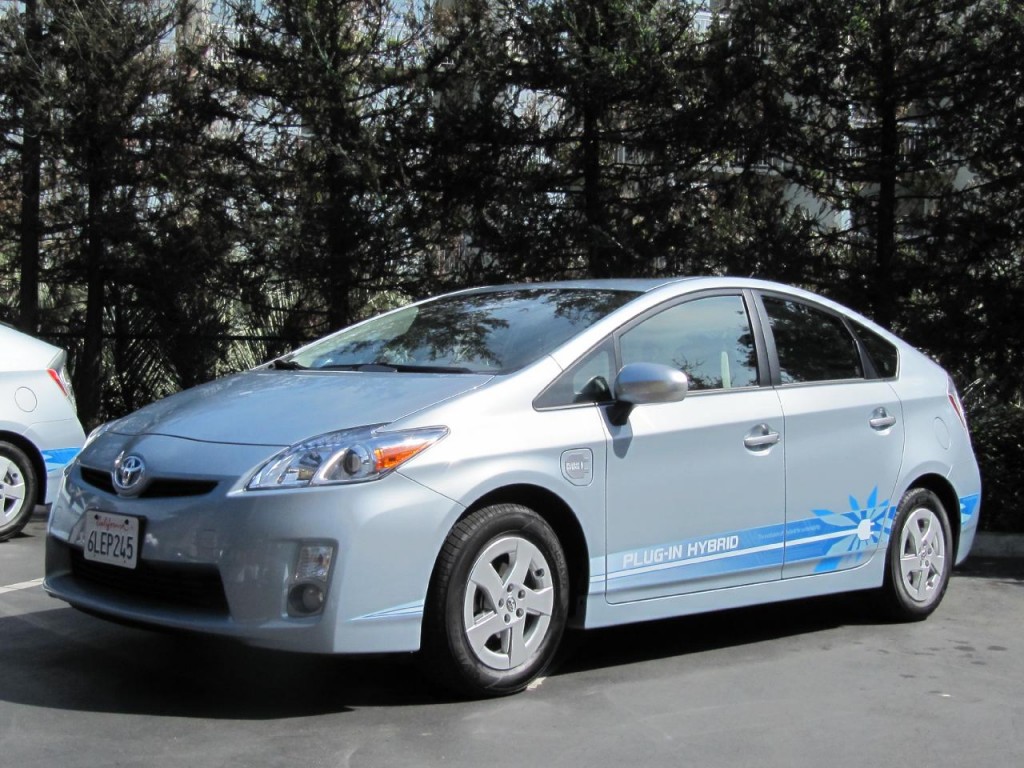
Like the other 150 Prius Plug-In Hybrids that will be tested in the States, our test car was painted in Blue Mica Metallic, a unique silvery-blue color. The door handles and rear crossbar were finished in silver, and it sported plug-and-sun graphic side stickers.
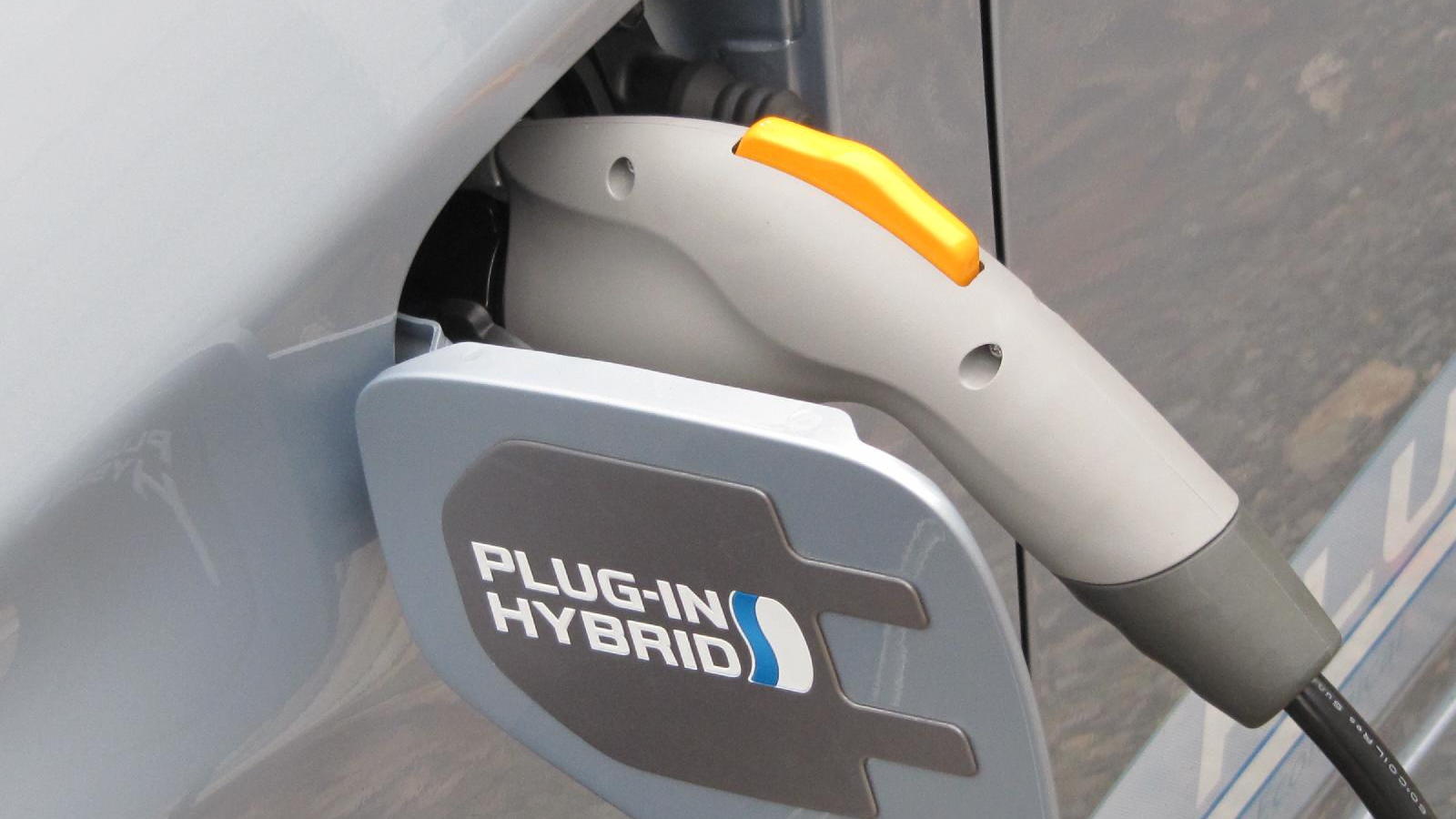
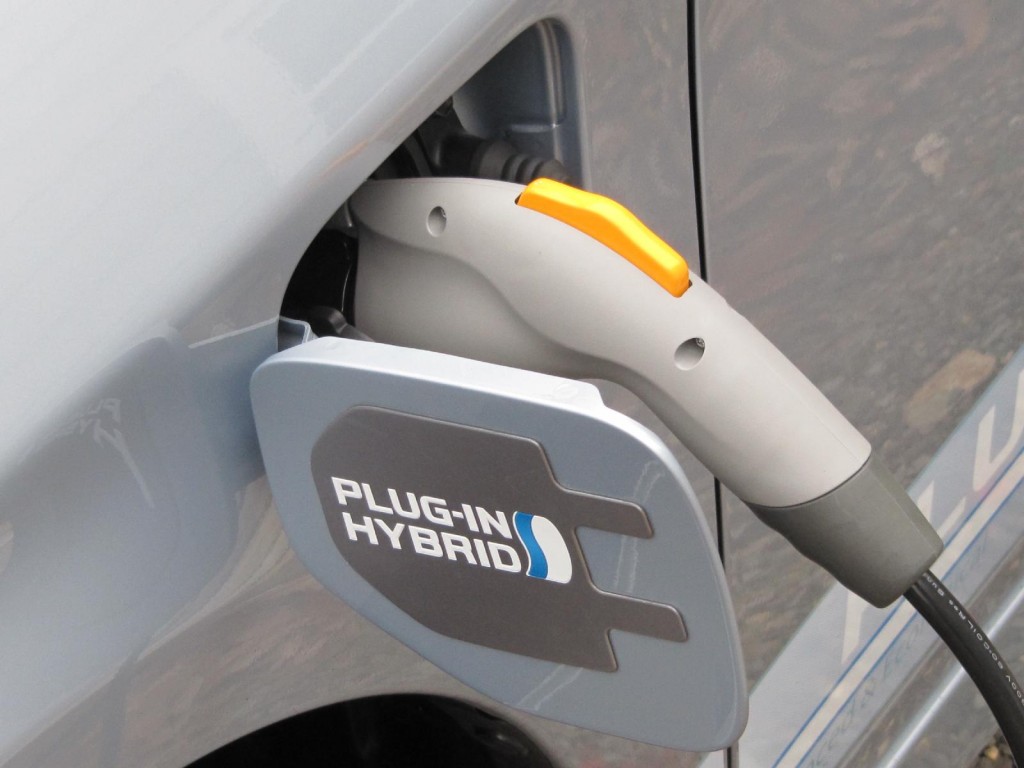
There's also that second "gas door" on the left front fender, with a plug graphic on it and the words "Plug-In Hybrid." But those cues aside, the car looks identical to a common Prius. Indeed, no one paid the slightest bit of attention to it during our test.
A Prius, only more so
In our April drive, we asked, "What's it like?" and responded, "It's just like driving a standard Toyota Prius hybrid. Only more so."
We see nothing to change that assessment. And even more than the Leaf and the Volt, which have more powerful electric drive motors, the amount of time you spend driving a Prius Plug-In Hybrid in EV mode will depend entirely on your usage.
Hammering up freeways at slightly-higher-than-legal speeds in winter weather? It's a Prius, period. Gentler use around level city streets in milder climates? You may indeed do half your miles in EV mode.

2010 Toyota Prius Plug-In Hybrid, 2009 Los Angeles Auto Show
Positioning as a Super-Prius?
In the end, as we've said, we think the Prius Plug-In Hybrid won't compete directly with the Leaf or the Volt. When it's launched in 18 months or so, Toyota says it will be the cheapest plug-in on the U.S. market.
Two months ago, Reuters quoted Takeshi Uchiyamada, Toyota's product development chief, saying that the Prius Plug-In Hybrid would be priced "so close to the current version that customers really have to hesitate and think about it."
He suggested that premium over a common Prius hybrid will be $3,000 to $5,000, which could mean a base price as low as $28,000.
That compares to $32,780 for the Leaf and $41,000 for the Volt, although the difference will be narrower for buyers who qualify for the Federal tax credit and other incentives. Those are usually higher for the Leaf and Volt because their battery packs are larger.
Indeed, the idea of making it not a standalone model but merely a sort of "super-Prius" with a larger battery pack and more electric range may be a smart one. And if it can get thousands of Prius drivers used to plugging in their cars, even better.
prototype 2012 Toyota Prius Plug-In Hybrid, April 2010
A bigger taste of electric, not a whole meal
Some auto industry analysts feel that hybrids have provided drivers their first taste of electric-only drive, albeit at low speeds and under light acceleration. And Ford's Nancy Gioia, for one, feels that electric drive is a necessary component to selling hybrids.
We're eager to see how much the production version of the Prius Plug-In differs from our test car, and whether it offers more electric capability.
For the moment, we view it as an evolution of the existing Prius--one that offers a slightly longer taste of the electric-car experience, but far from the full helpings offered by the Volt and Leaf.