With Initial EV Prices High, Is Conversion an Option?

 
Follow Nikki

Early this week, Mitsubishi announced that the U.K. purchase price of the 2010 i-MiEV would be a hefty £33,699 ($50,465). With prices for plug-in vehicles on the high side for the foreseeable future, is conversion a better solution for drivers who don't want to wait to plug in?

Granted, the Mitsubishi i-MiEV qualifies for a U.K. government grant scheme that gives buyers up to a £5,000 ($7,450) discount on eligible plug-ins. But the prices of the 2011 Chevrolet Volt, the 2011 Nissan Leaf, and the 2012 Toyota Prius Plug-In Hybrid all look to be similarly high. And the first modern EV, the 2010 Tesla Roadster, costs more than $100,000.

Electric vehicle (EV) conversion, via Nikki Gordon-Bloomfield

Electric vehicle (EV) conversion, via Nikki Gordon-Bloomfield

Enlarge Photo

Electric vehicle (EV) conversion, via Nikki Gordon-Bloomfield

Electric vehicle (EV) conversion, via Nikki Gordon-Bloomfield

Enlarge Photo

These costs are well beyond the abilities of many regular motorists. And used EV options are equally limited: You'll be hard-pressed to find a second-hand "previous generation" EV, such as the aging 1997-2003 Toyota RAV4 EV. And the only other option, a neighborhood electric vehicle like the 2006-2009 Zap Xebra, has limited performance and can only be used on public streets in some areas--let alone highways.

Many electric cars on U.S. roads today have been successfully converted from existing gasoline-powered vehicles. EValbum.com contains hundreds of such vehicles, showing that the electric-car revolution has been going on for years fueled by ingenuity and a little bit of hard work in garages.

Some converters stop at one car. Others, such as John Wayland (aka "Plasmaboy"), have gone much further. Wayland's first simple EV conversion ultimately led to such extreme, drag-race-winning vehicles as the "White Zombie," the world's fastest street legal electric car.

The prospect of converting a vehicle to electric may not be something that many EV fans relish. After all, while our parents' generation may have been quite happy to tinker with a few wrenches, how many people willingly work on their cars today?

But while the thought of converting a car to a plug-in may be daunting, a well-converted vehicle may even be easier to maintain than an aging early generation plug-in. While older EVs may be more refined in operation, due to their more complex circuits and designs, those same designs may cause issues once OEM support has ended and the vehicle needs fixing.

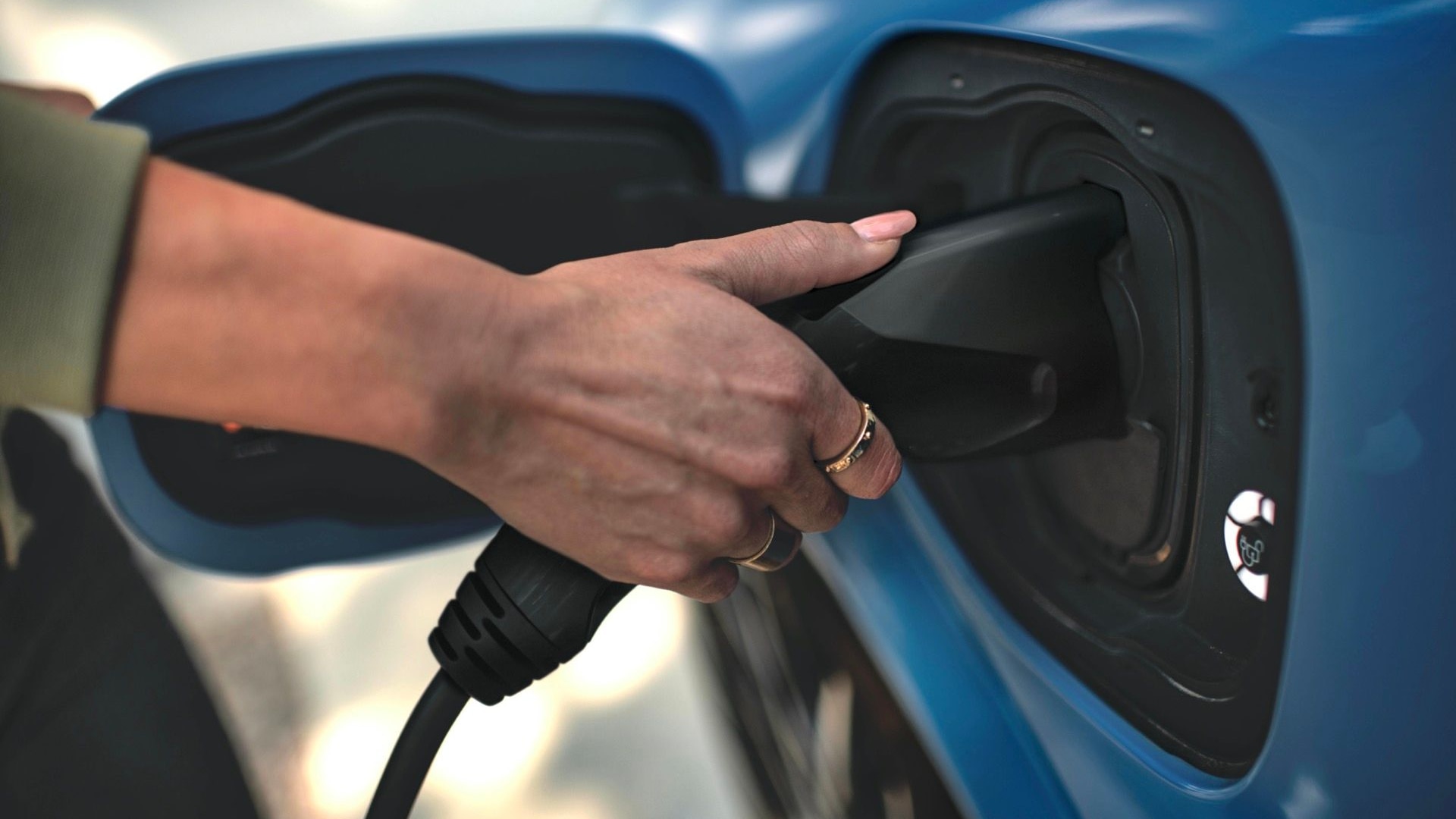
Whether converting an existing hybrid to a plug-in hybrid, or a gasoline car to a pure EV, it is possible to produce a highway-capable vehicle from as little as $5,000 if you're adept at sourcing components.

Doubling that to $10,000 will yield a competent highway-capable car with a reasonable electric range. With excellent support from many sites--including EValbum.com and contributor Gavin Shoebridge's EVsecrets.com--anyone with spare time and the willingness to learn can convert a car.

I'm no physics graduate, but I've already helped to convert two gasoline cars and a plug-in hybrid. So, what are you waiting for?

 
Follow Us


Have an opinion?Join the conversation!

  • Posting indicates you have read this site's Privacy Policy and Terms of Use
  • Notify me when there are more comments
Comments (15)
  1. Is anyone interested in electric conversion using in-wheel motors?
    Installing in the rear wheels only would provide incredible mileage improvement for hyper-milers. 70 mpg maybe.
     
    Post Reply
    Vote
    Bad stuff?

  2. Nor me, thank you very much. I want a new car with a factory warranty, when fooling around with new technology. And even if I would try it, my wife is another whole story.
     
    Post Reply
    Vote
    Bad stuff?

  3. For those who don't want to convert from scratch, you can find used conversions on eBay and a few other sites on the internet. A typical one costs $5000-$10,000 or so, but there's definitely a buyer beware aspect to it. You really need to do your research, know exactly what you're buying and be ready to maintain it yourself.
    That said, it's how I found my electric MGB, which had already been converted. It's a great car, attractive, pretty easy to maintain, and it cost me a LOT less than what the new EVs are slated to cost.
     
    Post Reply
    Vote
    Bad stuff?

  4. @Noel - I think the point here is that EVs aren't new technology. And for some out there desperate to go the electric route a conversion is the only affordable option right now if they want a half-decent highway capable vehicle. This will change but not for a good few years to come.
    It takes all sorts to make the world - and maybe you're not at all interested in conversion. But are you willing to pay a premium for EVs now, or wait another few years?
     
    Post Reply
    Vote
    Bad stuff?

  5. iMiEV pricing may be ludicrous, but the all important question is: what will the Nissan Leaf cost? Nissan has unofficially hinted at entry level Prius pricing (probably after tax credit) which would indicate a bit over $30K before tax credits. Since conversion projects are either very expensive or pointless very low range lead acid jobs the smart thing to do is to wait until Nissan officially announces the price of the Leaf and compare any alternative course of action against that. Since Nissan is preparing production capacity for very large numbers it's reasonable to expect a mass market price point.
     
    Post Reply
    Vote
    Bad stuff?

  6. @Chris O. Chris, you're quite right - If Nissan do come to market with an ultra competetive price for the Leaf then the game gets changed somewhat. And I hope they do bring a Prius-priced Leaf to the table. (For me, it's always been the point at which EVs start to become accessible)
    But - you also have to agree that a pricing that high is still out of the range of many folks - and for those who really do want to drive the electric dream and have some handy skills (and some spare time) a conversion can be a great alternative.
    Regarding range - What do you consider pointless low range? Most converted cars I've seen are capable of between 50 and 60 miles per charge - well within most folk's daily requirements.
    Nikki.
     
    Post Reply
    Vote
    Bad stuff?

  7. @Nikki: I guess we agree that the Nissan Leaf may be the game changer, depending on price. From what I get from Larry Williamson's march 22 article on this blog about DIY conversions a 40 mile range EV will cost you the better part of what the Nissan Leaf may cost and you'll still end up with an old car with a crude electric drivetrain and very low range. But it's not just about the rationale for DIY jobs. Many of the smaller EV initiatives will need to reconsider their viability if mass market pricing kicks in. Nissan's Carlos Ghosn stated that he will own the EV market in 2011 and if the price is right he is not going to be wrong.
     
    Post Reply
    Vote
    Bad stuff?

  8. I have to agree with Chris O at #5 and #7. Although Nikki may smile to know that her response sent me to Ebay to check out the offerings. Did anybody see the factory electric Chevy S-10 on offer? With all dead batteries, of course, LOL.
    Still, I have to admit to being sorely tempted. "Get thee behind me Satan!"
     
    Post Reply
    Vote
    Bad stuff?

  9. Nissan can afford to price the Leaf on the high side--where's the competition? They'll still find plenty of buyers no matter what they charge. Lack of competition and a desire to "make up" what they're going to lose on the "parts side" (evs being notoriously simple and reliable machines, after all)may make the initial offering much higher than what you or I can afford.
    Even so, maybe the Leaf will spark the emergence of "conversion shops." Wouldn't that be nice?
    : )
     
    Post Reply
    Vote
    Bad stuff?

  10. #7 Chris O - Well the Leaf changed the game all right. I think that all these little guys are toast. Good call.
     
    Post Reply
    Vote
    Bad stuff?

  11. Indeed they did! Wow. What a hit too - Right into that golden Prius price bracket. Well done, Nissan!
    I can't help but wonder though if conversions are still viable if you have specific needs that don't include long range - and you're the sort of person who is good at DIY. I know for a fact that many would-be EV owners are still put off by the high price (yes, the Leaf - even though it's a steal - is still out of many folk's price range). Okay, it may be a compromise when compared to the Leaf - but it could be a cheaper option than ever-rising gas prices. While gas isn't near 2008 prices, it still looks to rise this year.
     
    Post Reply
    Vote
    Bad stuff?

  12. Nikki #11 - Well, as I said, I had a bit of a tough moment fighting off the urge to bid on the electric S-10. Which I totally blamed on you, LOL. A PHEV or BEV small pickup or van would be perfect for my work/commute, but it has to be a Chevy. Maybe the Orlando, if it ever comes to pass. the Transit Connect is very cool looking, bit it's a bit too big for me, not to mention a Ford. Anyway, thanks for a thought and comment provoking post.
     
    Post Reply
    Vote
    Bad stuff?

  13. Nikki, this post sparked a great debate, thanks to you all.
    The Leaf will change what game and how much, how soon? "Nissan Leaf initial annual production capacity of about 50,000 units" (green car congress)thats about 17/1000ths of the U.S. auto fleet, double production next year if they all sell out, thats 34/1000ths of the fleet. Still leaves room for "conversion shops" using modular electric conversion parts (like the computer analogy)and crash tested vehicles.
     
    Post Reply
    Vote
    Bad stuff?

  14. Oh&@Noel Park, conversion shops could provide the security of a warranty for you and your wife. And I'm going to wait for a viable set of in-wheel motors for the rear wheels of my Honda 4cyl van.
     
    Post Reply
    Vote
    Bad stuff?

  15. Correction my post #13 should read, 17/1000ths, of one percent, of the U.S. auto fleet or (.00017 X 300,000,000 = 51,000) and 34/1000ths of one percent, of the fleet (at double the estimated first years production)
     
    Post Reply
    Vote
    Bad stuff?


Have an opinion?Join the conversation!

Find Green Cars

Go!


© 2011 Green Car Reports. All Rights Reserved. Green Car Reports is published by High Gear Media. Send us feedback. Stock photography by Homestar, LLC.