2010 Detroit Auto Show: The Confusing Wrongness of Electric Avenue

 
Follow John

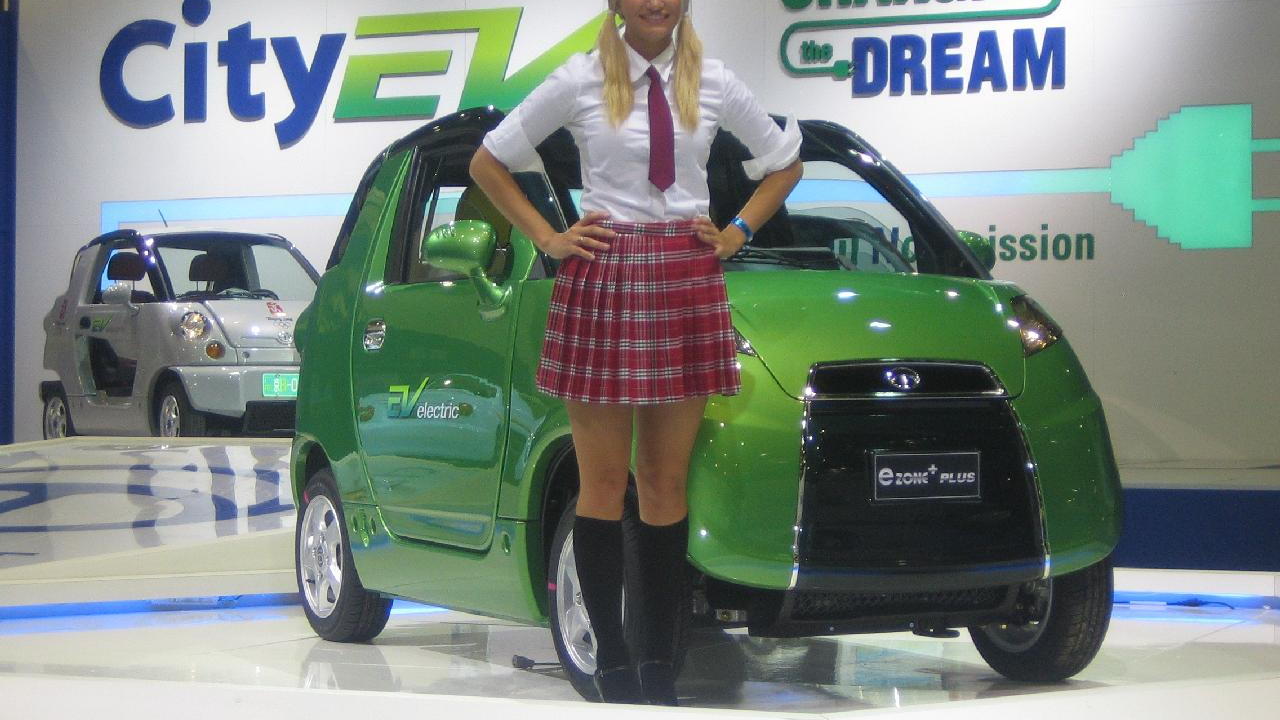
EV Electric eZone Plus, Electric Avenue, 2010 Detroit Auto Show

Literally a golf cart: EV Electric eZone Tropic, Electric Avenue, 2010 Detroit Auto Show

Literally a golf cart: EV Electric eZone Tropic, Electric Avenue, 2010 Detroit Auto Show

Enlarge Photo

Only four electric vehicles really matter at the Detroit Auto Show: the 2011 Chevrolet Volt, the 2012 Nissan Leaf, and the 2012 Toyota Prius Plug-In Hybrid, plus the current 2010 Tesla Roadster. They're on sale, or destined for volume production.

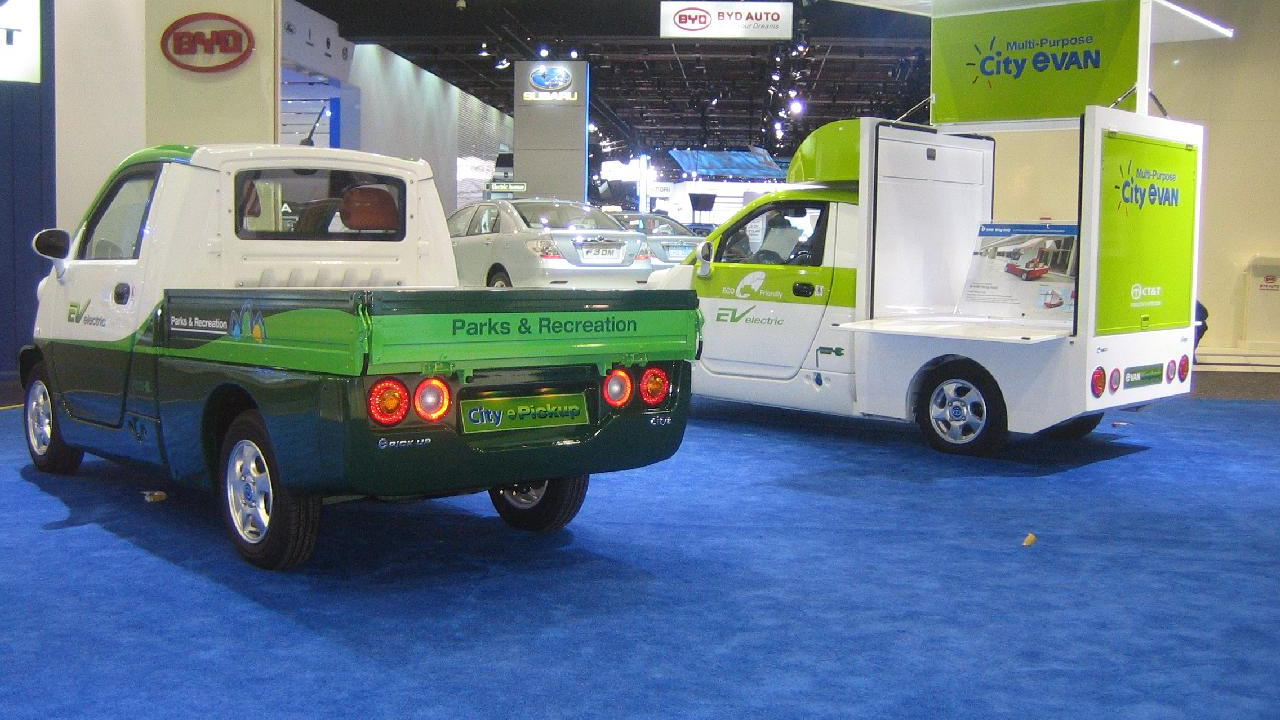
The rest fall into two categories:  low-volume prototypes from makers like BMW and Volvo, and a horrifying mix of low-speed and neighborhood electric vehicles and outright science projects.

But there's little to help showgoers understand the differences among these categories in the 2010 Detroit Auto Show's main-floor "Electric Avenue" area. That's a shame, and it poses a big risk to the automakers.

No payback for years

Electric vehicles in the U.S. face two problems. First, many automakers believe electric cars won't be cost-competitive for many years to come. Some executives are more vocal than others: Last year, Audi's Johan de Nysschen famously called Volt buyers "idiots."

About the numbers, those automakers are right. Consumer payback on electric vehicles is likely 10 or more years away. A recent Boston Consulting Group study said as much.

But this shouldn't be a surprise; hybrids suffered the same problem, with cash-rich Toyota soaking up most of that cost for years rather than passing it along to Prius buyers.

The "golf-cart problem"

The second issue is more insidious: the public perception of electric cars, a.k.a. the "golf-cart problem". Many U.S. buyers have experience with electric vehicles, and most of them are golf carts. Or forklifts.

Or, worse, neighborhood electric vehicles, those glorified golf carts that hum along private roads in temperate retirement communities. They have lights, wipers, and seat belts, but the Feds term them "low-speed vehicles" and keep them below 35 mph.
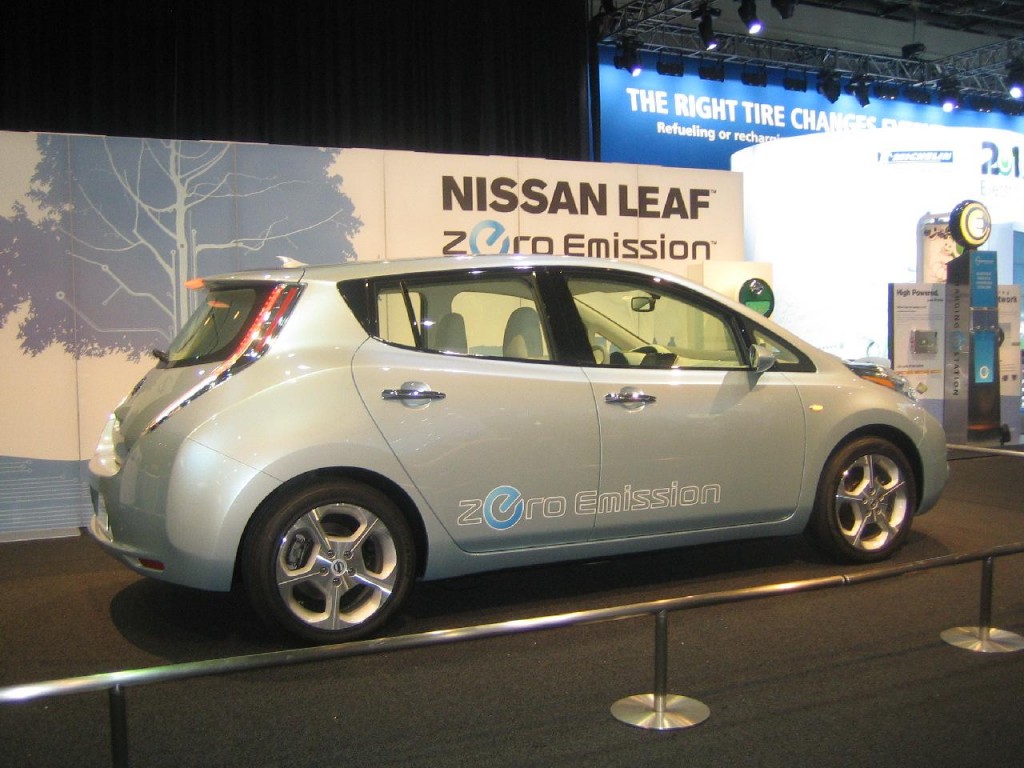
2012 Nissan Leaf, Electric Avenue, 2010 Detroit Auto Show

2012 Nissan Leaf, Electric Avenue, 2010 Detroit Auto Show

Enlarge Photo

BYD e6 electric crossover, Electric Avenue, 2010 Detroit Auto Show

BYD e6 electric crossover, Electric Avenue, 2010 Detroit Auto Show

Enlarge Photo

Threat to real carmakers

If you're Toyota or Chevy or Nissan, trying to persuade people that your electric car is a real car, those things pose a real threat. That's why the Electric Avenue mishmash is so stupidly counterproductive.

Toyota has it easiest. Many drivers first experienced electric drive in a Prius, when it dropped into electric mode and drove silently on battery power for up to a mile. The 2012 Prius Plug-In Hybrid extends that electric range up to 12 miles; it'll be familiar.

Chevrolet marketers will increase the drumbeat of "40 miles gas-free plus 300 more miles on gasoline" to underline the real-car capabilities of their 2010 Volt extended-range electric vehicle.

No Volts or Priuses

As you walk along Electric Avenue, you'll see not a single Volt, nor a plug-in Prius, BMW ConceptE, Volvo C30 electric vehicle, or anything from other major carmakers. No Teslas either.

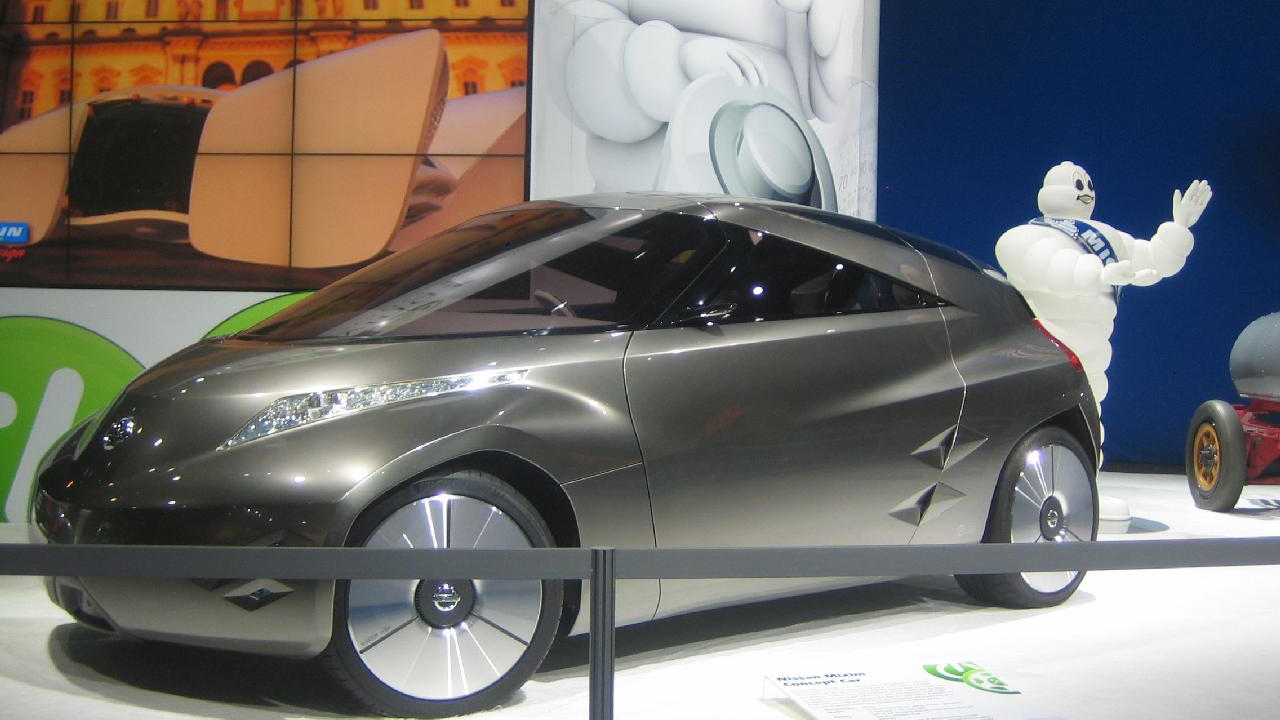
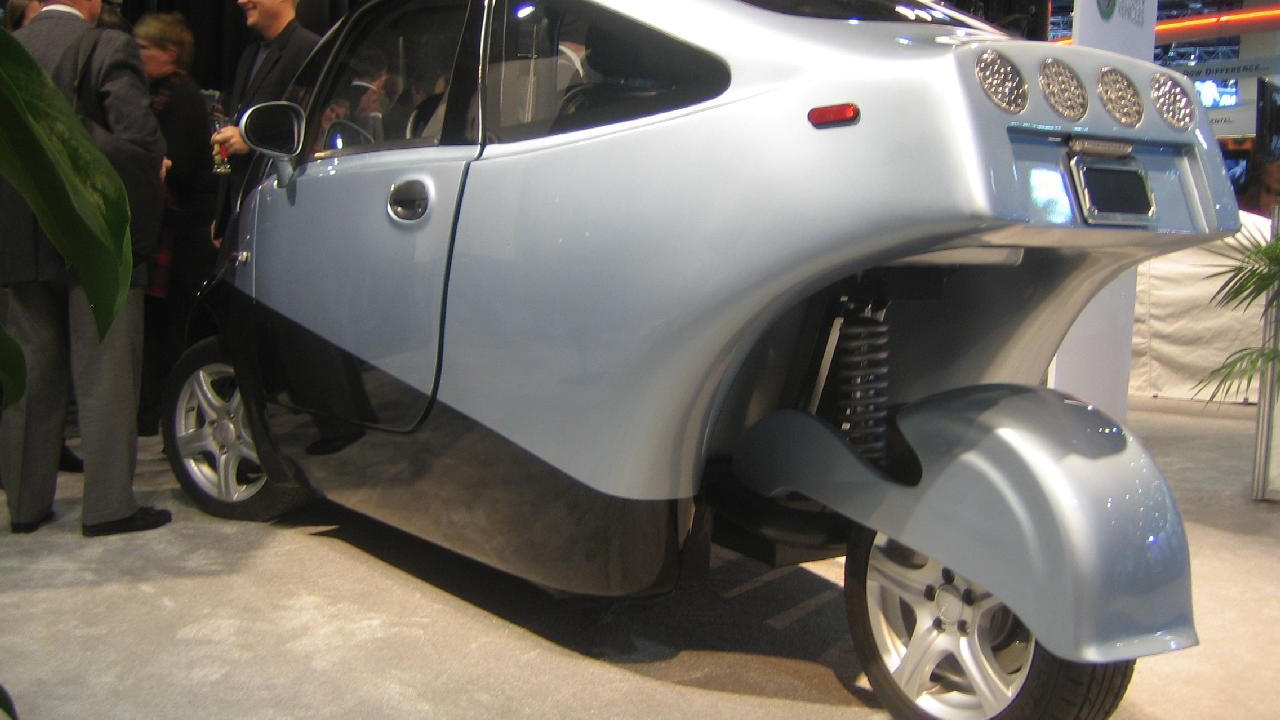
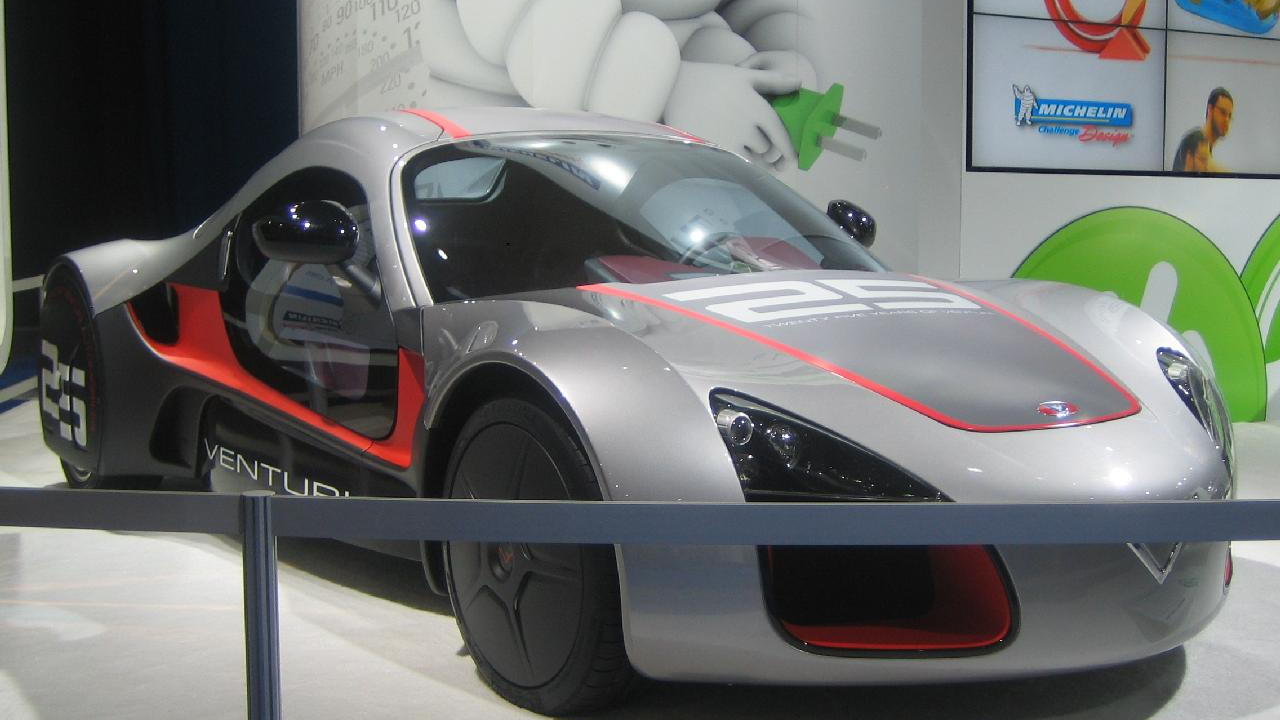
Instead, it's packed with odd-looking creations with names like BugE, cZone, Tango, and Triac, plus a handful of contenders for the $10 million Automotive X Prize for vehicles that get at least 100 mpg.

The Nissan Leaf is there, however; it's one of only four important cars on Electric Avenue. The others are the Mitsubishi i-MiEV (now on sale in Asia and Europe), and the two Chinese BYD vehicles, the E6 electric crossover and the F3DM plug-in hybrid sedan.

Danger! Danger!

Nissan faces the worst danger from the Electric Avenue image. It plans to sell the 2012 Leaf, a pure electric car with a 100-mile range, within two years. But Nissan has no stand at the Detroit Auto Show, let alone a press event.

To get the Leaf in front of the press and public, it was Electric Avenue or nothing. And, frankly, the Leaf display was underwhelming.

A little quality control, please?

Maybe next year, the organizers of the Detroit Auto Show could do us all a big favor. By all means, keep Electric Avenue, but restrict it to NHTSA-certified electric cars from major makers, plus selected others who sell "real cars". For the rest, why not banish them to an Experimental Alley or Golf-Cart Circle?

If the Detroit Auto Show is supposed to be promoting the interests of automakers, it'd sure be a public service.


 
Follow Us


Have an opinion?Join the conversation!

  • Posting indicates you have read this site's Privacy Policy and Terms of Use
  • Notify me when there are more comments
Comments (21)
  1. love the headline John!
     
    Post Reply
    Vote
    Bad stuff?

  2. Chinese cars will be "real" cars very soon. Some may deny this, but its going to be the same as when the Japanese came into the US industry. ALL of the auto dealers are taking huge hits, and all have relatively expensive cars (especially forefront technology bearing cars). People will buy the Chinese cars the second they are legal to drive if they can build a cheap reliable ≈100mpg. You would be surprised by what is already made in China.
     
    Post Reply
    Vote
    Bad stuff?

  3. I agree with Darryl. Your story is way too negative on the prospects of these cars. Just because the Detroit conference organizers were less than astute in placing the NEV group among the highway capable EVs doesn't mean cars like the Leaf will have a hard time competing when they hit the market. The Leaf and Volt will sell very quickly. The pent up demand for this technology is massive. The fake "reports" from such as the Boston Consulting Group and the National Research Council are last gasp efforts from the oil industry to try and confuse consumers about the reality of these cars.
     
    Post Reply
    Vote
    Bad stuff?

  4. @Paul: I think you misunderstood the drift of the article. I'm not weighing in on the likelihood of Leaf or Volt sales at all. I'm saying that Nissan may have hurt its prospects by putting the Leaf among non-highway-legal vehicles that are not "real cars".
    @Len: Most industry analysts think Chinese makers have a long, hard road to climb before they are able to sell cars in the U.S., which is the toughest large auto market in the world. The quality is not there, the marketers don't understand U.S. buyers very well, and establishing new brands here takes hundreds of millions of dollars. Chinese buyers are often purchasing their first car, so they don't know what to look for the way U.S. buyers do. And, frankly, the low-speed electric vehicles that predominated along Electric Avenue are pretty irrelevant to the vast majority of U.S. buyers.
     
    Post Reply
    Vote
    Bad stuff?

  5. Interesting the LEAF was put down there among all the oddballs and flakes. I've often wondered if Nissan is really going to come through with all their promises, or not. My money is on them cancelling it just as GM did with the EV1 and going back to the drawing board. Sorry, but until I see more proof of a committment from them such as GM has shown with the Volt, I'll not take them seriously.
     
    Post Reply
    Vote
    Bad stuff?

  6. The author calling himself a "car expert " is the only bigger laugh than his irrelevant opinions. Another blogosphere twit.
     
    Post Reply
    Vote
    Bad stuff?

  7. The issue with all these car makers is that they now have to deal with perceived public desire. Not in recent history has this been an issue ( at least not mine, I was not alive for the 70's oil crisis that changed Detroit). They no longer can shove cars down the public's throat and expect huge profits. I bought my first car in '99 when gas was cheap. It was a domestic 4 cyl and served me well for over 6 years. At that time, my age group was involved in the peak of the tuner scene, that has since dried up for the most part, no longer are industrial parks filled with street racing on Sat night. The domestic auto makers missed a golden opportunity to strike it good with the next round of adults who would be coming of age to purchase a higher end vehicle. Instead, we now look to the Europeans for style and status. Its too bad too, I just hit my 30's and always thought growing up that I would be like my dad driving a nice GM vehicle.
     
    Post Reply
    Vote
    Bad stuff?

  8. Did the author look at the Triac? I've been watching the development of this vehicle for years. IT IS NO GOLF CART.
    For $25k, the Triac promises 70 mph, 100 mile range (less if you have AC or heat on, I presume), 2 seat, 3 wheel (one in the back!) preformance.
    Does the Triac deliver? Is "Green Vehicles" in production? These are the questions I would like the author to be exploring!
     
    Post Reply
    Vote
    Bad stuff?

  9. Regarding stuart22's comments about LEAF...Nissan has been (maybe) more consistent on EV development than all. Long history of development efforts, in-house battery development, multi-vehicle product plan, global engagement and manufacturing commitments here in U.S. and other markets...PLUS an aggressive outreach with power companies and governmental entities for infrastructure development...I don't know what more proof can be offered...they truly are leading the way.
     
    Post Reply
    Vote
    Bad stuff?

  10. As Detroit Automotive Technology Examiner, I agree with John Voelker. The public is not getting the truth it deserves at Electric Avenue; it still has to read between the lines. Furthermore, The Volt showed a charge plug, but NOT a decent charger, which I know it needs. That hand-held hose coiler version was a disgrace and an "opportunity missed." At least the Leaf showed reality. And those golf-cart like vehicles couldn't pass FMVSS if they tried. As a former design engineer, I assure you the public is still confused!
     
    Post Reply
    Vote
    Bad stuff?

  11. Disgust to read your discriminatory report. There are "minorities" who really appreciate NEV vehicles and othe forms of Electric transportation other than the ones that seem to be " pretty irrelevant to the vast majority of U.S. buyers"
    Keep your selfishness for yourself.
    Thanks!
     
    Post Reply
    Vote
    Bad stuff?

  12. I'm old enough to remember when the Japanese cars first hit our roads, no one took them seriously. Then the Korean's- still not taken seriously. Partially as a result of this head in the sand attitude came the near collapse of our big 3. Now some say to pay no mind to the Chinese. Really? Think about it. They don't even need our market here in order to be top global producers- Asia, South America, Russia, Africa - all will need/ want inexpensive, possibly electric forms of transportation. We better hope the Chinese even bother to meet our standards, or else we will be out of what could easily be the best transportation value in the near future! While we are talking in circles, BYD has thousands of top engineers working to bring the best electric product possible to market. We need to stop the "us against them" thinking. We don't want to watch our auto industry go through another near collapse in a few years.
     
    Post Reply
    Vote
    Bad stuff?

  13. It's fascinating to me--if a little baffling--that so many commenters seem to have read this piece as bashing China.
    Most auto industry analysts simply don't believe China can build cars that are up to U.S. market requirements--for safety, quality, and design--within the next five years. That is not to say that it won't happen, nor that U.S., Japanese, or other makers should ever underestimate the threat Chinese makers could pose in the future.
    To Lyle's point, do you really think that "the best transportation value in the near future" is one that doesn't meet U.S. standards for safety or (in the case of combustion-engined cars) emissions? The Chinese may be happy to sell us lots of those. But unless or until Chinese makers can design and build world-class cars--which as of now they can't--it won't happen.
    Much more likely is that an Asian manufacturer will export cars under brands we know, like Toyota or Honda, to the U.S. from China. The Honda Fit models sold in Belgium (as the Honda Jazz) are Chinese-built, by Honda, and their quality is indistinguishable from that of Japanese-built Fits. The same cannot be said for any native Chinese brand.
    At the moment, that is.
     
    Post Reply
    Vote
    Bad stuff?

  14. THANKS for a catchy title and creating INTEREST!
    RE: "Consumer PAYBACK on electric vehicles is likely 10 or more years away", This is irrelevant!
    WHAT VEHICLE HAS a "PAYBACK", when are you going to "pay off" the fuel bill for a gasoline engine.
    You WILL PAY MORE for dirty FUEL over the service life of gasoline guzzler than you have saved by paying less for intial vehicle cost of an EV!
    With cost equivalent of LESS than a dollar/gallon equivalent for electricity, electric are the BEST!
    And if a owner want to stop rising cost for grid electricity to recharge, they can get endless clean and free "fuel" from the sun with your own solar electric system at home and/or work...I do!
     
    Post Reply
    Vote
    Bad stuff?

  15. The Chinese have on eproblem that the Jap[anese did no thave. Ther was a vacan tmarket niched no tsatified by the domestic manufactureres fo rsmall cars in the American market. They could get an uncontested foothold and expand from there. That is now closed, and there are no gaps to exploit other than tiny trucks as Mahindra is planning to attack.
    I don't know if even tha tmarket will remain unoccupied by established vendors. There are rumors of new Rangers and Canyons, and Dodge Ram is even talking of introducing such a trucklet in model year 2011.
     
    Post Reply
    Vote
    Bad stuff?

  16. @ Anyone who things china can compete: No they can't. China has severe quality problems, and they have a lower GDP than America for a reason: They sell complete crap, and a lot of it. We sell twice as much VALUE as china and yet produce less product because what America and Japan both have is quality, beautifully machined products. Chinese have underpaid workers, and the Chinese business model is completely against paying their workers living wages. Sorry, let them stick to cheap scooters and minibikes, not cars.
     
    Post Reply
    Vote
    Bad stuff?

  17. Certainly there were a few oddball looking electric cars at the show as they show up at all alternative vehicle auto shows. I am surprized that you did not post a picture of the SABA Motors Carbon Zero Roadster which was on display in Electric Avenue next to the Mitsubishi MeiV and a few feet from the Nissan Leaf. Certainly a few good photos would have completely refuted the jist of the article. see www.sabamotors.com . In the words of John Waraniak , VP of SEMA , "It takes just as much effort to design an ugly looking car and it does to design a good looking car and SABA Motors is on the right track". The SABA Roadster received an incredible amount of possitive feedback. 10's of thousands of visitors had their pictures taken with this Roadster during the show and a good majority of those had no idea it was a zero emmissions vehicle, they did so because of the stunning good looks. Many asked about how soon it will be available, and were interested in spite of it being an electric vehicle, rather than because it is an electric. See for yourself on www.sabamotors.com
     
    Post Reply
    Vote
    Bad stuff?

  18. John, I was at both media days for the show and I agree completely with your take on Electric Avenue. HOwever, I would add the Mitsubishi iMiEV to the list of 'real' vehicles, as it's already on sale in Japan and will make it to both Europe and the U.S. late next year or so. You are 100% right to point out that the claims of various startups are not to be confused with reality, despite how much certain posters want those claims to be real. If they can't meet current (and near-future) regulations in a package that people will accept, for a price they are willing to pay, they aren't "real" vehicles. There really is no way around that.
     
    Post Reply
    Vote
    Bad stuff?

  19. @AOatJWT: Should have made it clearer that I do count the i-MiEV amongst the "real" vehicles. We've covered it several times on GCR.
     
    Post Reply
    Vote
    Bad stuff?

  20. Swell John seems to know it all. The truth is he hasn't done an ounce of real research on these vehicles. He acts like an electric vehicle activist but in truth is contributing to again killing the electric cars with lies. Who works harder on making it real then these small EV manufacturers. Perhaps instead of putting down the true activists you should join them and offer a helping hand. Or you might consider keeping your worthless opinions to yourself.
     
    Post Reply
    Vote
    Bad stuff?

  21. I recently came across your post and have been reading along. I thought I would leave my first comment. I don't know what to say except that it caught my interest and you've provided informative points. I will visit this blog often.
    Thank you,
    Small Business Loans
     
    Post Reply
    Vote
    Bad stuff?


Have an opinion?Join the conversation!

Find Green Cars

Go!


© 2011 Green Car Reports. All Rights Reserved. Green Car Reports is published by High Gear Media. Send us feedback. Stock photography by Homestar, LLC.