It's really the defining feature of any plug-in electric car: How much electric range does it have?
The ever-helpful EPA, which has rated the gas mileage of all new cars, publishes its estimates of electric range for every plug-in car on the market.
So here's our list of all 2013 plug-in cars, with a few notes the EPA doesn't include, from lowest to highest.
PLUG-IN HYBRIDS and
RANGE-EXTENDED ELECTRICS
2013 Toyota Prius Plug-In Hybrid: 6 miles continuous, 11 miles total
The Toyota Prius hybrid, by this point, is an icon. The most popular car sold in California, it has expanded to a range of four vehicles, including a plug-in hybrid model that has the dubious honor of offering the least electric range of any car with a cord in the U.S. That didn't keep it from being the second best-selling electric car last year, however--due in part to the security of the Prius name.
2013 Honda Accord Plug-In Hybrid: 13 miles*
While this rating hasn't yet appeared on the EPA website, we expect it to be confirmed soon. The plug-in Accord, which like many plug-in hybrids is sold only in a few states, is the first car to use Honda's new two-motor full hybrid system for larger cars (a conventional hybrid will follow later this year). It competes directly with the Ford Fusion Energi.
2013 Ford Fusion Energi: 21 miles
2013 Ford C-Max Energi: 21 miles
Both of Ford's plug-in hybrids use the same powertrain and are rated at 21 miles of electric range--which we found in our test drive to be at least 15 miles and potentially more, depending on how you drive and what speed you travel at. The C-Max is a five-door compact hatchback, the Fusion a four-door mid-size sedan.
2012 Fisker Karma: 33 miles
We're leaving the Fisker Karma in this list for the moment, although the company hasn't built any cars since last summer and is now working hard to find a savior or a buyer. Still, the Fisker Karma is one of only two range-extended electric cars on the market (along with the Volt) and it's a stunning and attention-grabbing machine--even if it's the least efficient plug-in car on the market.
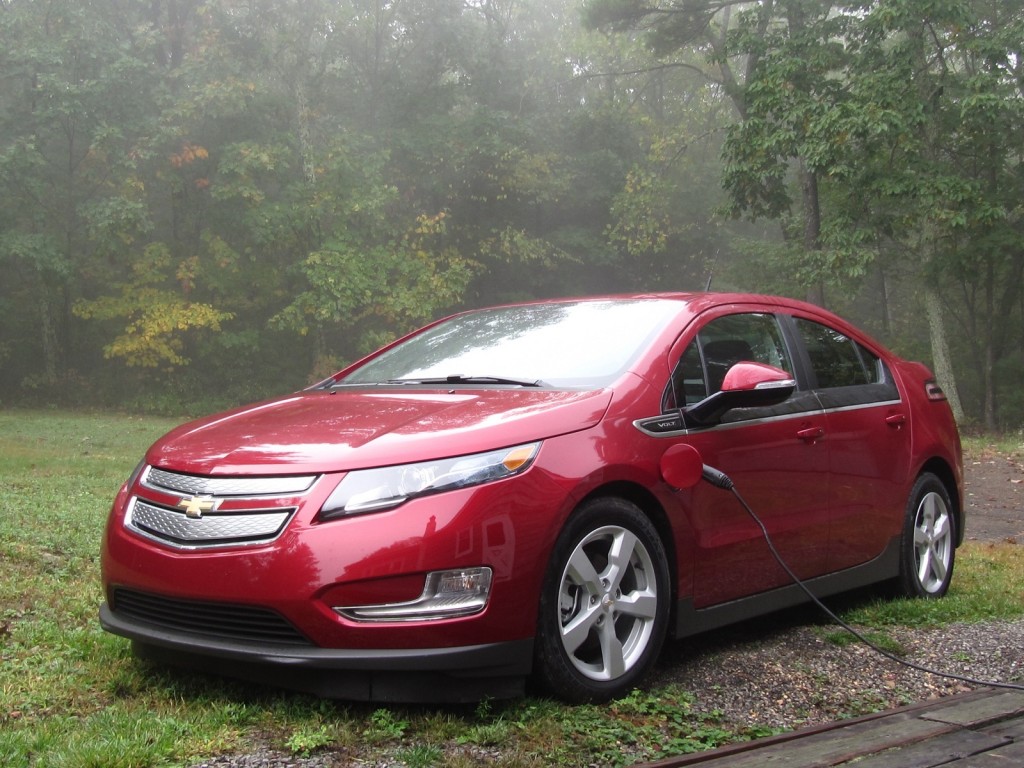
2013 Chevrolet Volt, Catskill Mountains, Oct 2012
2013 Chevrolet Volt: 38 miles
The best-selling plug-in electric car on the market, the Chevy Volt is now in its third year on sale. For 2013, its rated range went up slightly from 35 to 38 miles. Its Voltec powertrain will also be used in next year's stunning and considerably pricier 2014 Cadillac ELR luxury electric coupe.
BATTERY ELECTRIC CARS
2013 Scion iQ EV: 38 miles
This one's barely even worth covering, since its minimal battery range is likely to mean it's effectively unsellable in the U.S. We expect the small handful of electric Scions to be dispensed to fleets for "testing" before they're quietly sent back to Japan after a decent interval.
2013 Mitsubishi i-MiEV: 62 miles
We're fond of the little Mitsubishi, the smallest five-door hatchback sold in the U.S. But while it was the first modern electric car to be sold globally in volume, its range of 62 miles falls below 50 miles if it's driven aggressively or you use lots of climate control. This year, i-MiEV incentives have soared--and so have sales. Great for around town.
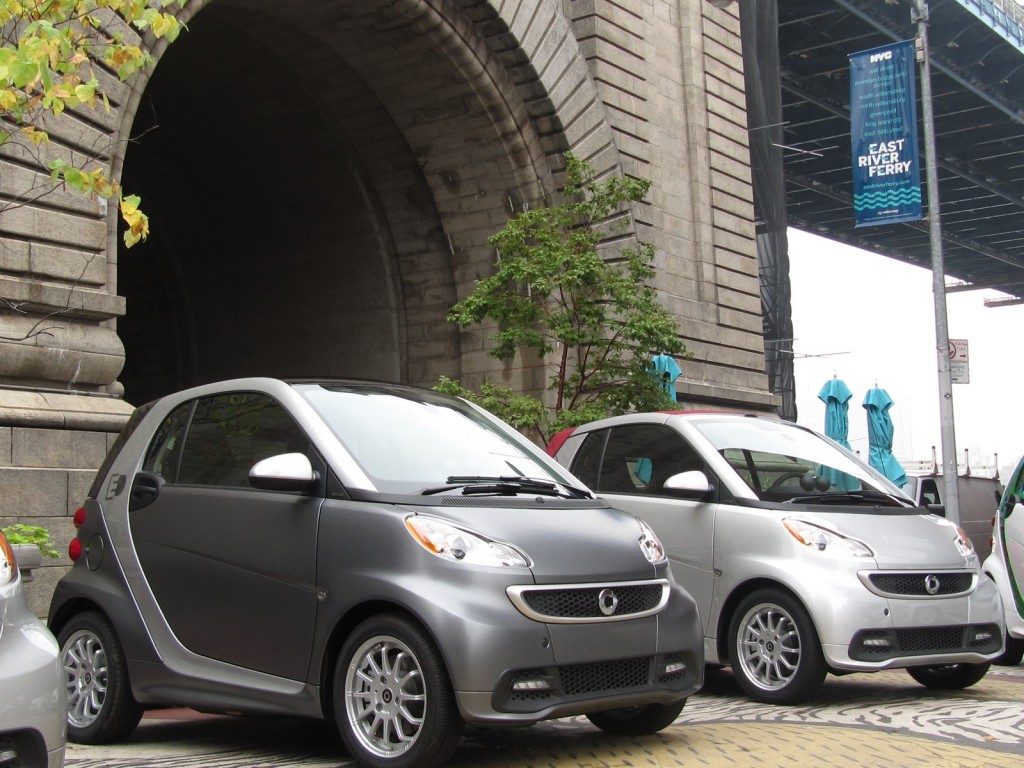
2013 Smart Electric Drive, Brooklyn, NY
2013 Smart Electric Drive: 68 miles
This rating for the little two-seater, the shortest and least expensive electric car sold in the U.S., applies both to the coupe and the convertible--which is the sole drop-top plug-in car sold this year.
2013 Nissan Leaf: 75 miles*
There's a catch here. This year's anticipated 75-mile range rating isn't directly comparable to last year's 73-mile rating because the 2013 number is an average of the two ranges achieved at 80 and 100 percent battery pack charges, respectively. The comparable figure to last year's 73 miles would be 84 miles this year, at a 100-percent charge.
2013 Ford Focus Electric: 76 miles
While Ford claims it's serious about selling the electric Focus, the sales results for 2012 were pretty dismal: just 685 units. To our mind, it's debatable whether this is a compliance car--Ford strenuously denies it--or simply less profitable than Ford's hybrids and plug-in hybrids. For what it's worth, Focus Electric owners love 'em.
2013 Honda Fit EV: 82 miles
The electric Fit is a fun car to drive, has a lot of punch--courtesy of a powerful electric motor from Honda's FCX Clarity hydrogen fuel-cell sedan--and is a practical package. That's why it's too bad that it's just a compliance car, with only 1,100 to be leased over three years--and then taken back by Honda afterward.
2013 Fiat 500e: 87 miles
This one's a compliance car too, but it looks sharp and cheeky, and has some neat design features that make us wish it weren't. Chrysler is quite clear, though: The company didn't want to build it and will lose money on every one it sells.
2013 Coda Sedan: 88 miles
We're including the Coda in here even though we're not convinced the company will be with us much longer, or that there are any 2013 model-year cars available. Still, it does squeak out the highest rated range of any electric car without a Tesla powertrain--and we think 100 miles might be a reasonable everyday range.
2013 Toyota RAV4 EV: 103 miles
The only plug-in crossover utility vehicle on the market, Toyota's compliance car has a powertrain engineered by Tesla Motors [NSDQ:TSLA] that's largely similar to the one fitted to the smallest-battery-pack version of its Model S luxury sport sedan. Too bad Toyota will only sell 2,600 of them over three years.
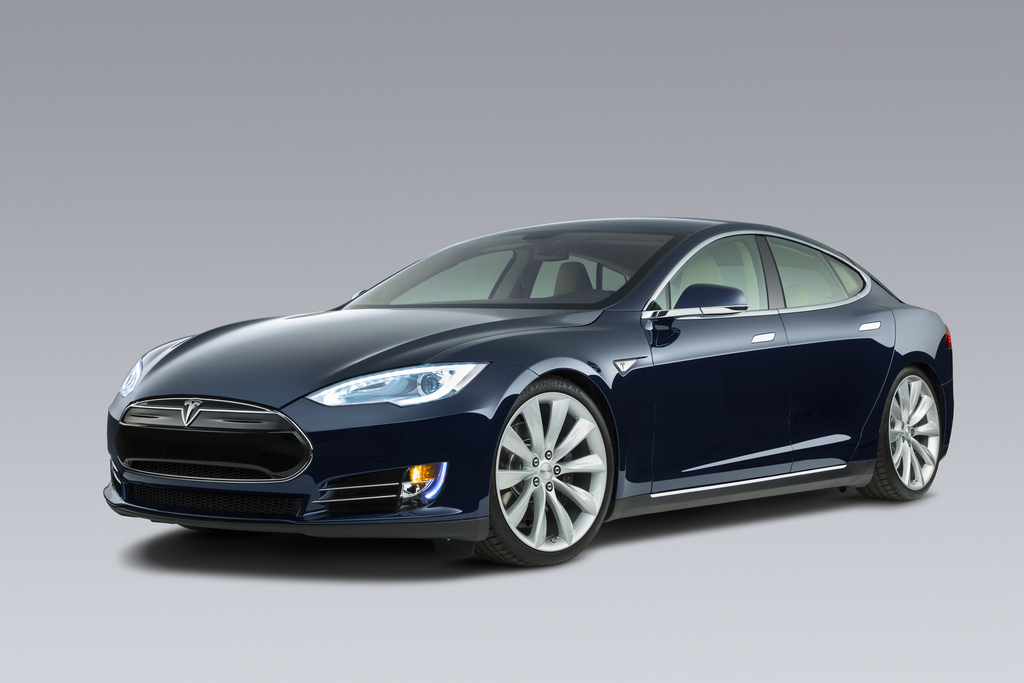
2013 Tesla Model S
2013 Tesla Model S (60-kWh): 208 miles
2013 Tesla Model S (85-kWh): 265 miles
We've said before that the Tesla Model S--an all-electric luxury sport sedan from a Silicon Valley startup--is a surprisingly good car. In fact, it won this site's Best Car To Buy 2013 Award hands down.
The car is now in volume production and Tesla is delivering hundreds of them a week while owners, including our contributor David Noland, are still learning how the Model S works in real-world use.
+++++++++++
As always, however, the rated range of a plug-in electric car will vary--considerably--with driving style, ambient temperature, and other factors.
Winter weather will reduce the distance an electric car can cover--here are six tips to maximize winter range--and aggressive driving sucks down range noticeably as well.

2014 Cadillac ELR revealed at 2013 Detroit Auto Show
As more electric cars enter the U.S. market, we'll update this article to keep it current.
We're still waiting to learn the range ratings of the 2013 Tesla Model S with the 40-kWh battery pack, the 2014 BMW i3, the 2014 Cadillac ELR, the 2014 Chevrolet Spark EV, and others.
Meanwhile, tell us: What's the minimum range needed for an electric car to be practical? Is it 120 or 125 miles, as an informal survey suggested? More? Less?
(And, no, "limitless range like a gasoline car" is not an acceptable answer.)
Leave us your thoughts in the Comments below.,
+++++++++++