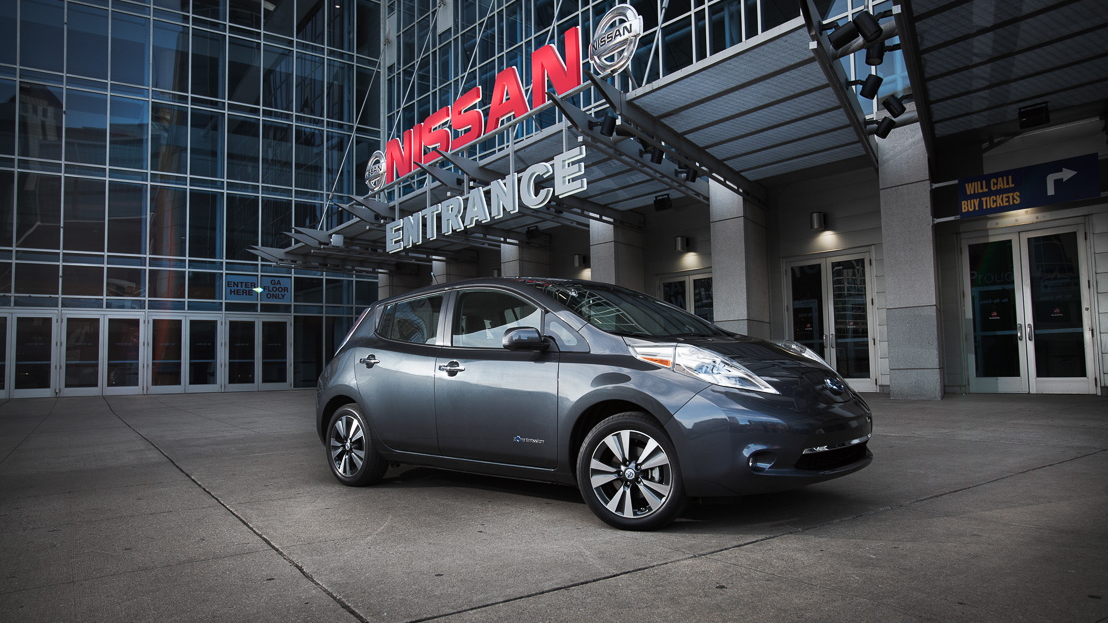
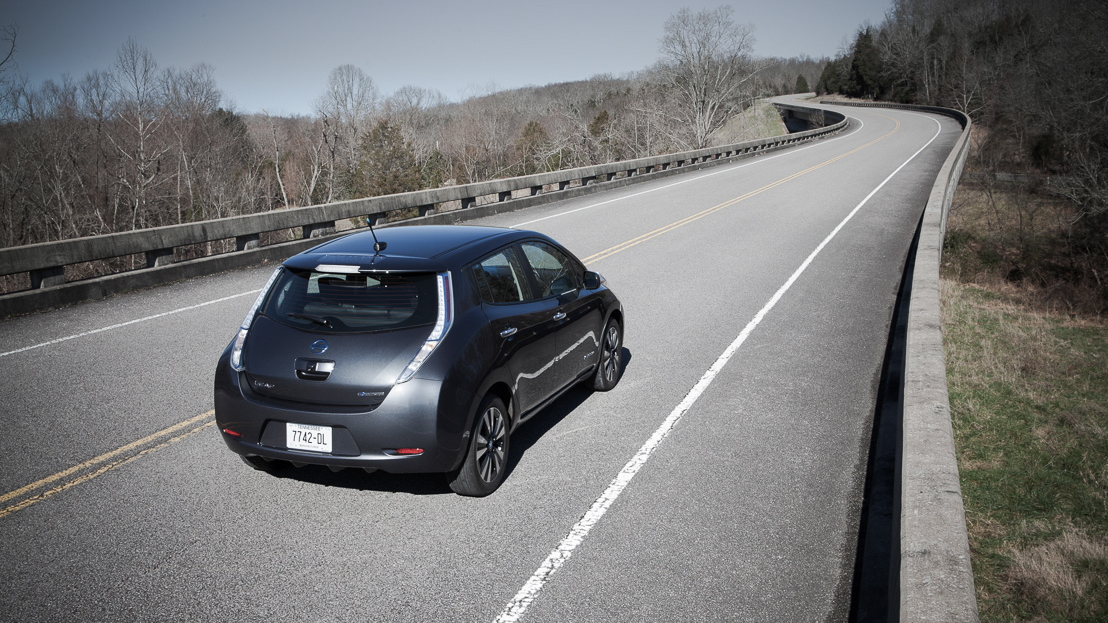
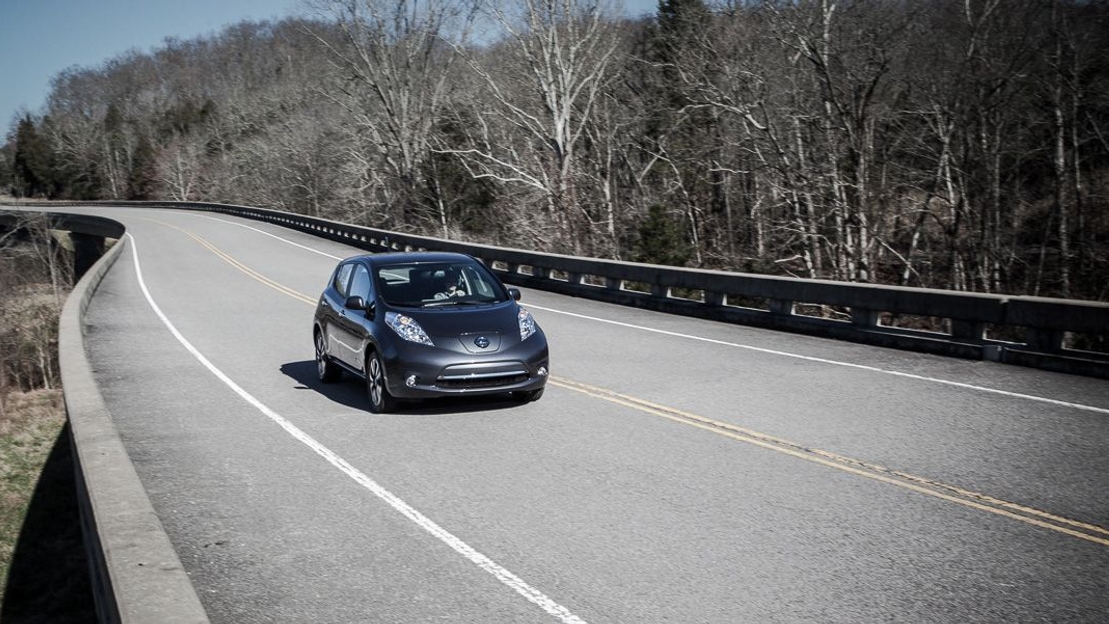
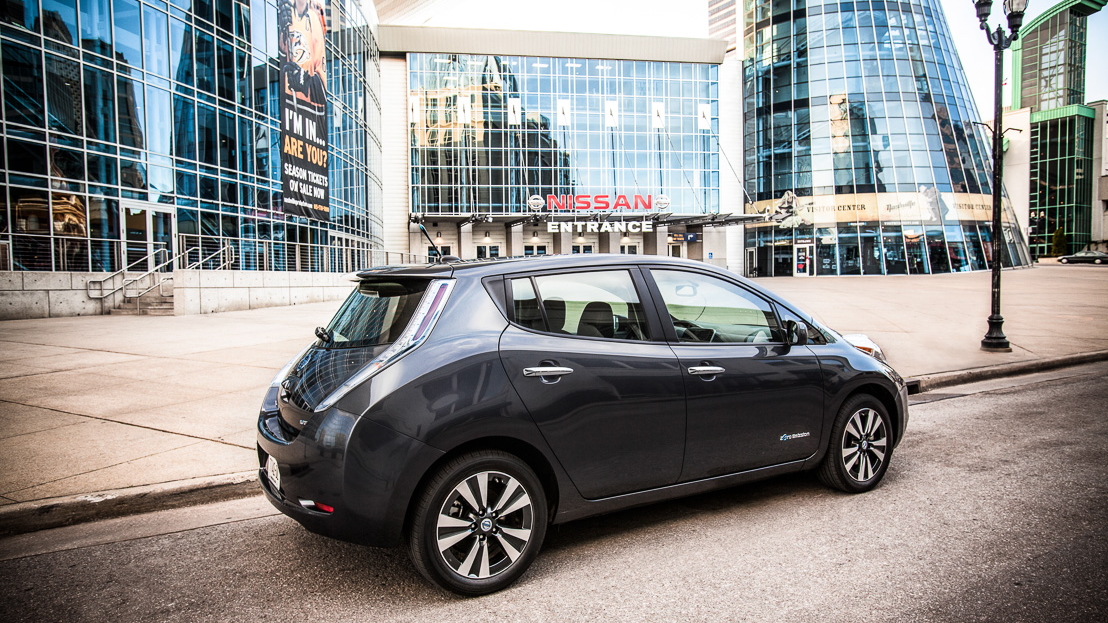
2013 Nissan Leaf
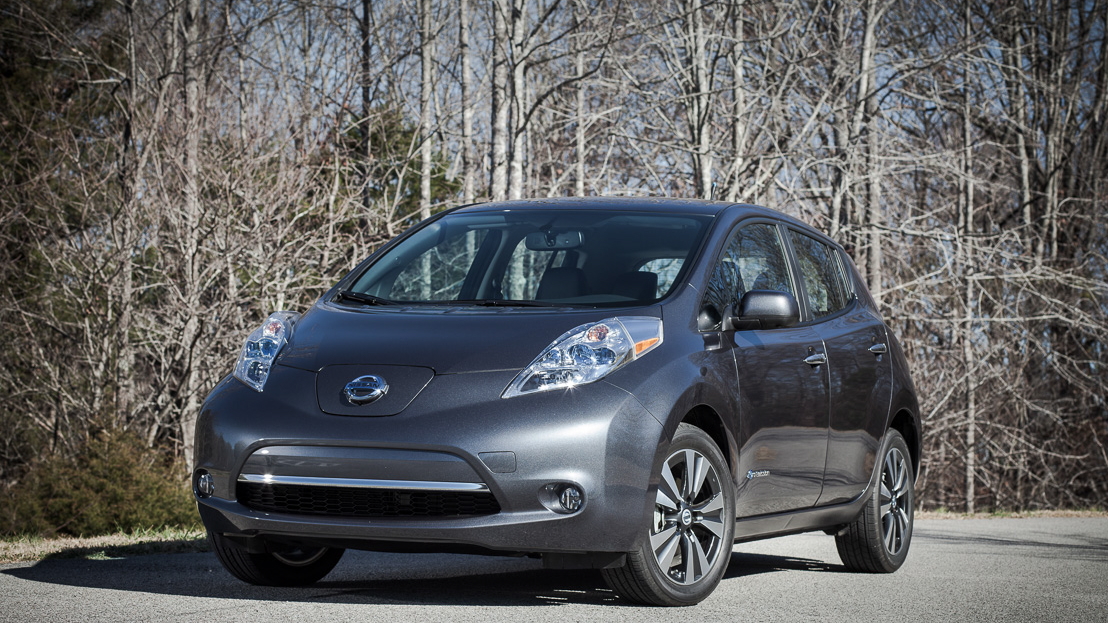
In its third year on the market, the updated 2013 Nissan Leaf will have a slightly longer range, a new and lower-priced base model, faster charging, and a more efficient cabin heater.
The battery electric car goes into production at Nissan's assembly plant in Smyrna, Tennessee, this week.
While the 2013 Leaf is still being tested to determine its EPA range rating, Nissan says that range higher than the 2012 model's 73 miles is "expected."
The higher range comes not from a larger battery --the lithium-ion pack remains at 24 kilowatt-hours--but from improvements to aerodynamics, regenerative braking, and energy management. Nissan says the drag coefficient has been cut from 0.29 to 0.28.
Optional 6.6-kW charger
The much-rumored 6.6-kilowatt onboard charger will be an extra-cost option on the base model, but standard equipment on the two upper trim levels--as it is on the 2013 Ford Focus Electric. It reduces the charging time for a fully depleted battery from seven hours to about four, using a Level 2 charging station.
The onboard charger in all 2013 Leafs has also been reduced in size and relocated to a new position under the hood, which increases cargo volume by removing the "charger hump" found on the load-bay floor on earlier cars.
Nissan is offering a new and optional hybrid heater that cuts energy consumption compared to the electric resistance heater used on 2011 and 2012 Leaf models.
Three trim levels
The new base trim level is called the Leaf S model. It replaces the LED headlights with less expensive projector beams, and uses 16-inch steel wheels with plastic covers rather than alloy wheels.
It also loses both the navigation system and the remote connectivity that allows drivers to turn on the climate control and monitor battery charging remotely using a smartphone.
The Leaf S offers an optional rear-view camera that displays on the smaller display screen in the center stack. The 6.6-kW charger is optional as well.
The middle trim level, the 2013 Leaf SV, rides on 16-inch alloy wheels and offers the LED headlamps and running lamps as an option.
The top-range trim level, the Leaf SL, adds a number of new standard features, including leather seats and a new design for its 17-inch alloy wheels. It features the LED headlamps as standard equipment.
A Premium Package for the SV and SL trim levels includes the AroundView monitor system, which shows images of the car's surroundings on the center display, and a seven-speaker energy-efficient audio system from Bose.
The 6.6-kW charger is standard on both SV and SL models.
Changes and upgrades
Other interior changes include the availability of black upholstery, longer sun visors, and a leather-wrapped steering wheel. Bluetooth connectivity is standard on all 2013 Leafs.
The trip computer now displays a battery state-of-charge percentage, as well as a bar graph, to give drivers more information on energy use.
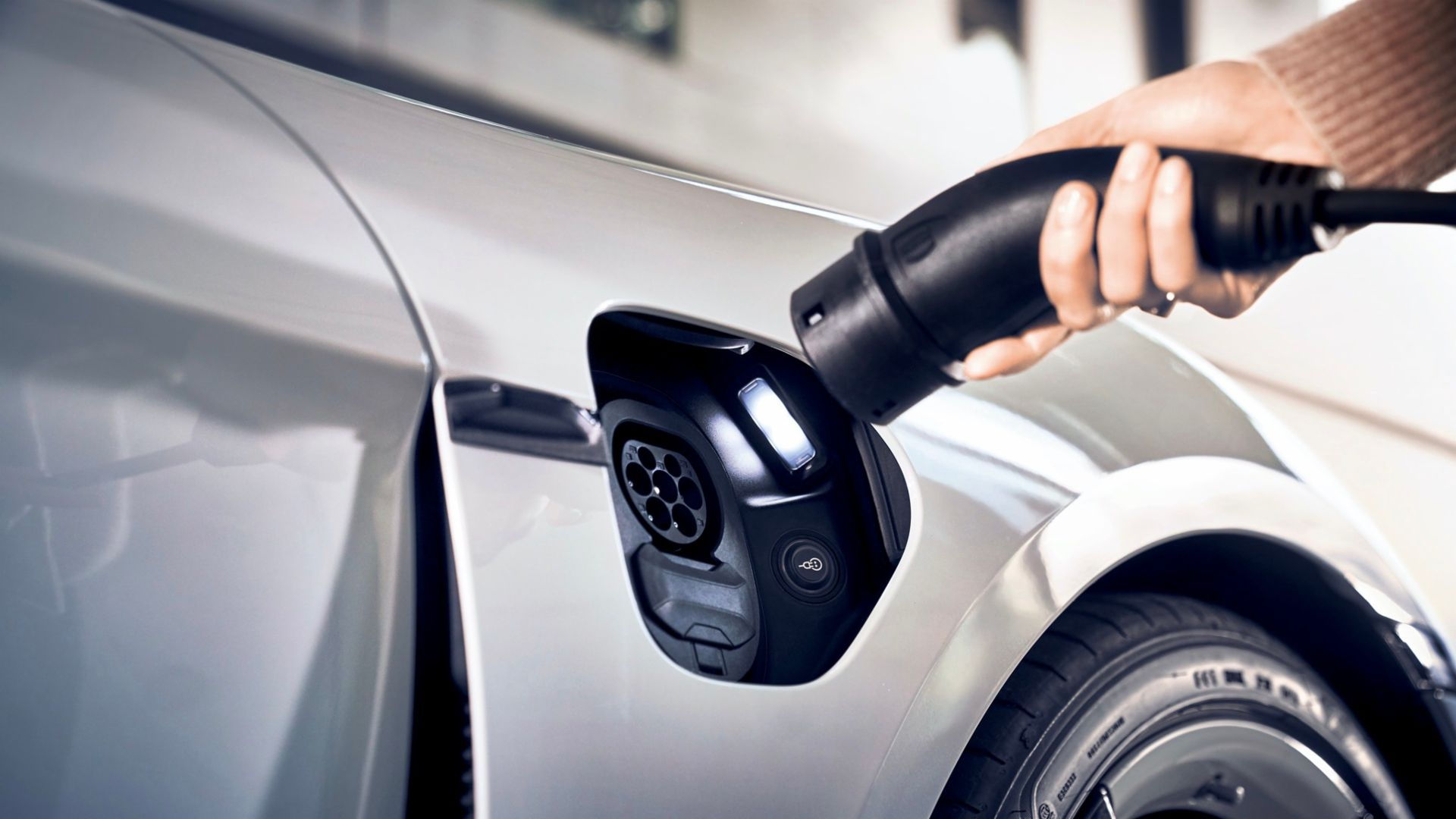
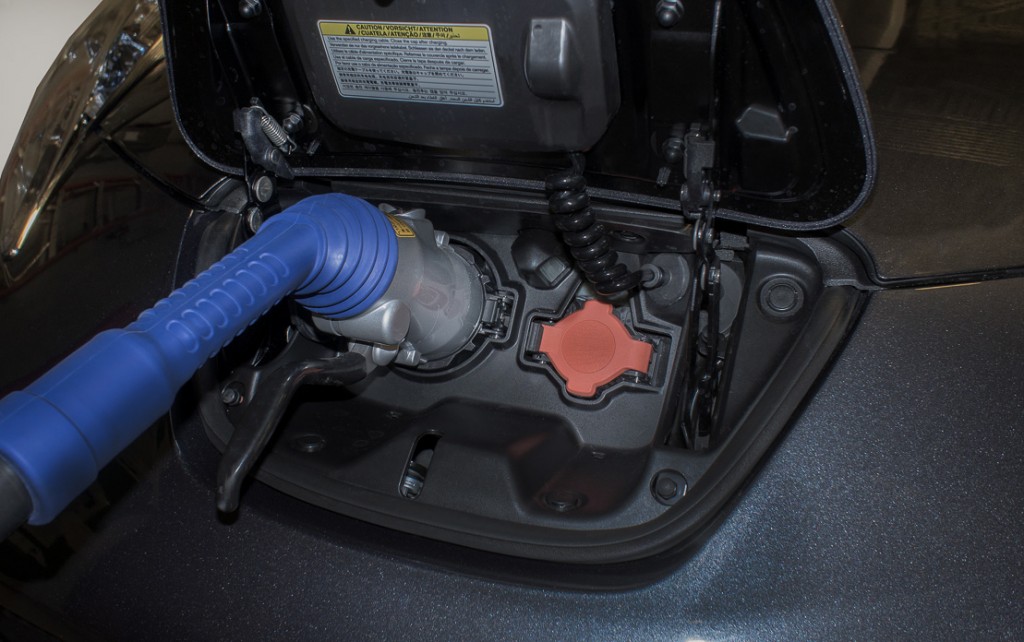
The charging port door on the nose of the 2013 Leaf now has a light inside, to illuminate the ports, and can be locked. The intelligent key can be used to unlock the charge-port door.
Nissan has also added a driver-selectable "B" drive mode that increases brake regeneration.
Electric motor, battery unchanged
The 2013 Nissan Leaf otherwise uses the same powertrain as the 2011 and 2012 models: an 80-kilowatt (107 horsepower) electric motor, producing 187 lb-ft of torque, driving the front wheels.
The CHAdeMO DC quick-charging port continues as an option, offering the ability to charge the battery pack to 80 percent in roughly half an hour.
Seven colors are offered on the 2013 Nissan Leaf: Brilliant Silver, Super Black, Cayenne Red, Pearl White, Blue Ocean, Metallic Slate, and Glacier White. The last two are new additions this model year.
Pricing for the 2013 Nissan Leaf will be revealed closer to the car's on-sale date in early February.
+++++++++++
Follow GreenCarReports on Facebook and Twitter.
Have an opinion?
Re pricing: if this is any indication, the Japanese version of the S trim is almost 6k$ cheaper than the 2012 SV. The US variant is different, but to what extent?
Interesting times ahead...
http://insideevs.com/us-nissan-leaf-production-underway-video/
http://youtu.be/WAbJoG4-K-0
But I'm a bit confused, how is the motor not changed? I thought Nissan themselves reported that the amount of the element, Dysprosium, was reduced by 40%. This not only had reduced the environmental impact, but improved performance by removing weight as well.
So, from driver perspective no performance change; from manufacturing perspective means lower cost & less dependency on constrained supplies of dysprosium from China.
But the Leaf still doesn't have active battery thermal management.
And it's still ugly, IMO.
Price? My guess: $36K before incentives.
Glad I leased my Ford when I did. And by the time Nissan solves the battery thing, others like Ford and BMW (love their "i"-line of electric cars!) will have figured it out long ago. (In other words, it just makes no sense to OWN an EV right now since changes are happening--and happening fast!)
BTW, if owning an EV doesn't make sense, thermal management is a non-issue, unless you are in Pheonix.
What happens to the range as the battery ages and depletes from use? Right, the range goes down. The warranty by Nissan covers the battery for a reduction in energy density of 30% within 5 years. That says to me, expect even less range as the battery ages.
How do I know all this?I own one.
Our Leaf is a year and a half old, 16K miles, no loss of range that is discernible, but I expect the car to have a 50 mile range at the end of its 8 year warranty. I'm hoping for the option to buy battery modules inexpensively to get back lost range.
In hindsight, leasing would have made more sense with a gen. 1 EV, but the Leaf has done everything we need it to do--as long as we drive no more than 35 miles each way!
Disclosure: I have cloth seats.
This is a common misperception. Leather is a co-product of the slaughter industry, not a by-product:
http://www.idausa.org/facts/leatherfacts.html
Consuming either supports factory farming and all the environmental destruction it causes. Switching to a vegetarian diet can reduce one's carbon footprint to an even greater extent than switching to driving a LEAF:
http://www.peta.org/issues/animals-used-for-food/global-warming.aspx
Or, for the detailed scientific analysis:
http://pge.uchicago.edu/workshop/documents/martin1.pdf
My leaf is a low milage car 1200 miles. and has never seen over 48 miles per charge at 80%charge driving 55 to 60 mph in eco mode. heating cabin 1 time pluged in at home, and 1 time on way home.
They didn't improved the energy density of the battery; this mistake will continue to limit the car's use, on one charge. to a city/short range commuter. Yes, the car will go 70 to 80 miles if you keep it below 55 mph, drive on flat land, and, use a brand new, 100% charged battery. Nissan recommends you only charge the battery to 80% to extend the life of the battery. If you do that, you will not get 70 miles.
The battery warrant is for a reduction in energy density of less than 30% within 5 years. And, I expect a reduction in range similar to this with age.
I like driving car. I could love it if it went 100 miles at 65 mph.
OR & WA have established the most substantial networks.
Highway driving needs fueling to be greater than a gallon of petro/hour to be practical. A gallon is equivalent to 33.7 kW of energy. Thus quick charging of >40kW/h is min necessary for highway driving. Even as battery density increase and the number of fuel stops decrease; we will still need higher charge rates (kW/h) to keep charge times reasonable. e.g. Tesla Model S's would take ~24 hours to charge 85kW at 3.6 kW/h. (12 hrs on 7kW/h Level 2, or 5 hrs on 19 kW/h Level 1 DC). Even the time difference for charging the Leaf's smaller 24 kWh battery is significant w/o QC.
Battery capacity can be expressed by how much energy it stores, e.g. in joules or in kW*h (1 kW*h = 3600 kW*s = 3.6 MJ).
For the Leaf: 24 kW*h, or ~21.5 kW*h useable -- ie, it can output 21.5 kW for 1h.
Charging now: how much energy is transferred per unit of time (e.g. kW*h per hour)? This is the definition of power (kW*h/h = kW).
Today's CHAdeMO QCs typically deliver 50 kW (which is also the max the Leaf can accept), so would fill an ideal 25 kW*h battery in half an hour.
Batteries are DC, the grid is AC. Conversion is done by the onboard charger for L1, L2 (vehicle gets 120 or 240V AC), and by the QC for L3 (vehicle receives 400+V DC).
I tip my hat to you Matt; you were basically stopping to charge after one hour of driving (not sure how long you were charging).
I hope the gov project at Argonne National Lab reaches its goal in 5 years. That will be a game changer.
1. 6.6KWh charger
2. Bettery Regenative Braking
3. Leather Seat
What about
Range? (slightly improved)
Price?
Battery thermal management?
more Power?
I suspect the single biggest issue with potential EV owners is range and only offering the new extended range car in Japan may be considered a slight to U.S. buyers. Nissan could have had a home run with the intro of the Japanese extended ranger version here in the states.
However, an entry level (depending on actual cost) may be attractive to some. I hope people overlook the lack of increased range issue and buy many, many of them.
The tweaks to the Japanese-market 2013 Leaf are largely carried over to the U.S.-built one, including the aero improvements and software updates. There are also some N America-only updates like the 6.6-kW charger.
Also, my understanding is that the 6.6kW charger IS standard equipment on both the SV and SL trims, and is only optional on the S.
You are correct regarding the 6.6-kW charger being standard on the two upper trim levels. When I read back through the article again, I realize I didn't specifically write that, just inferred it--so I've changed the copy a bit to make that clearer. Thanks for the comments.
http://bit.ly/jeffrange2013
I regret that I didn't post when some in the forum were assuming what the Japan range meant for the US vehicles. It's important to remember that comparably-equipped LEAF vehicles will generally travel the same distance on the equivalent change. That's to say, if you put a US LEAF, next to a Japan LEAF, next to a Euro LEAF, and each is equipped the same, and each has the same charge, they will travel the same distance. The only difference is the window sticker mileage value. Each country requires a different testing protocol, and this is how it appears that a LEAF in Japan travels farther. It's simply not the case.
A 14% increase in miles per charge is a pretty big advancement in range and this increased range was loudly and proudly touted by Nissan when they made their announcement about the 2013 Japanese version.
In your article from 1/09 about the U.S. made version of the you stated that "Nissan says that range higher than the 2012 model's 73 miles is 'expected."
I would think that If Nissan had even a remote chance of getting that type of increase with the U.S model they would have said so just as they did with the Japanese version.
In my defense, it appears that others in other forums were making the same conclusions as I have. BUT, I'm delighted to see the explanation and the clearing up of the confusion about the two versions and range.
I was planning on getting a 2013 LEAF regardless of the increased range or not because I feel it is a fantastic vehicle and I want Nissan to make this car a success, but it is good to get this news as I think it will help others be more confident about the purchase.
As you may have seen in this website and others, most Americans drive less then 50 miles a day so range is not as big an issue as you think. I argue that this new 2013 Leaf will more then double its 2012 sales w/ at least 20K sold in North America due primarily to the many minor improvements in the vehicle, the lower price, and the fact that it is now built in the US.
The Leaf is an excellent vehicle overall. In fact, if Nissan improves the Leaf as much as I think they will for the second gen, 100K in annual sales by the end of 2016 likely.
The problem is that the local NISSAN dealership cannot figure out why, and NISSAN America will not support the local dealership! The car has been in at the dealership for more than a week, with a life threatening hassard that Nissan is not addressing!
Have an opinion?Join the conversation!