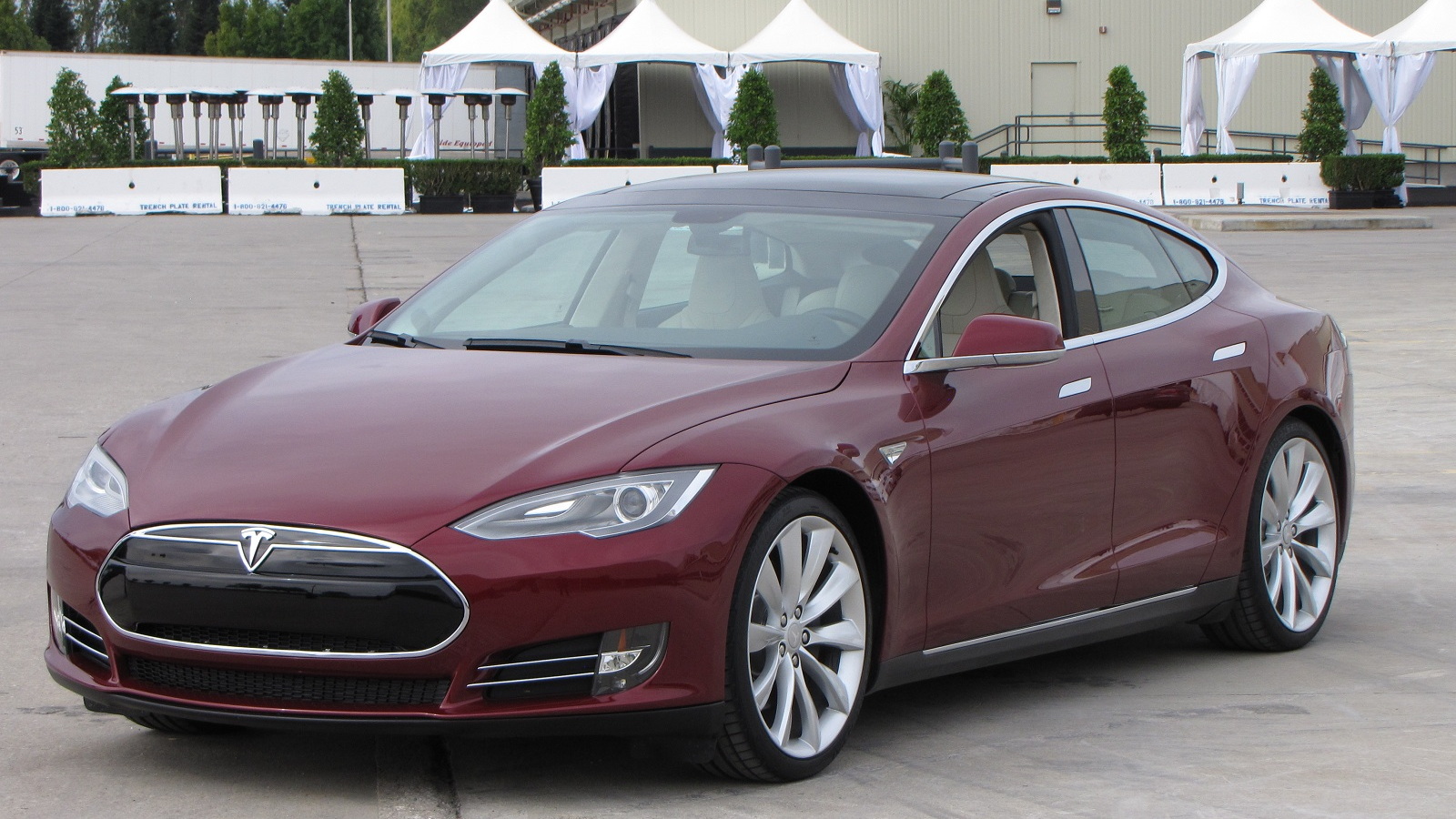
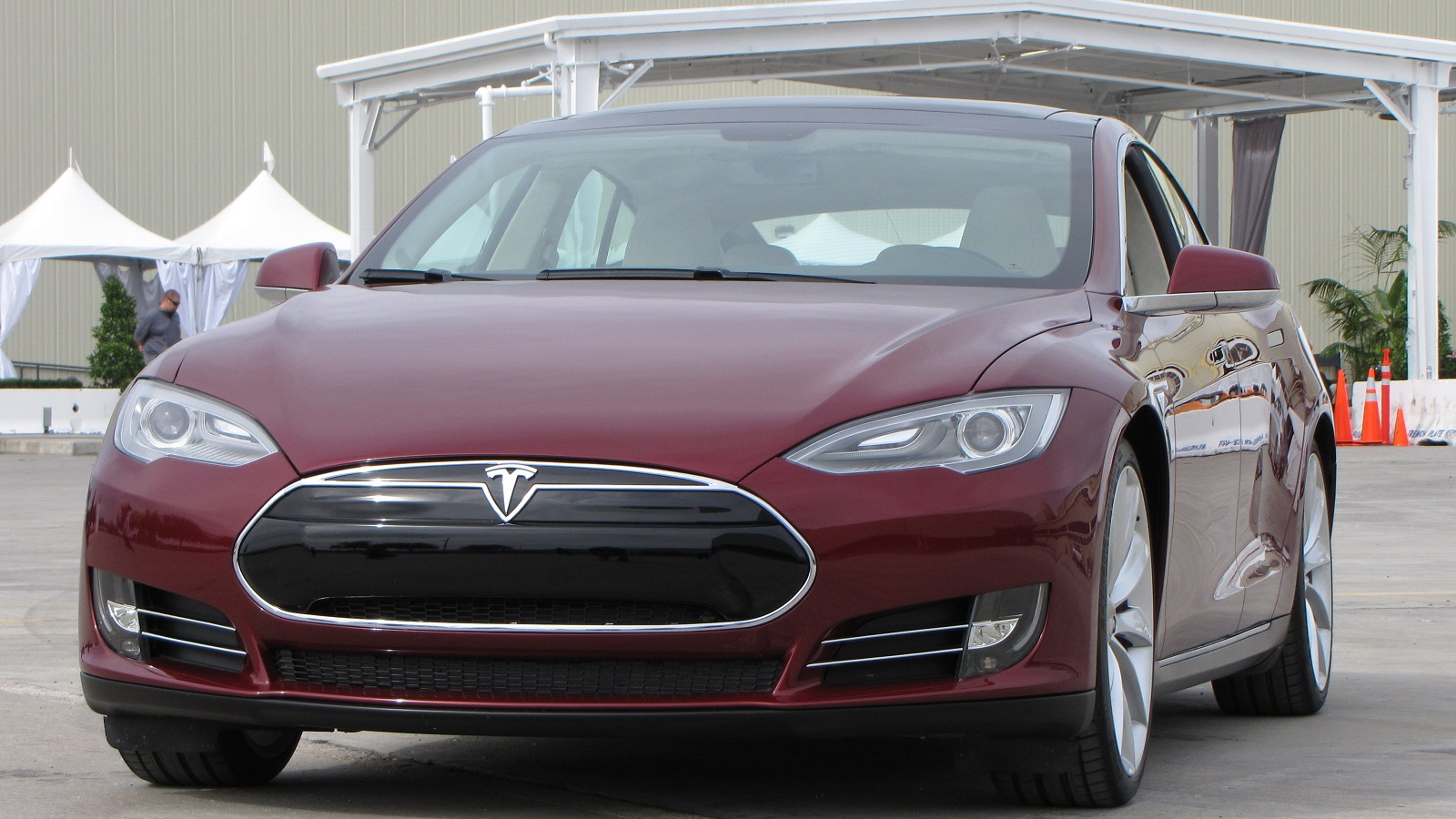
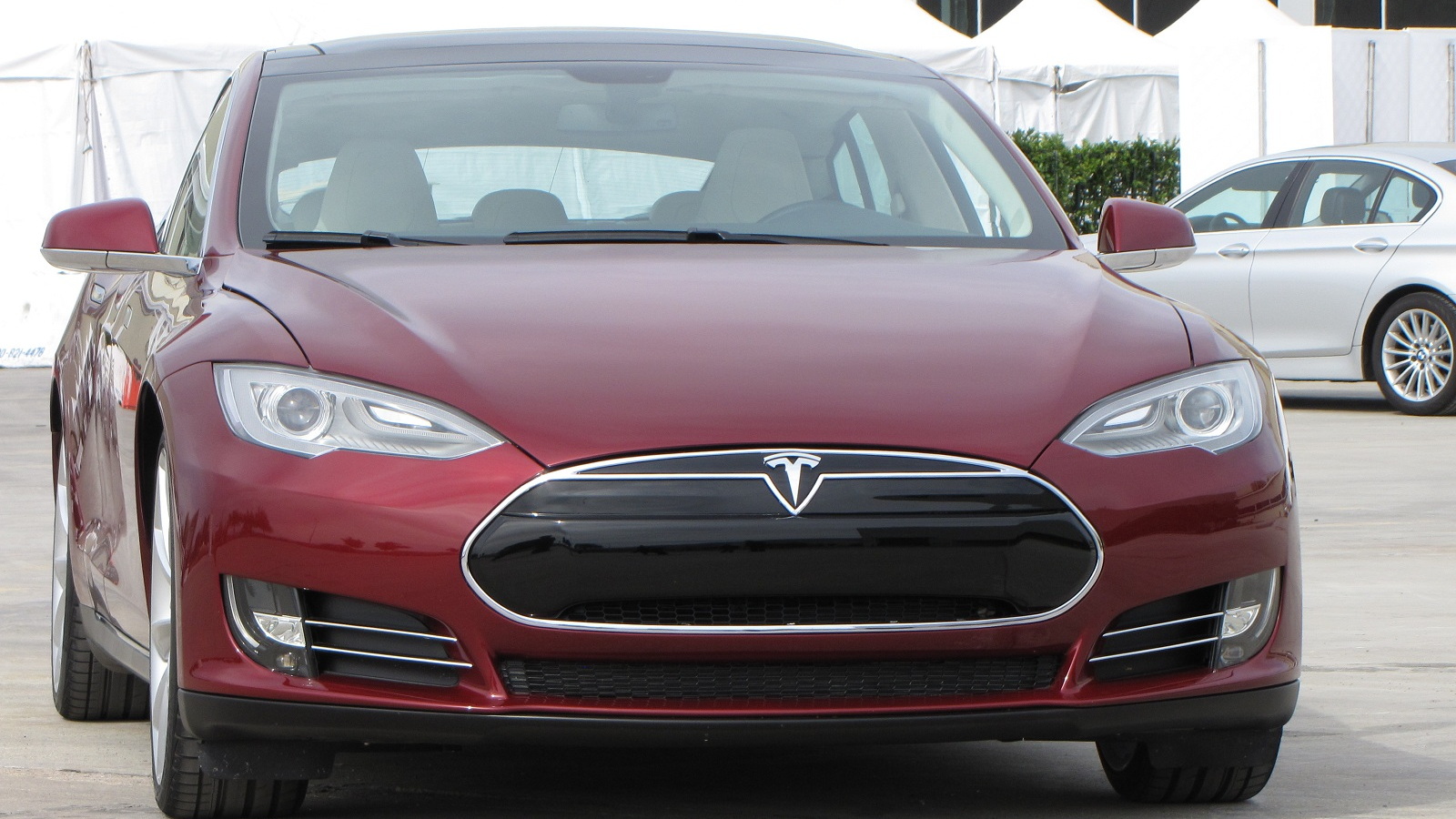
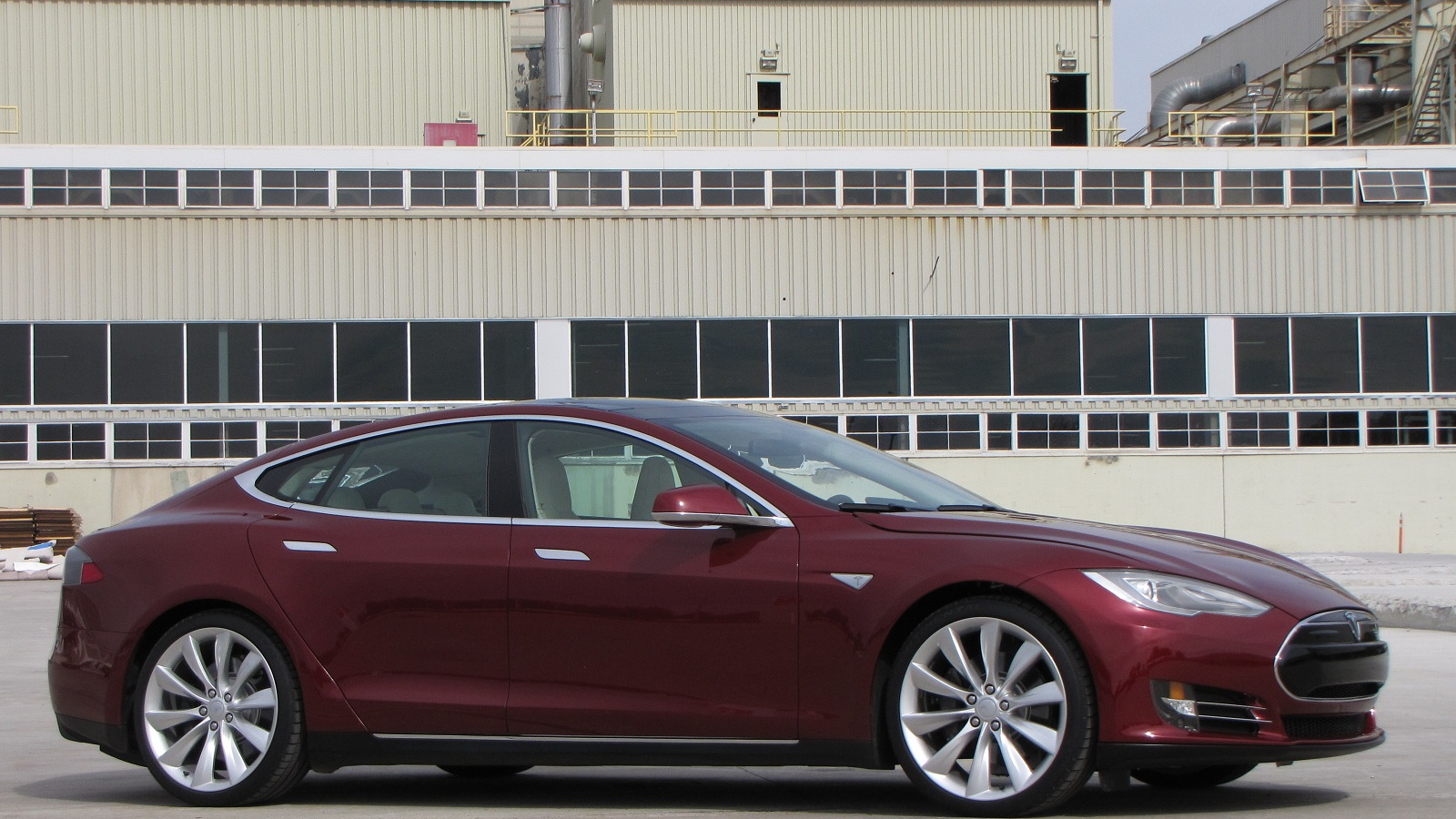
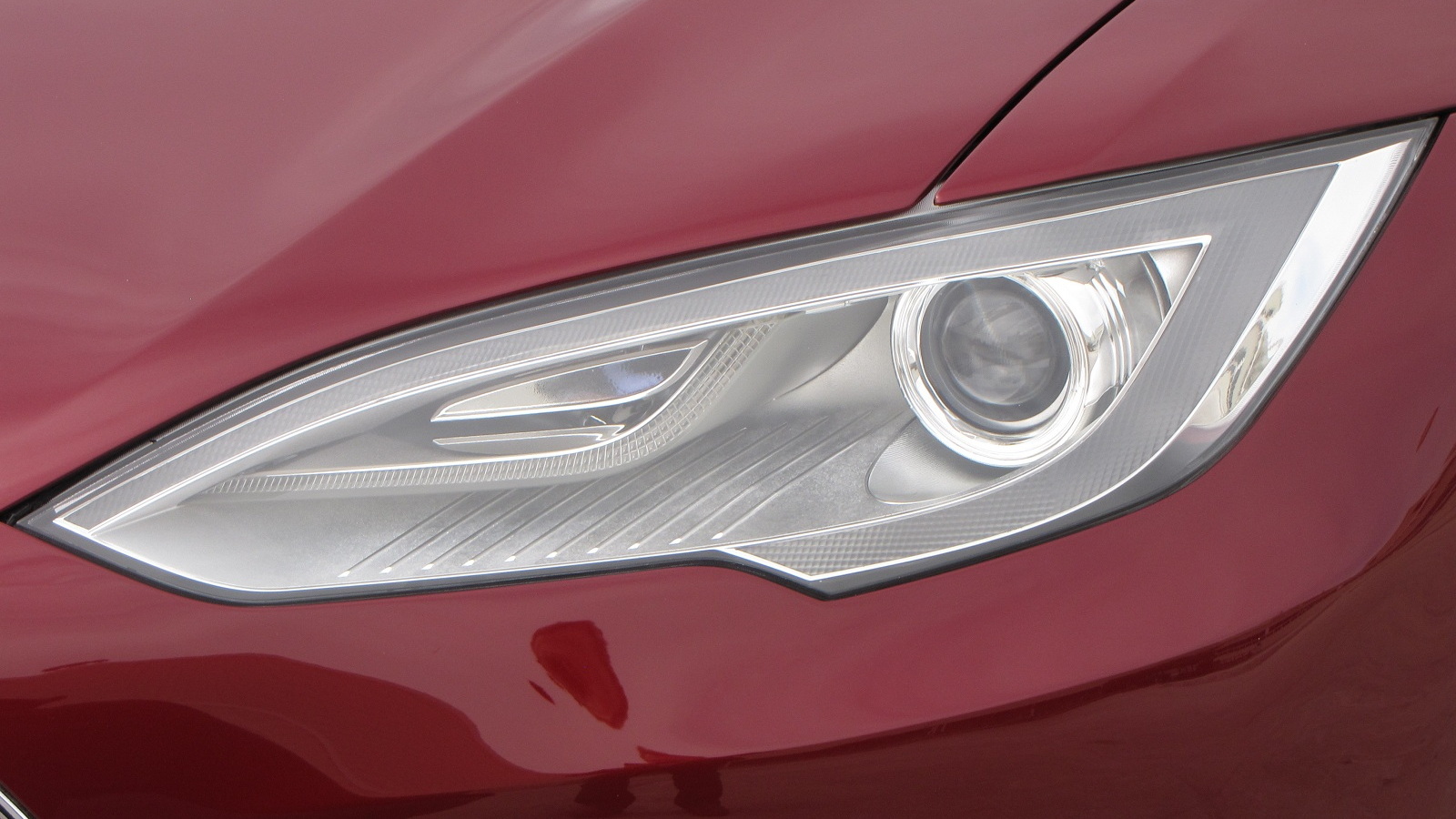
2012 Tesla Model S beta vehicle, Fremont, CA, October 2011
2012 Tesla Model S: Seven Little Things A Buyer...
Buying A 2012 Tesla Model S: Pros & Cons Of...
Tesla Model S 'Get Amped' Tour: 5,000 Test...
Friday will be a big day for startup electric carmaker Tesla Motors.
On that day, it will deliver its first 2012 Model S luxury sport sedans to retail customers in a big webcast event at its Fremont, California, assembly plant.
But a couple of days beforehand, the EPA has issued the eagerly awaited range and efficiency numbers for the high-end Model S version with the 85-kilowatt-hour battery pack.
The car has a rated range of 265 miles, and an efficiency of 89 miles-per-gallon-equivalent, a measure based on the distance the car can travel on the amount of energy contained in one gallon of gasoline.
That gives that model of the 2012 Tesla Model S the greatest range by far of any battery electric vehicle on the market.
As for efficiency, it puts the Model S behind the tiny Mitsubishi 'i' (112 MPGe), the Ford Focus Electric (105 MPGe), and the Nissan Leaf (99 MPGe), but comfortably ahead of the Coda Sedan (73 MPGe).
With seating for five, plus two optional jump seats for kids in the back, the Model S is a somewhat larger vehicle than any of those competitors. The EPA rates its interior volume at 94 cubic feet (versus 90 cu ft for the Leaf) and cargo space at 26 cubic feet (versus 23 cu ft for the Leaf).
With a 260-kilowatt (350-horsepower) motor powering the rear wheels, It's also likely to be faster; the Leaf comes in at 80 kW (107 hp) and even the Focus Electric, the comparative hot rod of the compact electric set, has only 107 kW (143 hp).
We look forward to learning more about the Tesla Model S, which certainly has a strong fan base among both electric car advocates and fans of fast, sleek, luxury sport sedans.
Meanwhile, now you have officially certified data with which to compare the Model S to any other large all-electric luxury sedan.
Oh. Wait. There are no others. Hmmmmmmmm....
+++++++++++
Follow GreenCarReports on Facebook and Twitter.
Have an opinion?
http://www.teslamotors.com/blog/model-s-efficiency-and-range
While manufacturers self-certify, the EPA still has to look over the carmaker's data and give its imprimatur--and that's what this article is about. I'm sure you're as aware as I am of the claims by makers that subsequently haven't panned out in the official EPA ratings ...
"Trust...but verify." :)
driving, and on that score the car can clock 300 miles,
or very close to it. We don't really care what the range is for
around town/combined conditions. Especially for this vehicle.
I am also amused at your assertion that "we" are not interested in the Model S's range in "around town/combined conditions". Remind me which group of Model S owners you speak for again, please?
The main difference with the new numbers is that it includes running accessories and variations in driving intensity that made less difference with a gas powered vehicle, but cause a bigger drop in electric performance.
Regardless, 265 miles on the 5 cycle test is outstanding performance for an electric. Few people drive that much in a day without opportunities to charge the vehicle, so its very likely that Model S owners will spend a LOT less productive time on charging than an ICE car spends getting gas.
Do you not check the epa's website for vehicle fuel economy? Right there in b n w:
http://www.fueleconomy.gov/feg/Find.do?action=sbs&id=32557&id=32154&id=31673&id=32278
Note that the Telsa S beats all the other EVs listed in the article above and in these posts in combined kw-hrs/100 miles range. Telsa does EVs much better right now...there's no denying that fact. Lets hope the others catch up n pass them soon.
"beats", you mean has the highest number (38). In terms of economy the lowest kwhrs/100mi is the best (30).
Thanks for the link. These numbers are interesting because the Ford Focus EV is tied with the Mitsubishi i-MiEV for Highway at 34 while the Tesla Model S is tied with the LEAF at 37. The main difference between the Model S and the others is City driving.
The real question is why the regular Honda Fit gets nearly 50% better gas mileage than a BMW 5 series (33mpg vs 23mpg) while the electric version of the Fit only gets ~20% more MPGE than the Tesla Model S.
The answer of course is that the Tesla Model S is a marvel of engineering designed from the ground up as an electric vehicle, while the Fit is just a gas powered car with an electric motor slapped into it.
That also helps explain why the electric version of the Fit has a terrible range and costs twice as much as the gas version, while the Tesla is reasonably competitive with a BMW.
And where do you get it costs twice as much than the gas version if it's a lease only compliance car (sadly)?
http://www.greencarreports.com/news/1068770_electric-honda-fit-ev-details-live-photos-from-l-a-auto-show
The gasoline 2012 Honda Fit starts at $15,325 (plus delivery).
Obviously we are both proponents of EVs and especially this great new Telsa S on the road this weekend...finally. However, I suggest you perform a bit more research and calculations before making claims and logic leaps. Three examples below where more time was needed:
1) Your 5 series vs Fit mpg numbers are wrong.
Base 2012 BMW 5 series now gets 23/34 mpg while the Fit sport automatic gets 27/33. BMW's new four banger twin turbo is a marvel in high performance with damn good efficiency too considering that it outperforms their previous base motor inline 6. I think you were using the previous 5 series drivetrain specs. Fit will likely still get better overall mileage but certainly not by 50%...more like 15%.
Telsa S in 40kw n 60kw battery pack trims are sure to be more efficient than the 85kw battery pack used for the epa's calculation released today. As I predicted in a previous reply in this post, I think the 40kw trim will likely obtain a mpge rating near the other current budget mpge ratings.
EV tech is new for Honda so they are going to charge a pretty penny for their initial EVs in order to try to get ample compensation to try n payoff those EV development costs. Telsa roadster cost over $100K, remember? And, Honda n nearly all the other current "budget" EV makers are not n will not build high numbers of their EVs in these first few years n therefore can charge, in their eyes, higher prices to try n recoup those EV development costs w/ lower sales numbers. Other reasons include the likely possibility of much lower maintenance needed for EVs by your local Honda dealer service department so Honda is getting more $$.
Sure the 5 series is in the same wide category of luxury/sport midsize/large sedans as Telsa S but it does not have a hatch nor the sleek, sexy looks of this 5 door coupe like car. The Telsa S actually is very much like the Porsche Panamera in many ways such as looks, performance, purchase prices, hatchback utility, and probably fun. The S just happens to be more than 3 times more fuel efficient then the Panamera. I expect/hope that the Telsa S will actually beat the Panamera in most aspects.
After the S proves itself reliable n kicks butt on the track too, potential buyers of similar looking conventional vehicles such as the Panamera n A7 will likely give it a thorough look as well.
MrEnergyCzar
( http://www.teslamotors.com/models/specs )
Yes. I suppose it is "likely" to be faster, a likelihood which depends solely on how much you depress the "gas" or brake pedals on the Model S.
For instance a Nissan Leaf *MIGHT* be faster than a Model S if the Model S stops completely. But even that is doubtful considering how fast the Model S looks just sitting there...
Have an opinion?Join the conversation!