Hydrogen fuel-cell cars have not progressed as fast as some companies had predicted 10 or 15 years ago.
No carmaker sells a fuel-cell vehicle in any kind of volume, but plug-in electric cars are on sale in North America, Europe, and Asia, with tens of thousands sold (and likely more than 100,000 within 18 months).
The list of manufacturers aggressively pursuing hydrogen-fueled vehicles has dwindled to three: Toyota, Mercedes-Benz, and Honda.
Cars coming in 2014 and 2015
Toyota has announced plans to put a fuel-cell vehicle on sale by 2015, though its price may be higher than the original target of $50,000.
That car was previewed by the FCV-R Concept shown over the last year, but volume is only expected to be in the "tens of thousands" during the 2020s.
Daimler just last week said it would sell small numbers of its B-Class F-Cell compact starting in 2014, using the next-generation B-Class as a base.
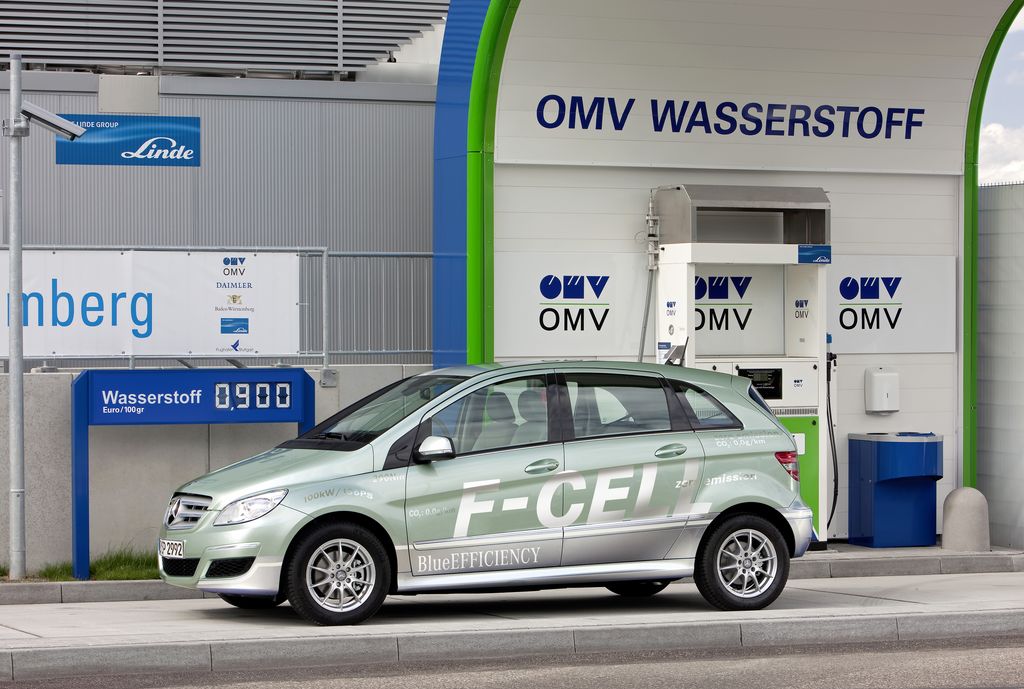
Mercedes-Benz B-Class F-Cell
It will also launch a larger hydrogen-fueled vehicle coming the following year, the company's U.S. manager of advanced product planning, Sascha Simon, told Automotive News.
The company has now leased roughly 35 B-Class fuel-cell prototypes to drivers in the Los Angeles area, with more on the way. Lease cost is $850 per month.
Compliance cars only?
Honda was actually the first maker to release a so-called "production" fuel-cell car, its FCX Clarity model, into the market in 2008.
Volumes for that lease-only vehicle, however, are measured in dozens per year. So we wouldn't really call it a volume-production vehicle.
And the company has said very little lately about its future plans for fuel-cell vehicles.

Actress Q'orianka Kilcher poses next to a Honda FCX Clarity at the 2007 Los Angeles Auto Show.
At least in North America, however, all of these cars are likely to be sold in volumes just sufficient to meet California's Zero-Emission Vehicle mandates.
In other words, like low-volume electric cars announced by several makers for 2012-2014, they'll only be "compliance cars" meant to meet legal requirements.
GM dials down
Meanwhile, General Motors has dialed down its fuel-cell program, which fielded the world's largest test of hydrogen-fueled vehicles under the "Project Driveway" test program.
Five years ago, that project put more than 100 Chevrolet Equinox crossovers, converted to run on electricity from a hydrogen fuel cell, on the roads for testing by consumers, media figures, celebrities, and other influential test drivers.
Now those cars have largely been withdrawn, and some of the hydrogen fueling stations that served them--in White Plains, New York, and Culver City, California, for instance--are shuttered.
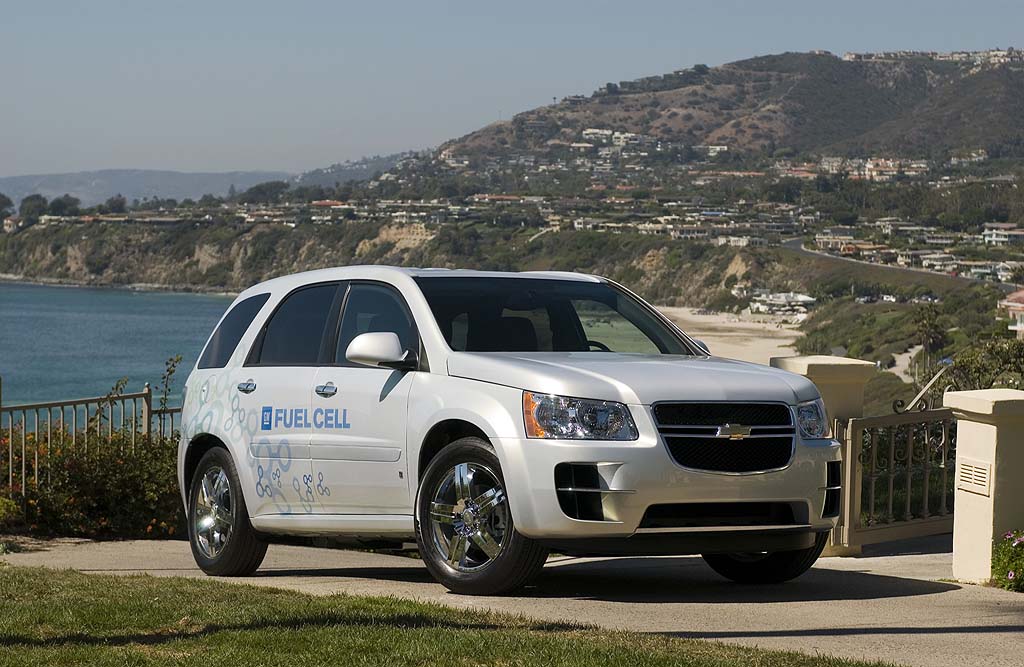
2007 Chevrolet Equinox Fuel Cell Vehicle
The fuel-cell research team has been folded into GM's broader vehicle electrification program, which is focusing on range-extended electric cars like the Chevrolet Volt (and small numbers of all-electric compliance cars like the Chevrolet Spark EV).
Known challenges
The challenges of hydrogen fuel-cell vehicles are by now well-known, including:
- Billions of dollars will be required to build a nationwide fueling system of at least 15,000 hydrogen fueling stations;
- The wells-to-wheels carbon footprint of hydrogen fueling is debatable; and
- It's far more efficient to use electricity to power a vehicle via a battery and electric motor than to make hydrogen with it, which must then be transported and turned back into electricity at no more than 50 percent efficiency.
Five-year-old show car?
It's probably telling that at last week's 26th annual Electric Vehicle Symposium in Los Angeles, many attendees remarked on the dearth of fuel-cell electric vehicles.
We only saw two there, and from the VIN visible in the windshield, the maroon Honda FCX Clarity on the show floor was the third one ever built--from 2007 or thereabouts.
Is hydrogen "the fuel of the future"--and, as the joke goes, destined to remain that way forever?
We think it's too early to tell. But we'll be curious to see whether fuel-cell cars actually hit the roads in 2015 and, more importantly, in what kind of volumes.
+++++++++++