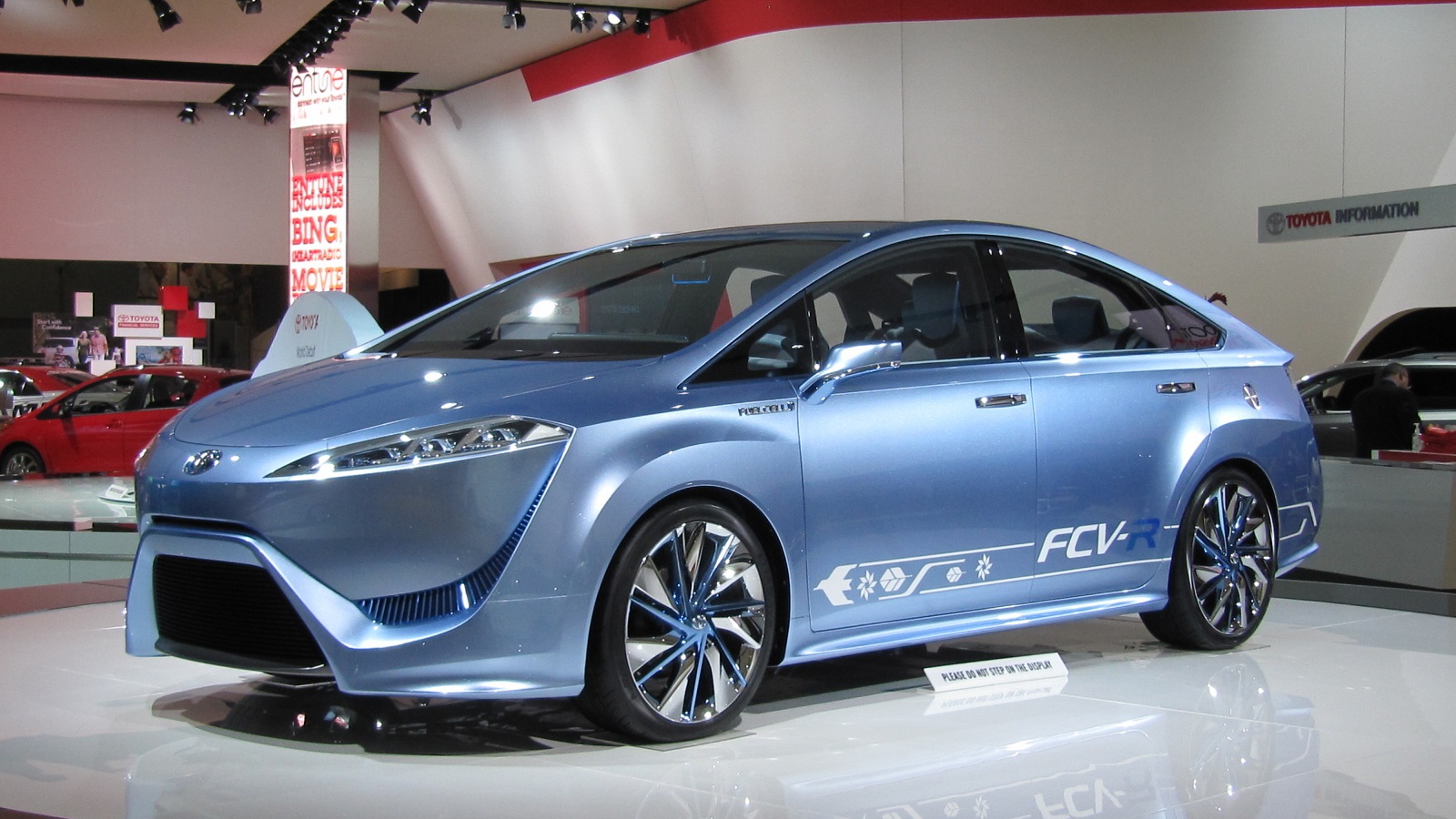
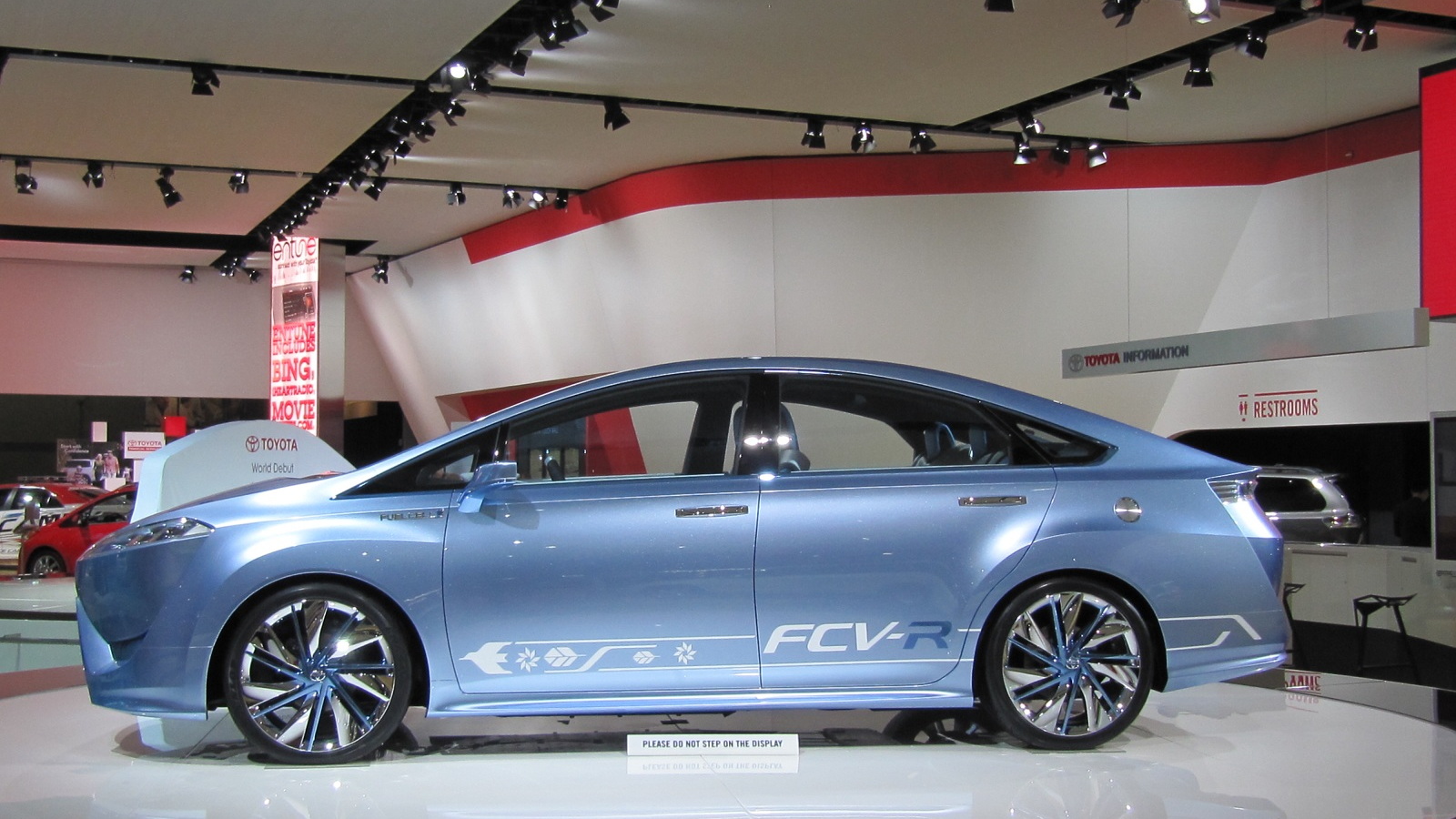
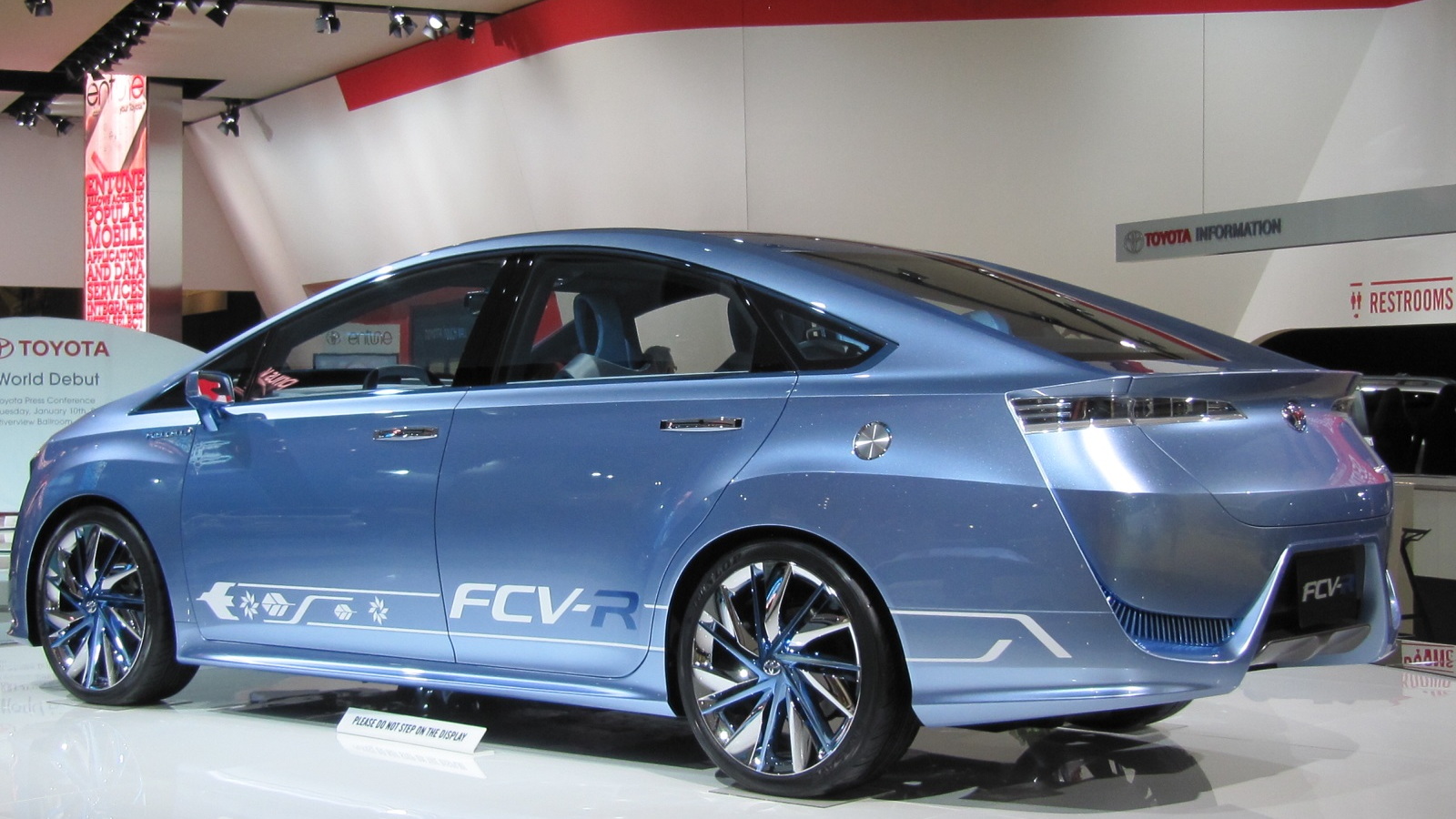
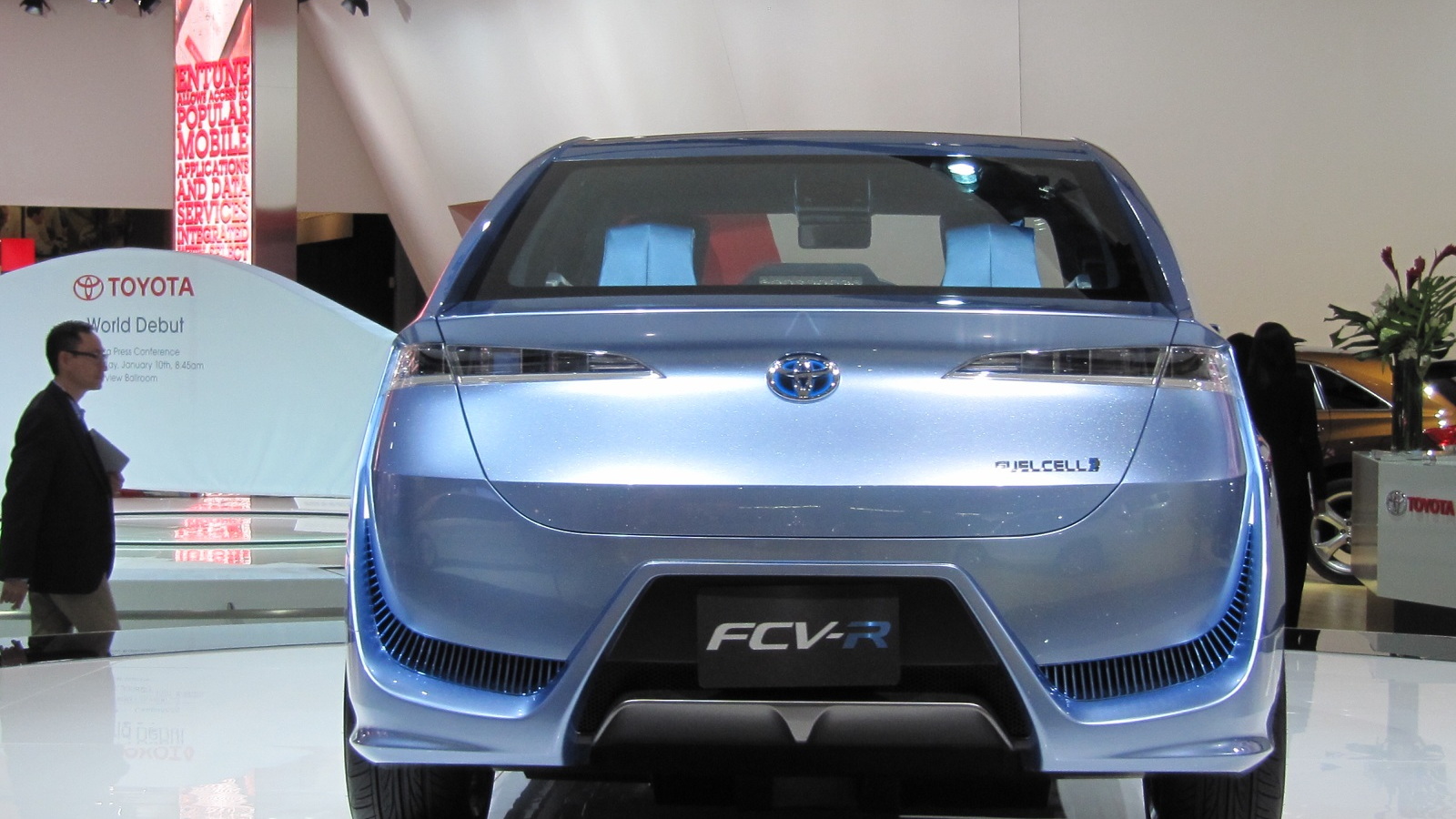
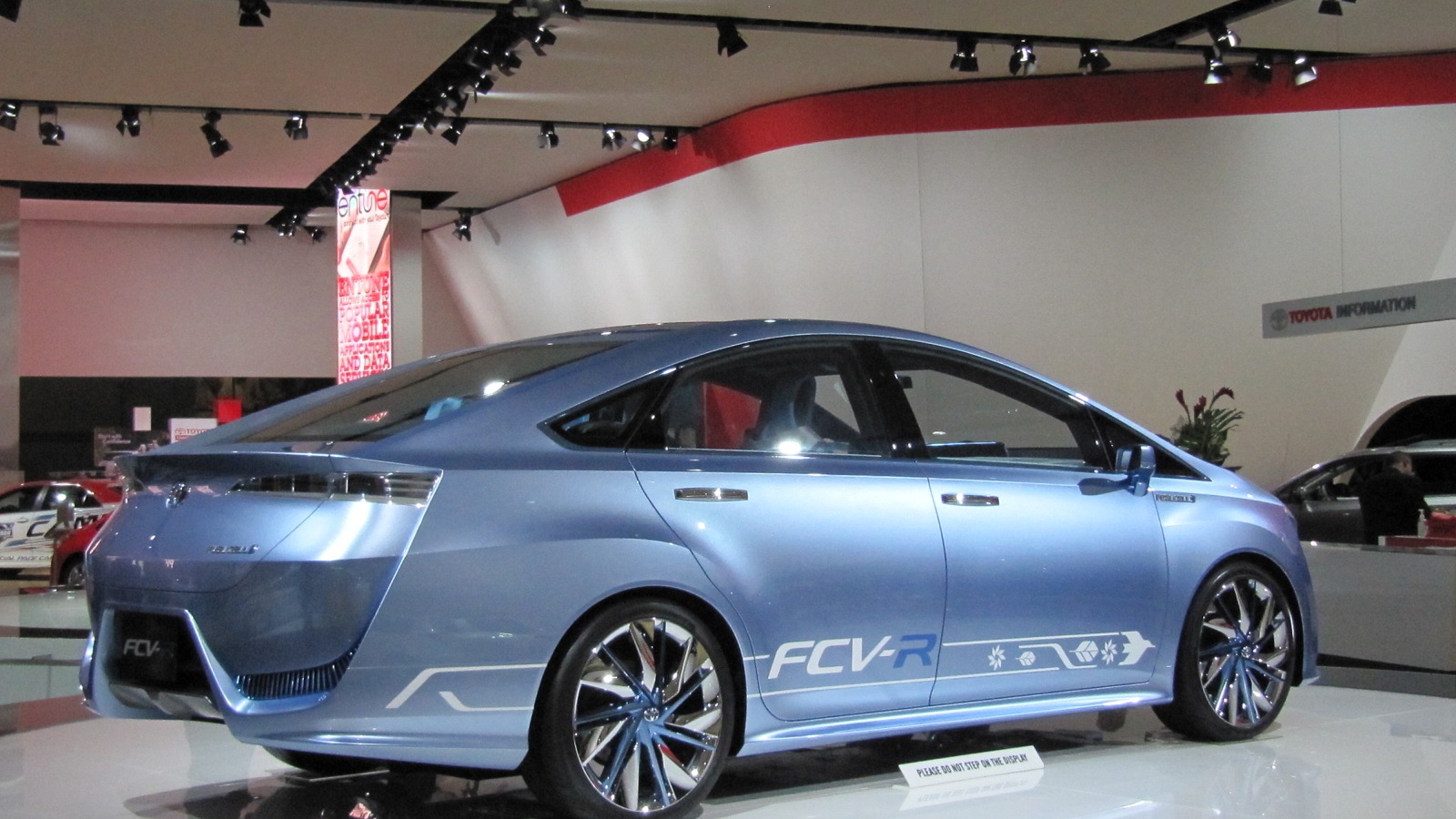
Toyota FCV-R hydrogen fuel-cell concept car, 2012 Detroit Auto Show
Toyota might be expanding its Prius line of hybrid and plug-in hybrid cars, but it hasn’t forgotten about hydrogen fuel cell technology.
In fact, at this week’s Geneva Motor Show, the automaker has reiterated its commitment to fuel cell technology by promising it will produce tens of thousands of hydrogen fuel cell cars in the near future.
“We are preparing to be able to produce tens of thousands per year in the 2020,” Didier Leroy, head of Toyota’s European operations told Automotive News.
That’s big promises from an automaker which last year admitted its first production fuel cell car -- due by 2015 -- had risen in expected price from $50,000 up to $138,000.
Toyota’s bold claim might not be quite so bold however. Tens of thousands of hydrogen cars every year would hardly make hydrogen fuel cell cars popular.
In order to reach mainstream popularity, Toyota would have to measure sales and production volumes in hundreds of thousands -- maybe even millions -- of cars per year.
But without those kind of production volumes or a dramatic drop in production costs and sticker price, we remain dubious that Toyota will be able to achieve its lofty hydrogen fuel cell car goal in such a short period of time.
Simply put, like plug-in cars, until the cost of buying and running hydrogen fuel cell cars drops, they will remain niche-market vehicles.
Take the hybrid car, for example. Even 12 years after hybrid cars first launched in the U.S., they command a very low market share.
For reference, 2029 is only 17 years away.
Then again, if any automaker can turn hydrogen cars around, it has to be the automaker responsible for turning the Hybrid from a dull, boring car into something a little more fun.
What do you think? Will Toyota achieve its goals, or is it chasing an impossible dream?
Let us know in the Comments below.
+++++++++++
Follow GreenCarReports on Facebook and Twitter.
Have an opinion?
FCV's first, best market is long haul trucking, followed by commercial vehicles, maritime tugs, etc. Plenty of profit margin, as material, component and system costs fall. Fortunately, plug-in vehicles help with much of these costs, as they are both electric drive. Now, only the fuel cell costs themselves (and the infrastructure) need to be addressed.
And by then we have Level 3 chargers along our main travel routes so that we can drive all day long with only a couple of recharging stops.
How is a hydrogen fueled car going to break into that market?
Remember, we'd have to build a "water cracking" and distribution infrastructure which means that vehicle purchase price and "fuel" prices would have to drop significantly lower than that of EVs.
1) the infrastructure to distribute water and electricity already exists. You only need to sell / install "water cracking" / hydrogen storage equipment.
2) at existing power / energy densities, batteries will not work for neither large, nor long distance, vehicles. Long haul trucking, dump trucks, tug boats, etc. would all be hydrogen fuel cell vehicles, so hydrogen fuel cells would dominate the high end of the market, while batteries will dominate bicycles. In between, there will be a blend depending on the performance / utility / convenience / cost requirements for the buyer.
FCV's will use even more expensive fuel that is made from reformed NG. And sell for over $50,000.
2)Water cracking/hydrogen storage would mean FCV's will be running on even "more" expensive, more expensive fuel.
Time -- that is, recharge/fill-up time will be up to 3-4 times faster; 1/3 -- 1/4 the charge time of BEV's. [Since you asked, that is one marketing point to be made]
Peace
1) An FCEV is an EV. 2) Both can be charged at home. 3) Convenience charges are gimmicky; short term - great, long term - must pull their weight, therefor... not for free. 4) Why must anyone HAVE to stop for lunch?
Pay a premium? Are you presuming technology stands still for everything except BEV's?
Peace
Yes, Toyota will achieve its goals if it does not defer to a new direction.
Peace
As battery technology improves, the case for FCs gets weaker, and even long haul FC trucks may be short lived or never come if batteries get good enough.
In Southern California, there are hydrogen stations that use solar power to make FREE hydrogen!!! It takes 5 minutes to "fill up" a hydrogen car, like the beautiful Honda Clarity, AND the driving range is around 200-150 miles. the ONLY tailpipe emission is water!
In electric cars, charging time takes at least 8 hours, and driving range is only about 75-100 miles for electric cars.
Admirable idea and pollutant free! Except the car would go 2 to 3 times as far if the electricity generated was used to power the electric motor instead of converted to hydrogen, then converted back to electricity, then used to power the electric motor.
Have an opinion?Join the conversation!