Late last night, a sensational blog post circulated through Silicon Valley.
It claimed that several $100,000-plus Tesla Roadsters were now useless as the result of a "devastating design problem," with their battery packs "bricked" from being left too long without plugging in.
Early this morning, we predicted that this would be today's electric-car news story, and so it proved to be. Jalopnik picked up the post and ran it, uncritically, sans context.
But we've spent the day talking, prodding, urging, e-mailing, tweeting, and generally doing what reporters do. We also reached out to the author Michael Degusta, who hasn't responded.
Right now, we can only speculate on any reasons for the sensationalist approach he took in describing the problem.
[UPDATE: Is Tesla 'Bricking' Story Just An Angry Owner's Warranty Claim?]
Courtesy of electric-car fan David Peilow, we note that blogger Michael DeGusta--who wrote the original post that kicked off the ruckus--was a business partner of Max Drucker, the aggrieved Tesla owner, for seven years.
DeGusta did not disclose this anywhere in his post, in which Drucker was never identified.
We welcome comments and input from any Tesla Roadster owners (one is apparently named Max) who claim that their battery packs have 'bricked'.
Failing that, here's our best crack at the real story, with appropriate context, in Q+A format.
Q: Is the possibility of 'bricking' a real problem?
A: Yes. It's been known since the earliest days of modern electric cars--the 1980s or 1990s--and is widely acknowledged as a potential risk by designers and manufacturers of plug-in vehicles. In other words, this is hardly a hidden problem.
Tesla said in a statement:
All automobiles require some level of owner care. For example, combustion vehicles require regular oil changes or the engine will be destroyed. Electric vehicles should be plugged in and charging when not in use for maximum performance. All batteries are subject to damage if the charge is kept at zero for long periods of time.
Q: Does Tesla tell Roadster buyers to keep their cars plugged in?
A: Yes. It's prominently called out in the warranty and owner's documents.

Tesla Roadster 'Acknowledgement of Charging Instructions' document (courtesy Tesla Motors Club)
One Tesla source confirmed to us that the company has buyers sign a document at the time of purchase that acknowledges it is the owner's responsibility to maintain the Roadster's charge by keeping it plugged in--and that any damage caused by not doing so is not covered under the warranty.
We will post a copy of that document when we receive it.
An image of that document, provided courtesy of owner Cingergi, who posted it on the Tesla Motors Club website, is included in this article.
Q: Will a Tesla Roadster warn its owners if the pack is dangerously low?
A: Yes. And owners of Roadster 2.0 and 2.5 vehicles (the vast majority of the total) can set their cars up to send alerts to the owner as well. Tesla said:
Tesla avoids this problem in virtually all instances with numerous counter-measures. Tesla batteries can remain unplugged for weeks (even months), without reaching zero state of charge. Owners of Roadster 2.0 and all subsequent Tesla products can request that their vehicle alert Tesla if battery state of charge falls to a low level.
All Tesla vehicles emit various visual and audible warnings if the battery pack falls below 5 percent state of charge.
Q: Are there circumstances in which a Tesla Roadster pack could in fact have been so depleted that it 'bricked'?
A: Yes. If an owner were not to use or visit the car, or the car were locked away, for several months, the warnings would not be seen, and the pack might over time go from the minimal 5 percent down to zero.
We have heard of a Tesla Roadster sold on a salvage title, for example, after sitting in storage for an undetermined period. That car's battery pack may not have been charged for a year or more, and could be completely dead.
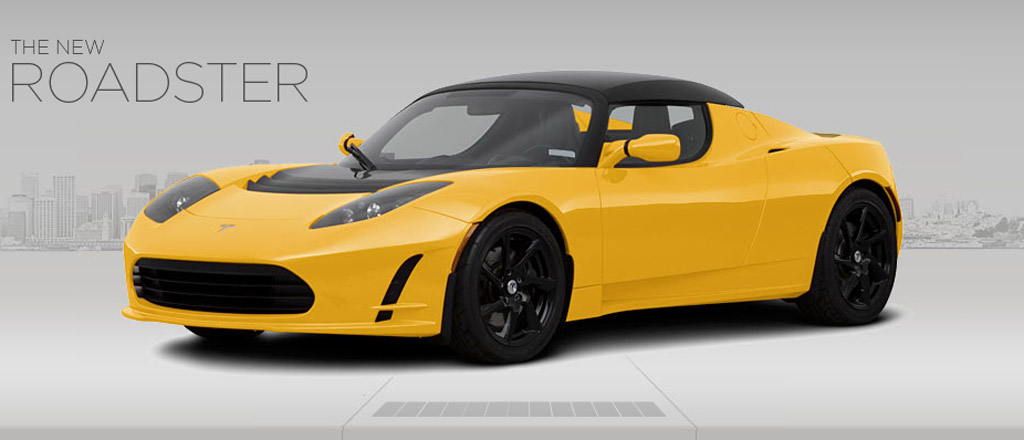
Tesla Roadster 2.5
Q: What about other electric cars? Will the battery pack of a Nissan Leaf 'brick' as well?
A: Not according to Nissan. The company sent a statement, saying:
The Nissan LEAF battery pack will never discharge completely, thanks to an advanced battery management system designed to protect the battery from damage. One element of the battery management system is a failsafe wall that stops the battery from reaching zero state-of-charge, even after a period of unplugged storage.
Globally, there are more than 22,000 LEAFs on the road that have driven more than 30 million miles, without any incidents.
Q: Can we sum up this little episode of media explosion in one pithy phrase?
A: Yes: RTFM.
As our esteemed colleagues at TechCrunch wrote, more politely and at greater length.
+++++++++++