A few days ago, we started hearing mumblings on the electric car grapevine which suggested that all was not well again with the 2011 Leaf, Nissan’s first ever all-electric production hatchback.
It all began at the end of last month, when a 2011 Nissan Leaf owner reported that his car stopped working just three days after picking it up.
Initially seeming to be just another random occurrence, the story has become a major headache, leaving the Japanese automaker trying desperately to find out what exactly is leaving drivers of its $32,780 electric car stranded.
Here’s what we know so far about the issue, and what you can do to rectify it.
What Exactly Happens
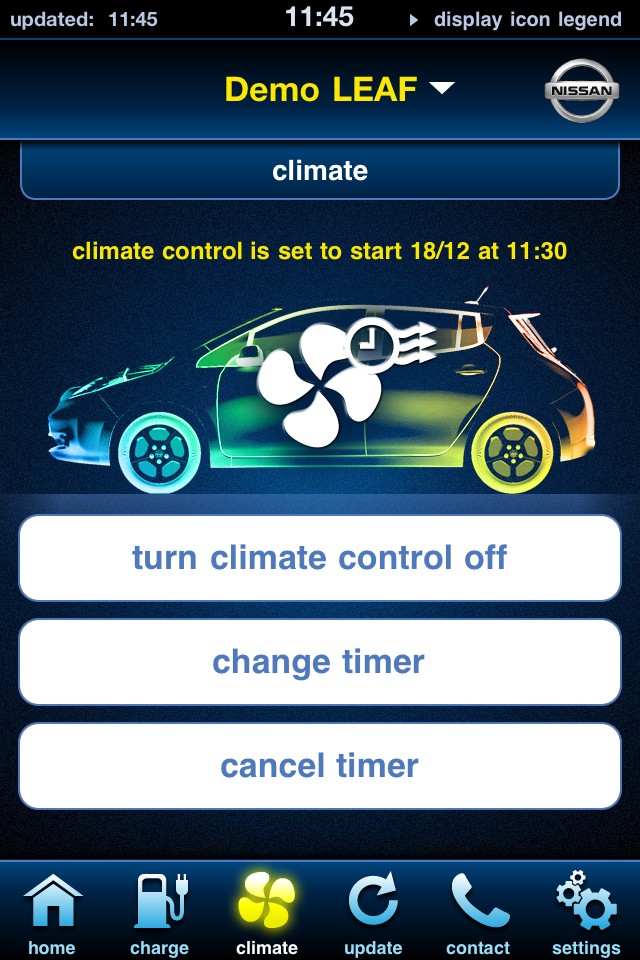
2011 Nissan LEAF iPhone App
According to owners talking on MyNissanLeaf.com, the symptoms are easy to spot.
After using the car’s on-board air conditioning to pre-cool a car before driving it, or to cool the car during use, an affected Leaf displays three yellow warning lights--vehicle, power steering, and battery--while it is being used.
At this point, the car still operates normally, despite the lights. But as we all know, warning lights normally indicate something is wrong.
What would most people do at this point? Pull over, and power-cycle the car.
But this is apparently exactly what you shouldn’t do, according to the recently created LeafWiki.
In fact, restarting the Leaf renders it completely inoperable. The car will apparently refuse to engage its Ready mode, temporarily turning it into a very expensive paperweight which has to be recovered and returned to the dealer.
The Cause
At the moment, Nissan has remained quiet on the issue, except to say that it is aware of the problem and working on a solution.
A few theories have surfaced, most of which revolve around the car’s air conditioning system.
One early theory cites over-charging of the Leaf’s air conditioning system at the factory. Several owners with the problems have had their Leaf air conditioning system recharged after dealers cited this as the problem. They have not had the same fault repeat itself.
A second theory cites a problem with the car’s current-leak detection software. That system activates a fault code if too much current is drawn by the air conditioning system or a current leak is sensed between the high voltage electronics and the car body.
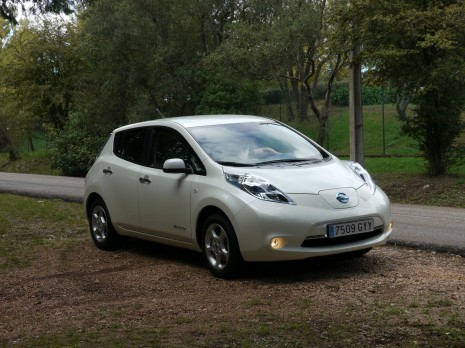
2011 Nissan Leaf
The Fix
Some owners of affected cars are reporting that their local dealers have either upgraded or downgraded their Leaf’s operating system, but thus far these actions just seem to be part of the dealer’s diagnostic attempts.
Officially, there’s no fix yet, although Nissan spokesman Toshitake Inoshita told Reuters earlier today that Nissan was aware of the problem affecting cars in both the U.S. and Japan, and said it was still trying to find the exact cause and solution for the problem.
Once Nissan is confident that it knows the cause of the problem, it will take appropriate steps to repair affected cars. At present, no recall is planned since the system does not pose a direct safety risk to either car or occupants.
We have to disagree, however, after hearing of several Leaf owners stranded at stop lights after rebooting their car in an attempt to reset the error lights.
2011 Nissan Leaf Carwings
Is Your Leaf Affected?
At the moment there seems to be no surefire way of telling if your car is affected. Some theories suggest that cars with operating systems 3NA0B and 3NA0C may be the ones susceptible to this issue.
To find out which operating system your car is running, follow the instructions listed at MyNissanLeaf.com.
What To Do If You’re Affected
The general advice if you get any warning lights while driving your 2011 Nissan Leaf is to continue to a safe stopping place, like a parking lot, before restarting the car.
Alternatively, drive your 2011 Leaf to the dealer.
Importantly, do not restart the car in an unsafe place.
If you get the error, have an unresponsive car, or simply need to use your Leaf, some owners report that disconnecting the car’s 12-Volt auxiliary battery under the hood for 10 minutes will enable the car to be rebooted.
However, all data will be lost and settings for the Carwings system, GPS, and radio will be lost.
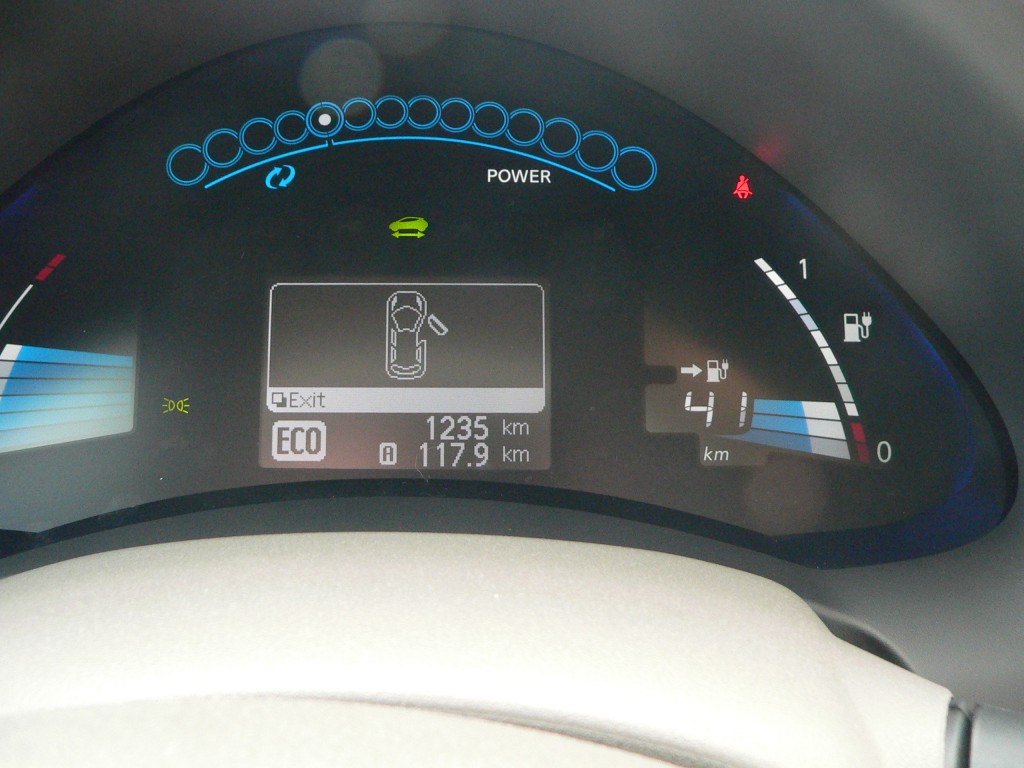
2011 Nissan Leaf
Our Advice
Obviously, should your new 2011 Nissan leaf behave like this, the safest thing to do is to find somewhere safe to park up and call your Nissan dealer.
But if you can't find anywhere, or you're already driving and know where your dealer is, just drive there there immediately but do not turn the car off.
Of course, we're not engineers, nor are we Nissan. We accept no liability for what happens if you can't find a safe place to park and await assistance.
We’d also like to remind you that the 2011 Nissan Leaf should not be towed with the front wheels touching the ground, as this could damage the car’s high-voltage system, drivetrain, and parking brake mechanisms.
Have you had the problem? Has it been solved? Let us know in the Comments below.