If like us, you were waiting with baited breath for the official EPA rating for the 2011 Chevrolet Volt you’ll have heard that the day before Thanksgiving Chevrolet announced the official figures were back for its first plug-in range-extended electric car.
But unlike the 2011 Nissan Leaf’s figures, which caused a lot of controversy but were vaguely straight-forward to understand, the EPA rating for the Volt was somewhat more confusing.
Apples to oranges
When the EPA rated the 2011 Nissan Leaf it had just one comparison to make: what the equivalent miles-per-gallon would be if one gallon of gasoline was equivalent to 33.7 kilowatt-hours of electricity.
Called Miles Per Gallon Equivalent (MPGe), the figure is aimed to give car buyers unfamiliar with electric cars a tangible way to view fuel economy.

2011 Chevrolet Volt test drive, Michigan, October 2010
While the comparison caused some lifted eye-brows and cries of anguish from those of us who felt comparing electric cars using gasoline was a little like comparing dogs to cats, the figures for the Leaf were relatively straight forward: 99 MPGe, and an official EPA-sanctioned range of 73 miles per charge.
Not so for the Chevrolet Volt, which is capable of all-electric travel as well as gasoline-assisted travel. The EPA rating reflects this, with a dizzying array of figures.
All electric: 93 MPGe, 35 miles per charge
Examining the electric-only operation of the Volt, the EPA concluded that its electric-only economy was 93 MPGe, and that it could travel for 35 miles on a single charge.
Compare that to the 2011 Nissan Leaf’s 99 MPGe and 73 mile EPA range, and the Leaf looks to have the winning edge.
That is, if you only want a purely electric car. But the Volt’s strength lies in its range-extending gasoline engine.
MPGe and MPG
Leaving aside the arguments about nomenclature, the Volt is capable of powering its wheels directly using the gasoline generator, but for the most part uses it as a range-extending device, providing electrical not mechanical energy to power the car’s electric motor.
Expressing the Volt’s fuel economy in this mode proved to be extremely tough for the EPA. After all, with a semi or fully discharged battery, the Volt actually uses gasoline, right?
The worse-case fuel economy, for all-gasoline motoring? 37 MPG, leaving consumers with at least a basic concept that using the Volt in plug-in mode is eminently better than using it in gasoline-only mode.
Throwing in a third figure, the EPA rating concludes the Volt’s combined fuel economy is somewhere around 60 mpg for regular use - that’s using a combination of gasoline and electric powered driving.
Multiple figures, confusing sticker
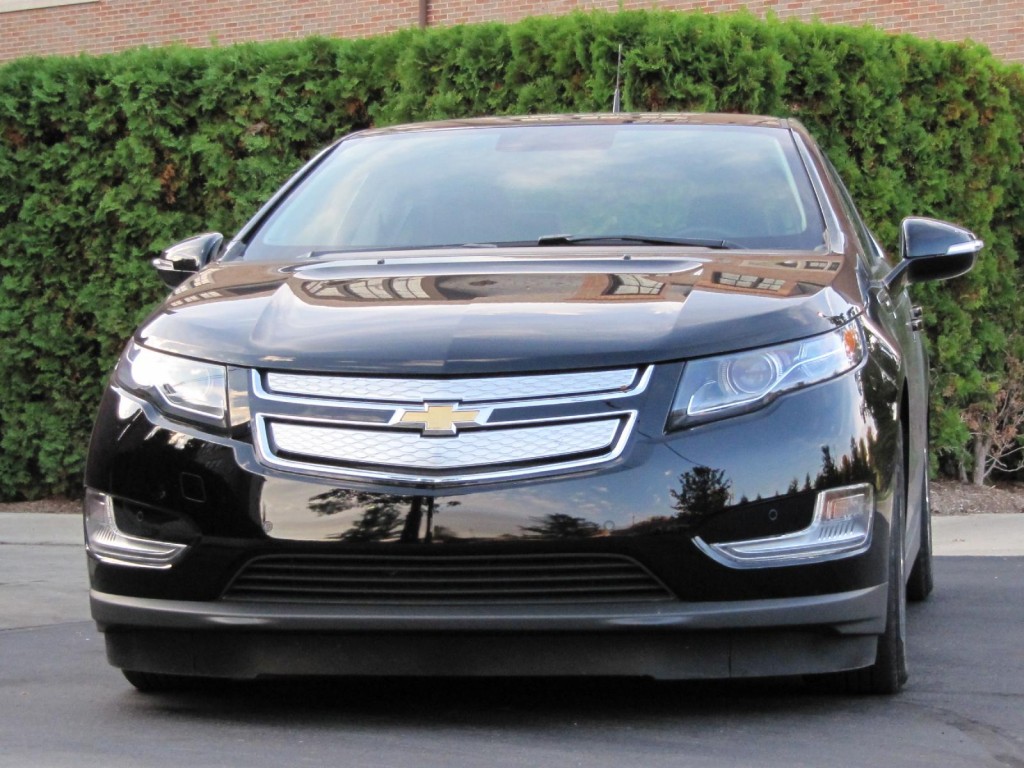
2011 Chevrolet Volt test drive, Michigan, October 2010
The EPA didn’t stop at worse and best case scenarios. In a box on the Volt Fuel Economy Sticker, the EPA have listed example fuel economy figures based on a set distance driven.
This is when things get really screwy.
Listing trips of between 30 and 75 miles between charges, the EPA details corresponding fuel economy figures, using MPG and electricity consumed as two discrete lines on its chart.
For example, driving 45 miles between full charges will result in 12.9 kilowatt-hours of electricity being used. It will also result in a gasoline fuel economy figure of 168 MPG.
Yes, a fuel economy figure of 168 MPG, greater than the 93 MPGe of the electric only mode. But remember that the electric mode is measuring an equivalent, not an actual consumption.

2011 Chevrolet Volt
There has to be a better way
The 2011 Chevrolet Volt is a great car and offers people the chance to drive electric without suffering range anxiety or requiring them to own a second car for long-distance trips. But the EPA stickers do not reflect this.
We think it’s time that the EPA revisited its fuel economy labels. The Chevrolet Volt sticker is a confusing mish-mash of different figures, varying scenarios and mixed messages.
To the uninitiated, it would almost appear better to drive the volt for 45 miles without recharging and use some gasoline instead of driving on electricity alone.
Chevrolet aren’t to blame. The EPA are. And we need a fix quickly.