Five Reasons Why Voltgate Won’t Hurt Sales Of The 2011 Chevy Volt

 
Follow Nikki

2011_Chevy_Volt

2011 Chevrolet Volt with hood open, showing range extender engine and Voltec drive

2011 Chevrolet Volt with hood open, showing range extender engine and Voltec drive

Enlarge Photo

When the proverbial waste-product hit the fan yesterday with the revelation that GM could possibly have “lied to us” about just how its 2011 Chevy Volt operated we sat back and waited for the dust to settle. After all, the tabloid reporting of some sites didn’t tell us anything we didn’t already suspect. The Chevrolet Volt uses a planetary gearbox between the car’s motor, wheels and generator. As a consequence, in Power or Mountain mode, the generator can provide supplemental mechanical assistance to move the Volt along. 

But instead of analysis of what the Volt is or isn’t, we’re going to concentrate on sales. Will Voltgate affect sales of its first plug-in vehicle since the EV1? 

We don’t think so. Here’s just five reasons why:

Most Volt Customers Will Use The Volt For Sub 40 Mile Commutes

Why does the 2011 Volt only have a 40 mile range? Because most daily commutes are well under the magic 40 mile figure. 

For 90% of Volt owners, their daily driving will comprise entirely of zero tailpipe, all-electric motoring. Only those with commutes over 40 miles or those who do a lot of aggressive freeway driving will find the gasoline engine kicks in. 

Alternatives? Those who make commutes between 40 and 100 miles are already likely to be choosing a 2011 Nissan Leaf in preference to the Volt.  And those who need to go further still are probably sticking to a traditional series-parallel hybrid like the 2011 Toyota Prius. In other words, they’re not on the Volt waiting list anyway.

Lithium-ion battery pack for 2011 Chevrolet Volt

Lithium-ion battery pack for 2011 Chevrolet Volt

Enlarge Photo
 

Hardcore Right-Wing EV Fans Won’t Own A Volt Anyway

“Own a Volt? No way! That’s a stinking Hybrid!” If someone talks about the Volt like this then the chances are they aren’t the kind of customer Chevrolet is targeting as customers. 

While many EV advocates are happy to accept a world in which a plug-in vehicle can also have a gasoline engine for backup power the purists who won’t accept anything except pure electric power are already suspicious of the Volt. They won’t be on the waiting list.

Many Consumers Need To Take Baby Steps

Asking many consumers to switch to electric cars is a bit like asking a technophobe to start using a computer to communicate with the world. It’s an uncomfortable step that many consumers just can’t, or won’t take without some form of safety barrier. 

The Volt offers a crossover between a conventional gasoline car and the world of electric vehicles. As consumers discover they don’t use the gasoline engine they become more confident with the concept of electric cars. They may even go all-electric next time.

Nomenclature? Most consumers won’t care what the Volt is called. It plugs in and saves them money. 

After all, how many friends do you have who truly know or care how their car works? We thought so.

Not Everywhere Is Pure EV Friendly... Yet

We’ve said it before, but not everywhere in the U.S. is electric car friendly. In fact, not everywhere in the U.S. is selling all-electric cars yet. While the Chevy Volt is initially going to be available in select markets, we think it will be easier to own a Volt in some states than it will be to own a pure EV. That fact is bound to help Chevy keep its sales figures high.

For Many, Style Comes First

If you’re spending $40k on a car you’d better like its design. While many like the Japanese stylings of the 2011 Nissan Leaf and 2011 Mitsubishi i-Miev, some find the large headlights and bulbous fronts a little too cutesy for a car. 

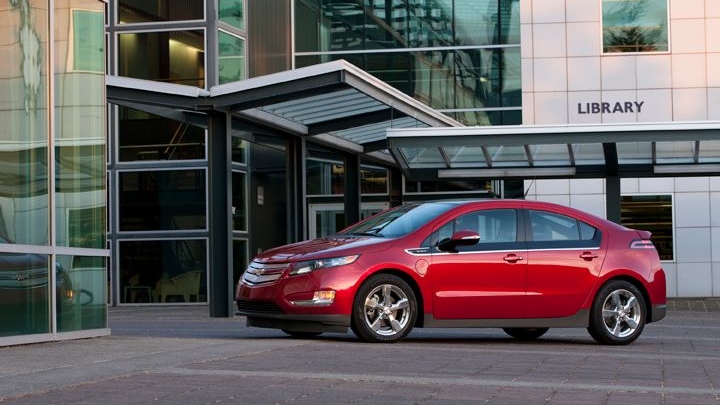
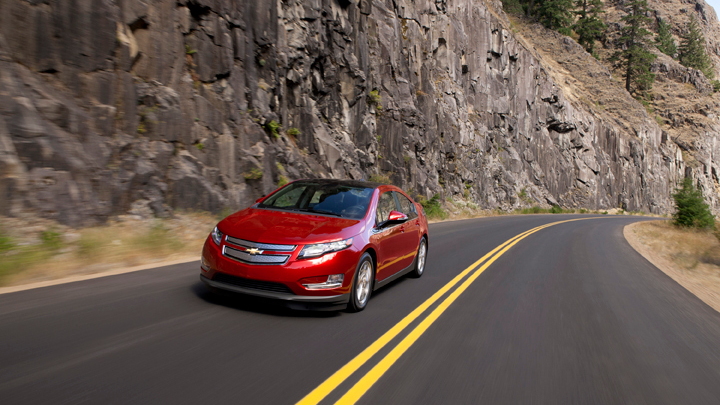
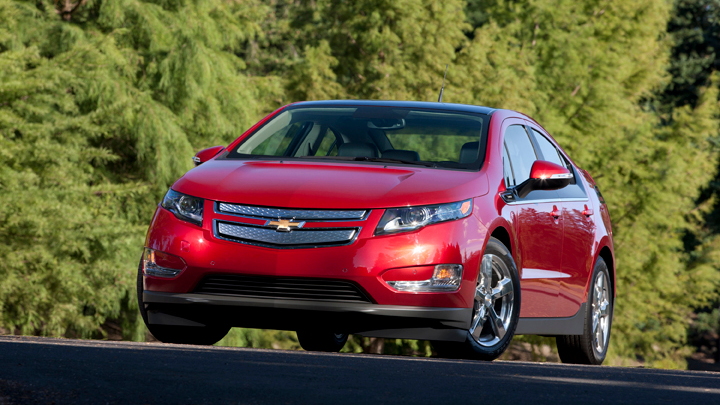
For others, the 2011 Coda Sedan looks are a little dated. Leaving the 2011 Chevrolet Volt, with its much more aggressive stance. 

While for some consumers fuel type comes before looks, most consumers choose looks first.  If none of the other plug-in options float your metaphorical boat, the 2011 Chevrolet Volt may be the best car for you, even if it turns out to be a little more of a hybrid than you initially thought.

In Conclusion

The 2011 Chevy Volt plugs in. It has an engine too. Sometimes, it burns gasoline. If that frustrates you or makes you feel queasy then don’t buy one. There are plenty of electric-only alternatives.



Follow Us


Have an opinion?Join the conversation!

  • Posting indicates you have read this site's Privacy Policy and Terms of Use
  • Notify me when there are more comments
Comments (52)
  1. I agree that I do not believe it will hurt sales. However, that revelation that the engine may provide direct engagement is disconcerting on one side and reassuring on the other.
    Since it is only a 1.4Ltr engine it can only provide so much but as a supplement to the battery it should give some better acceleration when needed.
     
    Post Reply
    Vote
    Bad stuff?

  2. In short, you're about to get the cake you've been wanting for 4 years. you will eat it.. and you will like it. and who cares if the magical unicorns haven't farted on it for good luck?
    if you're that pissed that this car works the way it does, then buy it and rip out the engine. done.
     
    Post Reply
    Vote
    Bad stuff?

  3. "There are plenty of electric-only alternatives."
    Ah really? Actually the ONLY electric car available to me at the moment is the Tesla. I probably won't be able to get the LEAF for a year. Not sure when I will see any "alternatives."
    But I agree the E-REV details are not relevant.
    However, we are starting to see problems with the Volt.
    1) MPG, much lower than expected
    2) range, lower than expected
    3) Charging higher than expected 9KWH not 8KWH
    4) Charging efficiency lower than expected (67%)
    5) Weight much higher than expected.
    The reviews sound great, but a lot of the details are seeming weaker and weaker.
    Later
    John C. Briggs
     
    Post Reply
    Vote
    Bad stuff?

  4. Garrett, your comment is a good one but I want to address it more directly,..
    there are times where it is more efficient to have this car directly driven from the engine instead of the engine making electric power that is (inefficiently) stored in the batteries and then again converted (inefficiently) into motive force.
    this car isn't a pure EV. it never was going to be. anyone who liked the idea of this car before, but now won't touch it because its possible for this car to run in a way that bypasses the electric drive completely is a fool. once the charge is depleted, the electric system is only good for regenerative braking. this car will use direct drive to bypass the inefficient electric conversion when travelling on the highway.. if you do regenerative braking on the highway, it will recover that energy and reapply it to the drive train, but when that battery is depleted again, cut the electrics out completely. it is more efficient this way.
    I'm an electrical engineer with hybrid design experience.
     
    Post Reply
    Vote
    Bad stuff?

  5. Well, I don’t think it will hurt sales— production is so low that very few consumers are needed and government fleets will pick up the slack. But the Volt is making sense to a narrower segment (if you commute less than 40 miles, a LEAF would save money). I’m no right winger and intend on having gas/hybrid as a second car.
    But the Volt is being made in small numbers and loses money—sales are not its purpose. The Volt serves a marketing/PR purpose to convince the public (beyond GM fans) of the environmental responsibility and technological capability of Chevy/GM. This misstep damages that.
    However, if GM resorts to trying to create “range anxiety TM” to promote their PR vehicle, then public distrust of GM may be a good thing for pure EV’s.
     
    Post Reply
    Vote
    Bad stuff?

  6. The Plug in Prius will dominate thi smarket. 13 miles in EV mode then 50-60mpg in hybrid mode all for under $30k. Only 18 months away. People that want pure EV's will go for the BEV's that are coming to market.
     
    Post Reply
    Vote
    Bad stuff?

  7. production numbers are low on this for the first year because they are doing something entirely new and want to make sure they get it right. first year numbers are 10k, second year will be 50k, and you can bet they will all sell without any incentives. the fleets will have to get in now before they're all gone.
    JP, I live 15 miles from work. my daily commute is 30 miles, unless I stop for groceries, so add 2 more miles. I work in two cities and constantly am making a 5 hour/350 mile trip every week or two. I'm sorry but a lot of people drive like I do, less than 40 miles on a typical day, and take long road trips at least every month. Unless I buy two cars, how am I supposed to drive around electric only on a day to day basis?
    You can try to discredit this car all you like, but the demand for this vehicle will be high. If it were to be a pop-culture symbol like the Prius, I'd give it 15 years before every commuter vehicle is set up similar to the Volt.
    There, I've hedged my bet. Again.
     
    Post Reply
    Vote
    Bad stuff?

  8. I for one think the Volt is great value for money. $43k buys you 4000lbs worth of parts and components including: one complete ICE drivetrain, one complete electric drivetrain, a generator and lots of bits and pieces to make all the systems work together. Never before were so many parts needed to get you from A to B. Okay, so GM had to tone down it's electric range claims and extended range MPG claims somewhat and in terms of drivetrain it turns out to be a Prius with a plug after all, but this car will go down in the Guiness book of Records as the mass produced car with the highest part count ever! All at $43K!
     
    Post Reply
    Vote
    Bad stuff?

  9. the hybrid volt wont be for sale for more than 2-3 years.
     
    Post Reply
    Vote
    Bad stuff?

  10. "first year numbers are 10k, second year will be 50k"
    Actually it is 45k for 2012, but remember that is global Voltec production (there is only one plant)- not US sales. Opel, Holden, Daewoo, etc. also want their halo cars. You'll be lucky to see much more than 15k here in the US...
    Even so, it would take a lot more than 45K global production to be profitable... try the 550k production from Nissan/Renault by the end of 2012.
     
    Post Reply
    Vote
    Bad stuff?

  11. The Volt's range extender would be more appealing (to me) if it could be powered with bio-diesel 100 or natural gas: just say no to Big/Imported Oil and Benzene. The "planetary gearbox" sounds like it could be fraught with complexity=repair visits. I have the expectation that BEVs have fewer moving parts and be more reliable.
     
    Post Reply
    Vote
    Bad stuff?

  12. good point, only 45k in the first year, globally. but everyone hates GM and especially any time they try to make a "green" car.. so they'll all get crushed like the EV1s..
    lets just all face it that this car is terrible.. we should all go buy the LEAF and limit our lives to a 50 mile radius
     
    Post Reply
    Vote
    Bad stuff?

  13. chris,
    most people simply wont be limiting their lives.
    q1) do you/your household drive over 100 miles round trip very often ?
    q2) will you/your household only have 1 car ?
    if the answers to both questions are yes, what i would do is purchase a gas only car, but USED. i would put the least amount of dollars into gas technology now, knowing that ev range will improve over time. and jump in when it makes sense.
    of course if you have multiple cars, only one of them would be typically needed for long distances. and lots of households have multiple cars.
    if you only have one car, and you dont drive over 100 very often, then i would get an ev, and rent something when needed.
     
    Post Reply
    Vote
    Bad stuff?

  14. 45k is in 2012, the second year of production, first year they sell outside the US. Paranoid delusions aside, calling GM's spin into question isn't hatred. Wanting the whole truth about something (even if you get upset when you are lied to or mislead) is not the same thing as hating something.
     
    Post Reply
    Vote
    Bad stuff?

  15. The Volt will have to contend with the Plug in Prius (priced under $30k) the Plug in Ford Escape and the Plug in Ford Fusion. All these vehicles will do what the Volt does. Drive in electric only mode for a certain distance before the (proven) hybrid technology kicks in.
     
    Post Reply
    Vote
    Bad stuff?

  16. Tempest in a teacup- so the engine in very specific circumstances may drive the wheels- they did this to burn less gas in those rare circumstances, so why the big hub-bub- makes absolutely no sense. The essence of the Volt has not changed- a car that can be a BEV for 90% of the time, but still get you down the road the other 10%. Are pure BEVs the future? Of course- but not for everyone until battery costs come down, range goes up and extremely quick charging is available between cities. Until that happens, the Volt, and EREVs like it, will be an excellent and even desirable option for a large portion of drivers looking to move, carefully, to EVs. The Volt and Leaf are not mutually exclusive- they are both options that will help the adoption of EVs in different ways. Vive le difference!
     
    Post Reply
    Vote
    Bad stuff?

  17. With "Range Anxiety TM" and GM's upcomming ads bashing pure EV's and their drivers, Volt is not going to "help the adoption of EVs". It is like the Anti-EV.
    http://www.plugincars.com/chevy-will-sell-volt-more-car-electric-during-mlb-world-series-90664.html?utm_source=feedburner&utm_medium=feed&utm_campaign=Feed:+PluginCars+(PluginCars.com+RSS+Feed
     
    Post Reply
    Vote
    Bad stuff?

  18. hmmmm.... let me see if i have this right . GM lied about having full ev for 1st 40 miles and has gas power assist in power and mountain situations. but many of you commenting still are defending GM. If GM lied about that, what makes you think theres not more to come! Does anyone know what true driving situations and range will actually be with the VOLT ....NO... GM has just been proven again to be unreliable in providing true information.
     
    Post Reply
    Vote
    Bad stuff?

  19. So many idiotic comments here begging for therapeutic counseling....
    Fact is, the Volt is drawing many more people into the EV fold than the LEAF or any other BEV could ever dream of doing. It bridges the gap between old dependencies upon oil and new freedoms from it. Volt ownership is more about actual use and less about waiting to use it. It's an EV without borders...
    Its success will be welcome and well deserved.
     
    Post Reply
    Vote
    Bad stuff?

  20. as i have stated before, we dont need a bridge at the moment. if you arent aware, WE HAVE A WAITING LINE of people wanting to buy what is available.
    i dont think we will ever need a bridge. what we do need is to get as many ev drivers on the road as soon as possible, thereby creating good exposure for those who havent walked across the street to the other side of the road.
    we wont need a bridge. we will have people racing across the street on their own two feet.
     
    Post Reply
    Vote
    Bad stuff?

  21. people just dont get it.
    if there are 100,000 cars manufactured in a year, the price and range will match such that 100,000 cars will be sold.
    the next year when production ramps up to 150,000 cars, the price and range will match such that 150,000 cars will be sold.
    it is that simple.
    if we needed a car today to have a battery that could deliver 200 miles in range, we would have a car today that gets 200 miles in range.
    most of you simply do not understand how life works.
    we have the technology, whenever we need it. but they want to sell us as many cars as they can. so improvements will occur, only so far as they are needed to sell the cars that have been made.
     
    Post Reply
    Vote
    Bad stuff?

  22. if you are a true ev enthusiast like me, and your only goal is to get off oil and the wars that it causes, and transform this society into a non-polluting, non-oil society - THEN your only goal is to get evs out on the road.
    you do this by selling EVS to those people waiting to get them. you then create free advertising for your next batch, as long as you are putting out a good car.
     
    Post Reply
    Vote
    Bad stuff?

  23. A quick refresher on elementary math: GM will build 10k by the end of 2011, up to 45k for global consumption in 2012. Nissan/Renault will build ~90k (50k for LEAF) in 2011, with production capacity up to 550k (250k LEAF) by the end of 2012... 90k is more than 10k. 550k is more than 45k. GM is not bringing "more people into the fold"
    There are two different approaches:
    GM publically promotes the idea that pure EV's won't work and offers a cynical compensation (that loses money).
    Nissan/Renault claim pure EV's will work, builds them in mass (to turn a profit and make the segment sustainable), helps build the infrastructure, and makes it happen.
     
    Post Reply
    Vote
    Bad stuff?

  24. I do not believe Nissan/Renault will honor their projected production figures in the time frame they say. The numbers are based upon hopeful guessing with an absence of a grounded consideration of trend realities. Sorry, but it will take longer for these numbers to happen. How long is unknown, but safe to say when gasoline prices spike up to uncomfortable levels; when technology breaks through with a 300 mile battery that recharges in 15 minutes......
     
    Post Reply
    Vote
    Bad stuff?

  25. Here are the two approaches as reality has it-
    GM's Volt proves an EV can work as one's primary vehicle and it finds mass market acceptance, thereby establishing an EV market segment which opens the door for others to join in.
    Nissan/Renault makes big promises with products that don't encounter mass market appeal, thereby causing other manufacturers to postpone or cancel any plans for bringing out their own EV into the market.
     
    Post Reply
    Vote
    Bad stuff?

  26. Well, I guess everybody is entitled to their opinion. But when Carlos Ghosn came to Nissan, nobody thought the French could teach the Japanese how to run an efficient, profitable car company. Ever since then, Carlos Ghosn has made statements that were doubted by many, but usually overdelivered upon (with the exception of the Titan). Their claims are firmly grounded in reality: Alliance sales and market share are now greater than they have ever been.
    GM has consistently made big promises, accepted by many, but came up massively short. They didn't end up with almost $100 Billion more in liabilities than assets by just messing up a little-- all the spin in the world doesn't change that.
    If this is a question of source credibility, based on consistent performance, I think it is far more rational to trust statements and market evaluations of Nissan/Renault than to trust anything GM says.
     
    Post Reply
    Vote
    Bad stuff?

  27. Today's GM is not yesterday's GM - they are different and should be judged as such. Leaner, meaner, and with a purpose.
    Ghosn has watched Toyota's prestige climb along with the success of its hybrids and also has seen how Honda's own hybrids have helped its image and therefore contributed to its steady growth. And he certainly has known very well how poorly represented Nissan has been with its own hybrids.
    How better to leapfrog over their competitors into the bright lights of free media publicity than to dust off an old EV program, update it and bring it back to life as the LEAF, with big production number forecasts that ensured cult status for Nissan among the green community.
    Of course Ghosn is smart. He knows those numbers are not written in stone. But just by being out there, they draw attention to Nissan and that is what it's all about. It's all about business - and there's no doubt in my mind that if all this attention ends up not elevating LEAF sales to these forecasted levels, the numbers will be cut.
    My hunch is that is how things will play out. Once the early adopter wave is complete, LEAF sales will slow to a trickle; Nissan will adjust their numbers downward and new plans will emerge.
    Meanwhile, GM's conservative approach with the Volt will expand and eventually settle into sales numbers that will be considered successful.
     
    Post Reply
    Vote
    Bad stuff?

  28. It is more than just a "big production number forecast"-- they are investing Billions in R&D and Billions more in manufacturing facilities throughout the world. Nissan is investing more in the US alone to build dedicated EV production facilities than GM. The investments are huge. And Ghosn is widely known to be all about making money- cutting cars that do not sell at a profit. Try looking at financial reports (something GM fans have a hard time doing) rather than press spin and you will see Nissan/Renault is very serious about making massive scale, profitable electric vehicles.
    And while GM may be blasting media channels with a new remix of "Not Your Fathers Oldsmobile", there has been little tangible evidence to prove that yet. Creating misleading new terms for minor variations of existing tech (range extender, drive unit, EREV, etc.) and attacking pure EV's in marketing is strong evidence that they haven't changed that much.
     
    Post Reply
    Vote
    Bad stuff?

  29. can gm dupe the public again ? this is the question that remains to be seen.
    will the volt be a big seller, and disappoint its buyers ? i am guessing no - buyers will come to a correct understanding of gm and its volt, thereby devolting it.
     
    Post Reply
    Vote
    Bad stuff?

  30. can gm dupe the public again ? this is the question that remains to be seen.
    will the volt be a big seller, and disappoint its buyers ? i am guessing no - buyers will come to a correct understanding of gm and its volt, thereby devolting it.
     
    Post Reply
    Vote
    Bad stuff?

  31. I have to call BS on this quote: "Those who make commutes between 40 and 100 miles are already likely to be choosing a 2011 Nissan Leaf in preference to the Volt."
    Nobody wants a single purpose vehicle. I don't want a car that's only good for my commute. I want a car that does most things well and some things great. The Volt can provide that while the Leaf (seriously?) can provide limited use at best.
     
    Post Reply
    Vote
    Bad stuff?

  32. The prius works in exactly this way - a planetary gearbox to select power from the electric motor and/or ICE. I guess the issue is that folks were expecting something radically different in the volt.
     
    Post Reply
    Vote
    Bad stuff?

  33. I have always read that the Chevy Volt uses electrical power to propel the car's first 40 miles. Then, when that power is all used up, a gasoline motor fires up that is used to sart a generator up, which generates more electrically-driven energy to to drive the wheels. The gas-powered generator never directly drives the wheels, it's used to provide more range, i.e. more electrically-driven power to the wheels. This planetary gear is different than the Toyota Prius setup, isn't it? Someone compare the Prius and Volt powertrain setups for a bit on here and tell me they're not the same setup.
     
    Post Reply
    Vote
    Bad stuff?

  34. I love the idea of a backup ICE engine; but I wish it were flex fuel so I could fill it up on ethanol instead of gasoline.
     
    Post Reply
    Vote
    Bad stuff?

  35. "...different than the Toyota Prius setup, isn't it? "
    It has a slightly different layout, but it is functionally the same- electric motors and a gasoline engine feed into a planetary gearbox that can either send just electric power to the wheels or some combination of the two. Niether one can run without elecrtric motors. In fact, it is most like the 1997 Prius (not for sale in the US) that also used 3 clutches.
    http://en.wikipedia.org/wiki/Toyota_Prius#1997.E2.80.932001_.28model_NHW10.29
    http://wiki.epfl.ch/polymac/hybrid
    The Volt is a hybrid, officially classified as a hybrid by the EPA. While it has plug-in capability, a larger battery and a bunch of misleading made-up terms, it is still a hybrid.
     
    Post Reply
    Vote
    Bad stuff?

  36. The Volt is an EV for ~40 miles after battery is charged. It may be always an EV if its range extending capability is never tapped into.
    The Volt becomes an Electric Hybrid after 40 miles of driving, when the range extender kicks in, always being driven via electric motors. Its gasoline engine drives a generator which maintains battery charge, and when efficiencies call for it, the generator (driven by the gas engine) sometimes joins in with the primary drive motor to power the car down the road.
    The Prius is mainly powered by an ICE engine, and therefore should be considered a Gasoline Hybrid.
    Bottom line for any of these cars - how easy is it to live with, and how much freedom from petroleum will it provide. Pure EVs fail on the first count for many of us, while being excellent on the latter. GasHybrids very good on first count, marginally fair on latter. The SuperHybrid/EV Volt very good on both counts.
     
    Post Reply
    Vote
    Bad stuff?

  37. The Volt is an EV for ~40 miles after battery is charged. It may be always an EV if its range extending capability is never tapped into.
    The Volt becomes an Electric Hybrid after 40 miles of driving, when the range extender kicks in, always being driven via electric motors. Its gasoline engine drives a generator which maintains battery charge, and when efficiencies call for it, the generator (driven by the gas engine) sometimes joins in with the primary drive motor to power the car down the road.
    The Prius is mainly powered by an ICE engine, and therefore should be considered a Gasoline Hybrid.
    Bottom line for any of these cars - how easy is it to live with, and how much freedom from petroleum will it provide. Pure EVs fail on the first count for many of us, while being excellent on the latter. GasHybrids very good on first count, marginally fair on latter. The SuperHybrid/EV Volt very good on both counts.
     
    Post Reply
    Vote
    Bad stuff?

  38. NO- the Volt is a Gasoline/Electric Hybrid- just like the Prius. There is no need to make up new confusing terms for existing technology. The Gasoline engine (which GM misleadingly tries to call a "generator" or "range extender") feeds torque directly into the planetary gearbox (via a clutch, just like gen 1 Prius). The car can also power the wheels by electric motors, just like the Prius. IT IS A HYBRID.
    The only significant mechanical difference between a Volt and a regular Prius is a plug and more battery capacity (and that the Volt uses less efficient Otto cycle on its gasoline engine). This makes the Volt a plug-in hybrid, just like the Plug-in Prius.
     
    Post Reply
    Vote
    Bad stuff?

  39. Technically speaking the Volt's gas engine doesn't feed torque directly into the planetary gearbox. The generator it drives does that and only when the car's control system determines it would improve efficiency to do so.
    The Volt is always under electric power with gas providing a backup while the Prius uses gas as its primary power source, and electricity to fill in the edges. Calling them both the same is inaccurate, but not too surprising for GM-haters to insist upon. In fact it's amusing to watch them squirm now that the Volt is getting rave reviews in the automotive media.
     
    Post Reply
    Vote
    Bad stuff?

  40. NO- technically speaking you are wrong. The Gasoline engine applies torque directly to the planetary gearbox. GM called the engine a generator to confuse people. The Gasoline engine powers the wheels through a mechanical connection. GM said that the engine can not turn the wheels without the electric motors (which is also true for a Prius) and claimed that without a "fixed gear" (like most transmissions) that it is not by GM definition a "direct connection" to confuse people to think that electric motors always power the wheels- which they do not.
    http://www.motortrend.com/features/editorial/1010_unbolting_the_chevy_volt_to_see_how_it_ticks/index.html
    It is arguably the absolute minimum difference possible from Toyota HSD not to directly fall under Toyota patents (there will probably be lawsuits anyway). This is why it is important not to make up new misleading terms for existing technology-- it confuses people and leads them to promote the wrong conclusions.
     
    Post Reply
    Vote
    Bad stuff?

  41. No - YOU are wrong. And so was Motor Trend. From the link that follows this excerpt:
    "It's important to note that the Volt's engine never directly powers the wheels completely on its own and only directly powers the wheels at speeds above 70 mph in range extending mode after the battery is drained. In addition, according to Andrew Farah, the engine cannot drive the Volt's wheels in any capacity without electricity flowing to the motor to provide the engine a force to work against, which means that the Volt cannot, at any point in time, move without using electricity."
    http://www.plugincars.com/truth-out-above-70-mph-chevy-volts-wheels-powered-directly-engine-90006.html
    GM had it right from the beginning - the Volt is an EREV (Extended Range Electric Vehicle).
     
    Post Reply
    Vote
    Bad stuff?

  42. by that definition, then so is a Prius, as it works the same way.
     
    Post Reply
    Vote
    Bad stuff?

  43. Also, there has been clarification of the 70 mph statement. 70 mph was merely an example of when the gasoline engine directly transfers torque to the wheels, not the only time. The cars computer calculates when it is more efficient to have a direct coupling of the engine to the gearbx and engages it at that point in time... just like in a Prius.
    And all the misleading made up terms you or GM may decide to make up for existing technologies do not change that.
     
    Post Reply
    Vote
    Bad stuff?

  44. Just to be clear: when the Gasoline engine in a Prius engages, it pushes up against an electric motor to transfer torque to the wheels. By varying push back from the electric motor, it effectively changes the gear ratio. This is how the transmission functions like a CVT even though there are no pulleys, etc. The Prius can not move without electric motors. It is fundamentally the same function as the transmission in the Volt. Both are hybrids, plain and simple.
     
    Post Reply
    Vote
    Bad stuff?

  45. Call it what you want. I'll call it an EREV. Shame on Toyota for capping their technology at 50mpg while GM gives us 127+ mpg cars. Perhaps it's Toyota who's been sleeping with the oil companies all this time... :smile:
     
    Post Reply
    Vote
    Bad stuff?

  46. Will the distortions never end. The if you count gallons consumed and divide by total miles traveled, it may equal 127 average under some circumstances (which in that test fall within the range of the LEAF, consuming no gasoline), but it is a distortion to state the combination as the gas mileage when it is a combination of grid power (which is neglected) and gasoline power. In testing, Volt is getting plug-in range ~36 miles and gas mileage in the mid 30's. So it does more miles on plug power and gets worse mileage running on gasoline. But, using the same methodology, you could easily create circumstances in which a plug-in Prius beats it. In reality, GM's hybrid is applying the technology less efficiently (lower gasoline fuel economy), but offering a larger battery (for an additional $15,000, and a financial loss).
    If GM wants to regain the trust of the public, they need to start being transparent and honest.
     
    Post Reply
    Vote
    Bad stuff?

  47. I believe the Leaf is the car with the sales problem! I used to drive an EV1 and range limited driving is a hugh problem! Having the back up gas generator is a big advantage. If the lead footed MT drivers got 127 MPG just imagine what a hypermiler could get with the VOlt. This is going to get interesting!
     
    Post Reply
    Vote
    Bad stuff?

  48. Distortion? Look in the mirror when you say that. Your agenda clearly is less about reducing petroleum dependency than it is about discrediting GM. OK - you hate GM. No matter that the Volt represents the first true viable paradigm shift away from gasoline. For the first time, a mass market, mainstream vehicle deemphasizes gasoline in favor of electric drive while at the same time providing range capability everybody can live with - your attempts at downplaying the importance of what this means serves nobody but yourself and the rest of those who would rather grind their anti-GM axe rather than welcome the change in direction the Volt represents for the consumer auto industry. The plug in Prius isn't due for another year but has only 13 miles of EV range - yet you claim it will better the Volt with its 40 mile EV range..... reports I've read on the PIP have it using roughly twice as much petroleum per mile as the Volt..... 65mpg for the PIP vs. 127mpg Motor Trend got with the Volt...... look in the mirror when you say, "Distortion!"
     
    Post Reply
    Vote
    Bad stuff?

  49. Don't jump to conclusions about my motivations. I truly do want to get us off gasoline, which is why I am buying an electric car. I do believe the Volt is a step forward from a traditional vehicle or non-plug hybrid, but it is an incremental step. I also think the Prius plug-in is an incremental step forward. I never claimed the Prius has more electric range. I stated the Volt "does more miles on plug power and gets worse mileage running on gasoline"- which is the truth. What I have a problem with is misleading marketing.
    If there is a term for a technology, use it. Don't make up a new misleading terms to confuse people.
    If there are standard measurements for fuel economy, use them. Don't make up confusing situational numbers (without explaining the situation).
    Misleading marketing hurts an automaker and the segment they are associated with in the long run. The attacks and distortions from GM may help them in the short run (at the expense of other vehicles in the segment), but it is not a long-term strategy. Unwillingness to accept lies and distortion as gospel is not hatred.
     
    Post Reply
    Vote
    Bad stuff?

  50. Fair enough - I do see EV nirvana as pure EV without range extending assistance... minimum of 300 miles with maximum of 10 minutes to full recharge is there for me.
    We're far from that however and yes, the Volt is an incremental step towards that mark. Yet I seem to see the Volt as deserving much more credit for changing the rules of the game than do you. That you persist in downplaying the Volt and what it means; that you very much group the Volt side by side with Toyota's clearly inferior attempt with their 13 mile range PIP.... that is why I question your anti-oil creds and conclude you are simply lost in your anti-GM hatred. Maybe you're an ad exec with Nissan as your client - whatever. Anyways, we'll get there one way or another.
     
    Post Reply
    Vote
    Bad stuff?

  51. Well, the Volt is an advancement over a Prius in a number of ways. When GM introduced the original Volt concept as a "plug-in hybrid" it was positioned as an advancement over the Prius. However, in the transition to production vehicle, the actual car performance is not as impressive as what was claimed for the original concepet, but the rhetoric has escalated exponentally (claiming it is an electric car, etc.). I do not work for Nissan or any company that workd for Nissan. Just because I am not shaking Pom Pons to the Volt dance song doesn't mean I'm motivated by hate. Why do GM fanboys always assume that there is an emotional reason behind criticism of their company when there are plenty of rational ones? I'm motivated by truth and having an honest discussion about trying to get this country off of oil.
     
    Post Reply
    Vote
    Bad stuff?

  52. @kent stuart. "minimum of 300 miles with maximum of 10 minutes to full recharge is there for me." You say we are far from that??? A couple of months after Volt is delivered to public in 2011(lutz acually said 2012 for full roll out) the Tesla Model S will be out in 2012.. The Tesla Model S gets 300 mile range, charges in 45 minute quick charge with a 1 minute battery swap, 0-60 in 5.6 sec. and top speed of 120. all in a 7 passenger sedan and all for the same price of a VOLT. Are you rethinking your volt purchase or is 30 minutes over your ideal recharge time a deal breaker? Or maybe your waiting for GM to come out with an EV with those specs? in that case we are far from that!
     
    Post Reply
    Vote
    Bad stuff?


Have an opinion?Join the conversation!

Find Green Cars

Go!


© 2011 Green Car Reports. All Rights Reserved. Green Car Reports is published by High Gear Media. Send us feedback. Stock photography by Homestar, LLC.