![2013 Tesla Model S electric sport sedan [photo by owner David Noland]](https://images.hgmsites.net/med/2013-tesla-model-s_100421970_m.jpg "2013 Tesla Model S electric sport sedan [photo by owner David Noland]")
2013 Tesla Model S electric sport sedan [photo by owner David Noland]
A couple of weeks ago, shortly after I took delivery of my 2013 Tesla Model S, I noticed that my home electric meter seemed to be running a bit faster than normal.
I keep a close eye on my meter, but that seemed odd.
After all, the long-awaited new luxury sport sedan delivered to my house in February by Tesla Motors [NSDQ:TSLA] was simply replacing electric miles I had been driving in my Chevrolet Volt.
The two cars have about the same efficiency in winter. So it shouldn't have taken notably more power to run the Model S than the Volt, right?
I decided to try an experiment. Unplugging my 60-kilowatt-hour Model S for the night at 9 p.m., I made a note of the Rated Range display, which read 169 miles.
Next morning, the range had dropped to 153 miles.
I left the car unplugged again the next night. (Temperature was in the 20s, a bit colder than the previous night.) Range dropped from 89 miles to 66, a loss of 23 miles.
What was going on here? Many days, I don't drive even 23 miles.
Was the Model S actually a "vampire" that used more electrical power just sitting overnight in my driveway than it might use during a typical day's driving for me?
Two more unplugged tests confirmed the pattern: 10 miles range lost in 9 hours, then 23 miles lost over 22 hours. On average, I'd been losing roughly a mile of range for every hour the car sat unplugged.
This was different: It wasn't just a design quirk, like the good and the bad points of the Model S that I wrote about recently.
This was taking money out of my pocket and putting carbon into the atmosphere.
No State-of-Charge Readout
Unfortunately, the Tesla Model S has no direct readout of the battery state of charge (SoC). There's just an undelineated bar graph that gives you a rough idea of remaining charge.
With no direct SoC readout (either as a percentage or in actual kWh), the only way to estimate vampire losses is to extrapolate from the lost range.
In normal driving, the Model S uses about one-third of a kilowatt-hour per mile. My apparent 24-mile-per-day loss thus translated into about 8 kWh of electricity. That's about a third of my total daily home electrical consumption, not counting the two electric cars.
If those mileage-loss numbers were correct, my Model S's apparent vampire losses would amount to almost 9,000 miles of driving a year.
Delusional Owner's Manual?
My numbers were wildly contradicted by the Model S owner's manual.
"When you're not driving Model S," it purrs reassuringly, "the Battery discharges very slowly to power the onboard electronics. On average the battery discharges at a rate of 1 percent per day."
One percent? Based on my unplugged mileage-loss numbers, my battery appeared to be discharging at about 12 percent per day.
![2013 Tesla Model S electric sport sedan [photo by owner David Noland]](https://images.hgmsites.net/med/2013-tesla-model-s_100421972_m.jpg "2013 Tesla Model S electric sport sedan [photo by owner David Noland]")
2013 Tesla Model S electric sport sedan [photo by owner David Noland]
Hotline to the rescue
Tesla has recently established a hotline phone number for Model S owners with problems or questions, so I decided to give it a call.
The guy on the phone quickly confirmed the vampire problem. It seems that the "sleep mode" in the original Model S software--the basis for the owner's manual statements--had caused so many glitches in other car functions that it had been disabled.
With sleep mode missing from the current v4.2 software, he said, I could expect to lose about 8-10 miles of range per day when unplugged.
Using the rough three-to-one conversion ratio, that worked out to about 3 kWh per day.
He assured me Tesla was working to come up with new sleep-mode software as soon as possible, but he offered no estimate of how long it might take.
Last week, Elon Musk addressed the vampire/sleep-mode issue in a meeting with Norwegian Model S buyers in Oslo. Musk promised that the new sleep mode would reduce vampire losses to a mere 0.2 percent--a miniscule 170 watt-hours--per day.
And, he said, the new sleep-mode software would be installed by the time the Model S was introduced in Norway--currently set, he said, for July.
Faulty mileage readings
But my apparent vampire losses were more than double what the hotline rep said they should be. Did I have a special problem?
![2013 Tesla Model S electric sport sedan [photo by owner David Noland]](https://images.hgmsites.net/med/2013-tesla-model-s_100421975_m.jpg "2013 Tesla Model S electric sport sedan [photo by owner David Noland]")
2013 Tesla Model S electric sport sedan [photo by owner David Noland]
No, he told me, the problem was faulty range calculations. In the current software version 4.2, the range readings are inaccurate when the battery is cold.
"When the range software makes its prediction, it takes into account the current battery temperature," explained the hotline guy.
"It's not smart enough to know that the battery will warm up as you drive, and so your range will increase."
"The range numbers you see on a cold morning are too low," he went on. "That means the range 'loss' you think you see is too high."
Some Model S owners have indeed reported gaining back some of their "lost" miles as they drive. I haven't noticed this, however.
I did notice that on one cold unplugged morning the range was 18 miles--less than 10 percent of the max range--but the battery-state-of-charge bar graph showed somewhere around 25 or 30 percent.
"If there's a discrepancy between the range number and the bar graph," he said, "trust the bar graph."
New software to improve the accuracy of the range numbers reportedly started downloading to a few Model S cars last week.
Due to bandwidth limitations, however, only a limited number of cars can be updated per day--so it will take a while to update the entire Model S fleet.
No Battery Warming
Surprisingly, my hotline guy said that temperature has no effect on Model S vampire loads. Contrary to what I believed--along with many other Model S owners, I suspect--he said that no power is used to keep the battery warm. It all goes to the electronics.
"There's no additional loss due to battery thermal management," he told me. "The Model S does not keep its battery at any particular temperature when the car's off. In fact, lithium-ion batteries actually last longer if they're cold when not in use."
(Musk confirmed this in his Oslo talk.)
On the other hand, the Model S owner's manual says that when you plug in the car to charge, "If the battery requires heating or cooling, you may notice a delay before charging begins.
"Heating or cooling starts automatically when you plug in, and charging begins when the Battery reaches the appropriate temperature."
Now I'm totally confused.

2013 Tesla Model S electric sport sedan on delivery day, with owner David Noland
How many kWh really?
Despite the Tesla rep's claim of 8 to 10 miles of range loss per day, I still didn't know how many actual kilowatt-hours of vampire power my Model S was using.
So I asked an electrical engineer friend to cobble together a kilowatt-hour meter that would be compatible with the 240-Volt NEMA 14-50 outlet I use to charge the Model S.
The device would measure precisely how much total electric energy passed through the outlet into the car: No guesswork.
With battery fully charged and the range readout at 189 miles, I plugged the Tesla mobile connector into the NEMA 14-50 outlet, with the 240V kilowatt-hour meter attached, and went to bed.
Next morning, fully 12 hours later ... surprise!
The meter read zero, and I'd lost 12 miles of range. Even though it had been plugged in, the car had used its own battery energy rather than grid power. The actual electricity it had used was unknown.
Charging Kick-start
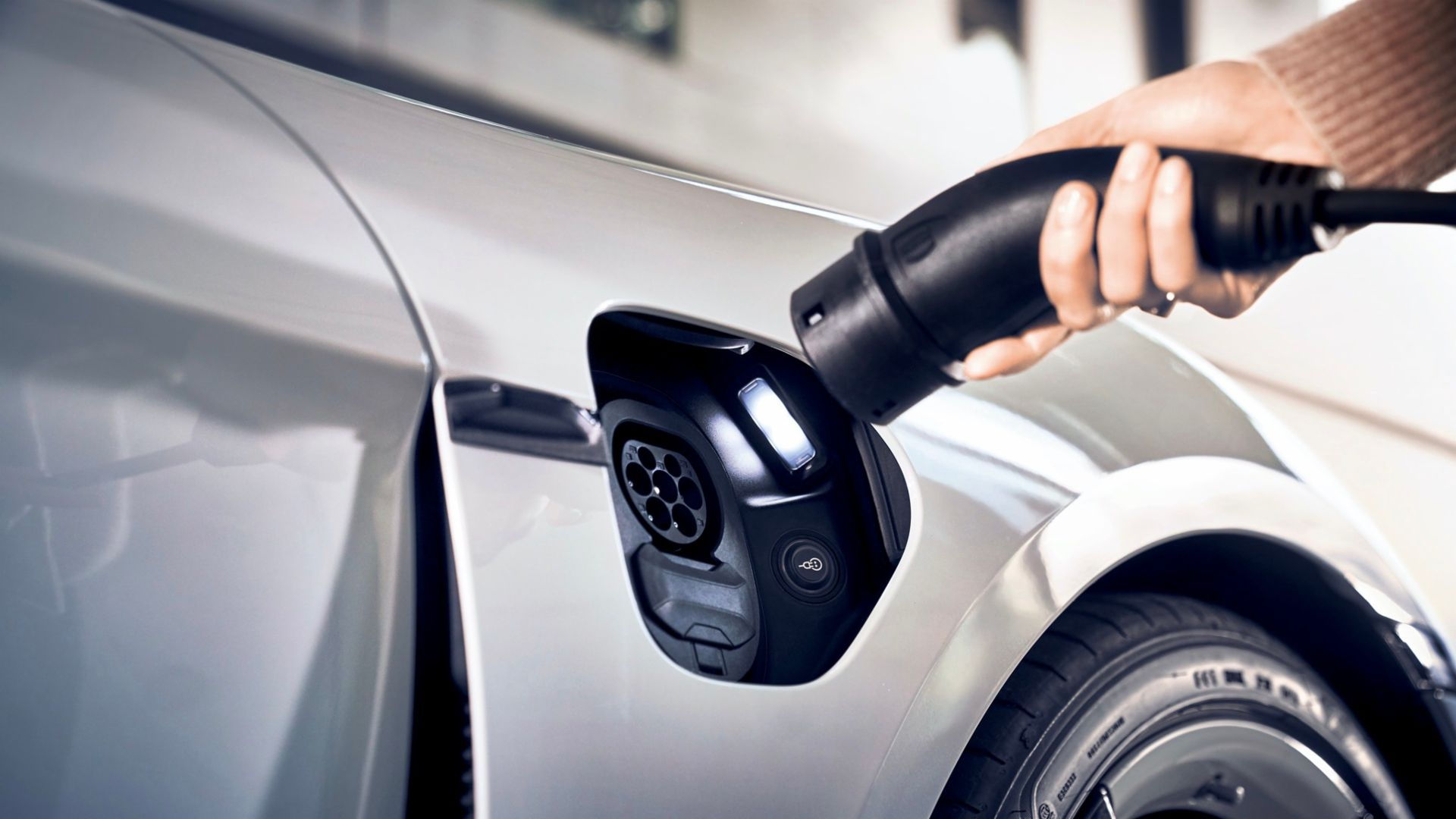
On a hunch, I unplugged the charge cable from the car, then plugged it back in. The green ring around the charge port immediately began to pulse, indicating that charging had begun.
About 15 minutes later, the battery was full again.
The meter said it had taken 1.6 kWh to top off the night's losses. That worked out to a vampire power draw of 3.2 kWh per day.
Interestingly, the range now read 183 miles--at the same full charge level that had indicated 189 miles last night. (Warmer battery then, presumably.)
The next night I replayed the same scenario, hoping to leave the car plugged in long enough to trigger the auto-transition to grid power to recharge.
But the next day, after 18 hours, the kWh-meter still hadn't budged. I needed to drive the car.
So again I kick-started the recharging process. This time the meter read 3.5 kWh to refill the battery after 18 hours. That works out to 4.7 kWh per day.
![2013 Tesla Model S electric sport sedan [photo by owner David Noland]](https://images.hgmsites.net/med/2013-tesla-model-s_100421974_m.jpg "2013 Tesla Model S electric sport sedan [photo by owner David Noland]")
2013 Tesla Model S electric sport sedan [photo by owner David Noland]
A third 11-hour test session showed 5.7 kWh per day, a fourth 24-hour session consumed 4.5 kWh. During the 24-hour test, the car did switch to grid power sometime between 18 and 24 hours.
Overall average of the four test sessions: 4.5 kWh per day.
That's the equivalent of a steady drain of 188 Watts, or three incandescent light bulbs left burning 24 hours a day. That may not sound like much, but over the course of a year, it's enough juice to drive about 5,000 miles.
Losing 4.5 kWh per day, my battery would be totally exhausted from full in about 13 days.
Suddenly, leaving the Tesla parked at the airport for a ten-day trip looks a bit sketchy, to say the least.
If my car is typical, the Model S fleet--now about 5,000 strong-- wasted 22.5 megawatt-hours of vampire power yesterday.
Conclusions
My little experiment taught me three things.
First, with sleep mode disabled, my car uses an average of 4.5 kWh per day, or enough to drive about 14 miles--significantly more than Tesla's hotline reps currently tell owners.
Second, instead of trickle-charging when plugged in, the Model S consumes its own battery power for periods of 18 to 24 hours before briefly switching to grid power to top off its battery. Thus it can lose 10 to 15 miles of range overnight even when it's plugged in.
[UPDATE: According to a Tesla spokesman who responded to the author after this article was first published, the Model S starts the topping-off process when the battery charge level drops by more than 3 percent.]
Third, owners can kick-start the topping-off process by removing and re-inserting the charge cord. Doing so 10 or 15 minutes before driving has the further advantage of preheating the battery, which increases range and maintains the regenerative braking, which is otherwise limited when the battery is cold.
Solutions
In my opinion, Tesla needs to do three things:
(1) Get the new sleep-mode software out as fast as humanly possible.
And I'm sure they're already working hard to do just that.
![2013 Tesla Model S electric sport sedan [photo by owner David Noland]](https://images.hgmsites.net/med/2013-tesla-model-s-electric-sport-sedan-photo-by-owner-david-noland_100422001_m.jpg "2013 Tesla Model S electric sport sedan [photo by owner David Noland]")
2013 Tesla Model S electric sport sedan [photo by owner David Noland]
(2) Along with estimated-range readout, give us an actual battery state-of-charge indication--either percentage of charge, or total kWh remaining. (Better yet: a choice of either.)
No matter how sophisticated, range-estimating software cannot predict the future or read the driver's mind.
Am I about to begin a long uphill or downhill stretch? Will I be be driving fast or slow? Lead-footing it or feather-footing it? Blasting the A/C or sweating it out?
I know those things. The software doesn't. So tell me precisely how much juice I have left in the battery, and let me figure it out.
(3) Do a better job of communicating with us.
The owner's hotline is a good start, but it only tells us what we know we don't know. What about those pesky "unknown unknowns"?
If the owner's manual tells us the battery loses 1 percent a day, shouldn't Tesla inform us that the actual number is closer to 5 percent?
And if you know the range readouts are inaccurate, shouldn't you let owners know that, too?
Send a freaking e-mail.
David Noland is a Tesla Model S owner and freelance writer who lives north of New York City.
+++++++++++