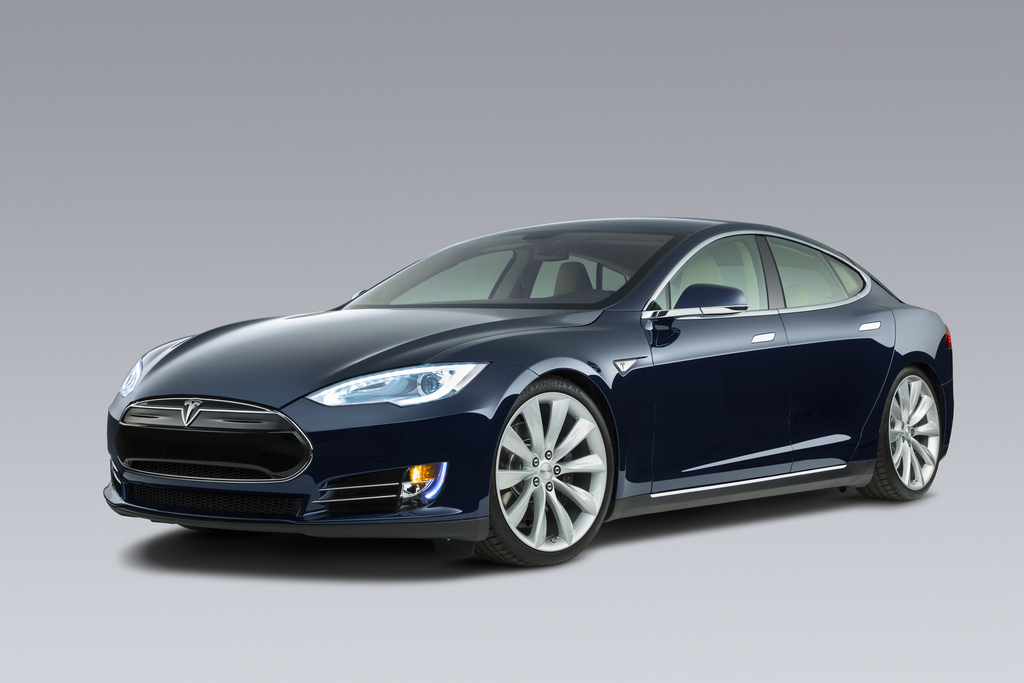
2013 Tesla Model S
Sharp-eyed Tesla Model S buffs may be wondering why the mid-range 60-kWh car, which costs $10,000 less, is rated more efficient than the top-of-the-line 85-kWh model.
The EPA said last week that the 60-kWh Model S has a range of 208 miles, and its efficiency rating is 95 MPGe (miles per gallon equivalent).
That's about 7 percent better than the 89 MPGe rating for the 85-kWh version--which has a rated range of 265 miles.
Measured from a different angle, the EPA says the 60-kWh car uses 35 kWh of electricity to go 100 miles.
The equivalent number for the longer range version is 38 kWh, meaning the cheaper car has about an 8-percent edge.
Why the difference?
Tesla Motors [NSDQ:TLSA], with its penchant for secrecy about technical matters, is mum on the subject (although a Tesla rep recently told me the company was working on an official statement to explain the difference).
Whatever the reason, the numbers make Tesla buyers who've opted for the mid-size battery (like me) feel a little better.
The $10,000 jump to the big battery gains only 57 miles of range, from 208 to 265 miles. That's about $175 per mile.
Looked at another way, the 85-kWh Model S uses a battery pack that's 42 percent larger to achieve 27 percent more range. Not a great tradeoff.
There are a number of possible reasons for the better efficiency numbers of the car with the mid-size battery.
*Lighter weight?
Although Tesla has always been cagey about battery specs, it's likely that the smaller battery weighs less. Lower weight means quicker acceleration with the same power, and less rolling resistance at higher speeds.
But it seems unlikely that a weight difference of 100 to 200 pounds--we're guessing here--could account for a 7-percent efficiency jump. There's something else going on.
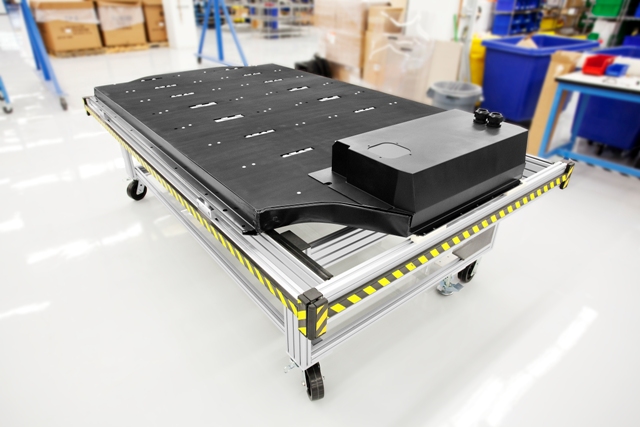
Tesla Motors - Model S lithium-ion battery pack
*Improved battery chemistry?
An unofficial source at Tesla hinted to me that the chemistry of the 60-kWh battery is different--and better--than that of the 85-kWh battery.
The 85-kWh packs went into production more than six months ago, while 60-kWh packs are only now starting to roll off the production lines.
It's quite possible that, in the meantime, Tesla has improved its battery chemistry.
Tesla uses Panasonic commodity lithium-ion lap-top batteries in its battery packs, making them easy to update. Perhaps Panasonic has tweaked its cells recently?
*Test procedures?
The new 5-cycle EPA tests include a more vigorous acceleration profile.
The 85-kWh battery can supply more output power to the Model S drive motor (362 hp vs. 302 hp). If the EPA test includes maximum acceleration, the 85-kWh car would accelerate slightly faster than the 60-kWh car--and thus use more energy.
If that's the case, the EPA numbers are not a precise apples-to-apples comparison, and the efficiency advantage of the cheaper car is illusory.

2012 Tesla Model S
It's also unclear whether the EPA tested a standard 85-kWh car, or the more powerful Performance version (416 hp).
If the test car was the latter model, this test-related discrepancy would be even greater.
*Software changes?
A recent software upgrade tweaked the acceleration profile of the Model S to provide more oomph at highway speed.
If included in the 60-kWh EPA test car, this may have had an effect on the test numbers--although we would have expected any performance increase to reduce the MPGe number.
As you may have noticed, fevered speculation about technical and production minutia is a daily sport among Model S owners and hard-core Tesla buffs.
With luck, Tesla will soon put us out of our misery on this question.
Until it does, does anybody else have theories why the 60-kWh Model S is more efficient than the 85-kWh version?
David Noland is a Tesla Model S reservation holder and freelance writer who lives north of New York City.
+++++++++++