Chevy Volt Production To Halt For 5 Weeks Due...
2012 Toyota Prius Plug-In Hybrid Drive Report...
Chevy Volt Electric Car, Age 1: Can It Survive...
Charging the 2011 Chevrolet Volt: What You Need...
Could Opel Ampera Outsell Its Sibling The 2012...
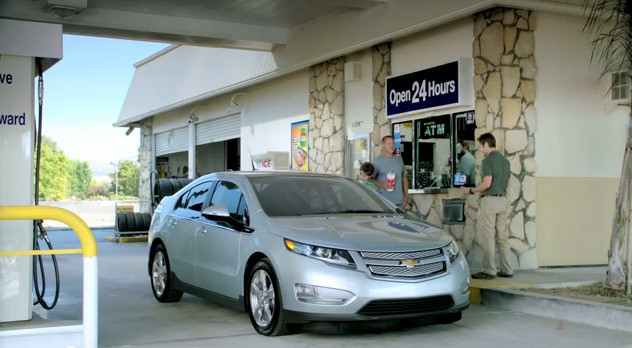
When General Motors launched the Chevrolet Volt plug-in hybrid back in 2010, it chose to emphasize how it differed from electric cars by highlighting how its gasoline engine meant folks didn’t suffer from range anxiety.
Now, almost two years after the Volt launched, charging data by a charging infrastructure company suggests that Volt owners have exactly the opposite problem: gas anxiety.
In short, Volt owners do everything they can to avoid using their car’s built-in gasoline-powered range extending engine.
And that means plugging in more often than all-electric cars, like the 2012 Nissan Leaf.
The data comes from electric car charging provider Ecotality, which has been tracking the charging habits of around 6,000 plug-in car drivers in the U.S. as part of a $230 million research project part funded by the U.S. Department of Energy.
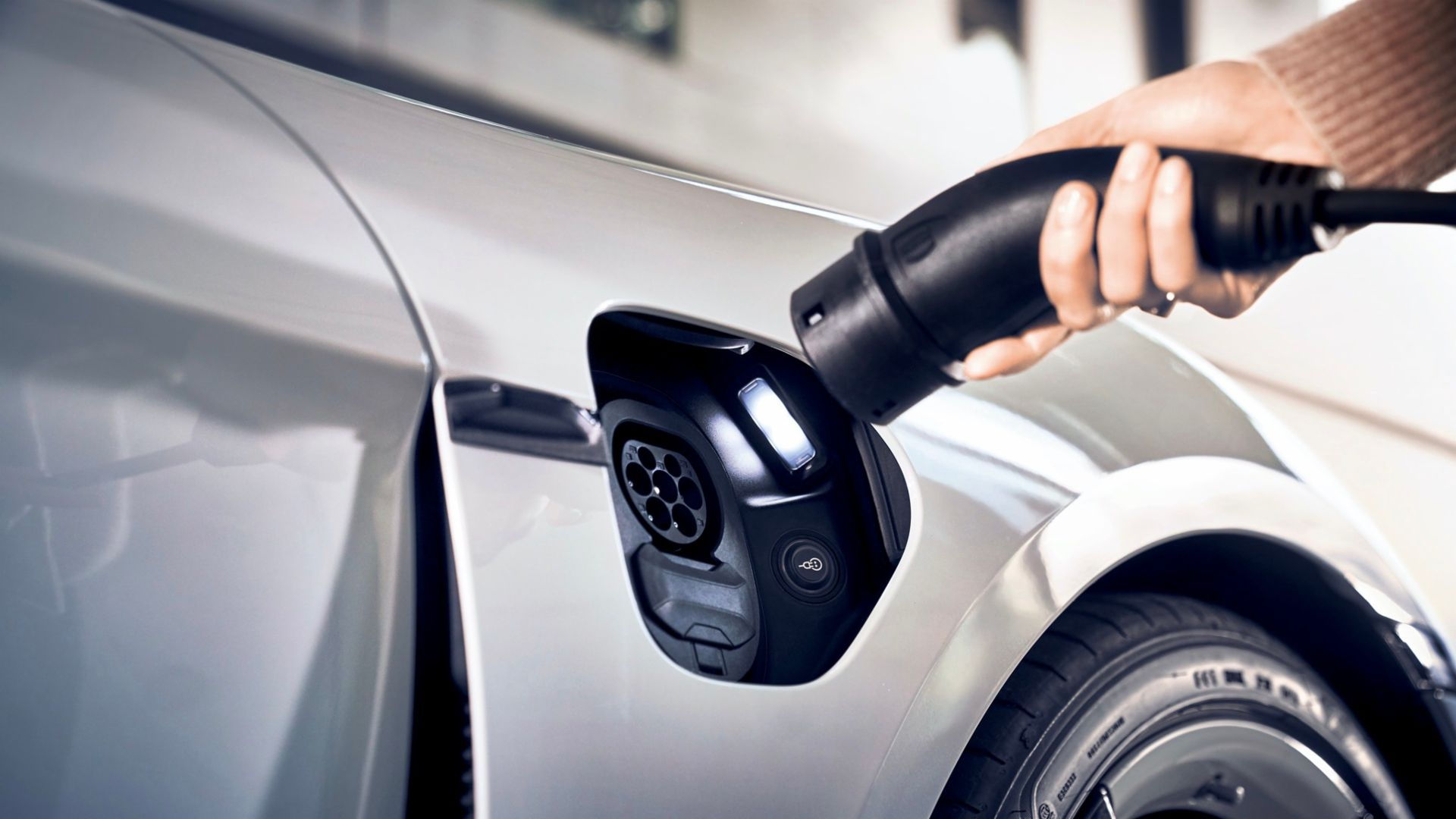
Known as the EVproject, Ecotality offered plug-in drivers a free home charging station, as well as access to its nationwide public charging network, in exchange for collecting anonymous data on charging patterns.
The EVproject was set up to see the viability and demand of electric vehicle charging, but its findings so far confirm what many electric car advocates predicted would happen.
First, the EVProject’s data shows that those with electric cars like the 2012 Nissan Leaf tend to charge at home most of the time, with a single nightly charge providing more than enough range for daily driving duties.
“If you have a home charging station, you don’t really need to rely too much on commercial infrastructure,” Colin read, Ecotality’s vice president for corporate development told The New York Times.
“Home charging meets a lot of our needs,” he continued, pointing out that 89 percent of all Nissan Leaf charging takes place at home.
Second, plug-in hybrids, like the 2013 Chevrolet Volt, tend to spend more time charging their cars than their all-electric counterparts.
Moreover, those with Chevrolet Volts are 11 percent more likely to charge away from home than Leaf owners.
With gas prices reaching unexpectedly high levels in parts of the U.S., it is logical to expect plug-in hybrid owners to prefer using electricity over gasoline wherever possible.
Although the data corroborates what GM, and Volt owners--already knew about the Volt--that it was primarily an electric car--Read, and Ecotality, were surprised by the data.
“We never anticipated that a 40-mile[sic]-electric-range plug-in hybrid would charge more than a 100 percent electric car,” he said. “You have that gas engine that you’re paying an extra premium for a reason.”
We’re not surprised to learn that Volts charge more often than Leafs, but are you?
Do you own a Volt? And how would you describe your charging habits?
Leave your thoughts in the Comments below.
+++++++++++

Follow GreenCarReports on Facebook and Twitter.
Have an opinion?
Plugging in "more often". What does that even mean?
If most of the charging is done at home, does that mean that LEAF owners are sometimes coming home and NOT plugging it. In contrast, Volt owners are plugging in after every little errand to the local store, so they are "plugging in more often."
Surely this is a silly way to look at it. The LEAF owners are doing 100% EV miles and the Volt owners are doing 70% EV miles. In that context, I see the LEAF owners as "plugging in more often."
Why are we making a big deal out of slightly more plug/unplug action on the Volt side? It has a monogamous relationship with its home outlet. So why object?
I at least am *not* on gas except very rarely, when I go on longer trips. You can look at my stats at https://www.voltstats.net/Stats/Details/305 and see the trips (the steps in the blue part of the graph). If I didn't have the trips to do, I might have bought a Leaf, but given the state of the charging/battery swap infrastructure now and for the next few years, the Volt is the perfect car for me.
16,000+ miles on under 65 gallons. I have an engine as a backup because I want to be able to go on longer trips when needed, but drive on electricity 99+% of the time otherwise.
For a vehicle that mainly use electricity, I find it strange!
Getting from 23MPG (Impala, my last car) to 106MPG (Volt) saves me 80%+ in gasoline costs. Going from 106MPG to infinity MPG (Leaf), at best will only get me that last 20%. I am perfectly happy with "only getting 106MPG" and having a car that has a 360 mile range whenever I need it. To me the Volt represents the "sweet spot" of performance and economy.
That being said, I will plug in at public stations to boost my MPG to 150 or 200 for the day and I can see why Volt drivers would be more interested than Leaf drivers in using public stations.
The electric engine is a tad undersized, and the range just short.
The Volt seems to be in a good spot, and if they could add a reverse flow inverter for Vehicle 2 Home and get a few battery options, like an LE or XR model, so we could buy 50 or 60 Miles of electric, it would increase sales.
I don't like the Prius to drive, but I respect it overall. The PIP, however, really poor work, Toyota. Do much better next time.
I hope Toyota uses Tesla longer, but the idea is to learn from Tesla and eventually do it in house. Seeing the PIP, however, perhaps Toyota should stick with Tesla a little longer...
I have only filed up 9 times since April, 6609 miles.
http://www.fuelly.com/driver/mitch672/prius-plugin
:)
I guess Toyota Prius owners don't really care about anything other than MPG...
But there are rooms for improvements.
Volt sure has plenty of room for improvements.
It certainly can NOT do that in EV mode for sure.
I'm still getting over a 600-mile round-trip to Cape Cod, which knocked my lifetime mpg from 180 down to 140.
The Volt is a great car, and a great concept. I agree it's the "sweet spot" for plug-in cars. A real electric car for 95 percent of my trips, but unlimited range when necessary. I originally bought the Volt as a "compromise" because the Leaf was so slow in coming to my area, but now I wouldn't dream of trading my Volt for a Leaf.
The owner 'spends' the time doing other things. Right now my Volt is tethered but 'I ' am spending my time here on line. I 'spend' very little time 'charging'. twenty seconds plug in and out per day.
I used to spend ten minutes/week 'gassing' and driving to 'inconvenience stations' (inconvenience to be out of gas)(50) wks. 9hours/yr of my time. 9 hours a year for ICE fueling, 2 hours/yr spent plugging. (20sec(350) 7000 sec/3600 = 2 hours. Volt saves 7 hours/year in time not 'spent' fueling around.
Volts plug more than EVs,logical. Some also keep our tanks with just a couple gallons to shed weight. Cant wait to shed gas completely.
Not sure what the interval is exactly, but perhaps a Volt owner can tell us?
It is also stated that Volt can use regular gas. it will just impact efficiency. But I don't know how much yet...
Most Volt owners are those who want to drive EV but for whatever reason, they can't own a 100% EV. So, Volt is by far the "most electric" plugin there is.
That is why they plugin as often as they can to NOT use gas. That is also clearly showing that Volt is more "EV" than other "pretenders" such as Prius Plugin.
That is why I think that is a good thing. I imagine most of those Volt owners will consider a 100% BEV if the charging is faster and network coverage is sufficient for "all" their needs...
I have been wishing that GM to come out with a Volt that has 60 miles range.
Yeah, Prius driver's best accident avoidance is by driving slow and having their eyes fixed on their MPG...
Prius PHV is a plugin hybrid that uses both fuels depending on the driving conditions, not range. It operates under the idea that both fuels have superior benefits under different conditions. It is optimized for both fuel while enabling synergy between the two.
If you are EV bias, Prius PHV is not for you. However, if you are fuel neutral and want to enjoy the benefits of both, a plugin hybrid like C-Max Energi or Prius PHV provides the best bang for the buck.
Don't those cars also help to increase the demand for public chargers?
Second, GM did they homework here. They are purposely limiting the SOC (state of charge) to something like 20-80% to improve the battery life. Let's hope that works and they Chevy does not suffer the battery issues that "other" manufacturers have had.
Expensive production methods like off-shore and arctic drilling and fracking depend on high oil prices. The only way to bring oil back to $10 per barrel is to stop buying gasoline.
My Volt and I do our part.
As much as Volt owners focus on their "gas free miles", they are not vocal about their gas miles with the 37 MPG gas engine that runs on premium gas.
http://www.chevrolet.com/volt-electric-car.html
Vocal about our gas miles? Since I'm using gas only about 20% of the time, a very credible 37 MPG is fine with me. I average 165 MPG overall and that's fine with me, even if it bothers you for some irrational reason. Yeah, that $1.80 extra premium cost per fillup is killing me. Let's see, four fillups per year is a whopping $7.20. I'll take the looks and acceleration, but to each his/her own.
Using your MPG, divide it by (1- percentage of EV miles).
So, if Volt is 60% Electric, then its MPG is 37/(1-0.6) = 92.5mpg.
@ 92.5 mpg, it is higher than PIP's average MPG of 80...
I think the data so far proves that Volt uses less gas due to its electric% being far higher. The higher the electric % , the most efficient it will be since electric miles are about 2x more efficient or 1/2 the cost...
Another fact that you don't understand. Once the Volt is its "extended mode", it behaves as a hybrid. Some of those miles will be electric only but it is NOT being recorded as "EV only" miles.
In your slow PIP, you keep bring up the fact that PIP record all "electric" miles whether it is IN the hybrid mode or plugin mode...
Also, this article is about Volt owners "avoid" those gas miles and try to be on EV as much as they can. So what is your freaking problem?
I'm afraid I have to remind you to keep it polite. No direct attacks on other commenters, especially on individuals.
It's possible to disagree without targeting the person. We try for respectful discussion in the comments here. Just try to keep it polite, and treat others the way you would like to be treated. Thanks in advance.
I appreciate that you frequently back up your points of view with actual data. Keep it up, and we're happy to have your frequent comments on different stories.
You really think about turning on the AC or heat when you "see" your economy go down. The visuals are terrific in the Volt.
If you need to use the gas engine, use it. Otherwise, it'll warn you to run it anyway (engine maintenance).
He happens to get 12 miles in his EV mode in his PIP. I happen to manage only 38-40mpg with my short time with Prius and I managed easily a 36-38mpg in my driving with my Volt and 40+ EV range per charge...
Have an opinion?Join the conversation!