Bosch Offers Wireless Charging For Nissan Leaf...
Delays At Detroit Electric Postpone Electric...
Build Your Own Ford Transit Connect Electric...
2015 Infiniti LE 'Luxury Leaf' Sedan Put On...
Gasoline, Diesel, Hybrids And Plug-Ins: The...
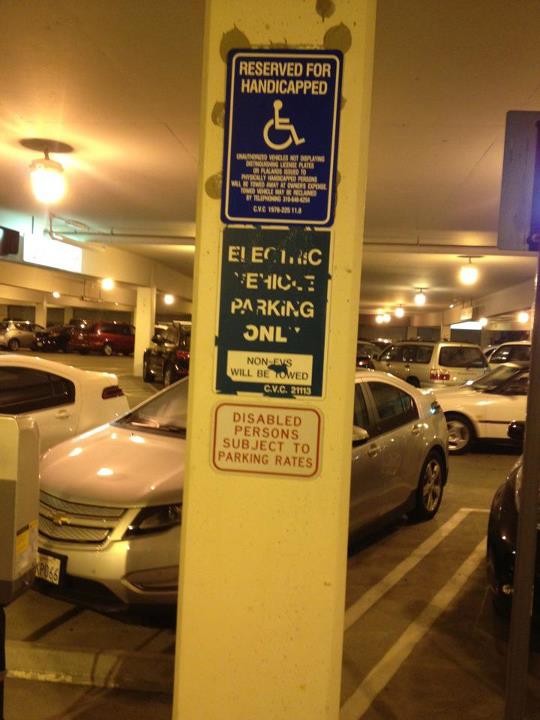
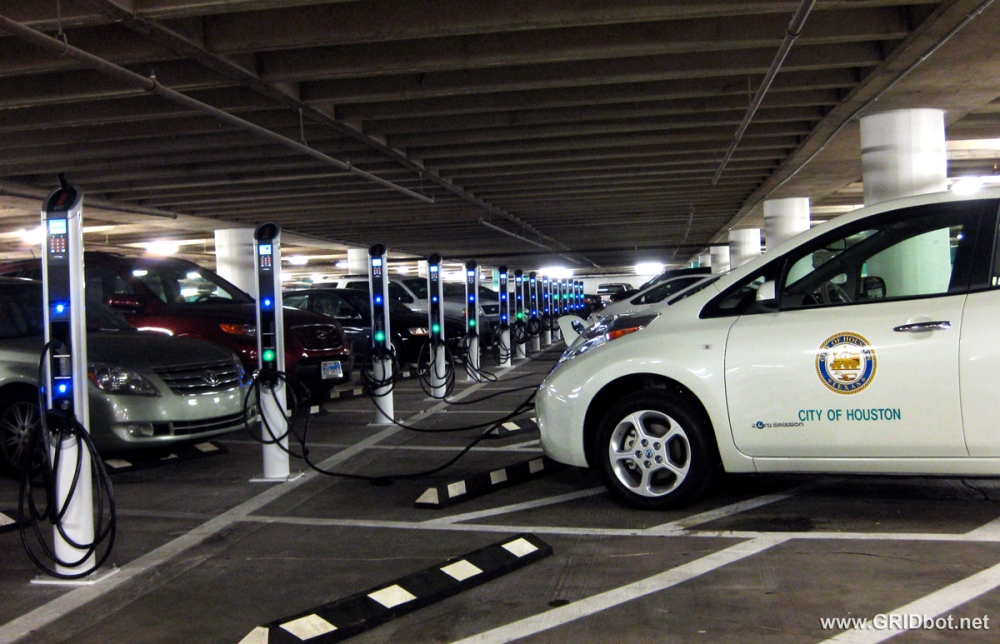
Thanks to an increasing number of public charging stations, finding a place to recharge your electric car or plug-in hybrid is easier than ever before.
With recharging of a fully empty car like a 2012 Nissan Leaf taking up to 8 hours at a public level 2 charging station however, how should access to charging points be prioritized?
Should all-electric cars, for example, get preferential treatment over plug-in hybrids like the 2013 Chevrolet Volt?
It’s a topic we’ve covered before, but thanks to a recent post by The New York Times covering a study by the University of California, Davis on charging etiquette, we’ve decided to revisit the subject.
At present, most plug-in car owners follow some simple, unwritten rules about charging etiquette, leaving messages on their car’s windshield inviting other plug-in car owners to usurp them at the charging station if they need an urgent charge OR their own car is sufficiently charged already, or perhaps only charging if they really need to.
This share and share alike mentality has served the electric car community pretty well for years, only to be challenged by the occasional selfish plug-in driver, and in California, Assembly Bill 475.
In most situations, it even works with a mix of plug-in hybrid and all-electric car owners.
After all, with most electric-only cars offering ranges well beyond the usual distance travelled, all-electric car drivers are less likely to want to plug-in at a public charging station than those with limited-all-electric range plug-in hybrids like the 2012 Chevrolet Volt and 2012 Toyota Prius plug-in hybrid.
It’s worth noting too, that for most plug-in car drivers, finding another plug-in car monopolizing charging station time isn’t as common as finding an internal combustion engined car blocking access to the charging station.
With adoption of plug-in cars extending beyond enthusiastic, well-versed early-adopters, however, will charging station abuse become a more common sight?
Does there need to be a formal code of use set out for public charging stations to ensure electric car owners aren’t left with a case of charging station rage?
Should electric car charging, for example, be given on a first-come, first-served basis?
Should plug-in hybrid owners with limited all-electric range but gasoline backup be prohibited from using public charging stations?
Or, to put a plug-in twist on George Orwell's classic Animal Farm; are all plug-in cars equal, or are some more equal than others?
Let us know your thoughts in the Comments below.
+++++++++++

Follow GreenCarReports on Facebook and Twitter.
Have an opinion?
1) Perhaps it should be the Plug-in Prius because without using the charging station, it will certainly switch to gasoline for the return drive home.
2) Perhaps it should be the LEAF, because without the charging station, the LEAF might not make it home.
3) But the LEAF owner may not really need a charge and can make it home without using the charger, so is it better to let the Plug-in Prius have the charging station?
Seems like an awkward situation.
Cycling a battery from 80% to 100% over and over actually reduces its life compared to charging the same numbers of times from, say, 40% to 60%. At least, so I'm told by battery engineers.
I already assumed the LEAF would be set to 80% maximum SOC for a full charge. So "Topping up" would stop at 80%.
I was thinking of the LEAF owner recharging midday so that on the trip home the SOC doesn't drop below 30%, which also damages the battery.
Many Volt owners don't carrry large amount of gas in their tanks if they don't frequently use gas. So, what if the Volt owner is "out of gas" and its only way home is by electricity? (Volt can operate fine without a drop of gas). Sure you can claim that Volt can just "fill up" somewhere else. Well, the BEVs are filling up as well...
Now, I am NOT sure if Prius Plugin can "operate" without any drop of gas. I haven't gotten a chance to test a Prius Plugin with complete empty tanks. But I would think that Prius plugin without any gas in the tank is NOT operable... (despite its EV only mode).
Most of the EVs today (exclude Tesla) can only charge at either 3.3KW or 6.6KW. At EPA rated 3.5 mile per KWh. You are talking about 10miles/hr or 20 miles/hr...
In either case, they are going to hold up the charger for ~ 1 hr for not much distance... 1 Hr is a long time to "hold" up the station anyway...
But I do agree that a full charged Volt or PIP still plugged in at a charging station after 3-4 hours is really annoying.
I think a "decent" owner would leave their cell numbers and card to move the car if others need it and their car is fully charged...
1. must charge here in order to get home or complete the trip, otherwise would be stranded.
2. top off to be able to run on electric instead of gas to get home or complete the trip
3. take advantage of the free charge or prefer to charge here instead of at home
Am I missing any criteria/scenario?
The larger issue is when the charging stations are blocked by ICE's. I would rather have the e-parking spot further away from the building/store, than have a premium spot.
Have an opinion?Join the conversation!