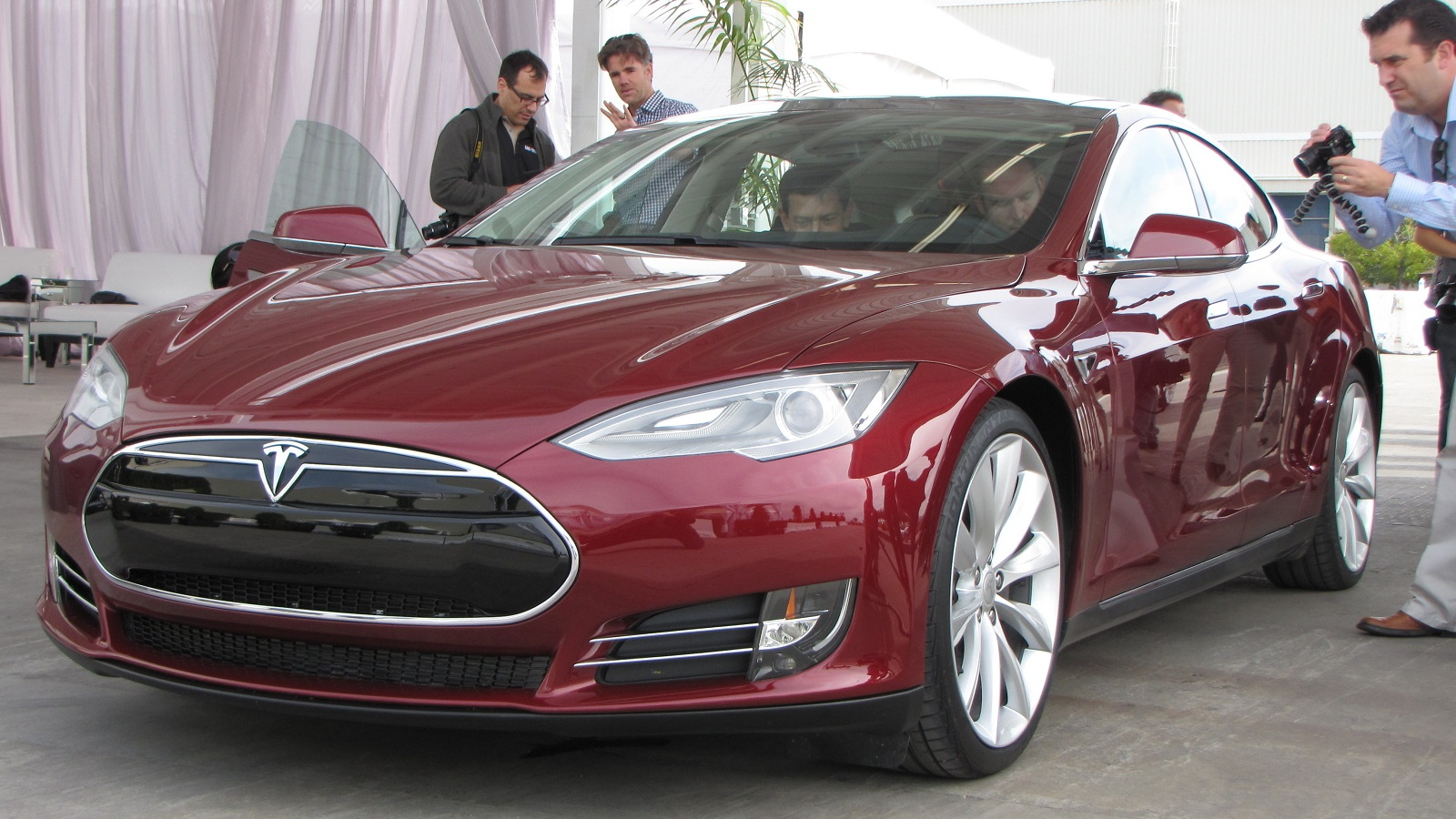
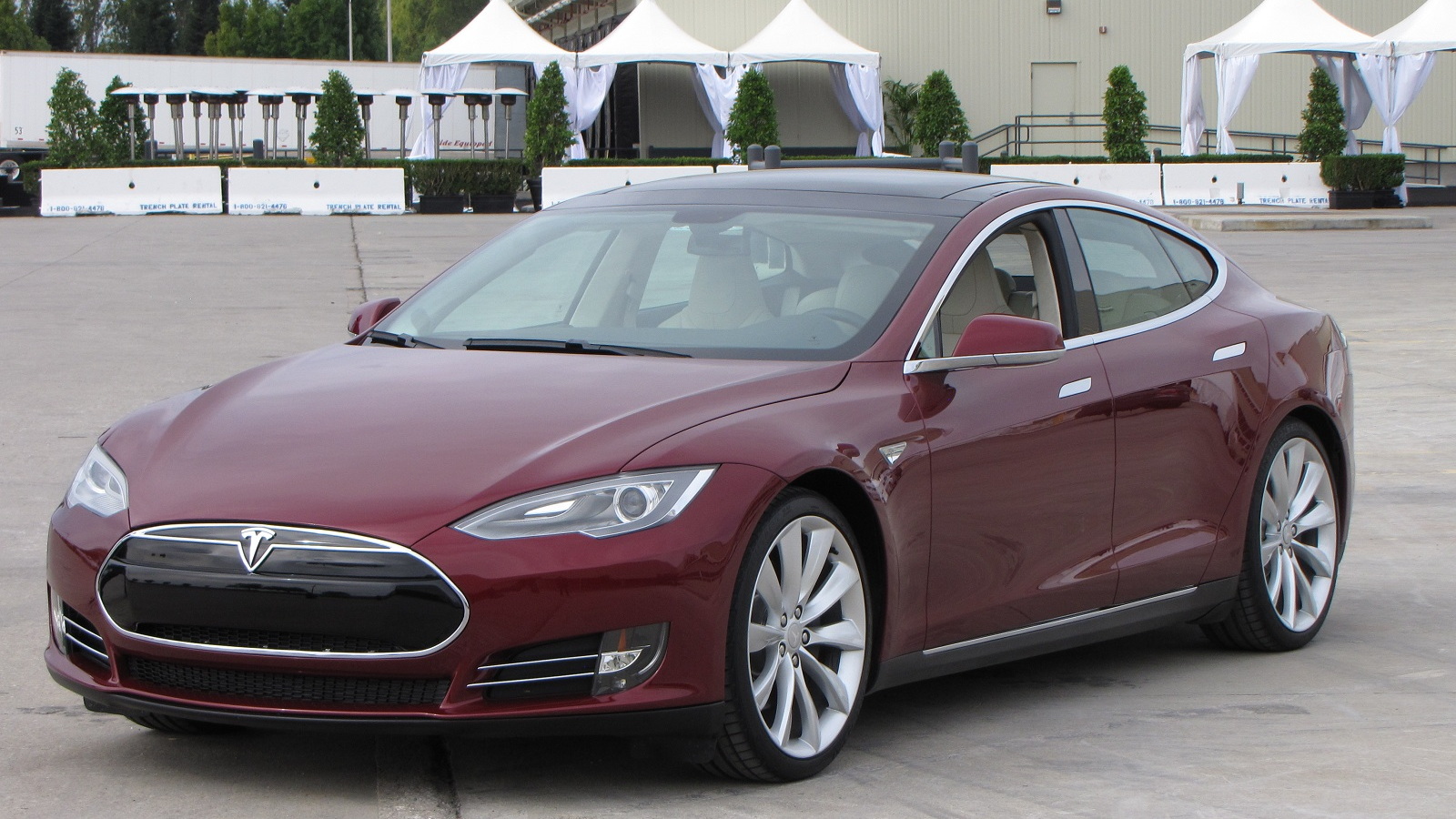
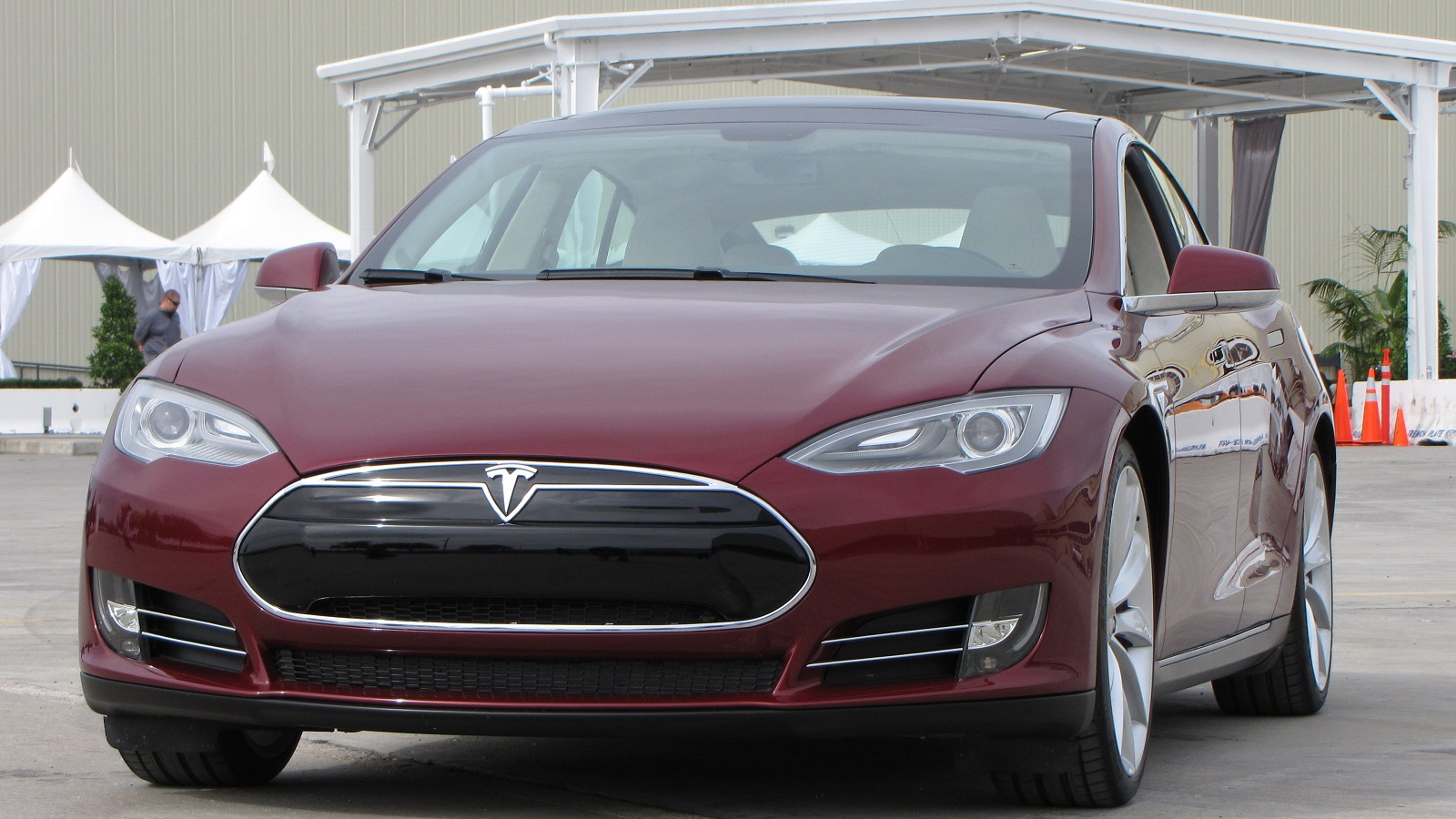
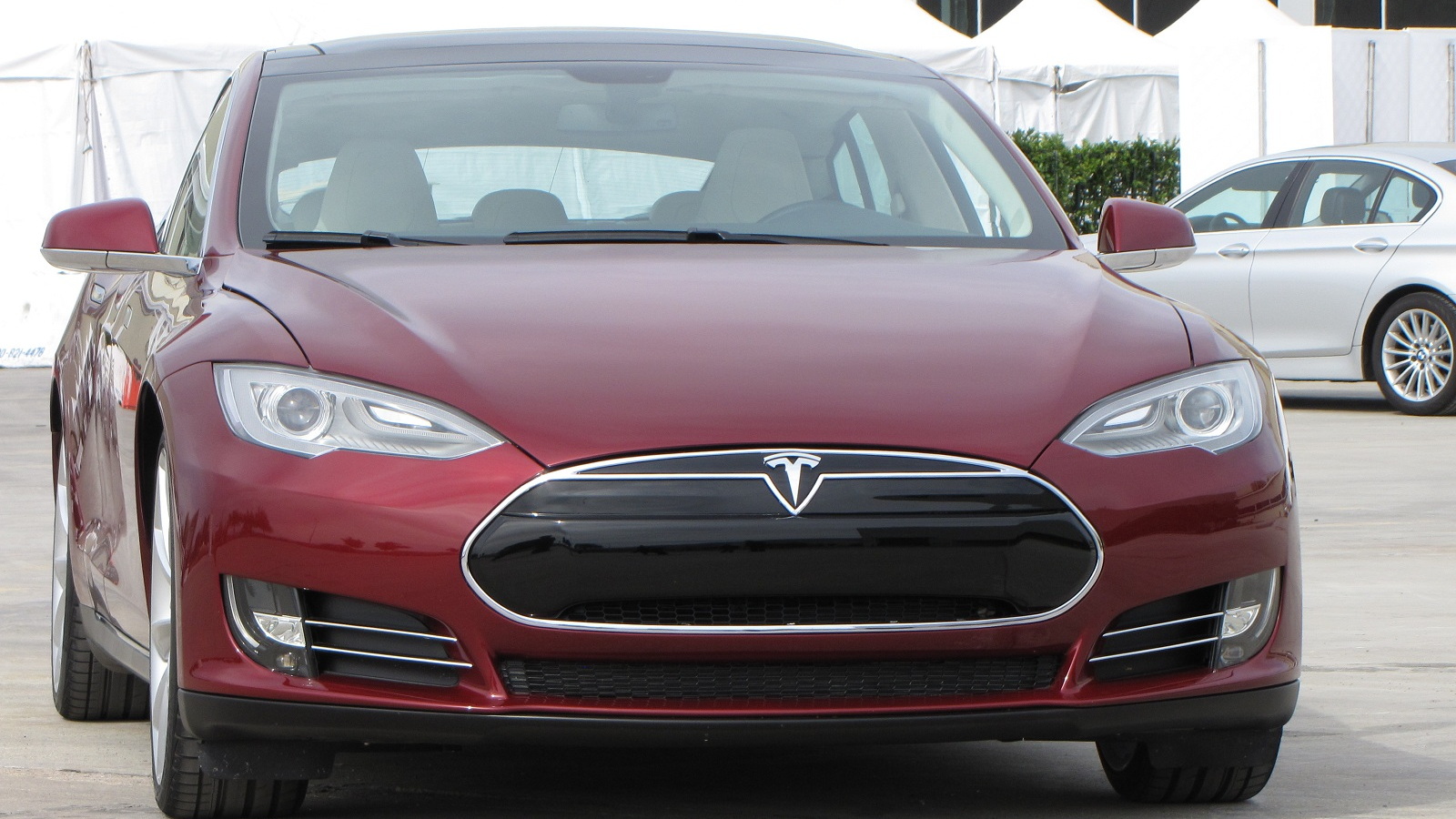
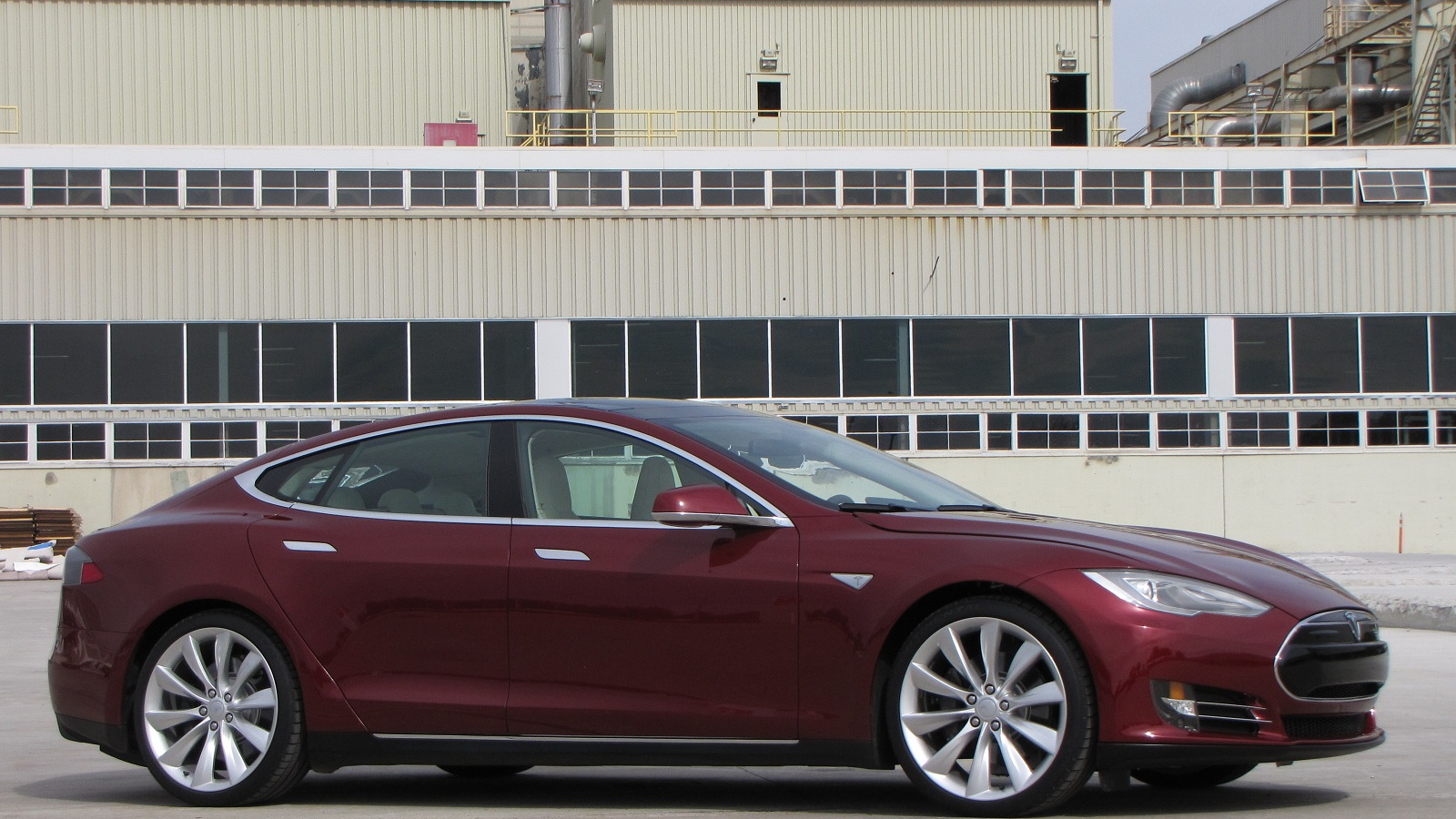
2012 Tesla Model S beta vehicle, Fremont, CA, October 2011
2012 Tesla Model S: Seven Little Things A Buyer...
Tesla Model S 'Get Amped' Tour: 5,000 Test...
Buying A 2012 Tesla Model S: Pros & Cons Of...
2012 Tesla Model S: EPA Range Of 265 Miles, 89...
Tesla Buoyant After 2012 Model S Launch...
The first two 2012 Tesla Model S all-electric sport sedans to roll off the Tesla production line last month were shipped to Chicago, where they're presumably now tooling around in the Midwest's record-setting summer heat.
But how will the cars' impressive EPA range of 268 miles hold up six months from now, when the Windy City turns bitterly cold?
For now, Tesla Motors [NSDQ:TSLA] isn't answering that question. A company spokesperson told us that "we're not yet fully ready to discuss" the car's range in seriously cold weather.
Tesla's range-calculator program (available at its retail stores, but not yet on its website) offers some hints--but it only goes down to a temperature of 32 degrees. That's fine for the lucky folks in California, but for many of us, 32 degrees in January would be a heat wave.
For a variety of reasons, electric cars suffer a significant loss of range in cold weather. When the temperature hits the teens, my Chevy Volt's summer range of 40-plus miles drops to about 25 miles--a loss of 40 percent. Nissan Leaf owners report similar numbers.
Will the Model S suffer the same fate, or does Tesla know something that Nissan and Chevy don't?
For me, that's not just an academic question. I'm Model S owner number P 717, hoping to take delivery late this year.
I'm currently debating between the basic 40-kWh battery pack (good for 160 miles) and the $10,000-more-expensive 60-kWh battery, good for 230 miles. Those range estimates are both Tesla numbers; the official EPA ratings for range on those two battery-pack capacities have yet to be announced.
My minimum travel requirement is to New York City and back without recharging, which is about 120 miles. At first, I assumed the 160-mile battery would be enough.
But after living through a winter with the Volt, I'm not so sure. If the Model S suffers the same 40-percent loss as the Volt, I'm looking at a cold-weather range of 100 miles--which would leave me stranded somewhere on the Palisades Parkway in New Jersey or lower New York state.
So the $10,000 question becomes: In seriously cold weather, will the 2012 Tesla Model S suffer range losses similar to those of the Volt and Leaf?
A few months ago, Elon Musk assured me in a personal e-mail that "we are probably closer to a 20-percent drop than a 40-percent drop." (Pretty cool that the CEO will respond in two hours to a customer query out of the blue.)
A blog on Tesla's website by Musk and company CTO J.B. Straubel says that under "very cold" conditions, range at 55 mph may be reduced by 10 to 15 percent.
Tesla's Model S range calculator, which I tried out in the Tesla store in White Plains, New York, predicts a loss of about 8 percent at 50 degrees and 15 percent at 32 degrees. But that's as low as it goes.
If we extrapolate that curve (actually, it's a straight line) down to 17 degrees, we get a range loss of 21 percent--only about half that of the Volt. Take the curve down to 0 degrees, and we have a 27 percent loss--giving a range of about 118 miles on the 40-kWh, "160-mile" battery.
But how accurate is that extrapolation? I'd rather make my $10,000 decision on the basis of real-world testing and experience. And at the moment, almost none of that is publicly available.
According to Tesla's range calculator, cabin heating causes most of the Model S range loss in cold weather. At 55 mph, the model I'm considering has a range of 170 miles at the ideal 70 degrees.
When the temperature drops to freezing, that range goes down to 145 miles. But if you're willing to turn off the heater, range jumps back up to 162 miles.
So what do you think? Should I pony up the extra $10,000 for the bigger battery? Or just bundle up for my winter trips to New York City? Or, maybe just burn some gasoline in the Volt?
Leave me your thoughts in the Comments below.
David Noland is a Tesla Model S reservation holder and freelance writer who lives north of New York City. This is his first article for High Gear Media.
+++++++++++
Follow GreenCarReports on Facebook and Twitter.
Have an opinion?
In addition to the longer range, you should have less cycles of deep discharge which should lengthen the battery life.
another thing to consider; LEAF owners are seeing range degradation...at least some are. i am in WA State, 2 days short of 18 months and just over 19,000 miles and have no range loss. others have seen loss and the difference "might" the depth of discharge others have seen while doing range tests. A LEAFer in San Diego which also has the moderate climate has done well to chart ranges during all types of scenarios but has seen loss and i believe its his several dozen forays into "turtle" mode.
so if you have a regular commute that could stress your packs range, you might want to consider bumping up to use the middle of the pack
Get the bigger pack if it is that close. You'll get a zippier ride as an added bonus.
And here everyone is saying I'm paying too much for electricity and discussing ANOTHER $10,000 on top of an already expensive car. Before you drew a single kWh to make it go. And in any 8 hour period I can go 50% further than a Tesla S with my tiny battery.
On the plus side, with a 60 KWH battery pack, the author can make his daily travels without having to go to a battery swap location (if such thing existed for him and it doesn't), which he would need to do in the fluence. So it is a time saver.
On the negative side, it is true that the author has to pay for a 60 KWH (model s) versus a 24 KWH (Fluence) and there is no doubt, that big battery is expensive and the cost could be mitigated by swapping.
Tesla is selling a modern smart phone with a battery the size of an 80's brick phone. Sure the standby time of 3 months is handy on treks to the North Pole, but you can't get a signal there.
And if your daily run is more than 80 mile each way and you can't charge at both ends, maybe gasoline is still for you.
Compare the LEAF to the Model S with the 85KWH battery.
LEAF 99 MPGe
Model S 89 MPGe
So maybe a 10% difference, significant, but not huge given that the Model S is significantly larger.
Also, if you are doing highway driving, there is almost no penalty (92 mpge LEAF, 90 mpge Model S) for the weight in terms of efficiency. City driving, however, shows greater differences.
In most urban environments, you don't need to change batteries. For long distance travel, swapping batteries every 80 miles is flat-out ludicrous.
Let's stop pretending that Rube Goldberg's Renault is somehow more advanced than an electric car that can go 300 miles without stopping for an electron or an ounce of gasoline. Sure, the weight isn't optimal, but the Fluence isn't exactly a featherweight either. It's still a 3400 lb. car (so it's 1200 lb. lighter than a top-range Model S) and it's significantly smaller inside and out.
Why is switching every 80 miles ludicrous? I can drive 100's miles without stopping for gas on normal days so if I have to stop twice on one 200 mile trip it's not a big deal. I've travelled 2000 miles so far and made 6 essential switches. I reckon that would have been 6 to 8 fuel fill ups instead.
And I know the Renault sucks compared to the Tesla: it's built down to a tight budget and in reality (away from Israel's crazy car pricing structure) it would cost less than half the base price of the Model S. But the reality is, Renault Fluence + switching is a more capable car than Model S plus a wire. And that's before the crazy big battery models.
Thanks for the healthy debate. I appreciate your push-back on this issue.
John C. Briggs
don't know if this was done but heat from the operating batteries
may be great enough to contribute to interior heating, in addition to heating the pack itself.
The smaller battery is really best in an urban environment. The medium battery and big battery are large enough for decent road trips and are much more durable.
Usually all major auto makers test their products in extreme cold and extreme heat to account for environmental differences.
Tesla can easily figure out the % using a large environmental chamber...
I hope the owners don't take their cars to Lake Tahoe then... B/c that is about 230 miles from SF bay area and Tahoe can get really cold in the winter and hilly....
"Right, and it's flat-out nonsensical to claim that Better Place's tiny range cars are some kind of game-changing innovation, when they are not." Mark, they don't have to be game changers in "your" driveway. Just in Israel and the few places they are sold.
http://www.treehugger.com/cars/winter-testing-teslas-model-s-electric-sedan.html
"This winter Model S took a trip to Baudette, Minnesota, one of the coldest places in the continental United States. Tesla engineers worked for days in sub-zero weather in order to put Model S through a rigorous set of demanding winter driving tests."
Lithium batteries don't love icy cold either, but the batteries themselves will come up to temperature fairly quickly. The most important issue is that heating a car with electric space heaters is inefficient as heck. It was never an issue with gas-powered cars because the waste heat from your engine is an extraordinary source of free heat. At -30, your heater is going to be eating up probably 1kw to keep the car warm.
http://www.teslamotors.com/forum/forums/batteries-cold-weather
You can't put a fixed figure or percentage on cold weather driving as it is VERY dependent on the temperature and even on if it is snowing or not. You do not want to get caught late at night 0F temperature in a blizzard, and realize you only have a few miles range left.
http://www.israellycool.com/2012/07/17/id-love-to-try-this-road-trip-in-a-tesla-model-s/
Was that 20% range loss with or without heat on?
Buy the biggest battery you can afford. You are saying you only want to get to work, but I'm sure there will be other situations where you want more range.
My information is that the middle sized battery is going to be delayed. If you click that one, your car will likely come later than you think.
I'm considering a Tesla. I will not buy one if I can't afford the largest battery and the air suspension. The rest of the options are nice, but these two are non-negotiable. If I can't afford them, I can't afford this car.
I'm assuming that I will drive it too fast, range will decline with age, I'll give people rides around the block, turn on the climate control etc and that all these things will affect the range.
Other considerations...The Tesla has a coolant circulation system to keep the battery at reasonable temps. I've been told it also keeps the battery above 20F. This works when the car is "off". So, the longer you store it out in cold weather, the more it will discharge the battery. My garage is heated to about 45F in winter, but my parking space at work is not, so I'm counting on loosing another 10% of the power while the car is parked at work. Then, you are going to want to use some heat in the car while you drive it. That will take away some more of the battery's capacity.
MW
Have an opinion?Join the conversation!