In the automotive world, there are automakers who ignore plug-in vehicle technology, those who experiment with it, those who do it because they have to, and those for whom it is part of the company future.
With its 2012 i electric minicar already on sale in the U.S., and its Outlander plug-in hybrid on the way this fall, Mitsubishi is clearly the latter, but according to Autocar, the Japanese automaker is planning more than just a few plug-in cars.
Over the next four years, it reports, Mitsubishi will refresh its entire model range, offering customers a plug-in and regular version of each.
Rather than offer electric and plug-in hybrid versions of the same car, Mitsubishi’s aim is to build electric-only variants of its smaller gasoline cars, while building plug-in hybrid versions of its larger and sportier cars.
Mitsubishi Outlander
Looking at Mitsubishi’s current U.S. offerings, we’d expect this translates to offering an electric compact similar in size to the current 2012 Lancer, while offering plug-in hybrid solutions for all of its other cars.
Although it has yet to prove its plug-in hybrid technology in the marketplace, Mitsubishi is confident that it has engineered a drivetrain that consumers will love.
Talking about the up-coming 2013 Mitsubishi Outlander Plug-in Hybrid, Lance Bradley, managing director of Mitsubishi UK, was keen to emphasize the car’s performance.
2012 Mitsubishi i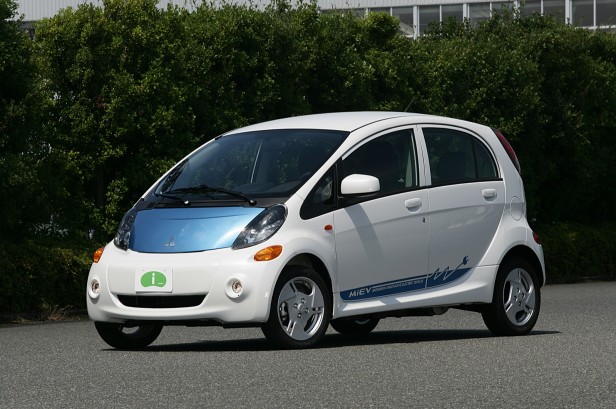
“[It] feels like it offers the performance of a 3.0-liter V6 petrol engine,” he said, adding that he expected the vehicle to steal sales from the Lexus RX450h and other crossover vehicles.
With a predicted all-electric range of 25 miles and a gas mileage efficiency expected to be around 109 miles per gallon, Bradley could be right -- especially if it is the first plug-in hybrid crossover to the market.
Of course, the real challenge for Mitsubishi is to convince die-hard fans that plug-in technology is the way to go.
And when that convincing could come at the hands of a diesel-electric plug-in Evo XI? That’s when we really do know plug-in vehicles are having an effect.
+++++++++++