Advertisement

Job Training For Returning Vets: Installing Electric-Car Chargers

 
Follow John

Eaton technologies test day, Marshall, Michigan, Sept 2010

Eaton technologies test day, Marshall, Michigan, Sept 2010

Enlarge Photo

Related Photo Galleries


See more photos »

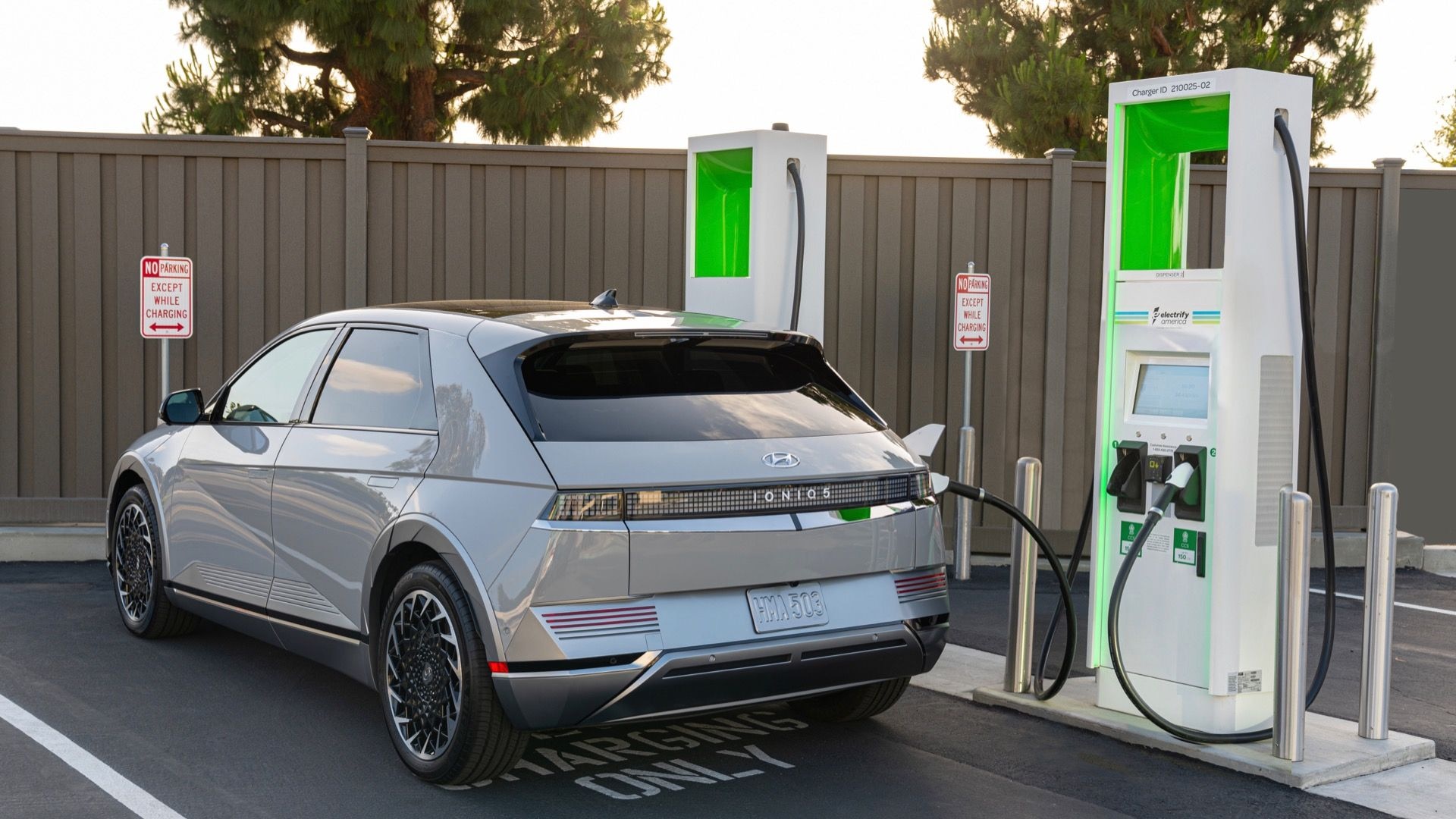
Industrial manufacturer Eaton Corporation, whose automotive business makes superchargers and many other parts, also supplies electric-car charging stations.

Under a recent Federal contract, Eaton will provide those charging stations to various Federal locations--and the company is also working to train new installers for those stations.

Among the future installers will be qualified U.S. military veterans.


Eaton is working with the U.S. Department of Veterans Affairs (and the Community College of Baltimore County) to create the pilot "VetCars" program, which will instruct veterans how to install and service infrastructure for plug-in vehicles.

Veterans who complete the program can also earn a certificate showing that they are qualified to maintain the advanced batteries used in plug-in vehicles.

Employment opportunities for returning veterans have been a challenge over the last few years, as the tough economy has made jobs at all levels more scarce.

The intention, Eaton says, is to "provide returning veterans with jobs in communities across the country.”

The charging station contract is between the U.S. General Services Administration (GSA) and Autoflex, which will install Eaton's stations as part of the Electric Vehicle Pilot Program. That program is now expanding beyond its five original test cities: Washington, D.C., Detroit, Los Angeles, San Diego, and San Francisco.

Eaton technologies test day, Marshall, Michigan, Sept 2010

Eaton technologies test day, Marshall, Michigan, Sept 2010

Enlarge Photo

More than 60 charging stations have already appeared at various Federal agencies and departments, with more on the way. The goal is to see how and when plug-in electric drivers take advantage of at-work charging in the near term.

Range-extended electric cars like the Chevy Volt and pure battery electric vehicles like the Nissan Leaf went on sale in December 2010, joined by plug-in hybrids like the Toyota Prius Plug-In Hybrid just a few months ago. There will be more than 40,000 of them on U.S. roads by the end of this year.

Electric cars may also be popular with veterans of the Iraq and Afghanistan conflicts, as those soldiers have experienced first-hand the costs of maintaining U.S. energy supplies and the associated geopolitical impacts.

The more vets who get connected to plug-in cars--which can be fueled from a variety of electricity sources, including domestic natural gas and renewable sources--the more effective a voice they may become.

Those veterans range from Iraq vet Tim Goodrich, who talks about the oil he doesn't use driving his Nissan Leaf, to U.S. Marine and former GM product czar 80-year-old Bob Lutz, who has energetically dispatched right-wing criticisms of electric cars in his Forbes blog.

+++++++++++

Follow GreenCarReports on Facebook and Twitter.


Follow Us


Have an opinion?

  • Posting indicates you have read this site's Privacy Policy and Terms of Use
  • Notify me when there are more comments
Comments (4)
  1. I love this story! The guys and girls coming back from fighting in the sand really understand just what our petro-dollars (and shekels) are used for.
     
    Post Reply
    Vote
    Bad stuff?

  2. We have already seen millions thrown down the drain by Federal grants that bought chargers that were purchased without due diligence. Apparently , although for some reason not mentioned, are these level 1 and level 2 chargers. With the certified improvements in near term future batteries with respect to charging speed, anything other than level 3 as a public charger
    makes no sense - they will be obsolete almost as soon as they are installed. I have always felt that, in general, level 1 and level 2 chargers, make little economic sense as public chargers. They service so few vehicles that their costs can seldom be justified and, technologically, they will shortly become obsolete anyway.
    Level 1 and level 2 charging belongs in the home.
     
    Post Reply
    Vote
    Bad stuff?

     
  3. I have to disagree. Cars spend more than 90% of their time sitting in one spot. It doesn't take a huge power feed to charge an EV at one of the spots. To use a fast charge requires an industrial power feed - 408 3 phase, and they run into tens of thousands to install. Level 2 charging can be put in just about anywhere.
     
    Post Reply
    Vote
    Bad stuff?

  4. I love the initiative to put veterans back to work as I think it shows a lot of support and love for those who defend us. What I am curious about however is how to keep this plan going in the long term? As it is now veteran unemployment is high (among young vets its 29% -http://wapo.st/L8ziKF- ) but the national unemployment figure is also still high at 8.1% and even higher when you consider those who have given up looking up for work. Again we need a longer term strategy to combat this problem and put everyone back to work.
     
    Post Reply
    Vote
    Bad stuff?


Have an opinion?Join the conversation!

Advertisement
Advertisement

Find Green Cars

Go!

Advertisement

 
© 2013 Green Car Reports. All Rights Reserved. Green Car Reports is published by High Gear Media. Send us feedback. Stock photography by Homestar, LLC.