This past January, many commentators hailed 2011 as the year of the electric car.
But as we approach the end of the year, neither Chevrolet nor Nissan has sold as many plug-in cars as it had predicted a year ago it would--due to everything from the Japanese earthquake and tsunami (Nissan) to overly optimistic rollout projections (Chevy).
In its latest report, Electric Vehicles: 10 Predictions For 2012, Pike concludes that while the selection of plug-in vehicles on sale in 2012 will be larger than the selection in 2011, many consumers will still be unable to buy a plug-in car.
Still Too Expensive
According to Pike Research, recent price rises in cars like the 2012 Nissan Leaf, combined with a drop in specification for the base 2012 Chevrolet Volt, haven’t helped the image of electric cars as affordable in the eyes of consumers.
In fact, according to its own research, most consumers will be unable to consider an electric car as a viable alternative until prices have dropped below $23,750.
At the moment, even the cheapest highway-capable car on the market today, the 2012 Mitsubishi i ES, now stickers at $29,125 before federal or local purchase incentives are applied.
2012 Mitsubishi i - First Drive, U.S.-spec MiEV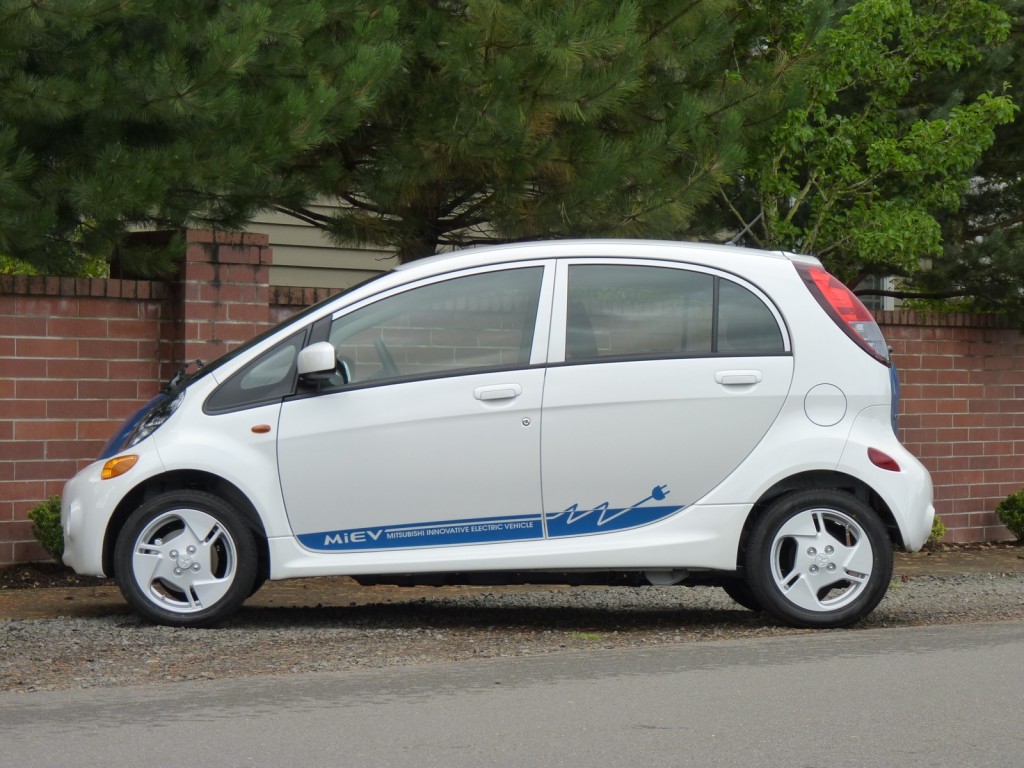
No Price Drops In 2012
Those waiting for cheaper plug-in cars during 2012 will be disappointed, the survey concludes.
“Automakers are recouping the huge investments in R&D and retooling the plants to assemble these new technology vehicles,” the report explains. “Thus, charging more to the early adopters is not unexpected."
In addition, the natural disasters in Asia combined with global financial uncertainty has kept the cost of raw materials and manufacturing high, combined with the added cost of importing cars from Japan, where the 2012 Nissan Leaf is made. Nissan plans to assemble the 2013 Leaf in the U.S. starting in 2013, at its plant in Smyrna, Tennessee.
2012 Chevrolet Volt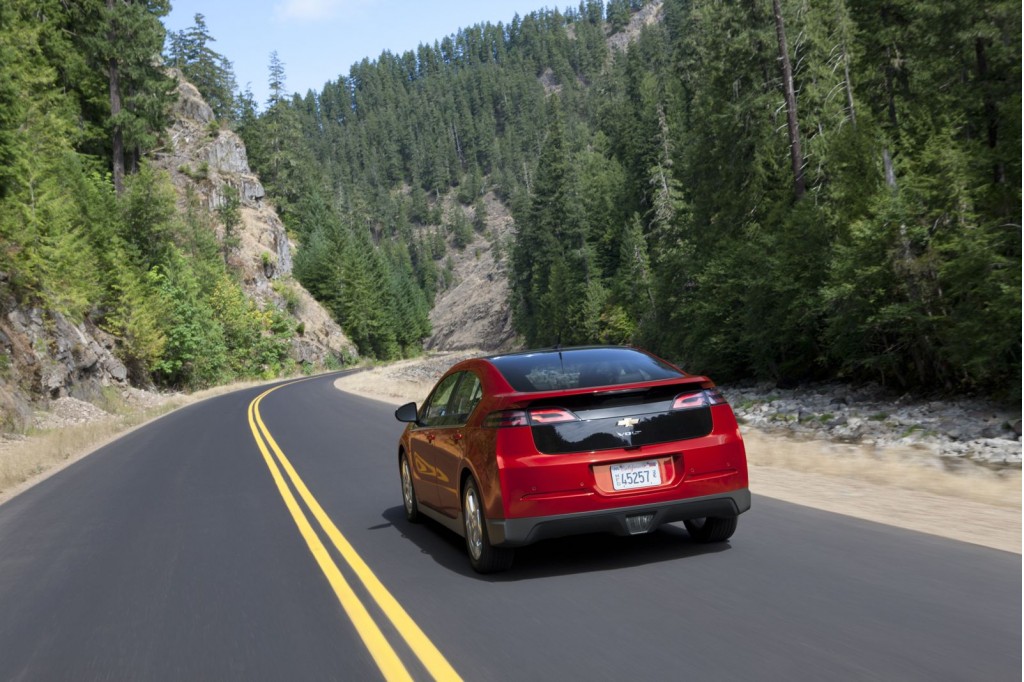
Until the costs of battery packs drop and production volumes rise, electric car prices will remain high.
Three-year cycles?
Pike Research predicts costs will stay high until 2013 or perhaps even 2014. Other analysts have suggested that prices will drop in three-year cycles, meaning that we're halfway through the first one (2011 through 2013), and the situation should improve for the 2014 model year.
Running costs of electric cars are far lower per mile, and so are maintenance costs for pure battery electric vehicles.
But retail buyers notoriously overweight initial purchase price and underweight the total cost of owning a car, so that sticker price matters a lot to get a customer to sign on the dotted line.
What price do YOU think is the level at which a much larger public will start to consider electric cars more seriously? Leave us your thoughts in the Comments below.
+++++++++++