Tesla Model S 'Get Amped' Tour: 5,000 Test...
Buying A 2012 Tesla Model S: Pros & Cons Of...
Tesla Buoyant After 2012 Model S Launch...
The 2012 Tesla Model S all-electric sedan isn’t due to roll off the production lines for another 8 months, but Tesla CEO Elon Musk wants the world to know that the Californian-based automaker is already putting plans in place to ensure that Model S owners won't be running out of charge.
Earlier this year at the official launch of the 2012 Model S Sedan, Musk said that Tesla was planning on installing ultra-rapid charging stations along major arterial freeways such as the I-5 between Canada and Mexico, but declined to give specifics.
But in an official Tesla earnings call last week, Musk let slip where the first of these ultra-rapid charging stations would be: somewhere between San Francisco and Los Angeles.
During the earnings call, Musk joked that the the massively powerful “Supercharger” 90 kilowatt charging stations looked a little like an advanced alien artifact, reiterating that the stations could easily add as much as 150 miles of range to a 2012 Model S in under 30 minutes.
With the top-specification 2012 Model S Sedan capable of a massive 300 miles per charge, we think the first SuperCharger will most likely be stationed at a hotel or rest-stop mid-way along the I-5 between SanFrancisco and Los Angeles.
However, even by the shortest route, the distance between the two cities is nearly 400 miles, meaning that an equidistant SuperCharger would be no use to owners of Model S sedans with smaller 160 or 230-mile battery packs.
And while most of Tesla’s current orders are for Model S Sedans complete with 300-mile battery pack option, expect Tesla to install multiple SuperChargers along the I-5 route to cater for drivers of lower-range Model S sedans.
Unlike other automakers which have been relying on third-party companies to provide level 2 and direct current rapid charging infrastructure for their cars, Tesla seems to be proactively working to ensure that charging infrastructure for its luxury seven-seat sedan is provided even before it launches.
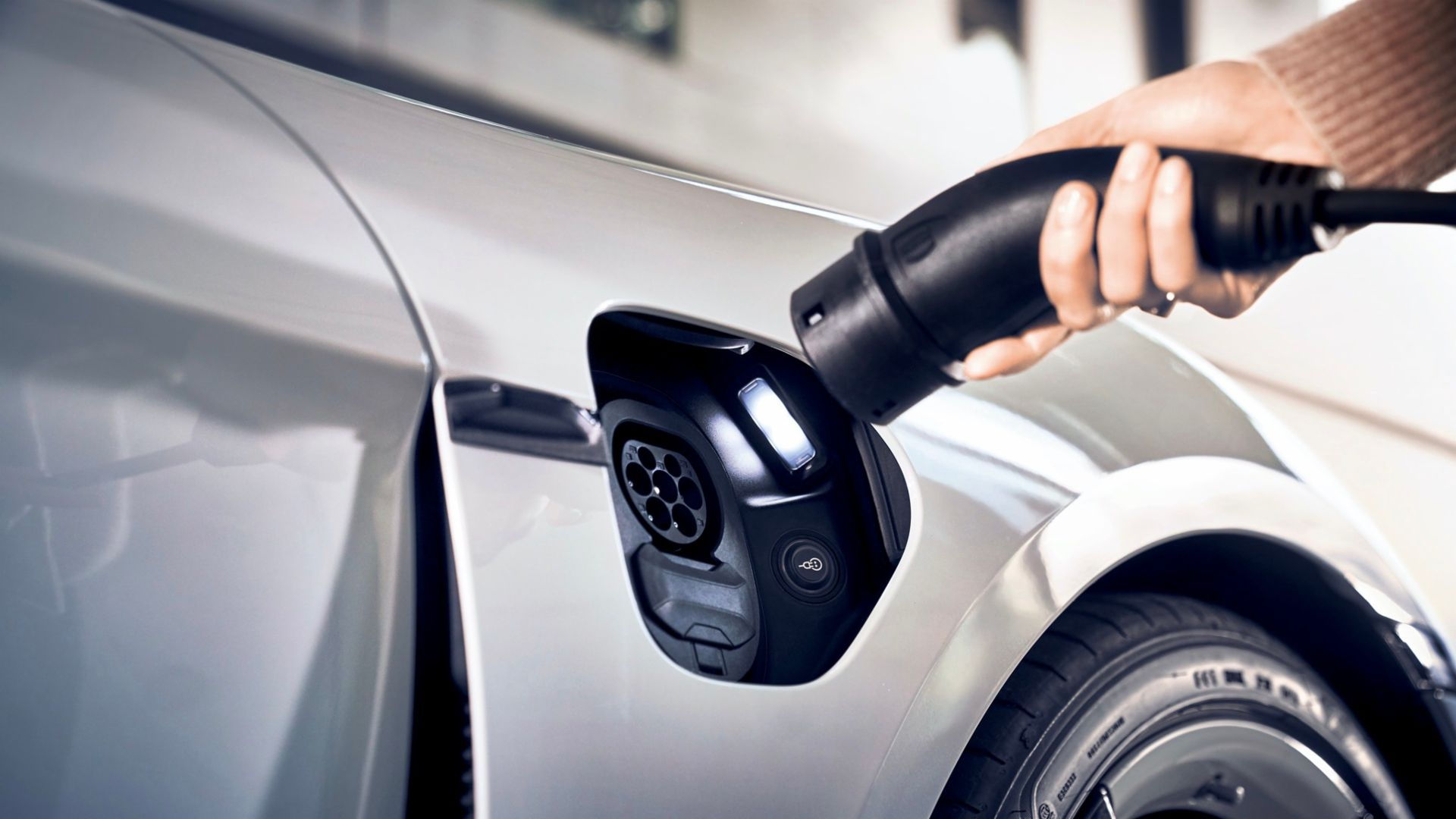
But because the 2012 Tesla Model S will use a proprietary charging connector rather than the standardized J1772 and Chademo connectors already found in other parts of the U.S., the SuperChargers will only be useful for Tesla owners.
That’s not so great for owners of other cars with rapid-charging features, such as the 2012 Nissan Leaf and 2012 Mistuibishi i. Although both cars are capable of recharging to 80% full in under an hour to give between 50 and 80 miles of useful range using a 50 kilowatt charger, they will remain incompatible with Tesla’s proprietary equipment.
That is, until someone figures out how to harness the quirky Tesla Super-Charging connector with a suitable Chademo adaptor, a little like a reverse version of the J1772 to Tesla-Roadster charge adaptor.
Until then, if you want to regularly travel between Los Angeles and San Francisco in an electric car, you’ll want to buy a Tesla Model S -- or be prepared for a long wait while you recharge.
+++++++++++

Follow GreenCarReports on Facebook and Twitter.
Have an opinion?
BTW, Nikki, We in the Leaf community appreciate your efforts with ZCW; perhaps,someone will start a ZCW here in the U.S.
the first thing they should have done. That's what we pay taxes for - to bring order out of chaos by establishing standards when required, prevent monopolies, and ensure a free market and equal opportunity for all competitors. If you don't have free competition, nothing works : not media outlets, not politics, not sports, not business, not science, nothing.
Don't any of you ever listen to Secretary of Energy Chu when he talks?
Setting unilateral standards of compatibility by government is assuredly a great way to destroy the viability of products and markets - is that what you are advocating? Government literally telling entrepreneurs they can't create new products outside of a defined range since the government feels it has suitably defined the products needed for the market?
Tesla's new connector is also an extension of J1772, but a different plug which is usually described as very small and elegant: for its looks, easy of use and convenient handling.
Since it uses J1772 electrically, it needs only a very simple adapter to use Level 2 J1772 stations, although with its longer range, the Model S will rarely need public L2 chargers.
When seeing Tesla's connector the first time, quite a few were surprised it allows 90 kW fast charging, so small.
If the charger is equidistant, then each leg is less than 200 miles, which is significantly less than 230. The 230-mile battery pack users would be able to make this trip using a single, equidistant, SuperCharger.
An equidistant charger will also be of use to the 160 mile pack cars. They will need to use a "standard" charger on each leg to and from the fast charger, but using the fast charger in the middle will significantly cut their trip time.
There is a chance you'd make it on a 230-mile range car with just one stop and one recharge. But even if the recharge were to go to 90% -- and no one is promising that -- you're still playing a dangerous game.
David: Re the trickle down - don't forget that "100%" rating on the Tesla is not chemically 100%. Shouldn't need to trickle that much.
Yes, if you start in San Jose, it's much more realistic as you've just cut 50 miles -- literally -- off your journey. I'm glad you think that racing to the charger is going to be a great idea, but at least with the Leaf, the range difference doing 75+ vs. 60-65mph is gigantic, so good luck with that.
Speeds on I-5 tend to be in the upper 70s. If that cuts the range of the 230mi car down to 180 miles, you won't make Magic Mtm.
Re: "racing" to the charger. Actually, it IS a great idea IF you have the range at that speed to make it from charger-to-charger. The best-time speed door-to-door on a trip (where you need to end with the same charge you started with) is the speed at which the car charges. Eg, if you gain 100 miles of charge per hour of charging, then you should be driving at 100mph. You'll need more charge, but you'll get to the charger faster to get it. Note that this assumes you stop the clock after you charge at your destination to your starting charge level. Most of the time we wouldn't consider this final charge part of the "trip time", so the actual best-time-speed is
going to be *faster* than the charging speed.
Have an opinion?Join the conversation!