Lately, we’ve seen a lot of new charging networks spring up around the world devoted to getting electric car owners the power they need to keep their cars charged up.
But a U.K. based, government-backed charging infrastructure company has outraged electric car owners by suggesting that its network of member-only level 2 charging stations aren’t intended for anything more than providing a top-up charge.
In a heated discussion between Nissan Leaf owners into its newly-launched charging network, Polar Network sales director Neil Sharpe said that its level 2 charging stations were not designed to help electric car owners travel well beyond the range of their car’s battery pack.
“We are primarily installing 40 charging bays in 100 towns and cities in the first wave which are intended to ‘top up’ [plug-in hybrids] and [electric cars],” Sharpe clarified in a discussion about why the firm wasn’t implementing rapid charging protocols in its charging stations. “The intention is not to range extend [electric cars] that are being used above their range capacity regularly - a use to which [plug-in hybrids] are far more suited.”
In other words, if you’re planning on using the level 2 charging stations to give your car a full recharge, you might be considered to be abusing the system.
And while owners of cars like the 2012 Nissan Leaf and 2012 Mitsubishi I say it is rapid chargers that they really need, Level 2 chargers are what charging companies are focusing on.
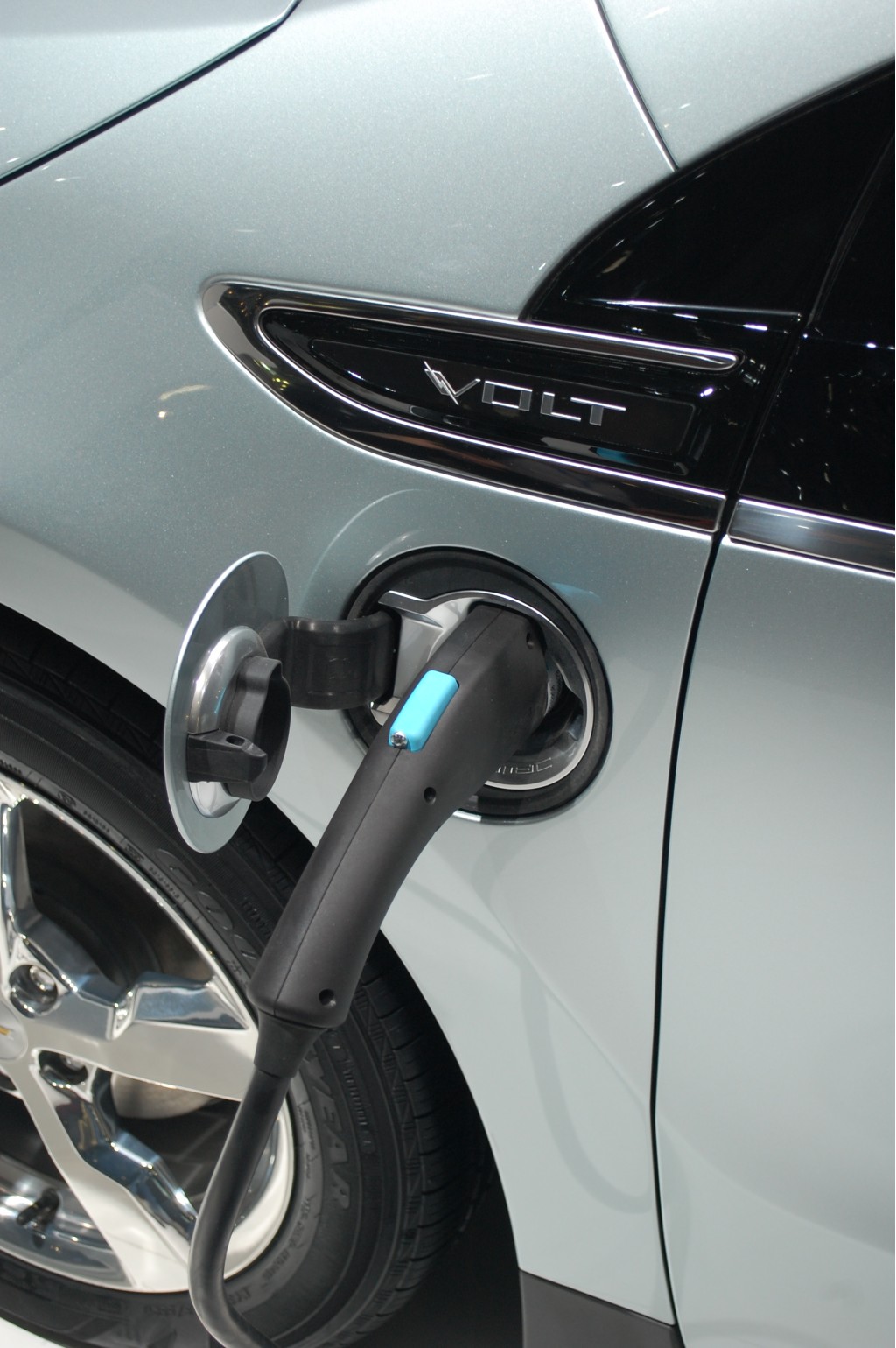
2011 Chevrolet Volt charging port
The Polar network joins yet more charging networks already in existence in the U.K. Rather than charge a nominal yearly membership fee and providing free electricity, Polar follows a subscription scheme similar to the one already run by NRG Energy in Houston, Texas, in which customers can choose a level of access depending on their needs.
Starting at the equivalent of $30 a month, customers are given a charging card which enables them to unlock the polar network charging stations. Every time a member uses a post, their account it debited an additional $1.40, regardless of how long they plug in.
Costs rise to $46 a month for U.K. customers who want Polar to fit a charging station in their home as well as provide access to its network. On top of that, there’s a one-off installation fee of $150, and customers will have to pay for the electricity used at home to recharge on their own utility bill.
Polar’s premium package, including charging stations at a customer’s home and office, raises the price considerably to $62 a month.
Traditionally, lower-power level 2 electric car charging networks have been most use to businesses which don’t really care about the costs incurred because it is classified as an expense, or long-distance electric car drivers who don’t mind waiting around while their cars recharge.
In reality however, until large numbers of rapid charging stations are included in membership-only charging schemes like this, we expect most private electric car drivers to be a little more resourceful in finding the right place to plug-in.
Are schemes like this a good or bad idea? Are they overpriced or would you pay for them? And if electric car charging stations aren’t for long-distance drivers, who are they for? Let us know in the Comments below.
[EDIT: Since posting this story, the original post at the leaftalk.co.uk forums has been edited by Mr. Neil Sharpe to a not-so-strongly worded alternative. In the interests of transparency, here is the new section, verbatim:
"The POLAR network is designed to provide available 'top-up' charging in local areas where you will park for a period of time which means privately owned car parks such as Supermarkets and Rail stations. We are also paying for all this ourselves, with an initial £10m being invested."
We would like to publicly invite Mr. Sharpe to discuss the his modified post and the reasons for changing it here on Green Car Reports]
+++++++++++