Five Ways to Increase Your Electric Car’s Range Overnight

 
Follow Nikki

24-hour Dutch Nissan Leaf Marathon

24-hour Dutch Nissan Leaf Marathon

Enlarge Photo

If you’re an electric car owner who finds that the range you can get from a full charge isn’t anywhere near the distance the dealer claimed, you’re not alone. 

Rushing to work, carrying excess weight, poor maintenance, inadequate planning and even drive distractions while driving can cause havoc with the number of miles your car can travel per charge. 

But there is help. By training yourself to follow these five simple steps you’ll find your electric car is capable of a much larger range than you thought was ever possible. 

Slow down

The laws of physics dictate that on earth the faster an object moves, the more energy is needed to push it along. 

Electric cars are no different. Driving down the freeway at 90 mph in the outside lane will drain your car’s battery pack a whole lot faster than driving along at 60 mph. 
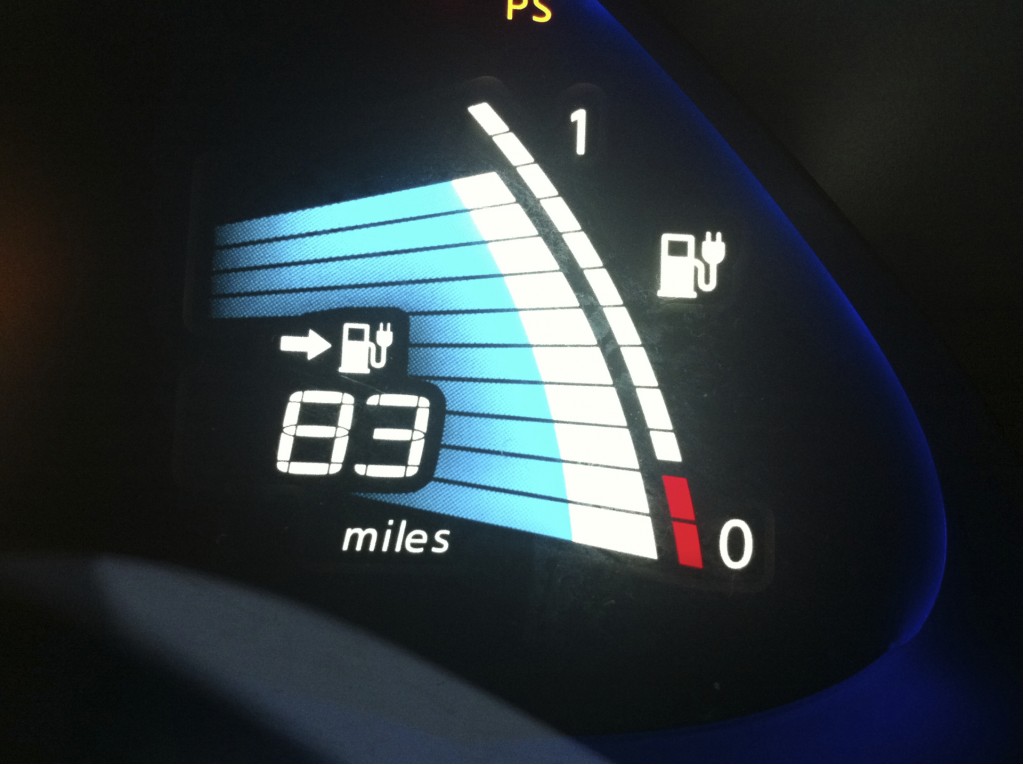
2011 Nissan Leaf State of Charge and Miles remaining

2011 Nissan Leaf State of Charge and Miles remaining

Enlarge Photo

Even a 10 mph difference in speed can make an amazing difference. Over a 60 mile commute in a 2011 Nissan Leaf, we discovered traveling at 70 mph for the entire trip results in a completely flat battery pack.  Make the same trip at 60 mph, and we made it back home with 20 miles of estimated range remaining. 

Knock 10 mph off your top speed, allow extra time for your journey and we think you’ll be pleasantly surprised. 

Healthy car, healthy range

Just like a gasoline car, electric cars work best when they are well maintained.  While electric cars don’t need expensive oil changes, air filters and new ignition parts, they do need healthy battery packs and healthy tires. 

2011 Nissan LEAF prototype

2011 Nissan LEAF prototype

Enlarge Photo


Make sure your car’s tires are properly inflated and are rotated regularly according to its manufacturer's recommendations, and follow the scheduled maintenance program set out in your car’s manual. 

Plan unfamiliar trips before you drive

While most electric cars on the market today have satellite navigation as standard they don’t always give directions appropriate to electric cars.  While electric vehicle specific satellite navigation systems are already coming to market, nothing beats old-fashioned route planning. 

Study your route, and check it using an online map service such as Google Maps to see what terrain and speed roads you’re going to be driving on. As a rule, avoiding steep inclines, fast roads and start/stop traffic in city centers will help increase your car’s range. 

Shed excess weight

Don’t worry. we’re not talking about gym membership or starving yourself.  But carrying around extra weight in your electric car has an adverse effect on its range. 

2011 Chevrolet Volt drive test, March 2011

2011 Chevrolet Volt drive test, March 2011

Enlarge Photo

Try and get into the habit of clearing out any unnecessary luggage from your car’s trunk and passenger compartment.  If you have kids, you can turn de-cluttering into a game after long trips, seeing who can clear their side of the car first. 

Not only will you end up with a cleaner, more pleasant car to drive but you’ll find your car feels noticeably lighter if you ditch all the junk that normally accumulates in your trunk over time. 

Stay focused, stay smart

A smart, calm but alert driver is always going to achieve better fuel economy than a stressed, tired driver. 

When you’re planing a longer distance electric car trip, try and allocate regular rest stops to keep you refreshed, alert and calm.   

While driving, try and anticipate the movement of traffic around you, increasing your following distance where possible to allow for smooth deceleration and acceleration, both of which contribute to efficient driving. 

Distractions, like cellphones, in-car entertainment and an unfamiliar route can all contribute to poor economy. Keep all distractions to a minimum, and you’ll find it much easier to drive smoothly, safely and efficiently. 

What tricks and tips do you have for other electric car drivers wanting to improve on their car’s range per charge? Let us know in the Comments below.

 
Follow Us


Have an opinion?Join the conversation!

  • Posting indicates you have read this site's Privacy Policy and Terms of Use
  • Notify me when there are more comments
Comments (8)
  1. I made my first all electric round trip to work today in my Volt. 49.8 electric miles in L.A. traffic. Pretty cool IMHO. You are totally right about the speed. I have gone from driving 75 mph on the freeway in my previous ICE car to about 63 in the volt, LOL. That and trying hard to anticipate/avoid stops are about the only secrets I can contribute. Plus to second your wise suggestions to get rid of excess baggage and keep the tires inflated properly. #1756
     
    Post Reply
    Vote
    Bad stuff?

  2. Right, most ecodriving techniques apply to EV's, too. One of the most important thing to do is to "drive without brakes" or at least drive in a way to only use your brakes to stop your car - you should slow down in anticipation of needing to stop so you get as much regen as possible. If you have to use the brakes hard then you have already wasted energy by accelerating too much.

    In other words, accelerate only enough to lets you coast to a stop; within reason of course.

    Aerodynamic drag is very important -- it goes up by the square of the speed, so 55-60mph is much better than 65.

    Another point about ecodriving is that many find it relaxing; because rather than worrying about staying ahead of the others, just ecodrive.

    Neil
     
    Post Reply
    Vote
    Bad stuff?

  3. Based on nearly two years driving an EV my three factors that affect range are speed, speed and speed. I'm sure your other points - tyre pressure, etc - have an impact, but my experience is that highway speed has an order of magnitude more influence than anything else.
     
    Post Reply
    Vote
    Bad stuff?

     
  4. Noel: Congrats on the new EV!

    Neil: "Another point about ecodriving is that many find it relaxing; because rather than worrying about staying ahead of the others, just ecodrive." - Absolutely! Last long trip I made in an ICE, I set the cruise at 65 on the highway - I arrived 20 minutes later that if I'd belted along at 75+ but I was so relaxed; no speeding up, slowing down, dodging traffic - brilliant.
     
    Post Reply
    Vote
    Bad stuff?

  5. Nothing beats plugging in at work. By the end of your work day, even of you go out to lunch, you will be full or near full, even of only charging at 110 volts. Keep your car plugged in and topped off!
     
    Post Reply
    Vote
    Bad stuff?

  6. Certainly agree with speed, it's the biggest factor by far. One that hasn't been brought up yet is pre-conditioning the cabin and batteries while plugged into the grid. Leave for your destination with the batteries at the proper temperature and the cabin already heated or cooled and you'll save a lot of energy for greater range.
     
    Post Reply
    Vote
    Bad stuff?

  7. Speed kills. Range, that is. Tesla website has a link to a chart that correlates range and speed. Generally,
    until you hit around 40 to 45 MPH, air drag doesn't hurt all that much. But as noted, 70MPH is a killer.
    Those Aussies that managed to get 360 or so miles out of a Tesla roadster, rated at 240 miles, did so by driving 25 MPH all the way.
     
    Post Reply
    Vote
    Bad stuff?

  8. Draft a semi. Not so close as to endanger your life, but a good safe distance will still improve your mileage, let the truck do the work.
     
    Post Reply
    Vote
    Bad stuff?


Have an opinion?Join the conversation!

Find Green Cars

Go!


© 2011 Green Car Reports. All Rights Reserved. Green Car Reports is published by High Gear Media. Send us feedback. Stock photography by Homestar, LLC.