Advertisement

Want a $500 Electric Car Charging Station? So Does the DoE

 
Follow Nikki

ECOtality Blink charging stations for electric & plug-in cars

ECOtality Blink charging stations for electric & plug-in cars

Enlarge Photo

Related Photo Galleries


See more photos »

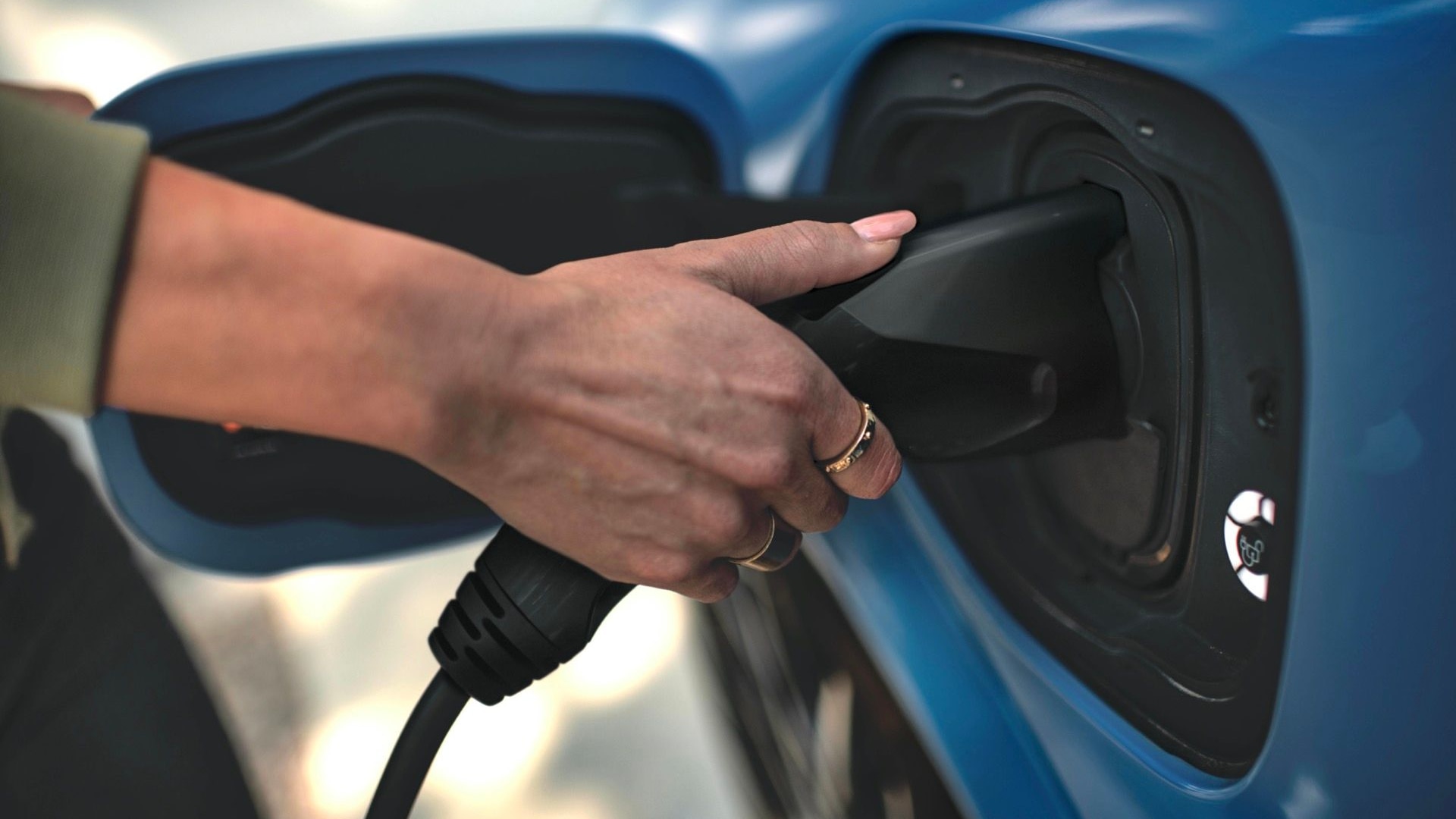
If you’re in the market for an Electric car you’ll know that besides the obvious financial burden of paying for the car itself you probably want to budget a few thousand dollars extra to account for the installation of a dedicated electric car charging station in your home. 

At the moment, most early adopters are willing to shell out the extra money, but if electric cars are truly going to become mainstream vehicles, the cost of providing charging infrastructure needs to drastically drop.  

Enter the U.S. Department of Energy, which has just earmarked $12 million to help firms develop charging stations over the next 3 years which could cost consumers as little as $500 to buy.


The funding opportunity announcement comes on the back of a study produced by the DoE’s Grid Integration Tech Team (GITT) which identified two key areas which new charging stations needed to address in order to aid electric vehicle adoption. 
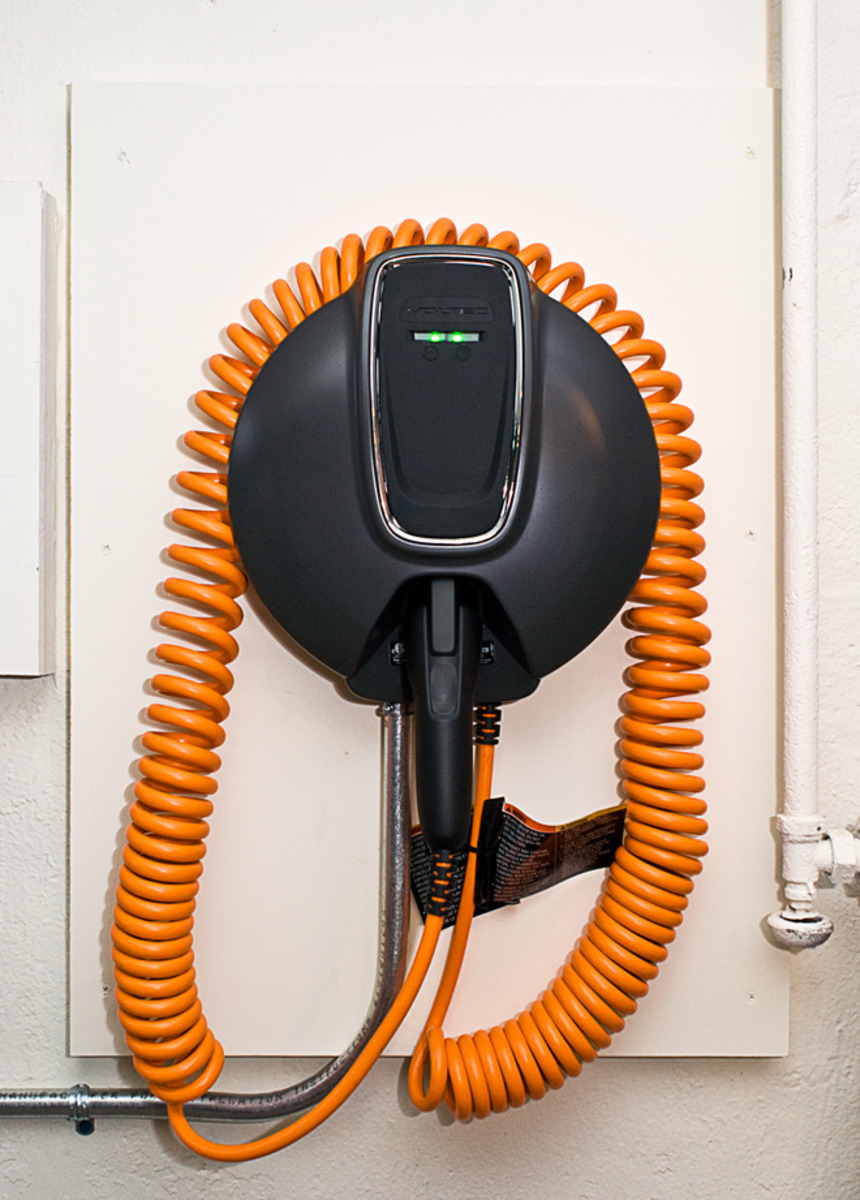
2011 Chevrolet Volt 240V charging station

2011 Chevrolet Volt 240V charging station

Enlarge Photo

Cost

With current charging stations costing as much as a laptop computer, one of the aims of the fund is to dramatically reduce the cost to develop and produce charging stations, lowering the end cost of consumer and commercial charging stations alike.  

Expect the funds to help enable charging infrastructure firms to refine existing designs, allowing for more functionality while lowering cost. 

Funds could also theoretically be used to leverage economies of scale, allowing firms to order more components at lower unit cost once a suitable design has been found. 

Smart grid connectivity

Portland CHAdeMO quick-charging station (publicly accessible)

Portland CHAdeMO quick-charging station (publicly accessible)

Enlarge Photo

With increasing numbers of electric cars on the road, the GITT has stipulated that future charging stations should be capable of communicating with power utility companies to ensure that the electrical grid is not overloaded at any one time. 

Stipulating that successful fund recipients also include smart-grid connectivity in their designs also provides utility companies with a future way to identify and bill electric cars owners individually for charging point use.  An example application of this would be to enable electric car owners to have any charging point use away from the home to be automatically charged to their home utility bill, for example. 

Maybe more?

Although cost and smart grid connectivity are the two main remits of the fund, charging stations could also be developed capable of providing up to 40 amps of power at level 2, providing future compatibility for electric cars like the 2012 Ford Focus Electric, which is capable of charging at up to 32 Amps at 220 Volts from a suitable charging station. 

[DOE via EVperspective.com]



Follow Us


Have an opinion?

  • Posting indicates you have read this site's Privacy Policy and Terms of Use
  • Notify me when there are more comments
Comments (9)
  1. The DOE is getting all wound up worrying about smart grids and other side issues while not addressing the main requirements of a future charging network. Public charging stations, as I thought everyone realized, will be Level 3, not Level 2, which doesn't
    adequately support EV travel. And why in the world isn't the DOE moving to establish the charging connector and specs of the power supply? THAT is what
    EV makers need to know and is the reason Nissan balked at incorporating faster recharge technology. A Level 2 or below public charging station is an oxymoron, except at places where waiting 4 hours for a recharge is aceptable, or the cars being charged are limited in how much juice they can draw and thus tie up the charger.
     
    Post Reply
    Vote
    Bad stuff?

     
  2. I think the smart grip capability is mostly for home charging, to balance loads at night, and avoid black-outs during hot summer days when all ACs are on. (For as long as the grids are in the bad shape which they apparently currently are, in the US.)
     
    Post Reply
    Vote
    Bad stuff?

  3. Actually, L2 and L1 charging are quite adequate for most locations. L3 is only needed for inter city travel, or for those who need quick charging because of a lack of charging capability at home or work.

    You don't need to charge to full every time you charge. When you go to the grocery store or the shopping mall, you can get anywhere from 5-50 miles of range depending on how long you are there. This "convenience charging" adds up, and when combined with a full charge at home or work, greatly expands the useful range of a 100 mile EV.

    I also feel L1 should be used everywhere people stay for long periods, such as workplaces, airports, etc. No need to spend the money on an expensive L2 station when the car is parked for 8+ hours.
     
    Post Reply
    Vote
    Bad stuff?

     
  4. According to Nissan's FAQ, charging the Leaf with L1 (110/120V) takes 20 hours, so 8 hours doesn't even give you half a charge. 29 miles EPA.
     
    Post Reply
    Vote
    Bad stuff?

  5. BTW, Paul, have you seen this already?
    http://evsolutions.avinc.com/uploads/products/1_AV_HCA_061010.pdf
     
    Post Reply
    Vote
    Bad stuff?

  6. Make them able to safely plug in to existing dryer outlets for a start. I also feel that there is a lot of potential in incentivizing Level 2 stations (or even Level 1) at hotels and motels, where people do tend to stay long enough to fully charge. Somebody said that the real trick is to provide LOTS of cheap level 1 access at workplaces and longer term parking lots. Cheap and effective.
     
    Post Reply
    Vote
    Bad stuff?

  7. I'm missing the mission here...we already have EVSEs at and around $500, and capable of charging 240v/40amp and then some. Yes, some of the EVSEs need to get cheaper, but cost of hardware is not our problem. The main issue around home infrastructure is the process of getting it installed- lengthy, clumsy, and often more expensive than the box itself. That will not be helped by doing more of them, the way EVSEs will benefit from economies of scale. Would much rather see the DOE put funding toward a replicable model that is much simpler and by its very nature, cheaper. It's not as visible a problem, but will do more to slow EV deployment than most of the other things people are worried about.
     
    Post Reply
    Vote
    Bad stuff?

     
  8. Not sure where the $500 figure comes from, perhaps Nikki is just assuming they are currently $1000.

    The DOE is requesting (1) reduced costs (2) smart grid capable (3) 40 amp minimum. I'm sure in addition they look at each project to decide how much sense it makes in detail. I'd hope they favor projects developing EVSE with more than 40 amp maximum.

    I'm not sure what the DOE could do to reduce installation cost... they might be looking for an idea of how to support reducing cost in that area as well.
     
    Post Reply
    Vote
    Bad stuff?

  9. Thanks for this Chelsea.

    I was geniunely unaware of a unit cosint $500 - but you've since told me the SPX Voltec unit retails around that price.

    What does this mean? A $250 unit? Yes please!
     
    Post Reply
    Vote
    Bad stuff?


Have an opinion?Join the conversation!

Advertisement
Get great deals on the 2012 Ford Focus!
By clicking above, you agree that your data will be subject to our Car Quotes Privacy Policy
Advertisement

Find Green Cars

Go!

Advertisement

 
© 2013 Green Car Reports. All Rights Reserved. Green Car Reports is published by High Gear Media. Send us feedback. Stock photography by Homestar, LLC.