Advertisement

Electric-Car Warning: Check Your Utility Bill Carefully!

 
Follow George

Scenes from dedication of electric-car charging station at Creekside Inn, Palo Alto, CA

Scenes from dedication of electric-car charging station at Creekside Inn, Palo Alto, CA

Enlarge Photo

Related Photo Galleries


See more photos »

It is apparently quite possible that the local utility company that provides the power to charge your new electric vehicle may not have "all its ducks in a row" when it comes to charging you properly for that electricity.

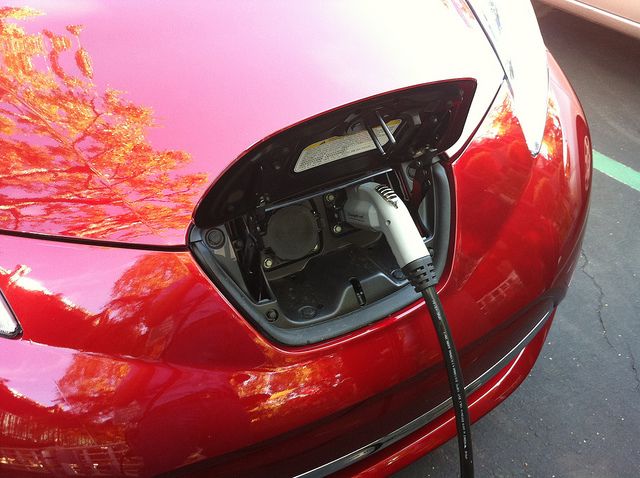
I recently bought both a 2011 Nissan Leaf and a 2011 Chevy Volt, and well beforehand, I applied for the rate that would let me recharge them with cheap power if I did it overnight.


But my utility's failure to bill me correctly made me realize what pioneers we are, and why it's important for all of us to check our utility bills carefully and promptly.

Last October, I filled out the simple form required by my utility company, Pacific Gas and Electric. I got notification about a month later that my meter had been changed from my previous "solar power system" rate (called "E6") to the "E9" rate they offer to homes with electric vehicles. They had even put a new "rate sticker" on the meter itself.

The E9 rate provides for slightly lower costs even during peak hours of use, but gives a wonderful value: Electricity during a special midnight-to-7-am period at about half the cost (less than $ 0.065 per kWh) of the E6 solar home rate (around $ 0.11 per kWh).

2011 Nissan Leaf and 2011 Chevy Volt, with charging station visible; photo by George Parrott

2011 Nissan Leaf and 2011 Chevy Volt, with charging station visible; photo by George Parrott

Enlarge Photo

After several months with this new E6 rate in place, I finally looked closely at my current supply costs. I could not come up with any accounting analysis that would explain how Pacific Gas and Electric had produced the cost totals I was seeing, if the E9 rate had actually been used for my home.

After a long telephone conversation with the billing office, I found that they had switched me to the E9 rate, but that the billing office had not switched their cost calculation to that special electric vehicle rate at all.

It will now, according to their billing offices, take them about a month to sort out this mistake on their part. Meanwhile, I estimate that my current "bill" is at least $125 more than it should be. If I hadn't carefully studied my monthly statement, this "error" would have been led to my new electric Nissan Leaf costing much more than expected.

Moral:  Look at your electric bills carefully once you get your new Chevrolet Volt, Nissan Leaf, Ford Focus Electric, or Mitsubishi 'i' home.  The special rates often offered for such vehicles may not actually have been provided by your electric utility.

If you've already taken delivery of an electric car, what experiences have you had with your local power company?

Tell us your story in the Comments below.


Follow Us


Have an opinion?

  • Posting indicates you have read this site's Privacy Policy and Terms of Use
  • Notify me when there are more comments
Comments (8)
  1. Thank you very much for your suggestion.
    I am from istanbul, Turkey. Hoping to drive me ev (renault fluence ze) in september. i think i will charge my ev from my home's hub.
    Could you give me some information about ev charging infrastructure in your area (state) and charging price at ev caharging points?
    Thank you very much.
    Yours Sincerely.
    email: muratakbalik@hotmail.com
     
    Post Reply
    Vote
    Bad stuff?

  2. If the E9 rate is working correctly, can it distinguish between electric car charging and not electric car use of electricity after midnight? That is, could I also, say, run my dryer, washer, swimming pool pump, air conditioner, etc at the same low rate after midnight? I am a PV Solar Panel installer and this would be useful info to convey as clients go solar.
     
    Post Reply
    Vote
    Bad stuff?

  3. I own a LEAF and like within SCE territory (southern CA). They offer 2 choices of rate schedules:
    Rate 1) EV on a super lower rate and house being on a normal rate.
    Rate 2) a Whole House EV rate.
    I chose the Whole House EV rate since it moves all my electrical usage to a much lower TOU rate. The trick is to adjust your a/c, pool, etc. to run later in the day - which I do. It is saving me a bundle.
    Actually, I now pay a lower total electric bill than before I owned the EV.
     
    Post Reply
    Vote
    Bad stuff?

  4. 1. Most EV charging points at public places here in California now are FREE. I stopped in Vacaville, CA. today and used the Davis Park and Ride charge points to get a bit of extra power in our Volt. (They have two J1772 chargers up and running, but the L3 charger IS DOWN "for certification" according to a sign on the unit.
    2. For Pacific Gas & Electric, the E9 rate applies to the WHOLE HOUSE, so we also set our clothes dryer to run after midnight (it has a delay start function for just that application), and I have both of our EVs (Volt and Leaf) set to use this late night charge period.
    We do get frequent breezes/winds in this area, and I have gotten an estimate for a wind turbine which could go beside the driveway.
     
    Post Reply
    Vote
    Bad stuff?

  5. SoCal Edison installed a TOU meter for me. I just got the first bill and it seems to be working fine. No one is home at my house during the day, and we don't use much electricity. My bill was $29 in March without the Volt and $67 in April with it.
     
    Post Reply
    Vote
    Bad stuff?

  6. I ran into a similar hitch recently with my mother's strata for her condo/townhouse in Vancouver, BC. She is wanting to convert her '99 Miata into EV and get a charger put into the unit's leased garage (apparently for 50 yrs). It is a new complex but does not have any charging as mandated by the City for new bldgs (20% min). The meter for all garages in the complex are paid to local utility (BC Hydro) by the strata fees and in order to get the go-ahead for any changes in expenditures, they must have an agreed vote of 75% or more! Even with the cheap rate BC Hydro offers for the residential rate of 6.7¢/kWh, there will be squabling.
     
    Post Reply
    Vote
    Bad stuff?

  7. Here in NY state, only commercial and industrial enterprises can get time of day rates, from what I can tell. So that's that. I buy from an ESCO, however (I think NY is one of the only states which allows that), which gets all-renewable.
     
    Post Reply
    Vote
    Bad stuff?

  8. Hmmmm... excellent article. I'm in the market for an EV as a second car right now and hadn't even thought about tiered rates, etc... installed solar panels a couple years ago that cover about 75% of our energy use, but not sure I'm ready to go the rest of the way to cover the added juice needed for the EV... Thx for the heads up.
     
    Post Reply
    Vote
    Bad stuff?


Have an opinion?Join the conversation!

Advertisement
Advertisement

Find Green Cars

Go!

Advertisement

 
© 2013 Green Car Reports. All Rights Reserved. Green Car Reports is published by High Gear Media. Send us feedback. Stock photography by Homestar, LLC.