There is nothing a company CEO hates more than not making a profit on a product, but as Fiat Chrysler CEO Sergio Marchionne knows, it is sometimes a necessary evil in the evolution of a new technology.
Speaking at Fiat S.p.A’s general meeting on Wednesday, Marchionne spoke frankly about his company’s involvement in electric cars.
“The economics of EVs simply don’t work. On the 500 that (Chrysler) will begin selling in the U.S. next year, we will loose over $10,000 per unit despite the retail price being three times higher”
The small four-seat retro-styled hatchback has a huge following in Europe, where the gasoline version was subject to a six month waiting list shortly after launch.
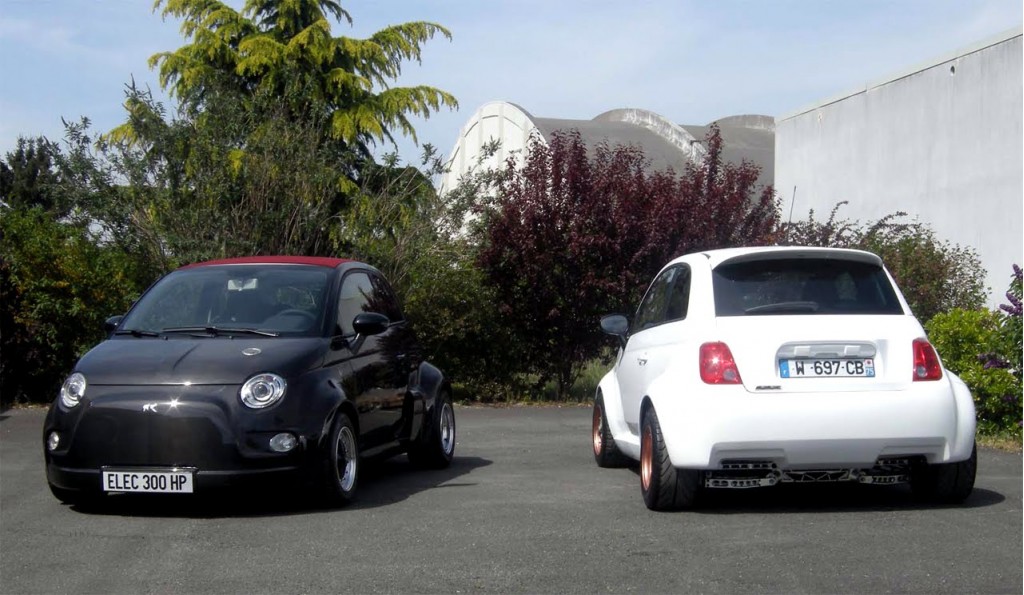
Designed as a homage to the original rear-engined Fiat 500 made between 1957 and 1975 the current 500 is Fiat’s answer to BMW’s retro-inspired Mini.
Retro styling or not, Marchionne’s comments spell potential trouble for the automaker’s ability to sell the all electric version when it launches in 2012.
Based on the U.S. list price of the Fiat 500, the electric version could cost as much as $45,000 - an increase of over $12,000 based on Marchionne’s own price estimates from last year.
Despite the predicted losses, Fiat Chrysler plans to forge ahead with the 500 Electric rollout, hoping that its initial losses will be recouped in coming years as the cost of production and battery packs drops and the popularity of electric cars increases.
Still recovering from Chrysler’s bankruptcy and with an already scaled back plug-in and hybrid development cycle, Fiat Chrysler could be taking one gamble too many.
But there are success stories. It took king of the hybrid Toyota many years before it started to make significant profit on its iconic Prius, and Nissan is expected to take a similar amount of time before its investment in the 2011 Leaf pays off.
Ultimately, unless Fiat Chrysler can reduce the predicted sticker price of the Fiat 500 electric it will remain a very niche vehicle with competing electric cars of greater size and lower cost taking the majority of market share.

[Automotive News (subscription required)]
Have an opinion?
kelly Posted: 4/4/2011 8:33am PDT
Tom Moloughney Posted: 4/4/2011 9:00am PDT
How much did Toyota lose on the early model Prius? Everybody was laughing at them. Are they laughing now? Toyota has been eating everyone's lunch for the past few years with the Prius because they took the chance to invest (and subsidize) hybrid technology. Keep living in the last century Marchionne and Fiat ans Chrysler will become even more irrelevant than they are now, if that's even possible.
Want to see what's THIS Marchionne? Take a look at these photo's of the drive train of the 2013 BMW i3: http://bmwi3.blogspot.com/2011/03/bmw-i3-light-weight-means-less-energy.html
Tom Moloughney Posted: 4/4/2011 9:08am PDT
B-Man Posted: 4/4/2011 5:52pm PDT
Did you guys overlook the above? Marchionne knows he'll lose money but did he say anywhere that Chrysler's dropping out of the running for all-electric 500's (and other Chrysler all-electric products)? No, he didn't.
He's right-they will lose money. But he is willing to do it to stay in the all-electric "game" and deal them out. For $45,000 a pop. Could be $45,000, that is.
Tom Moloughney Posted: 4/4/2011 7:35pm PDT
Of course the economics of any low-production vehicle doesn't work, everybody knows that. I think the low production numbers have more to do with the excessive cost than the fact that it's a BEV. It's disingenuous to simply blame it on the fact that it's a BEV.
I don't believe that manufacturers are intentionally avoiding electric vehicles, but with CEO's like Fiat's, you got to wonder.....
Tom Moloughney Posted: 4/5/2011 8:29am PDT
The silver lining is that it may not represent the feelings of others in the company. I know it must be tough to dump a lot of money into a technology that you know you won't make any money off for quite a few years. However to succeed in the auto industry, you have to be looking at and planning for the future, not just next years products. New platforms can take five to seven years to fully develop. Where will the EV market be in 2018? Nobody knows for sure, but I wouldn't want to be an auto manufacturer in 2018 without a competitive BEV in my showroom, I'll tell you that.
melanie Posted: 4/7/2011 4:47am PDT
Have an opinion?Join the conversation!