What can you do in three minutes? Boil a egg? Buy a Coffee? Check your Mail? Visit the bathroom?
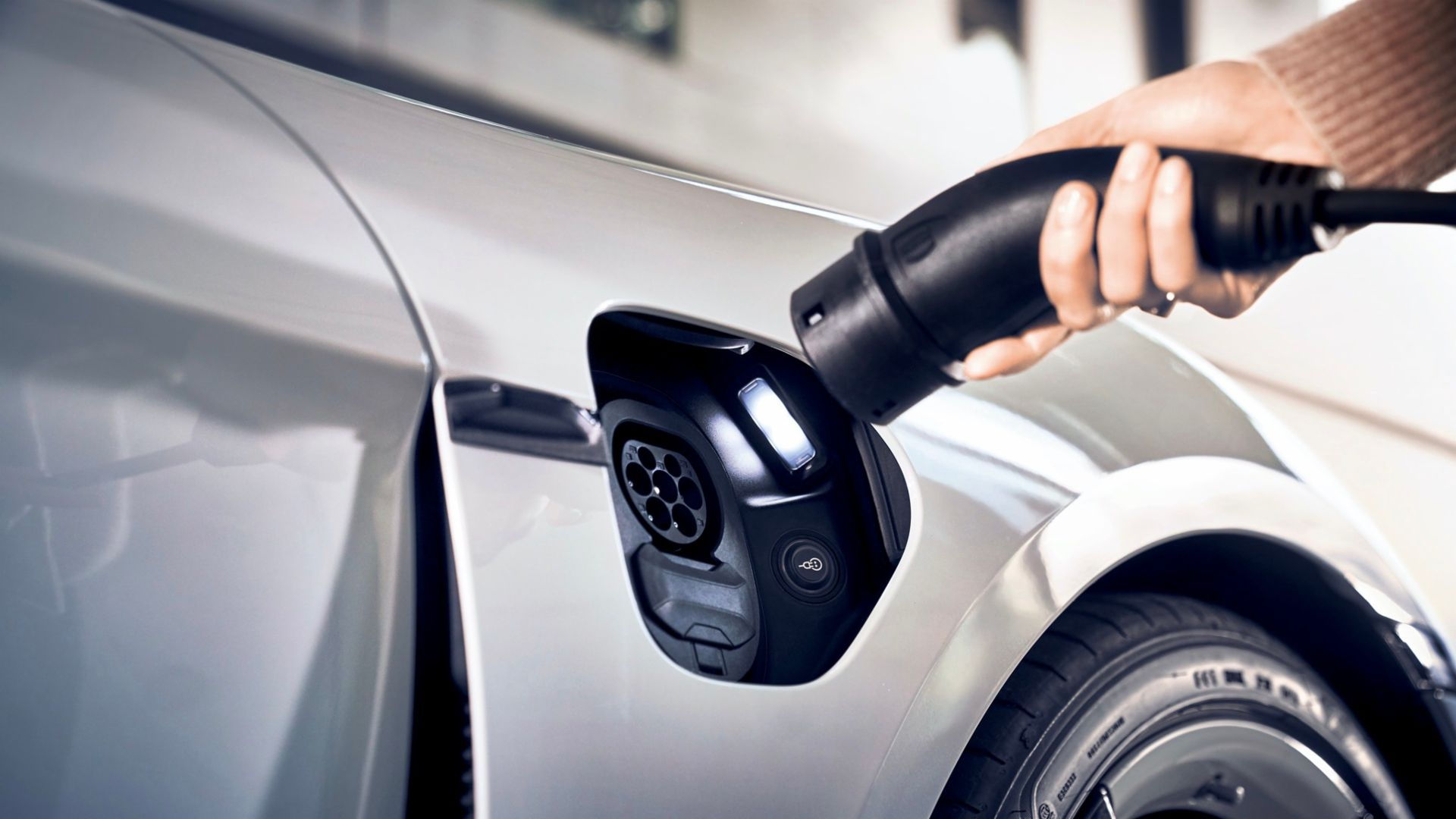
Thanks to Japanese based JFE Engineering, you can now add half-charging your EV to the list, courtesy of its ultra-fast charge station.
Designed to comply with the CHAdeMo standard developed by Tokyo Electric Power Company, Nissan, Mitsubishi, Subaru and Toyota, the system is capable of charging a 2011 Mistubishi i-Miev from empty to 50% full in just three minutes.
Even just three minutes plugged into the fast-charge station was enough to enable a standard 2011 Mitsubishi i-Miev to travel a further 50 miles before further charging was required.
Mitsubishi's own fast charger, as illustrated at the end of this article by EV advocate, actor and TV presenter Robert Llewellyn, takes between 15 and 30 minutes to fill up an empty i-Miev to full.
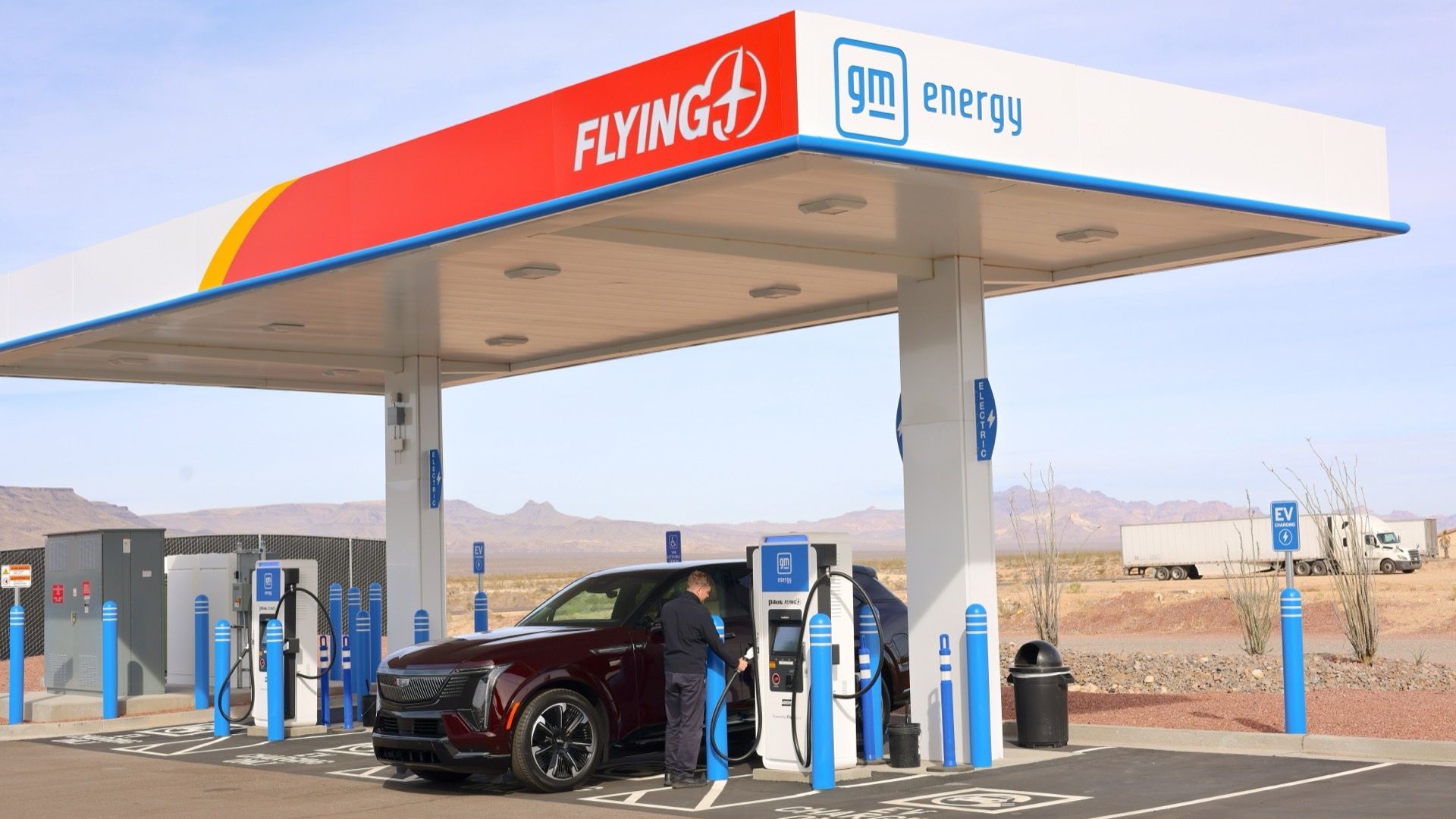
The cheapest version of the JFE Engineering charger costs a massive $60,000 so it's highly unlikely they will be purchased in large numbers for private use. However, with a 0-50% recharge taking three minutes and a 0-70% recharge taking five minutes the charging station may well be fast enough to be utilized at conventional gas stations, where a five minute refill time is in line with any gas car on the market today.
For gas stations placed in prime EV markets such as the Washington DC to New York Corridor, a $60,000 investment could pay for itself very quickly as EV drivers willingly pay to enable them to drive several hundred mile trips in one day.
While there are as yet no plans to bring the charger to the U.S. market, JFE Engineering plans to install its ultra-fast charging stations at gas stations and convenience stores all over Japan by the end of March 2011.
Fast, high power charging, or Level III Fast DC charging as it is known, has yet to be defined as part of the SAE J1772 electric vehicle charging standard adopted by U.S. automakers. However, the 2011 Nissan Leaf will ship with support for both CHAdeMo and J1772 charging stations.
At 24kWh the 2011 Nissan Leaf has a much larger battery pack than the 16kWh battery pack of the Mitsubishi i-Miev, so just like filling two cars with different sizes of gas tank, expect the larger capacity pack to take longer to refill, even on the ultra-fast charging station.
Basic math would indicate it is quite feasible to expect a 0-50% recharge time of a Leaf-sized battery pack to take between five and six minutes at a similar charge rate.While fast charge stations will not require anywhere near the expanses of land battery swap stations like those being tested by Better Place need in order to store and charge the huge number of batteries the system requires, consideration will have to be given to the massive high-voltage power lines needed to power a charger capable of recharging an EV so quickly.
But for retail locations and gas stations, the 62.5 kW power requirements of each charger should not be impossible to accommodate in all but the remotest of locations.

Have an opinion?Join the conversation!
By egmarshall Posted: 7/5/2010 2:33pm PDT
By Elizabeth Posted: 7/5/2010 2:52pm PDT
Regards, Matt
By LimousineLiberal Posted: 7/5/2010 6:49pm PDT
By James Posted: 7/5/2010 8:50pm PDT
This is Huge!!! A $60,000 investment is nothing compared to costs of underground tanks and pumps at one of today’s gas stations. I thought it would take higher density batteries to help the EV industry move forward. But 50% charge is minutes will definitely persuade future buyers to go with EV’s.
By ev enthusiast Posted: 7/5/2010 8:52pm PDT
it seems crystal clear to me. perhaps because i am older, and have just simply seen the same story.
we have had this technology a long time ago. we could have released all this stuff a long time, had the wealthy wanted to do so.
one can speculate on why now. the wars and instability of the middle east, the desire to sell cars to one billion people in china, and one billion people in india, etc.
the bottom line is it is finally coming.
By ev enthusiast Posted: 7/5/2010 8:57pm PDT
every year, we will sell as many evs as can be produced. at this point, demand far outstrips supply. and probably will for quite a few years to come. we miraculously now have batteries that can last 100 miles per charge, and drive with even more performance than a gas car. why just a few years ago, we were too far away from it all - LOL.
what we have right now is more than enough to keep demand way in excess of supply. once our production is ramped up, and the wealthy need to increase demand, voila ! something new will come out.
just as with tvs going from 19 to 21 to 23 inches, etc, we will have batteries that can get us 120 miles per charge, 150, etc. just the amount that is needed to sell their automobile supply.
By ev enthusiast Posted: 7/5/2010 9:06pm PDT
i can easily visit 25 gas stations in a 10 mile perimeter of my house. i simply dont see the need for any charging stations within the city.
what we really should do is have our charging station infrastructure be at every truck stop. our entire trucking industry will be electric. we already have big rigs with electric engines.
nearby will be a charging station for cars. that way it will share the power input system with the truck stop. this takes care of the trucks and cars that are travelling for extended periods before "seeing home". this is the only charging infrastructure that we will need.
the speed of charging is important. not only do we not want to wait too long while the vehicle is charging - more importantly we dont want to wait 8 hours before we "get to the pump".
it is probably best that we dont have these sorts of powerful chargers at the local city corner. it would probably be better to have a more centralized control than that.
in any case, dont worry about such and such coming out. things will magically appear out of thin air, when they are needed.
By John Posted: 7/8/2010 4:15pm PDT
Batteries produce very little power when they are cold, so EVs die when they get below zero F. Until LiOn batteries, something not commercialized until recently, battery energy density and weight made car-sized EVs impossible.
Finally, EV fuel cost will not be less than traditional vehicles. You still have to "burn" coal, oil or uranium to generate electricity (sorry but solar and wind can’t generate even a fraction of the energy needed to replace fossil fuels) and therefore the price will be the same.
By JQ Public Posted: 7/8/2010 6:05pm PDT
We need to take this as a National Security issue (which it is - even centralized power grids are dangerous in this age of cyber-war): So mobilize every resource, exploit every clean approach to power generation, provide generous tax breaks & a spate of other incentives for inventors, investors, producers & consumers in every aspect of the problem, and WE WILL FIND A WAY to put this country out front in ev's and clean energy. I urge everyone to demand Congress & the White House declare optimally-clean Energy Independence our top national security priority - an all-hands Apollo effort. If we'll just *commit*, there's NO REASON we can't succeed.
By Scunnerous Posted: 7/8/2010 6:41pm PDT
Then again do you really think there are many non-eco-loonies in the US who will put up with a Leaf as transportation? No, the figure required for a full charge for a vehicle suitable for US -- and Europe too -- driver range & capcity requirements is somewhere around 150kWh. Charging one of those in 10mins requires 900MW -- call it a GigaWatt -- which requires a "cable" of about 3.5" in diameter at 240V or so.
Now redo the math, add in some basic facts of Physics and a little realistic common sense and it just might become evident to you that wind turbines and solar cells cannot be made to power our personal transportation needs. Above all, learn to recognize scoundrels worse than any petroleum corp. and what the term "does not scale" means.
By Scunnerous Posted: 7/8/2010 6:54pm PDT
Thank you John for setting the record straight. The eco-folks here do not understand what "does not scale" means but even an engineer gets sneered at. There IS A REASON we cannot succeed with the current proposals. This subject has been studied to death for decades by graduate engineers but of course they have a habit of not applying "magical" formulae to the problem at hand. Then again the fossil-based energy companies are all seen as charlatans and the eco-energy industry marketroids are all altruistic heroes. Whadda ya wanna do with them?
By ev enthusiast Posted: 7/8/2010 9:47pm PDT
it is hard to do. yep, that is what they have said for the past 20 years. and 2-3 years ago, we were still a long ways off. now, all of a sudden, evs are coming out of the woodwork, in all countries, from all companies.
the ONLY REASON we did not have evs 20 years or more ago is that the wealth did not want it. yes, big oil is one of the wealthiest, if not the wealthiest. and they played a huge role in it. i guess it was just coincidence that gm destroyed their evs, even though they were popular sellers, and CHEVRON ended up with the patent for the batteries.
get a little more life savvy, and a lot less interested in studies. lithium ion batteries have not been "commercialized" until recently. we all know that. that is just another way of saying that the bigwigs did not want them commercialized. believe me, when the bigwigs want something, it magically appears.
By ev enthusiast Posted: 7/8/2010 9:56pm PDT
burning gas in a car is 10-20 % efficient. burning it at a plant can be extremely efficient. to use our energy more efficiently, we want to get rid of gasoline cars at all cost.
no matter what sort of scare tactics come from biased viewpoints, evs will make gas cars obsolete in short order. and society will be the better for it.
By ev enthusiast Posted: 7/8/2010 9:59pm PDT
This is not about scare tactics but more about common sense. We have some technology available but not very efficient right now. In my world we call this bleeding edge tech, meaning tech that is being developed by trail & error and more trail and so on. I'd give an other 30-50 years before we get to see some real technology that will be safe, efficient and affordable for everybody. Electrical power has been used for over a century (1888) as source of energy for trolleys, trains etc.... The problem remains on how to safely store large amount of electrical power in a very small lightweight & portable place that can be used for long period of time; that's the real big challenge.
I am also an electrical Eng, part of a Think-Tank
By ev enthusiast Posted: 7/8/2010 11:14pm PDT
30-50 years ? what a laugh. no one is gonna believe that one.
we will eventually have cars that can send energy back to the grid. the potential is almost unlimited.
good-bye gas cars and hello evs.
By Realist1953 Posted: 7/9/2010 6:32am PDT
*******
If 50% charge get 50 miles, then this car can only go about 100 miles on a charge? May be great for islands like Japan's, even good for cities like NYC, but to drive the corridor between DC and NYC is usually a no-fill-up zone - no stops between. And with traffic slowdowns, you may need 2-3 stops along the way.
All I am saying is the technology needs more work before you can take these on a trip. But I would be willing to open a dealership to sell them for 'in city' use.
By Bryan Posted: 7/9/2010 9:27am PDT
By Bannor99 Posted: 7/9/2010 9:06pm PDT
By ev enthusiast Posted: 7/10/2010 7:58am PDT
By mdell Posted: 7/12/2010 4:26am PDT
Our main power stations are obselete, and blackouts/brownouts are common. Small storms blackout 40,000 people, major storms do same, sometimes for several days and this is in our capitol cities, worse in regional areas. I am planning batteries to supliment my solar panels to limit my exposure, elec car coming soon.
Have an opinion?Join the conversation!