Speakers throughout today's Electric Drive Transportation Association conference agree: Plug-in electric cars that use little or no gasoline are coming. It's no longer an "if", it's now a "when."
To help boost early adoption of cars that run mostly or entirely on grid power, the Federal government offers tax rebates of $2,500 to $7,500 to private buyers of those cars.

Kevin Czinger, Coda Automotive CEO & Brian Wynne, EDTA President

2010 Toyota Prius Plug-In Hybrid, 2009 Los Angeles Auto Show

Volt Line Director Tony Posawatz
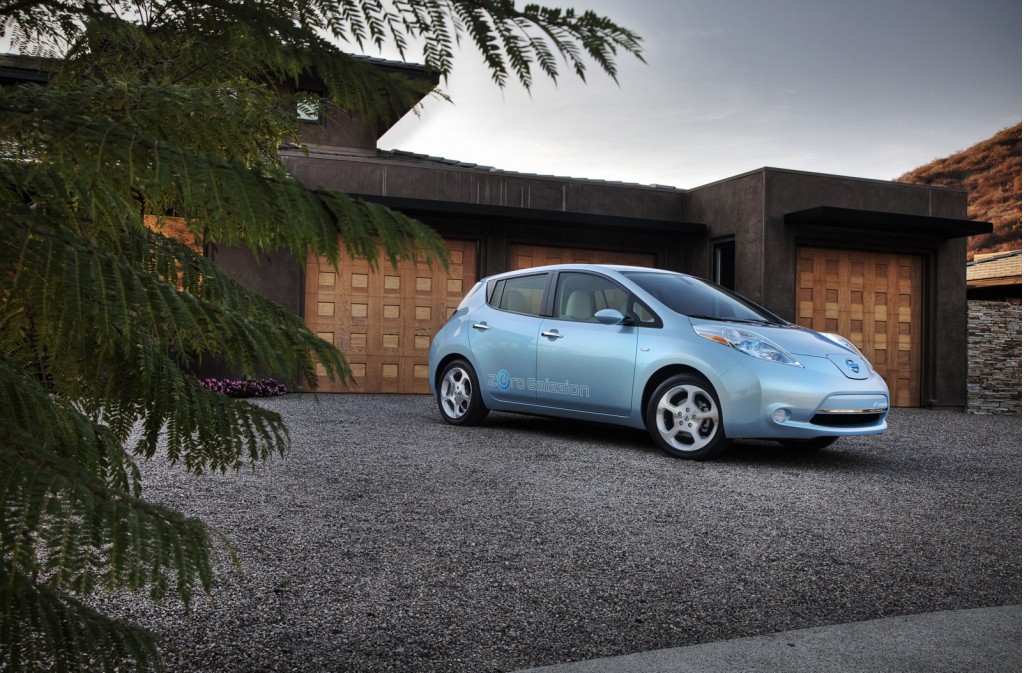
2011 Nissan Leaf prototype
From credit to rebate
Several speakers begged the Feds to change that subsidy to an outright rebate, similar to this summer's Cash-For-Clunkers credits. Those were outright reductions in purchase cost for buyers who traded in old, low-mileage vehicles for new, more fuel-efficient vehicles.
The idea is that not every buyer may have enough income to use the maximum credit of $7,500, whereas a direct rebate of the same amount would apply across the board.
Less paperwork, immediate impact
More importantly, it would cut the retail price of the car at the time of purchase, rather than coming a year after the fact, not to mention after completing tax paperwork.
The idea was broached at the conference by former New York governor George Pataki, now a lawyer in private practice. Market demand will spike, he said, if the tax credit were converted to a rebate.
The concept, and its impact, was heartily endorsed by Kevin Czinger, CEO of electric-car maker Coda Automotive.
"Transformative"
He said a $7,500 direct purchase rebate would be "transformative" and "put vehicles in range" for a wide variety of buyers, bringing the price of Coda's compact electric sedan to "the low thirties".
"We believe that single step," Czinger said, "would accelerate adoption of electric cars" and jump-start the U.S. transition to gas-free vehicles.
Beside the 2011 Coda Sedan, other vehicles eligible for tax credits from $2,500 to $7,500 are the 2011 Chevrolet Volt, the 2011 Nissan Leaf electric car, and the 2012 Toyota Prius Plug-In Hybrid.
Little chance of happening
As clean and effective as the idea may be, though, its chances of enactment may be low.
Tony Posawatz, vehicle line manager for the 2011 Volt, suggested that because the tax-credit mechanism already existed, there was little legislative appetite to design and enact a new mechanism for direct rebates on vehicle sales.
Clunkers challengesÂ
He pointed to the operational challenges of this summer's Cash-for-Clunkers bill.
A few dealers are still cleaning up remaining paperwork issues, and it was clear that the Federal government was initially overwhelmed by the paperwork processing issues and dealer demands for timely reimbursement for the hundreds of thousands of rebates issued in just a few weeks.
The revenue impact to the government is pretty much neutral, though the funds would be spent slightly quicker with a rebate than with tax credits (because not all buyers qualify).
Your thoughts?
So what do you think? Should the tax credit become a rebate? Give us your opinions in the comments, below.