Could Small 2015 Chevy City Express Van Offer...
VW Talks Future Tech: Plug-Ins, Natural Gas...
Gasoline, Diesel, Hybrids And Plug-Ins: The...
General Motors has narrowed its portfolio of future technologies, and will focus on plug-in and electric vehicles over the coming years.
The company will build on the success of its Chevrolet Volt range-extended electric car, an area where it leads its competitors, while downplaying more traditional full hybrid technologies.
GM Product Chief Mary Barra said in a videoconference yesterday that GM will "make educated bets on which technologies hold the most potential for creating values for our customers and our company."
The company will continue with its mild-hybrid eAssist system, which improves the fuel efficiency of vehicles up to 25 percent, Barra said.
The eAssist technology is currently standard on base models of the 2013 Buick Lacrosse and Regal. It's also used in the optional Eco model of the 2013 Chevrolet Malibu, and will be offered in an Eco model of the 2014 Chevrolet Impala full-size sedan as well when it goes on sale next year.
Through October, Barra said, GM has sold 26,000 vehicles fitted with eAssist this year alone.
But spurred on by the increasing popularity of the Chevrolet Volt, GM will concentrate its efforts on plug-in vehicles and add battery-electric cars as the market demands them.
"We think plug-in technology will plan an increasingly important role over the years to come" said Barra.
The company expects to sell half a million vehicles a year globally with some form of electrification--everything from mild hybrids to pure electrics--by 2017.
Joining the Volt in Chevy's line-up next summer is the 2014 Chevrolet Spark EV, an electric variant of the Spark minicar that's set to debut at the Los Angeles Auto Show later this month.
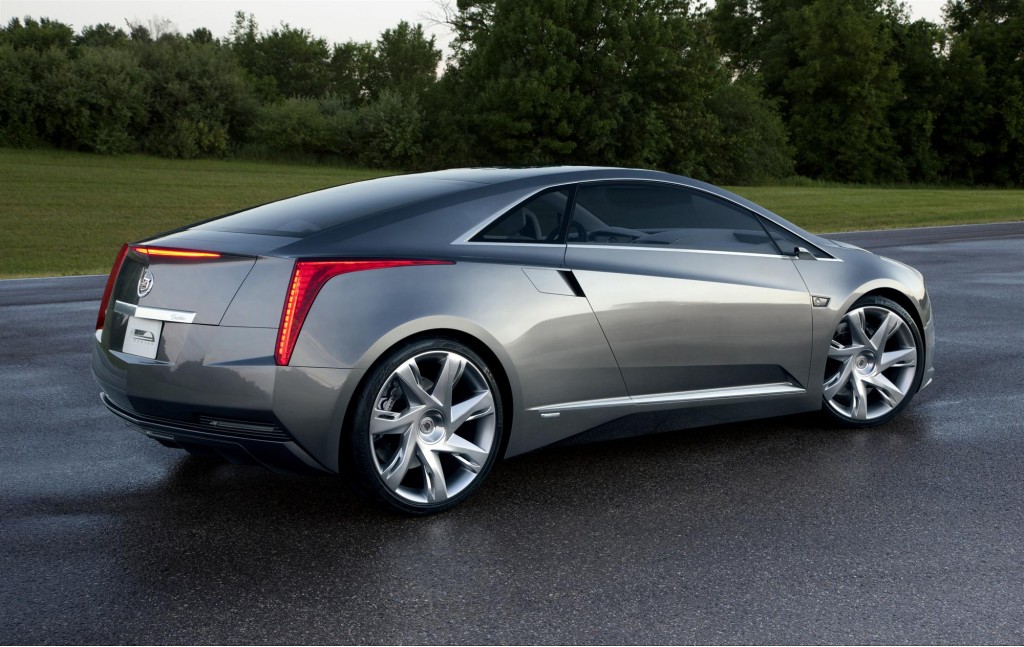
Also launching next year is the 2014 Cadillac ELR plug-in sport coupe, which uses the same Voltec range-extended electric drivetrain as the Volt four-seat hatchback.
Although the electric Spark is viewed by many as a 'compliance car'--a vehicle developed solely to meet California's zero-emissions vehicle regulations--it provides GM with a test-bed for its future battery electric vehicles.
Company executives also stressed that the Spark EV will be sold in Korea and other markets that it hasn't yet announced.
While sales of pure battery electric vehicles are currently slow, GM seems confident that its Voltec range-extended electric vehicle technology will prove successful.
Equally important, Chevy pioneered the technology and leads the industry in deploying it in production cars.
That gives GM an important edge as more plug-in cars join the growing number of hybrid vehicles on the road--an edge that arch-competitor Toyota thus far can't match.
Chevrolet provided airfare, lodging, and meals so that High Gear Media could bring you this first-person report.
+++++++++++

Follow GreenCarReports on Facebook and Twitter.
Have an opinion?
"...its Chevrolet Volt range-extended electric car, an area where it leads its competitors, while downplaying more traditional full hybrid technologies."
The Chevrolet Volt is a series hybrid vehicle (http://en.wikipedia.org/wiki/Hybrid_vehicle_drivetrain#Series_hybrid), while "traditional full hybrid technologies" are also known as parallel hybrid technologies. We know GM doesn't like the term "hybrid" when referring to the Volt, as it can create confusion in the general population, but it is what it is.
Good to see the investment continue, and to know they consider the Volt program to be worth continued investment.
No other so called PHEV even comes close to Volt in terms of "EVness"... Calling it an EREV is correct.
Name me another PHEV that operates just like an EV with electric heat such as Volt...
According to the "Chief Chevrolet Engineer for Global Voltec and Plug-in Hybrid Systems" (that's a mouthful), it only runs in parallel mode in limited and specific circumstances, and never because it has to--only because they found they could improve operating efficiency under specific circumstances (which is a good thing).
Regardless, parallel hybrid operation should be possible for most any series hybrid design.
I love the Volt-I guess I just choke on the marketing speak, that's all. A car that's a series hybrid almost all of the time is a series hybrid to me.
Gorey details here: http://youtu.be/an-VyIau-FM (3 parts)
In the end, whether a series or a parallel hybrid is a legitimate discussion (and again, I'd agree with you), but anything that gets more electrically-powered vehicles on the road is okay with me.
The only production car today that rightfully deserves to be called "range-extended electric" is the 85kW*h Tesla S.
If the vehicle has both an electric motor(s) and a gas engine, by definition it's a hybrid. Add a plug, it's a plug-in hybrid.
I wish GM would have separated the Volt from, say, plug-in Prius, by highlighting its technology and performance, especially electric-only range and speed. Not by making up a new acronym.
The term EREV may sound cool but can be tacked onto just any hybrid. This can further erode the meaning of electric vehicle, possibly slowing both PHEV and BEV adoption -- everybody loses.
Volt's UNIQUE powertrain in DETAIL is vastly different from any other plugin hybrids. Saying that all turbine, diesel, gasoline engines and fuel cells are the same b/c they are all powered by "fossil fuels" is just as silly as calling the Volt just another "plugin hybrid".
BTW, the hybrid definition is only a term for "average" consumers.
I understand that their fears that the Prius had 'tainted' the term 'hybrid' in the minds of consumers to mean something akin to 'wimpy eco-car'. So they went and created a new term, rather than simply offer a superb counterexample to a 'wimpy eco-car'.
But you're right in that it does tend to confuse the market, when the real difference is that it operates in series hybrid, rather than strictly in parallel.
Oh well... It's done, and not likely to change now; but every so often, I feel the need to cut through the... obfuscation. :) (I'm choosing the polite word.)
It would especially be a good option on large SUV/pickup trucks where the on-board generator can be used as an extra powerful and efficient portable generator for construction or remote site power source...
the sooner you start, the quicker your product will reach a level of acceptability. What I see now is too many people discounting EVs because they are not a "100%" solution.
but what the Hey!, they are a great step and allows money to flow to the technology which will eventually provide the answers towards greater useability and acceptability!
Have an opinion?Join the conversation!