Last week, Honda released the specs and photos for its 2014 Accord Hybrid and Plug-In Hybrid.
Now, we can talk about what it's like on the road.
The short answer? Like the Ford C-Max Hybrid, it offers new and strong competition for a model of the well-established Toyota Prius--in this case, the new-for-2012 Toyota Prius Plug-In Hybrid.
The 2014 Honda Accord Plug-In Hybrid has a longer electric range and a more conventional interior, and it's roomier and more comfortable than the plug-in version of Toyota's quintessential hybrid.
It's also a mid-size sedan, which may appeal to buyers who don't much like hatchbacks, and it looks almost like a conventional hybrid--which cuts both ways.
First things first. The EPA has not yet rated the plug-in 2014 Accord for fuel efficiency or electric range.
Honda says it will go 10 to 15 miles on electric power, and we observed that it stays in electric drive longer than the plug-in Prius will under medium to strong acceleration.
The plug-in Accord Hybrid runs purely on electric power up to 30 to 40 mph and then shifts into its hybrid mode, switching on the 2.0-liter four-cylinder engine that jointly contributes torque to the drive wheels--and occasionally does nothing but generate electricity to power the car as well.
You can't feel this "series hybrid" powertrain mode from behind the wheel, but Honda says there are certain driving conditions where it's more efficient to run the car solely with the 124-kilowatt (166-horsepower) electric traction motor than to use both engine and electric torque together.
2014 Honda Accord Plug-In Hybrid
The engine switches on almost imperceptibly, and even when operating at high speed, its turbine whir is more removed and less desperate sounding than the anguished howls of the Prius Plug-In under full throttle.
Our favorite feature of the plug-in Accord Hybrid is its relative calm and "normality"--it's a Honda Accord, with all that car's longstanding virtues, that runs purely on electricity quite a bit around town, and should deliver gas mileage of 40 mpg or more (perhaps a lot more) when operating as a hybrid.
As always, remember that with plug-in hybrids, the effective mileage you get will depend enormously on your duty cycle.
If you do a lot of short, low-speed trips around town and plug in frequently, you may use very little gasoline. If your driving patterns are more akin to those of a traveling salesman--banging out hundreds of miles a day--the Accord Hybrid will probably be cheaper and just about as economical.
MORE: 2014 Honda Accord Hybrid and Plug-In Hybrid: Review
Our least favorite feature of the 2014 Honda Accord Plug-In Hybrid is its weight. We also drove a four-cylinder gasoline Accord with a continuously variable transmission (CVT), and it was a much, much lighter and lither car.
2014 Honda Accord Plug-In Hybrid
The plug-in has several hundred pounds of extra weight among its 6.7-kilowatt-hour lithium-ion battery pack (mounted in the trunk just behind the rear seat) and its hybrid motors, plus assorted power electronics, high-voltage cabling, and the like.
That gives it the roadholding feel of a larger, heavier car. It feels well planted on the road, but it's not one you particularly want to fling into tight corners with great abandon.
Other impressions:
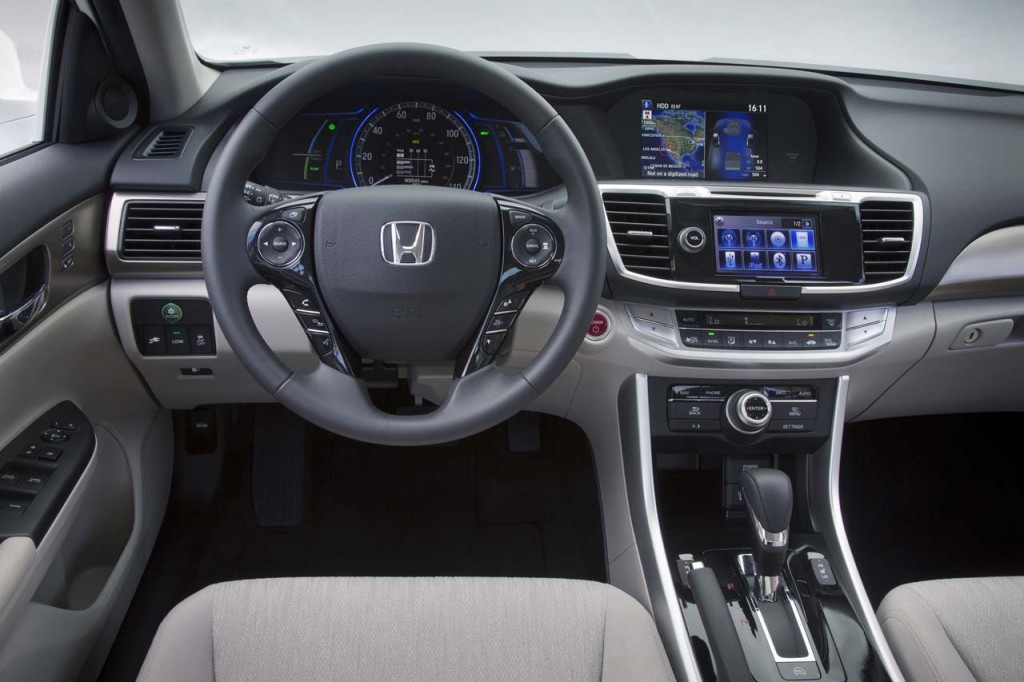
- We liked the instrument design, power displays, and energy usage graphics that have been added to the redesigned 2013 Accord.
- Laudably, Honda offers both an "HV" mode, to conserve battery charge until it's needed, and an "EV Charge" mode that recharges the battery pack with the engine.
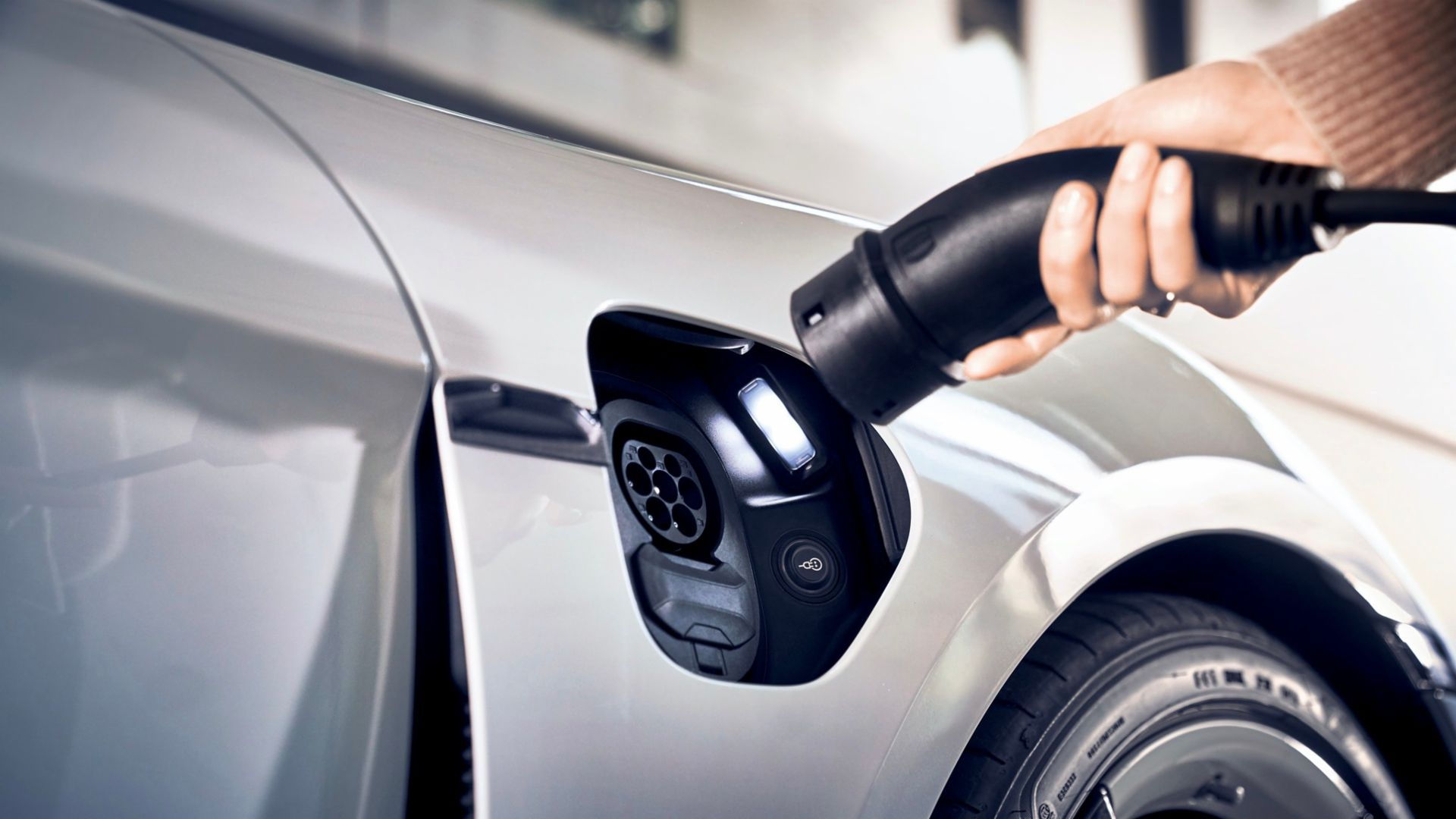
- Honda also gets points for fitting a 6.6-kilowatt charger as standard, twice as fast as the 2012 Leaf's 3.3-kW unit.

2014 Honda Accord Plug-In Hybrid
The 2014 Honda Accord Plug-In Hybrid will go on sale early next year in selected markets, California being one of the main ones. It will be followed in a few months by the regular 2014 Accord Hybrid (no plug), which will be sold nationally from the start.
No prices have been announced, but you can expect the plug-in hybrid to be the most expensive Accord. It's got essentially every feature of the top-of-the-line Accord EX-L, plus the plug-in hybrid system--so we expect it to leave the lot at $40,000 or more.
Its large battery pack qualifies it for a $3,750 Federal income-tax credit, and it will--Honda says--qualify for single-occupant access to California's HOV Lanes, making it even more valuable to harried Golden State commuters.
Honda provided airfare, lodging, and meals to enable High Gear Media to bring you this first-person drive report.
+++++++++++