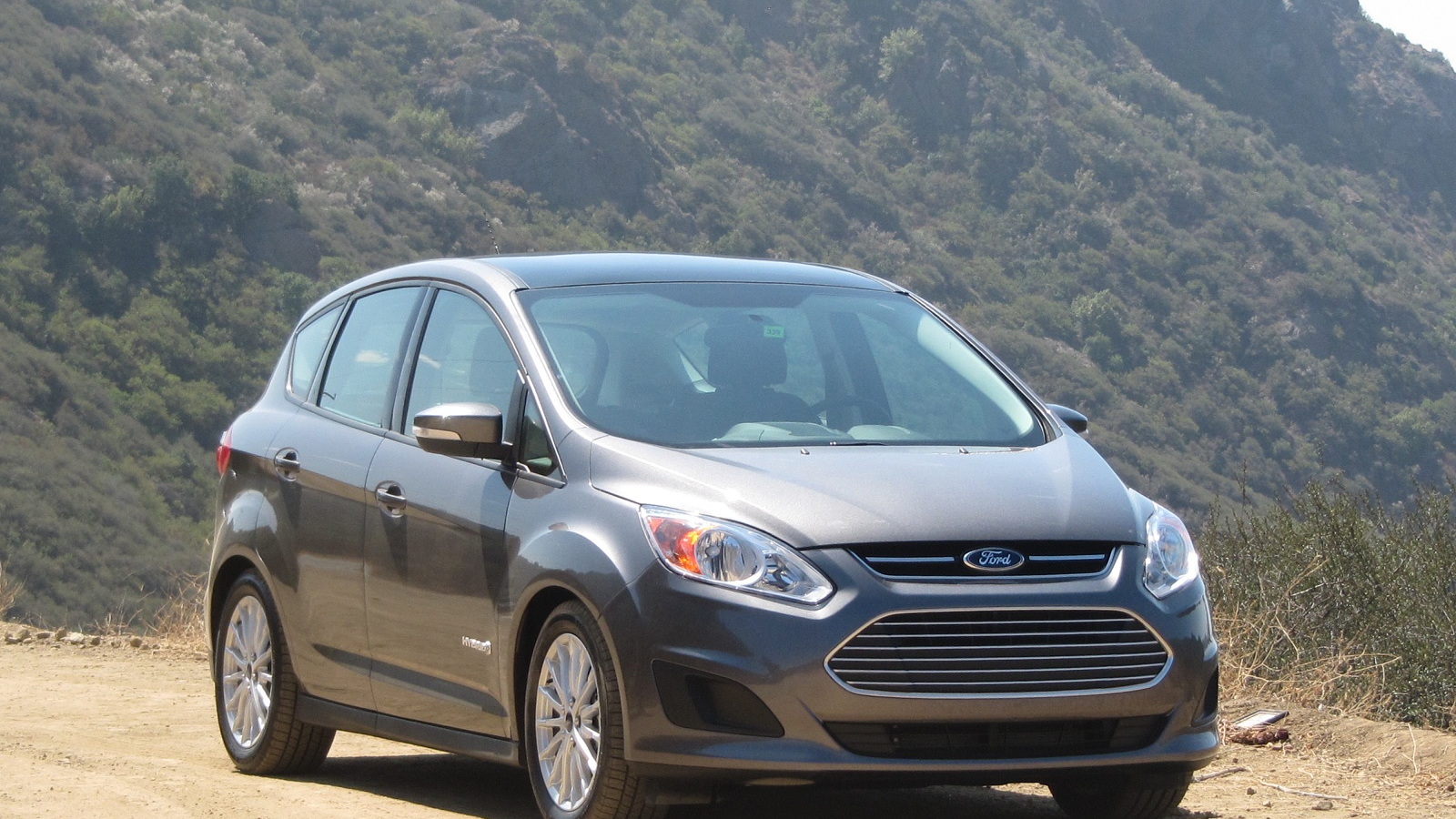
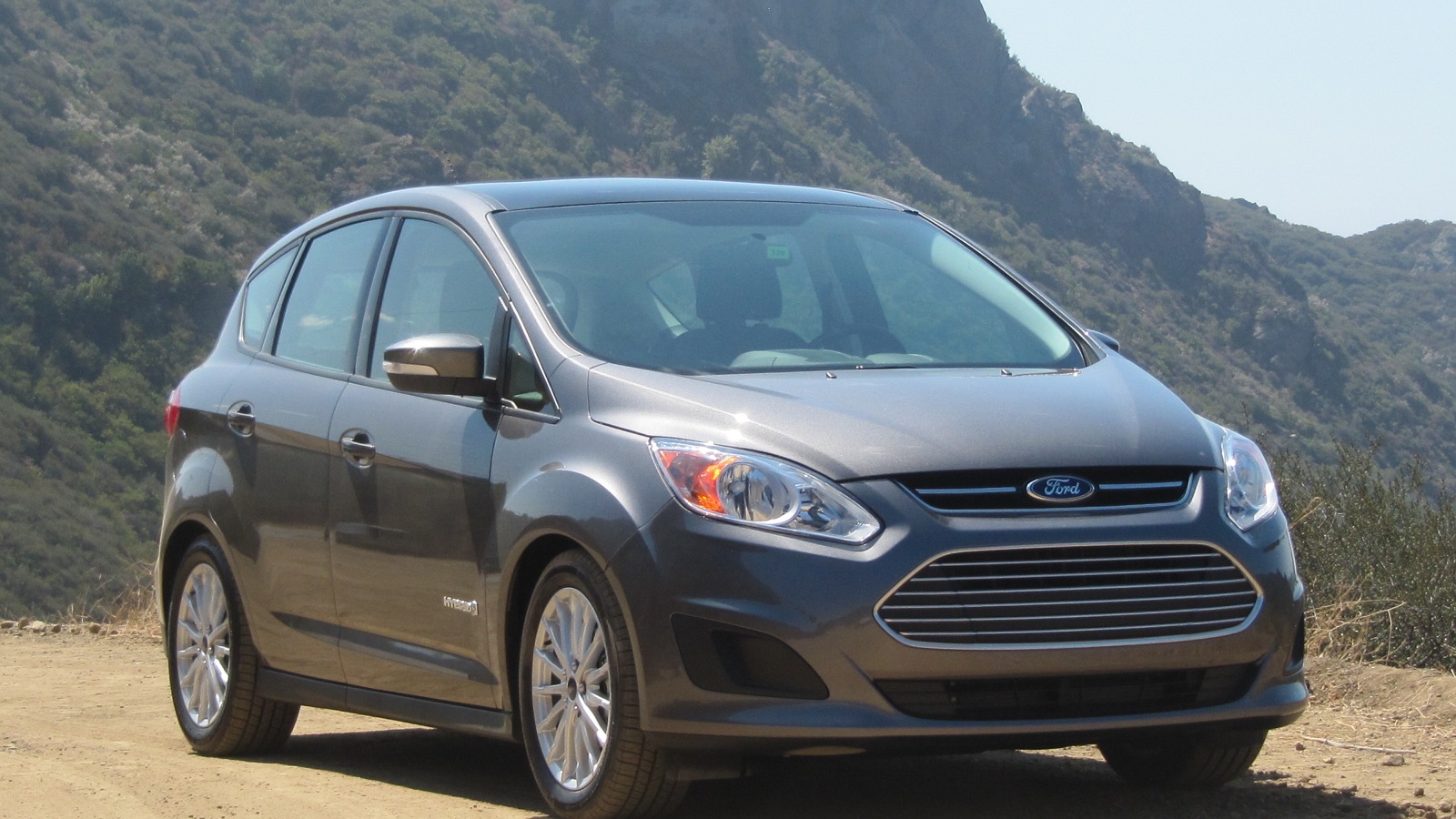
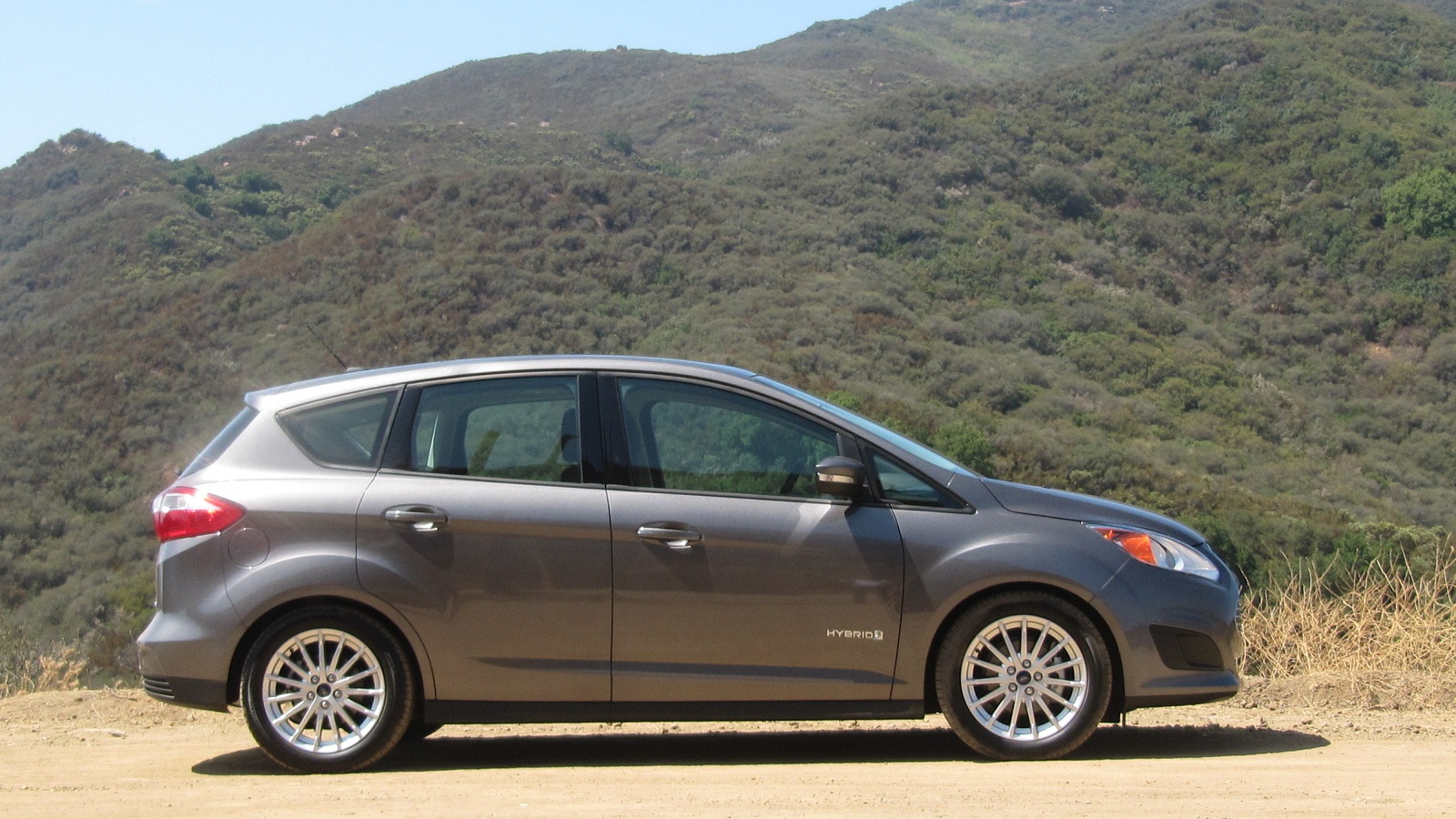
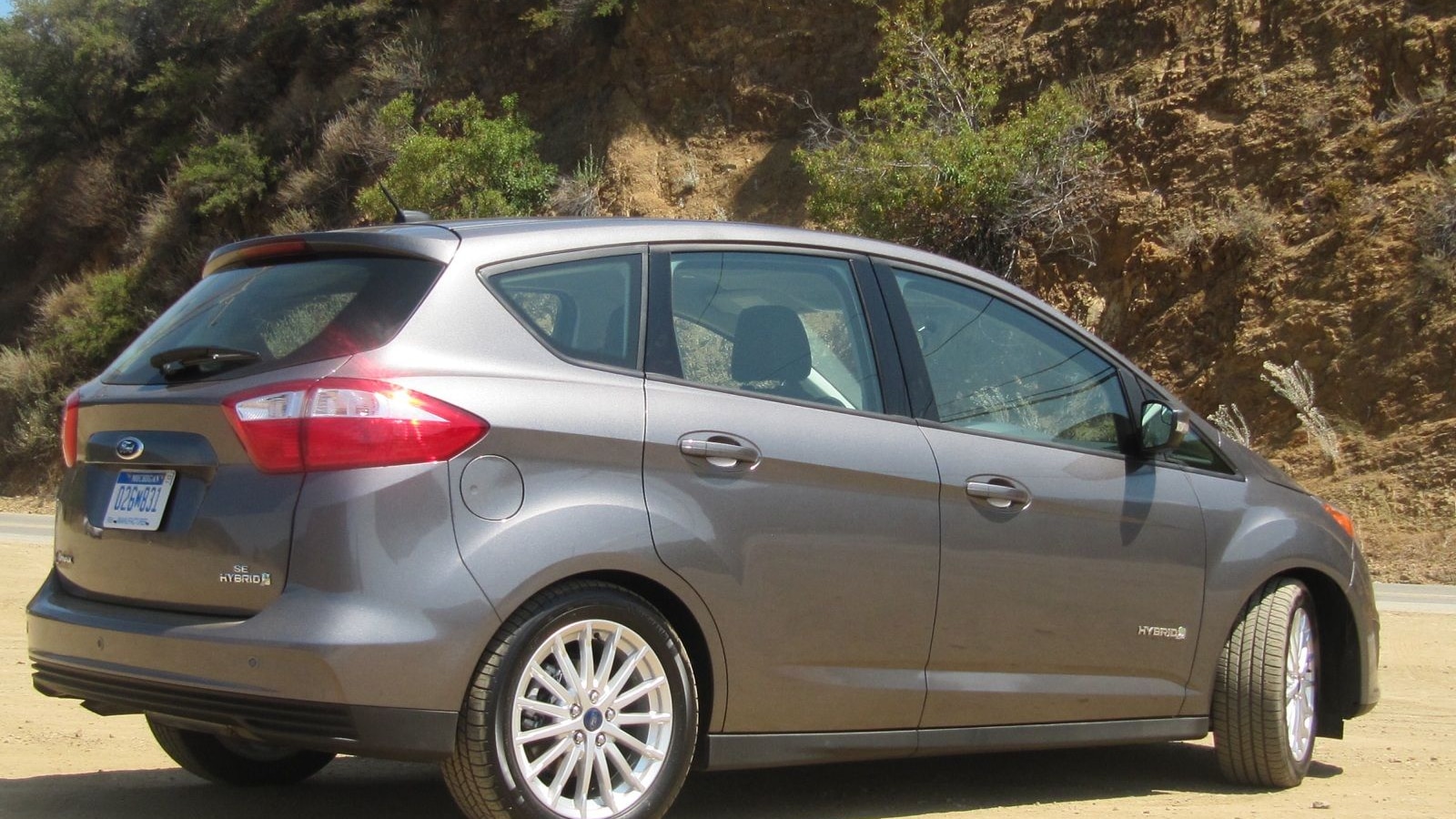
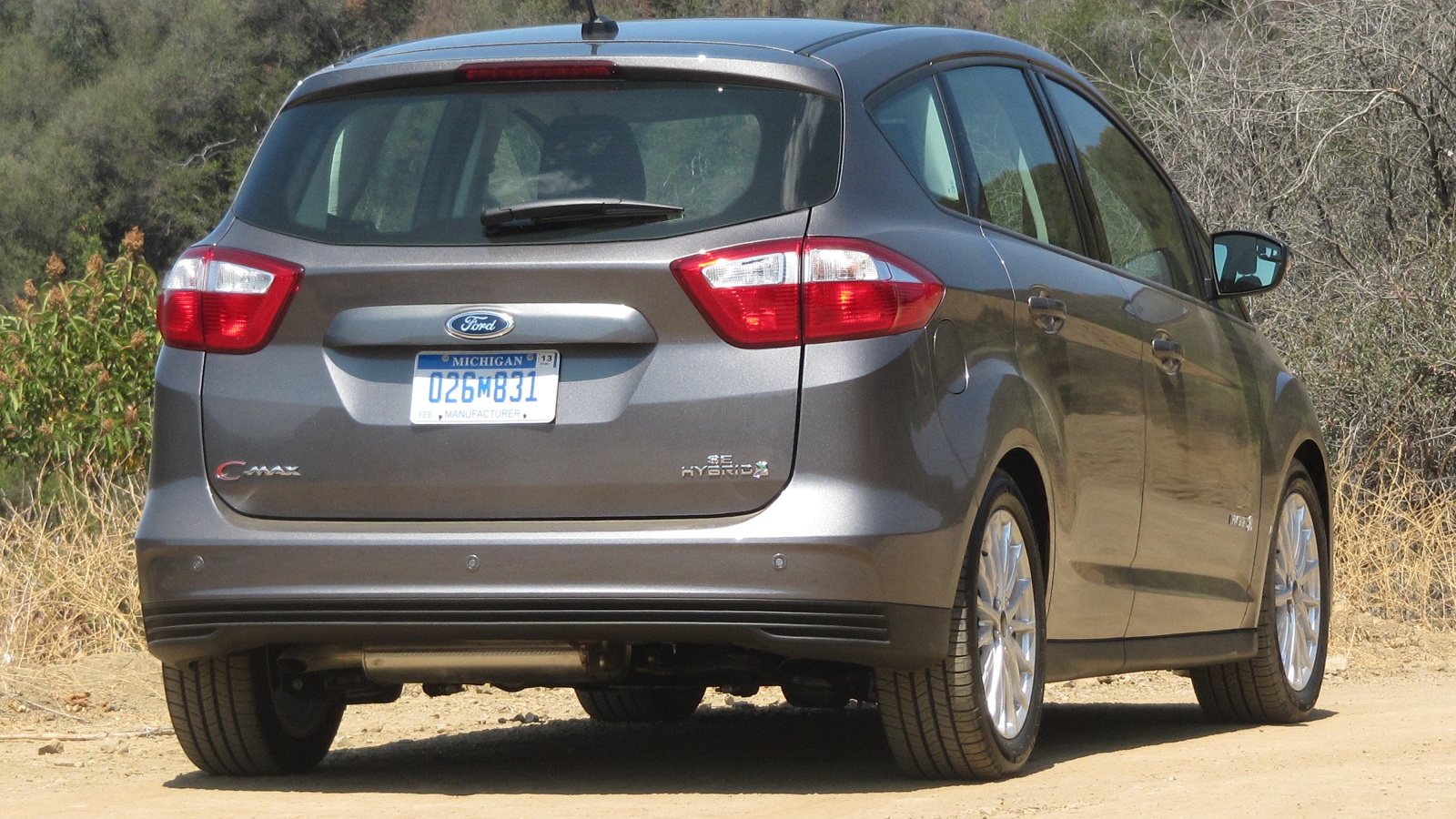
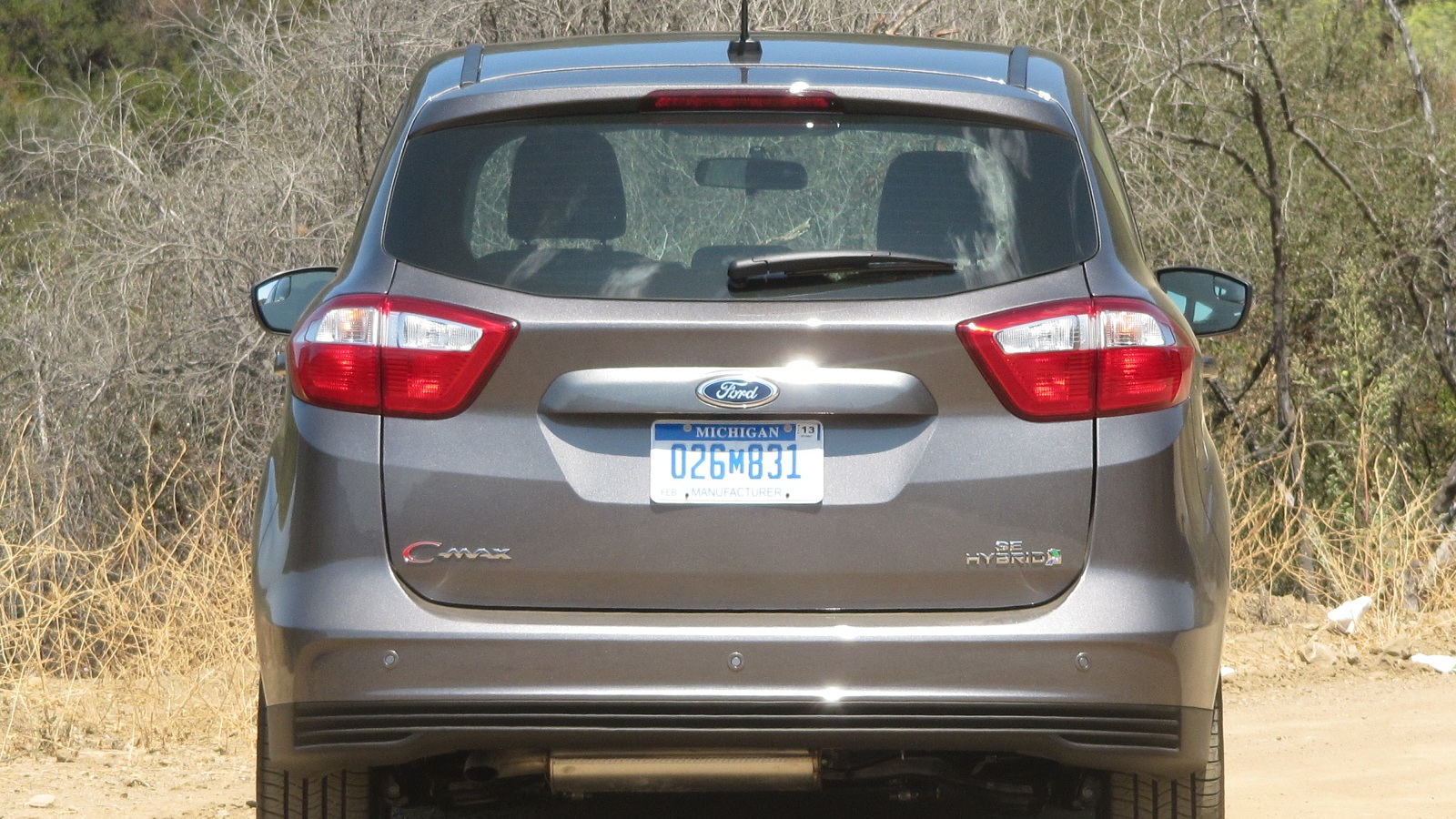
The verdict is in: At last, the fabled Toyota Prius hybrid has a viable competitor.
If you're in the market for a five-door hybrid hatchback with very high fuel economy--an EPA rating of 47 mpg combined--you should drive a C-Max Hybrid before you trot down to your local Toyota dealer and sign the papers for a Prius.
Two weeks ago, we drove the 2013 Ford C-Max Hybrid for half a day through a mix of Los Angeles stop-and-go traffic and the winding, hilly curves of the Pacific Coast Highway.
It's Ford's first-ever "dedicated" hybrid--no gasoline-only version is sold in the States--and at a starting price under $26,000, Ford has priced it more aggressively than past hybrid models.
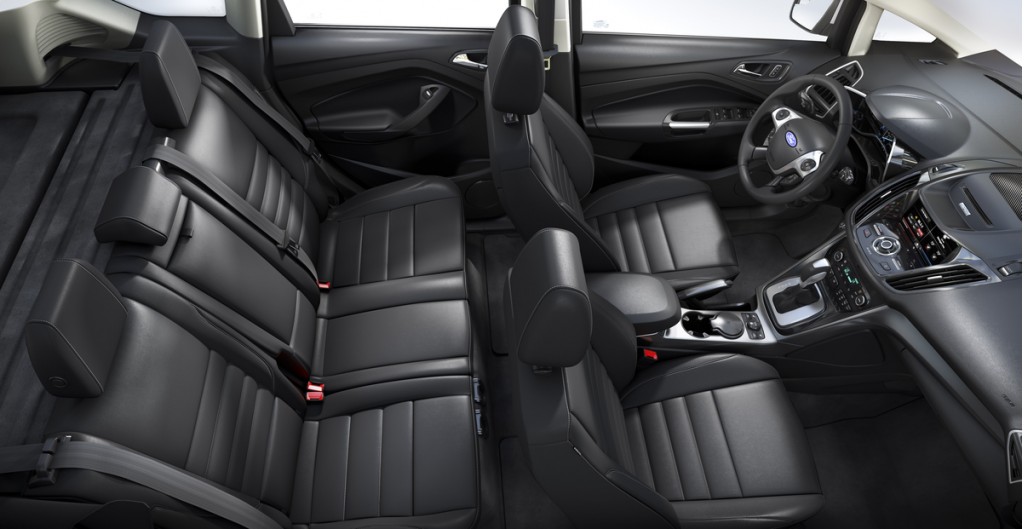
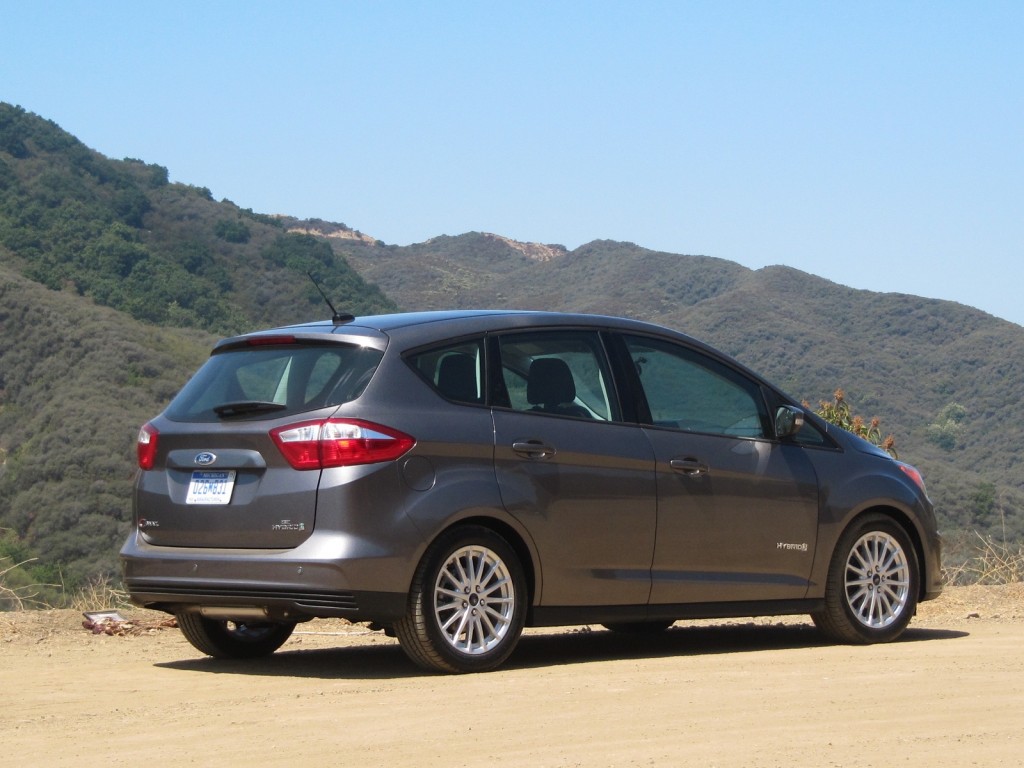
While the 2013 Ford C-Max Hybrid is less visually distinctive than the well-known Prius Liftback, its interior is nicer, with a more conventional dash design and much higher quality plastics and trim.
One little example that caught our eye: Most cars with 12-Volt "cigarette lighter" power sockets have rubber plugs on floppy rubber lanyards. The 2013 C-Max has a hinged plastic lid "12V" printed on top, surrounded by a small, tasteful chrome ring.
The front seats are comfortable, and the tall body gives plenty of headroom for four 6-foot-plus adults. And the interior is filled with useful cubbies, bins, and other storage areas, including small hidden compartments in the rear footwells. The load bay has a family-friendly storage net and grocery-bag hooks.
Most importantly for drivers, the performance of the hybrid C-Max simply feels better than that of the Prius.
Its 141-horsepower, 2.0-liter four-cylinder engine and electric drive motor combine to put out a maximum of 188 hp, or 54 hp more than the Prius powertrain can manage.
That means the C-Max feels far less stressed and desperate under maximum power than the Prius--despite almost 600 pounds of extra weight compared to the Prius Liftback, and about 300 lbs more than the Prius V wagon.
With the 60/40 split rear seats down--they fold and lower with a single pull on one lever--the C-Max Hybrid offers 52 cubic feet of load space. With the rear seat up, cargo volume is 25 cubic feet.
Those numbers exceed the capacities of the Prius Liftback (which has only 21 cubic feet with the rear seat up), but are less than the comparable specs for the Prius V wagon. It offers 34 to 40 cubic feet with the sliding rear seat up, and a whopping 67 cubic feet when it's down.
So Ford has neatly positioned the C-Max Hybrid between the Prius Liftback and the larger, slower Prius V wagon (which we felt was underpowered when fully loaded).
It's slightly cheaper than the most popular Prius Three Liftback trim level, so it competes head-to-head--but offers more room and a nicer interior.
And it's significantly cheaper than, and almost as roomy as, the Prius V wagon. Not to mention more confidence-inducing under hard acceleration.
We can't comment yet on the C-Max Hybrid's real-world fuel efficiency, though we have some questions about whether it will live up to its EPA ratings as reliably as the Prius does.
Have an opinion?
Excellent interior, very pleased there, too. Just good to see a credible contender to the Prius after so long.
I do, however, disagree w/ the assesment that the lack of AWD is a failing here, as there's no need to drag around a couple hundred extra pounds of mechanical complexity 90 percent of the time. Our fathers and grandfathers survived for decades in snowy climates in places like Michigan, Illinois and New England with RWD American sedans: They simply put snow tires on the car in the Fall, used tire chains if it got really bad out, and drove cautiously in bad weather.
To some people, that is worthy the "price" to pay...
And to some people, you can find about couple hundreds pounds of "junk" in their trunk at all time... So, they are hauling those extra "junk" around for no reason at all...
I am glad that someone finally produced a more powerful, better looking and more competent version of the Prius...
MrEnergyCzar
"Nicer interior" (subjective)
"Feels better" (subjective)
"?'s about living up to reliability of EPA ratings" (always a concern with Ford)
Remember, these are the guys who fudge their numbers ("Focus now outsells the Corolla worldwide" for one, not to mention the reliability their EPA mileage numbers, in general).
15 years later, finally comes Ford with a 'dedicated hybrid" and we go crazy for the new "Prius-killer". Expanding the category is great and I am sure Toyota doesn't mind the competition. Still, let's wait for the real world verdict. Heard this story before!
Obviously, Ford is hammering away with these Prius comparisons and that PR wind is really filling up blogger's sails!
I drive 50 or more cars a year, and I like to think that it gives me some basis for comparison, but you're more than welcome to disagree. Educated, informed (and polite) comments are always welcome on GCR.
But do please give us some backup (links are good) for the assertion that Ford are the guys who "fudge their numbers". Curious to see the basis for this rather blanket assertion.
Links are good - Motor Trend: #:http://www.motortrend.com/roadtests/alternative/112_0901_2010_ford_fusion_hybrid_2009_toyota_camry_hybrid/viewall.html
"According to the EPA, the new Fusion achieves 41 city mpg and 36 on the highway compared with the Camry's 33 and 34, respectively. Our impromptu testing revealed a very different result, however. While the Camry confirmed its EPA numbers, the Fusion didn't. How come? Good question."
What we hear in the alt fuel biz is that in adept hands Toyota hybrids do better than EPA and Ford's do not!
Many other companies produced hybrids of questionable efficiency and smoothness of operation. Even some of the Toyota hybrids (e.g. the old Camry hybrid) have not had especially impressive efficiency.
When you look for smooth function, I think you will see that Ford is a class leader along with the Toyota.
I really think we should be celebrating Ford as a leader in this area, not tearing them down. They have done well.
I understand your frustration for the way Ford has screwed up in the past and still does at hopefully less frequent rates(new Escape recalled for fire risk). However, even if this new C-max hybrid does not quite live up to its EPA mileage numbers as well as the Prius does, the C-max is the first real competition the Prius has had in the US....ever. No other gas only vehicle has really come close to the Prius in the US this century in terms of efficiency let alone also be able to compare well as a hybrid to the excellent safety, reliability, and value of the Prius.
The former/current Honda Insights fall woefully short in one major area or more...as well as Civic hybrid. C-max hybrid looks to compete well in all areas w/ Prius.
1. EPA fuel economy is derived from a specific set of driving cycles that are conducted in a controlled laboratory on a dynamometer. The total drive time is around 1 1/2 hours (see www.fueleconomy.gov).
2. Manufacturers conduct their own tests; around 15% are audited by the EPA.
3. If a descrepency is found, EPA meets with the manufacurer. The latest case was BMW last year; BMW had to adopt lower EPA mileage.
4. Differences between the manufacturer and EPA are not likely due to cheating but car-to-car or laboratory variability.
5. Do those who say Ford is "fudging" understand they are implying that Ford is submitted faked data to the government? This is not likely. And it's insulting to Ford employees.
1. EPA label economy is the result of a specific set of tests; as they say "individual results vary" if your driving varies from the standardized testing.
2. Prior to 2008, EPA results were very optimistic. In fact hybrids were grossly overstated, and there were unhappy Prius owners.
3. From 2008, additional tests were added that brought mileage estimates closer to what owners were really experiencing.
4. You can't throw around the words "fudging" or "honest" without implying Ford is submitting false data. Ford is not doing that, nor is any any other manufacturer.
At any rate, your comments do not have any relevance to how the C-Max Hybrid will perform.
Toyota has said that the battery pack in its Prius hybrids is less frequently replaced than most other parts. Happy to look at data that tells a different story.
The Prius battery is warrenteed for 10 years/150,000miles in many states.
The Prius has been used in Taxi service for as much as 250,000 miles with no need to replace the battery.
This is made possible by very shallow cycling from 40% state-of-charge to 60% state-of-charge, which yields a very long life.
We will have to see if BEV and EREVs have similar long lives, but at least for the Prius, the answer is well know by now, the battery will last a long time.
Unfortunately, it has a lead-acid accessory battery that I did have to replace after 2 years for $200.
There's no such thing as a five door vehicle. No one enters or exits the vehicle through the hatch. It's a four door hatchback. Call it what it is.
Sincerely,
128% of EPA rating in my CR-Z.
Where are the cubbies, bins and other storage areas? I test drove the C-Max, and it just might be the most spartan vehicle around among the ones purporting to be practical, along with the Focus and Escape.
The driver only gets the basic door pocket and under armrest bin (which is tight). There are zero cubbies for the driver, and the cup holders weren't even that good.
Those rear footwell compartments are not accessible from the driver's seat.
The lack of storage cubbies is all the more egregious given the intrusiveness of the center console.
Have an opinion?Join the conversation!