In the toughest days of Tesla's early years, CEO Elon Musk said on film, he wired $3 million of his personal fortune to the company so it could make payroll.
Now the always-quotable CEO is downplaying the effect the $465 million in U.S. Department of Energy low-interest loan guarantees it received under the government’s Advanced Technology Vehicles Manufacturing program. In fact, Musk says, it was Daimler -- not the DoE -- which saved Tesla from bankruptcy.
Never shy of saying interesting things, Musk made the debatable revelation at The Wall Street Journal’s ECO:nomics conference in Santa Barbara yesterday.
“We were saved by Daimler,” Musk said, adding that Daimler’s $50 million, 9 percent ownership of Tesla was enough to help the company stage a successful initial public offering without the DoE’s help.
Technically, Musk is correct. Without the investment from Daimler, the DoE loan guarantees would never have been given to Tesla. In reality however, the DoE loans enabled Tesla to do much more than the Daimler investment did.
Not to be ungrateful for the $465 million of tax-payers’ money, Musk was sure to add “The DOE was a helpful catalyst,” and that without it, Tesla’s IPO “wouldn’t have been as good.”
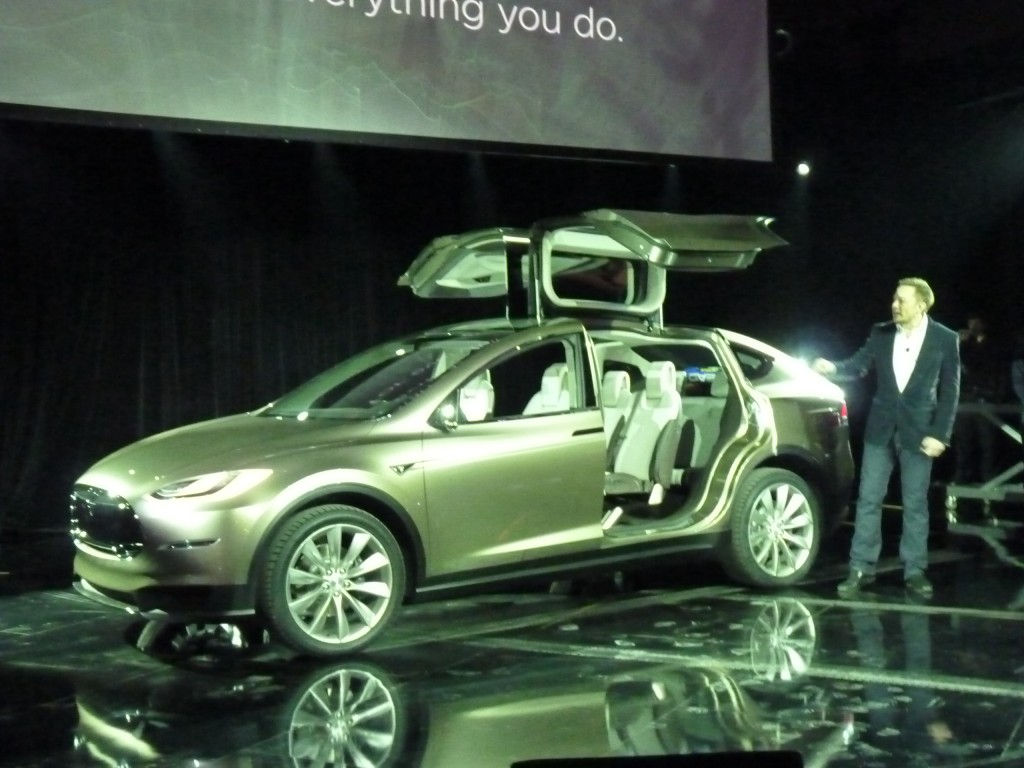
Tesla CEO Elon Musk, demonstrating the Model X third-row seat and falcon doors
With the 2012 Tesla Model S Luxury Sedan set to enter production this year and the 2013 Tesla Model X Crossover SUV already unveiled, it isn’t difficult to see why Musk is keen to bask in Tesla’s less-grim prospects. After all, history tends to be written by the victors.
But while we understand Musk’s keenness to distance Tesla from other, less-successful DoE ATVM loan recipients, his next move baffled us.
“Musk said that generally he doesn’t believe government subsidies are good, but in some cases they do help,” reports The Wall Street Journal.
Instead of offering federal loans which artificially pick and choose winners and losers in the marketplace, he opined, companies should be allowed to survive on their own merits. The implication, of course, was that startups should rely on private investment, not government funds. In addition, he proposes taxing business and individuals on the carbon dioxide they produce, encouraging individuals to make greener choices through taxation.
Had Tesla not taken funds from the DoE, Musk’s statements would be entirely understandable.
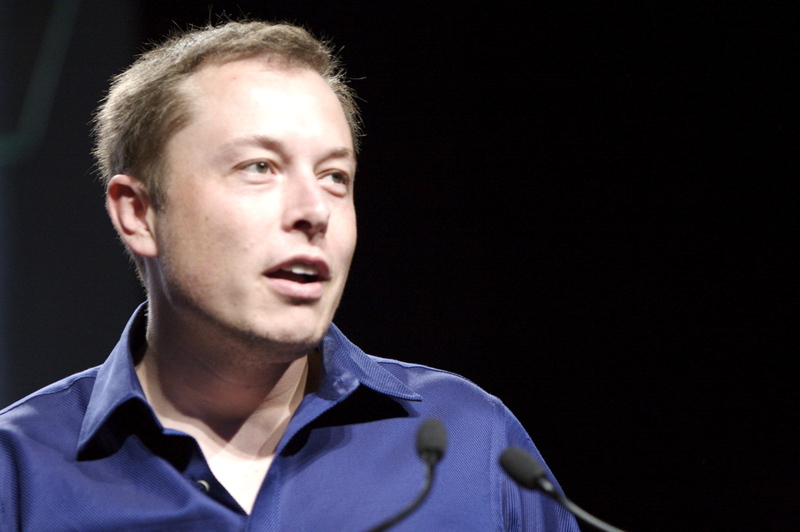
Elon Musk
Given Tesla’s participation in the program however, it doesn’t seem all that fair for Musk to criticize the hand that -- at least in part -- helped to keep the company running.
In fact, we can’t help but think that Musk’s recent revelation is nothing short of an attempt to distance Tesla from the DoE and its now politically toxic ATVM loan program ahead of the 2012 Presidential campaign.
What do you think? Let us know in the Comments below.
+++++++++++