In the world of plug-in cars, the Nissan Leaf and Chevy Volt may get all the attention, but a new arrival will make it very much a three-car race.
The 2012 Toyota Prius Plug-In Hybrid is just now arriving at Toyota dealers in California plus a dozen or so other states.
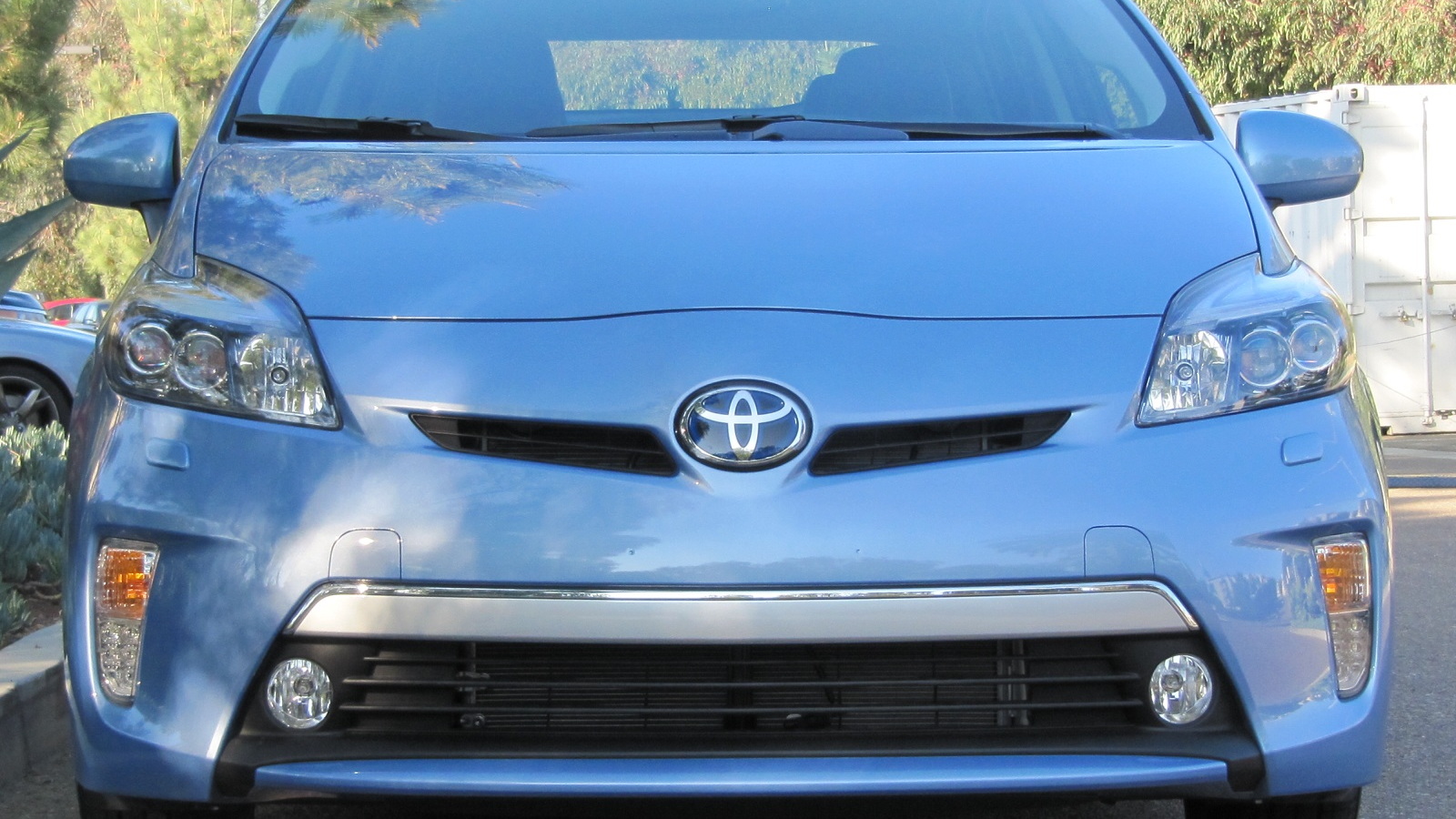
While it may look just like a standard Prius hybrid, it has a very important difference: Like the Volt and Leaf, it plugs into the wall to recharge its battery pack.
The plug-in Prius has a much smaller battery pack than either of those cars, however, giving it 12 to 15 miles of electric range.
Electric range, interrupted
And that's not necessarily continuous electric range, as it is in the Leaf and Volt. Like a standard Prius hybrid, the Prius Plug-In switches on its engine to drive the wheels under demanding conditions.
As we found out during a couple of short test drives last month in San Diego, this means that--even if you have 10 miles of electric range remaining--an uphill freeway on-ramp will switch on the engine at full howl when you floor the accelerator to merge into fast-moving traffic.

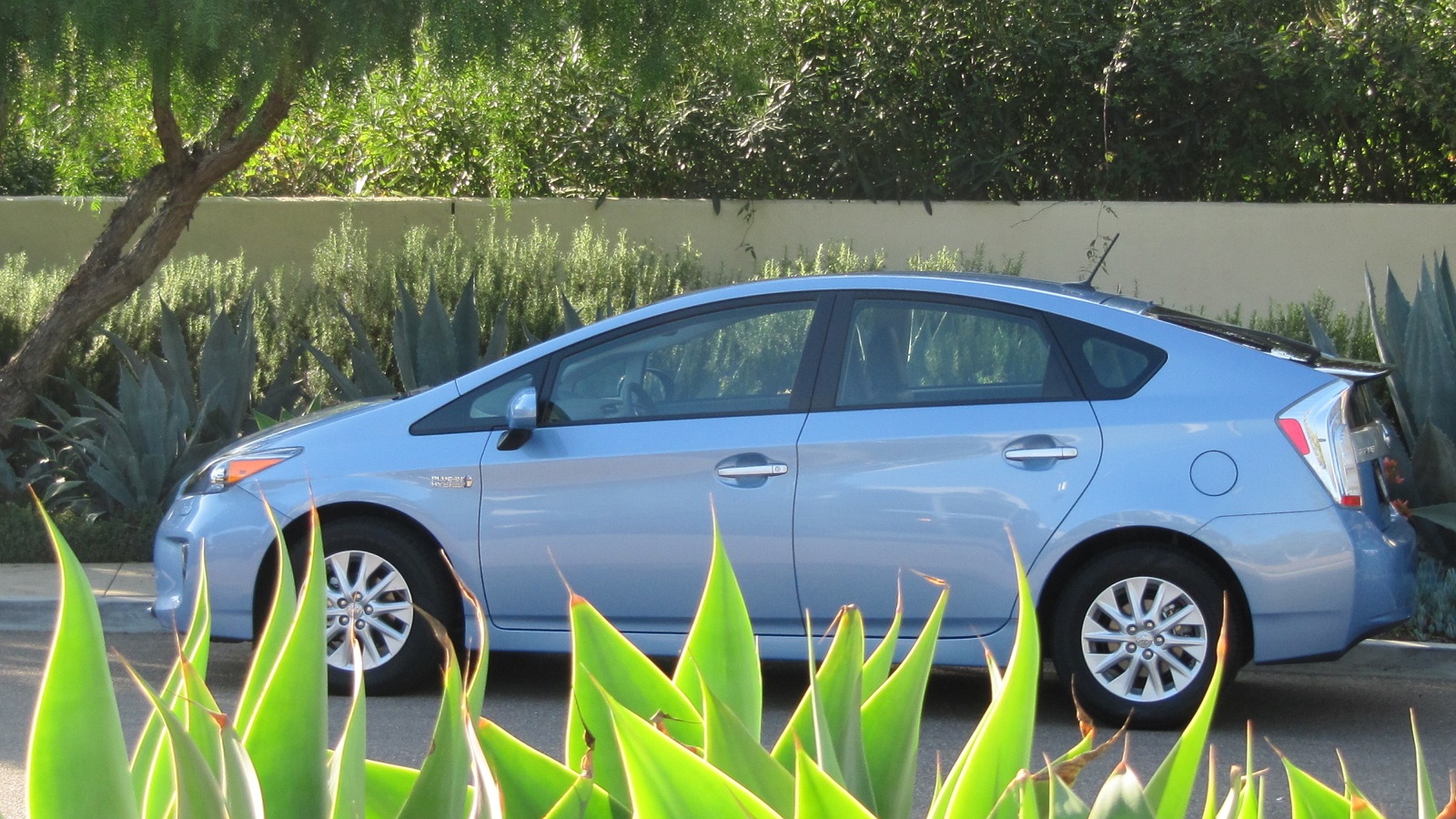
2012 Toyota Prius Plug-In Hybrid - production model
And once the engine has switched on for the first time, it will stay on for at least a minute or so, even if you revert to slow speeds and gentle acceleration.
That's to make sure the catalytic converter is properly heated up, since engines emit far more pollution from a cold start until the catalyst reaches several hundreds degrees than they do at any other time.
Range estimation: about right
Our test took place on and around a college campus outside San Diego, California. The temperature was in the 60s and 70s, an ideal temperature for maximizing the range of an electric car.
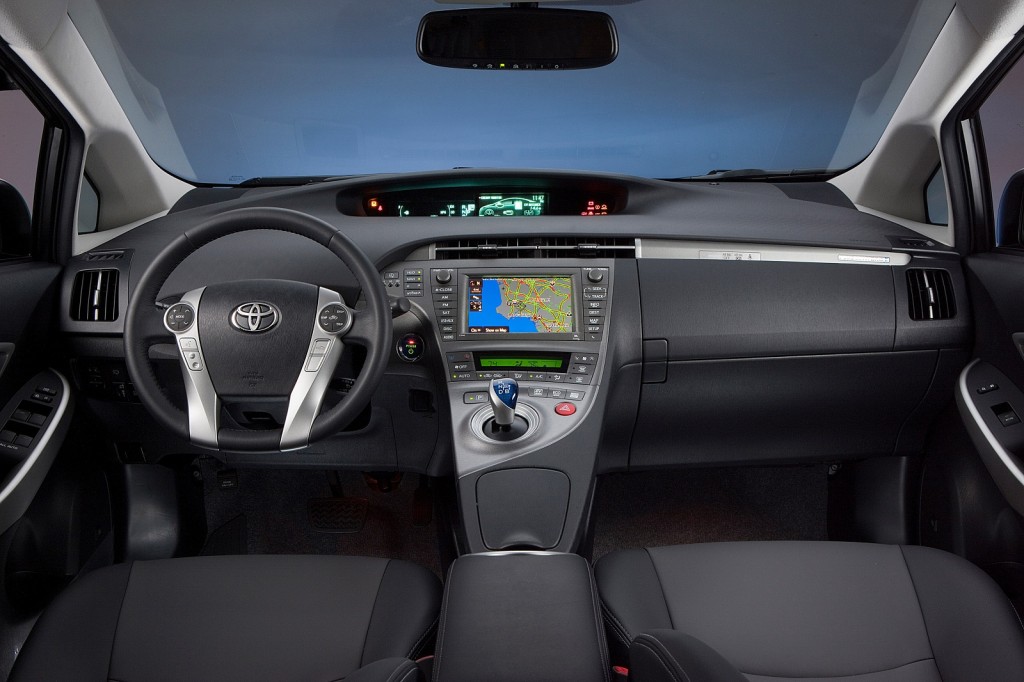
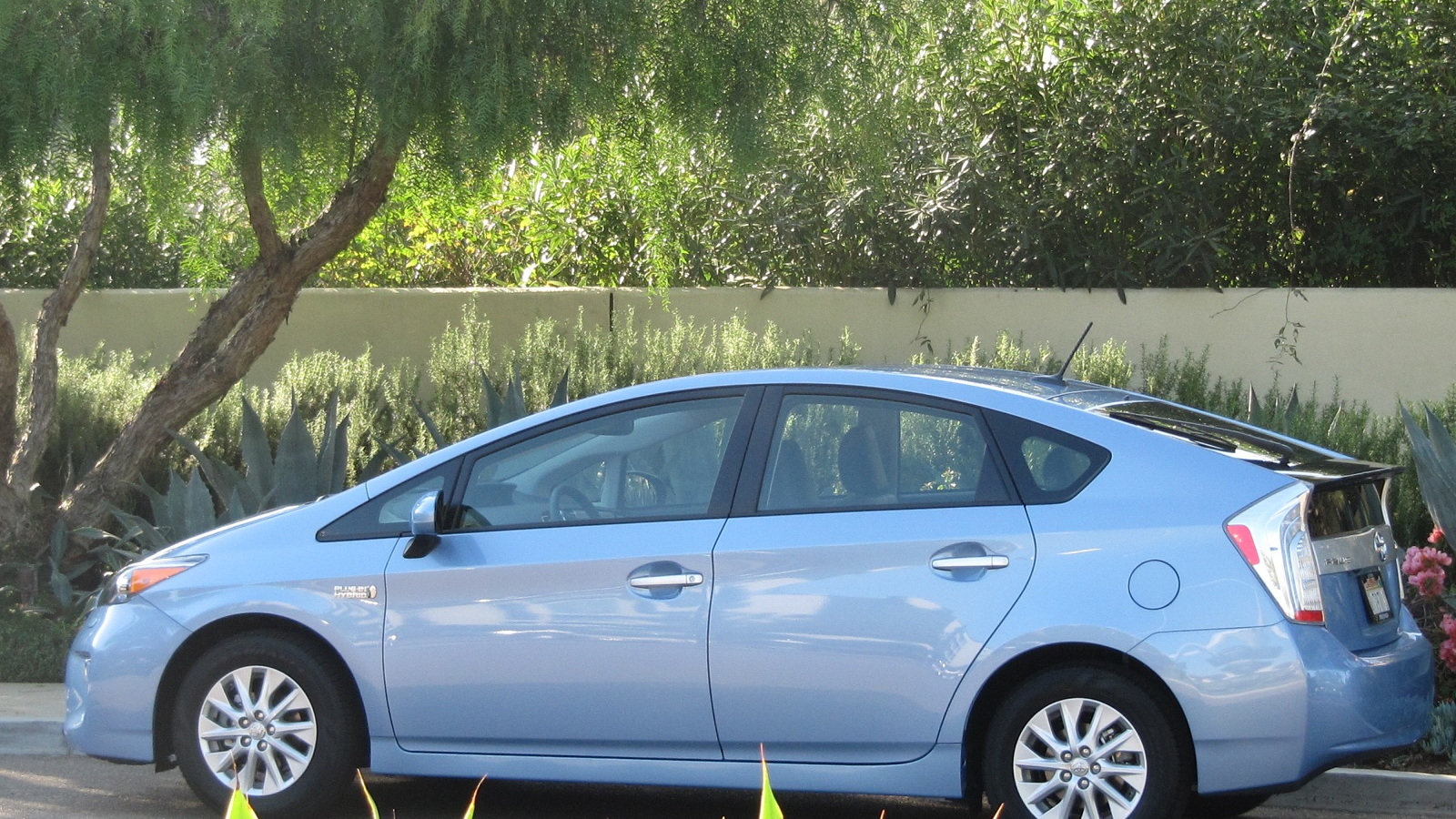
2012 Toyota Prius Plug-In Hybrid - production model
And a campus tour--with lots of stop signs and 30-mph speed limits--let us keep the plug-in Prius in electric mode for the bulk of our miles.
Toyota offers a display, in fact, that shows what percentage of your miles were covered in electric mode versus with the engine on. It includes in the "electric" category any distance covered with the engine off--including those short periods in regular hybrid operation after the larger pack is depleted.
For short trips--20 miles or less--the majority of those miles will be electric, unless the entire distance was covered at speed on an Interstate highway.
On our first loop, we drove 4.7 miles and used an indicated 5.0 miles of range. On the second test, we covered 4.4 miles but used only 3.8 miles of indicated range.
Both times, the car started with 11 to 13 miles of range on a relatively full battery pack.
As always, remember that--as we learned while driving a prototype Prius Plug-In in a chilly Northeastern November--battery range may fall by 30 percent when the weather gets cold.
Several changes for production
Compared to the prototype Prius Plug-Ins we drove three times in 2010 and 2011, the production model has a handful of changes. It still looks just like a regular Prius, but underneath, there have been many detail updates.
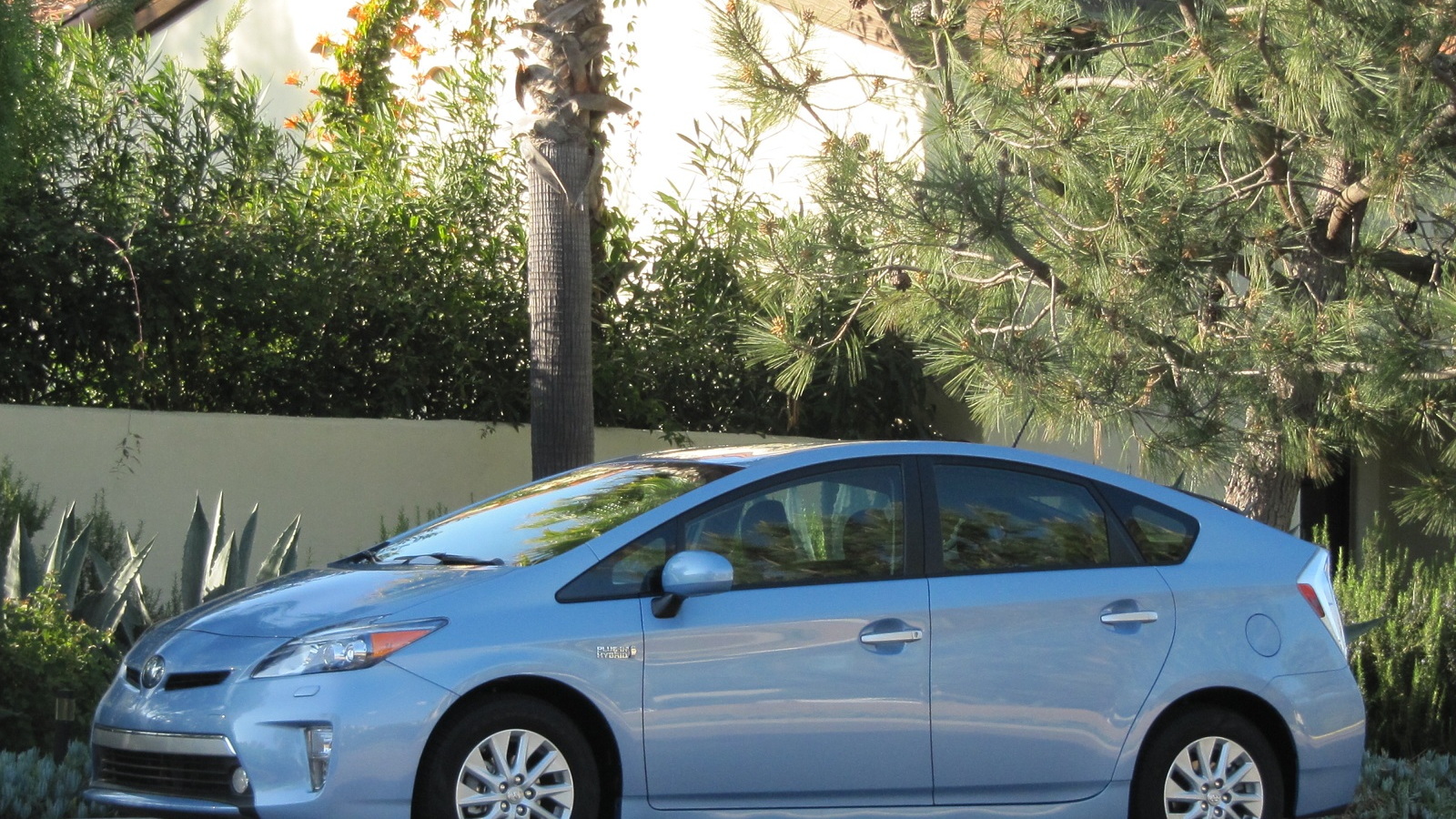
2012 Toyota Prius Plug-In Hybrid - production model
Most significantly, it has an entirely new battery pack, using different lithium-ion cells made by Sanyo (now owned by Toyota's long-time battery partner Panasonic).
That pack is smaller (4.4 kilowatt-hours versus the prototype's 5.2 kWh), but alterations to the software management algorithms allowed Toyota to get slightly higher electric range by using much more of the smaller pack's energy capacity.
Charging door moved
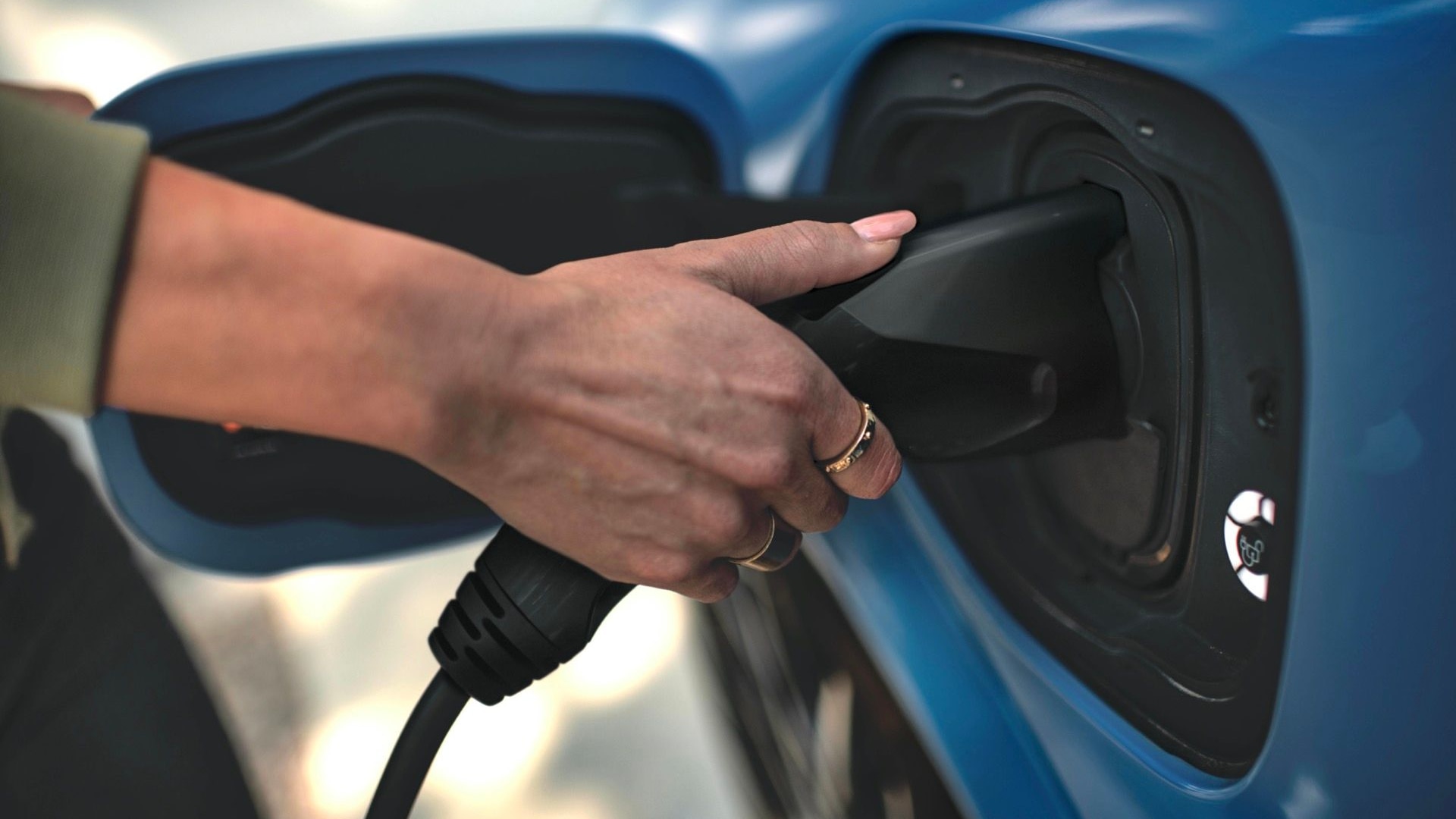
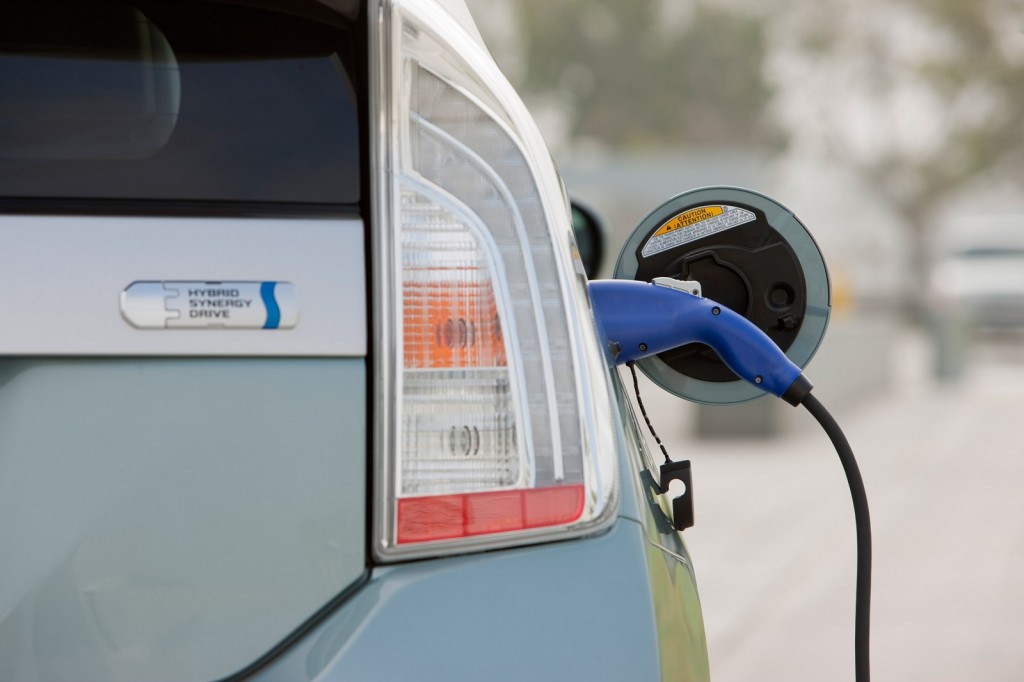
The few hundred people who drove the prototypes will also notice two operating changes: The driver must push the "EV" mode button to get the car to operate as much as possible on battery power, and the charge port has moved from the left front fender to the right rear.
That seems illogical if you support the reasoning that putting the charge port next to the driver's door keeps it visible, and serves as a subtle reminder to plug in the car when parking.
But Toyota rejects that logic. In conversations with engineers, we learned that the charging port migrated to the rear simply to save weight--by eliminating long runs of thickly shielded high-voltage cable from the rear-mounted battery pack to the left front area of the car.
Slightly ponderous
Toyota managed to take 150 pounds of weight out of the production car, compared to the prototype. But the Prius Plug-In still feels slightly heavier and more ponderous underway than a standard Prius liftback.
(Since we'd spent all day driving the significantly smaller and nimbler 2012 Toyota Prius C compact, the standard Prius may have seemed large and unwieldy, too.)
In either EV or normal mode, the plug-in Prius accelerates in a linear fashion--though of course it's smoother and much quieter with the engine off.
While there's some whine from the motor-generators and/or power electronics, all-electric operation is still much quieter. The difference in noise level is sufficient to encourage drivers to keep it operating on battery power as long as possible by modifying their driving habits.
Does it make sense for you?
The 2012 Toyota Prius Plug-In Hybrid is now the very top model in the four-car Prius range.
Whether it makes sense for you depends on how far you drive daily, and how often you can plug in (for up to 3 hours) to recharge the battery pack.
If you're considering the car, take a look at a post in which we crunched some of the numbers to demonstrate how it might (or might not) work for you.
High-end equipment
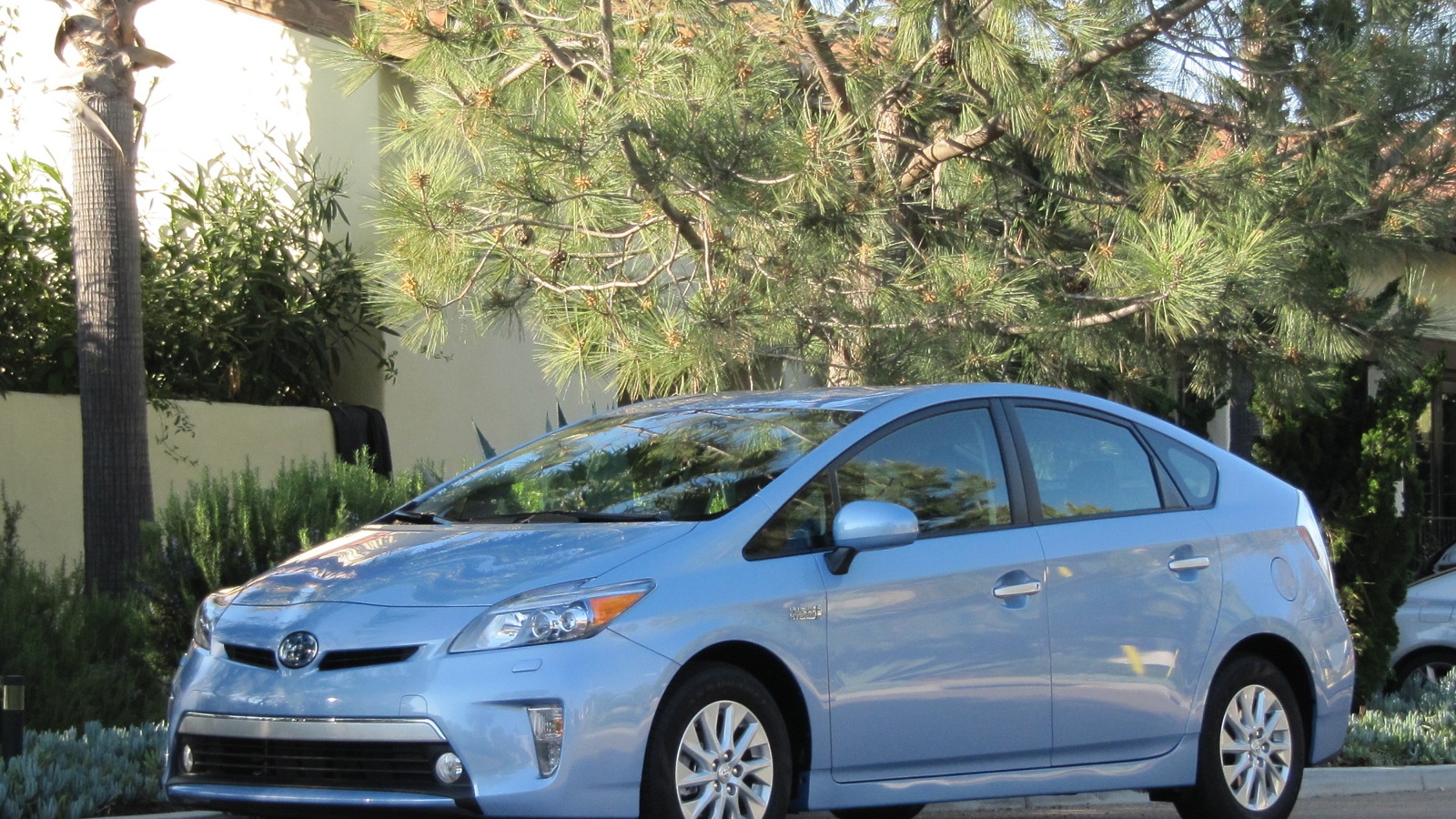
2012 Toyota Prius Plug-In Hybrid - production model
All Plug-In Prius models get remote air conditioning, a charging timer, heated front seats, a Display Audio system with navigation and Entune, and LED running lamps.
The base plug-in model starts at $32,760 (including destination), but the Prius Plug-In Hybrid Advanced trim level--which adds a navigation system, JBL GreenEdge audio, a head-up display, dynamic radar cruise control, a Pre-Collision System, LED headlamps, a power driver's seat, Safety Connect, and smartphone integration--costs $40,285 before adding any options.
The Prius Plug-In qualifies for a Federal income-tax credit of $2,500, as well as various state, regional, local, and corporate incentives for plug-in vehicles.
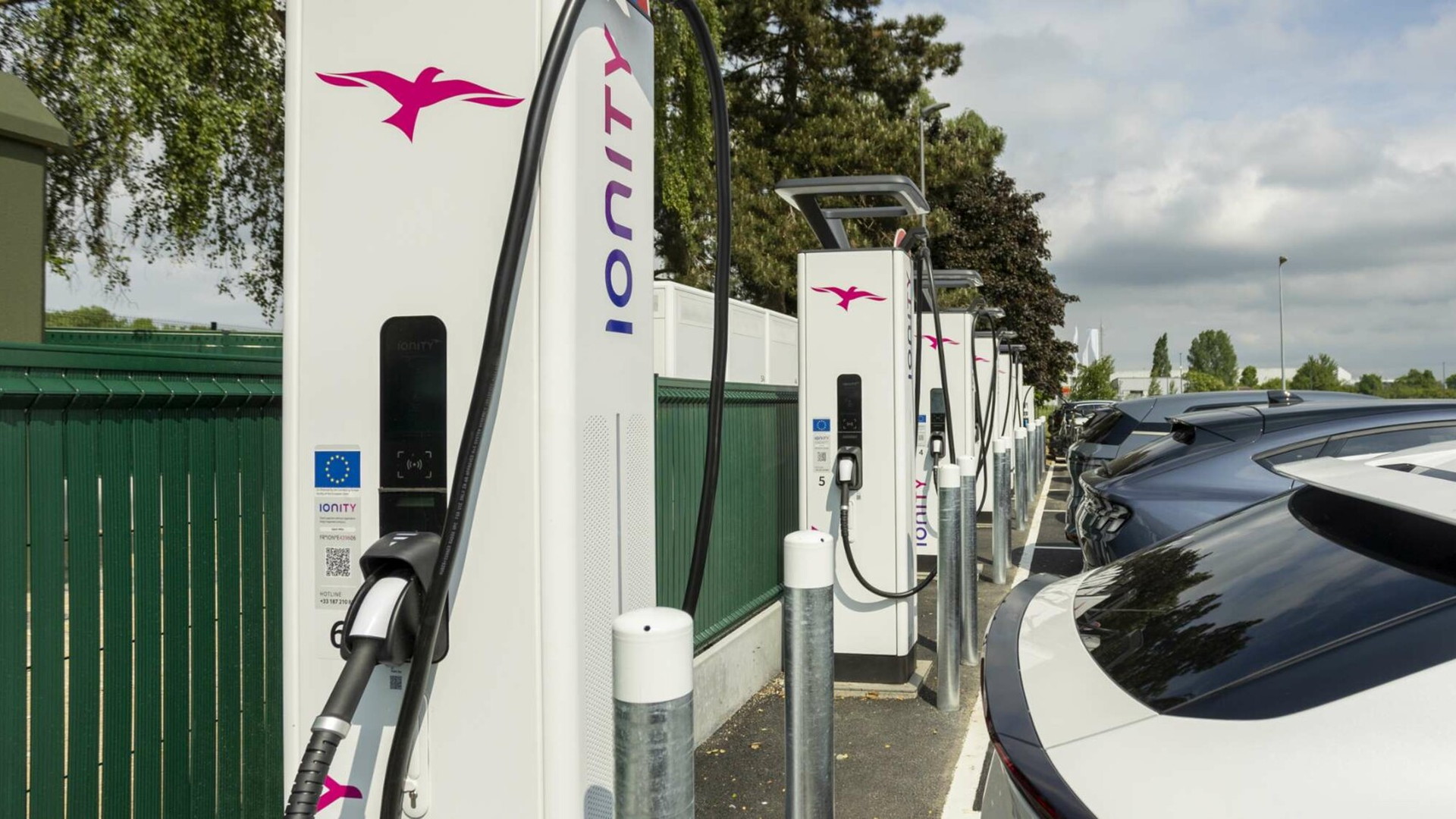
Last November, Toyota announced that Leviton will offer a 240-Volt, Level 2 home charging station—of up to 30 amps—with special support for Prius Plug-In customers, with the prices of $999 and up.

2012 Toyota Prius Plug-In Hybrid - production model
This year the Prius Plug-In Hybrid will only be sold in 14 launch states: California, Oregon, Washington, Arizona, Maine, Massachusetts, Vermont, New Hampshire, Rhode Island, Connecticut, New York, New Jersey, Maryland, and Virginia.
In several of those states, most notably California, the Prius Plug-In will qualify for access to High Occupancy Vehicle lanes with only a single occupant.
Next year Toyota will roll out the plug-in Prius in the rest of the country.
Toyota says it expects about 15 percent of its total Prius range sales to be the plug-in model, indicating that it hopes to sell 25,000 or more Prius Plug-Ins a year.
That puts the latest plug-in entry in the U.S. market about on a par with expected Leaf sales next year, with the Volt's sales numbers at that level or perhaps higher.
Let the plug-in battles begin.
+++++++++++