Advertisement

What Would You Give Up For Higher Gas Mileage? Cash? Features? Safety?

 
Follow John

Pump handle

Pump handle

It happens every time. Gas prices go up sharply, and new car buyers suddenly decide that gas mileage is important--and shop accordingly.

With gas around $4 a gallon in many parts of the country, what would you trade for higher miles per gallon?

Would you pay more? Would you buy a smaller car than your current one?


How about giving up features you'd hoped to have? And what about safety?

Everyone wants more mileage

Six weeks ago, Consumer Reports surveyed 1,750 car owners. Although their cars were now eight years old on average, less than one-fifth of them planned to buy a car in the next year. Of that pool of buyers, six out of 10 were planning to buy used cars rather than new.
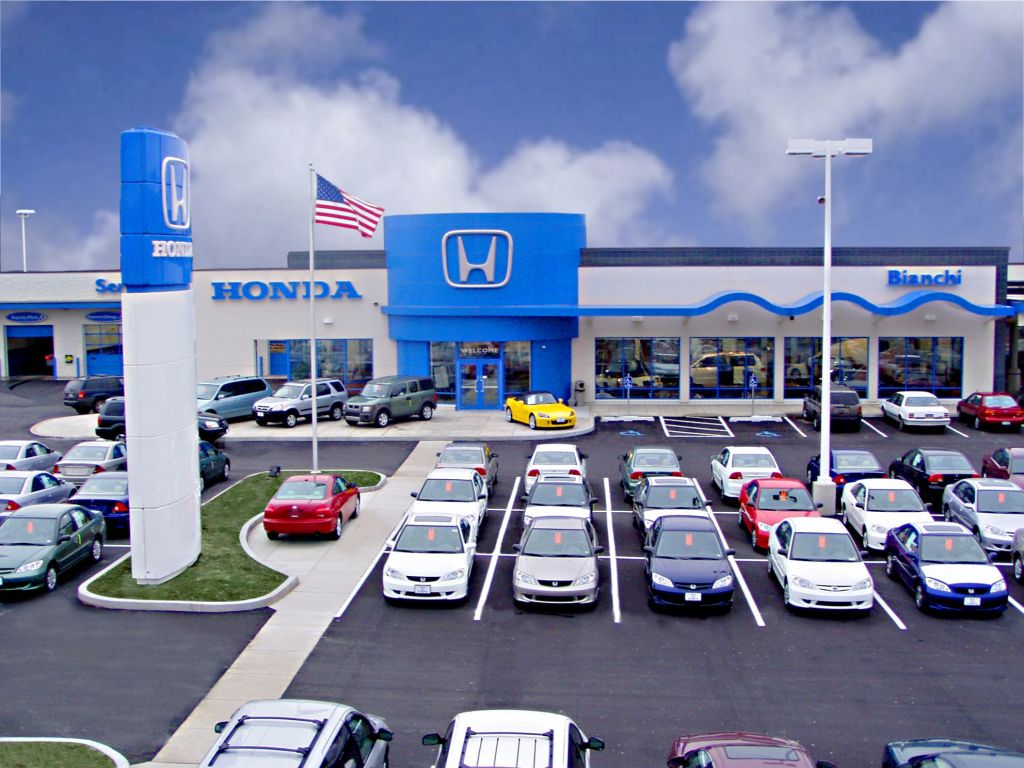
Honda Dealership

Honda Dealership

Enlarge Photo

When they do finally buy, almost two-thirds of respondents expect their next car to have better gas mileage--and virtually all the rest expected fuel economy to stay the same.

How high do they expect it to go? On average, the respondents said their new car would return 29 miles per gallon. But older drivers, lower-income buyers, and women expected higher fuel economy, and favored sedans and small cars over larger cars and crossover utility vehicles.

Remarkably, more than 10 percent of respondents said they expected their next car to deliver 40 mpg or higher.

40 mpg: still rare

That's a high bar indeed. For the 2011 model year, only four cars on the U.S. market deliver EPA combined mileage of 40 mpg or more, all hybrids: the Honda Civic Hybrid, Honda Insight, Lexus CT 200h, and Toyota Prius. For 2012, the Toyota Prius V wagon is likely to join that list.
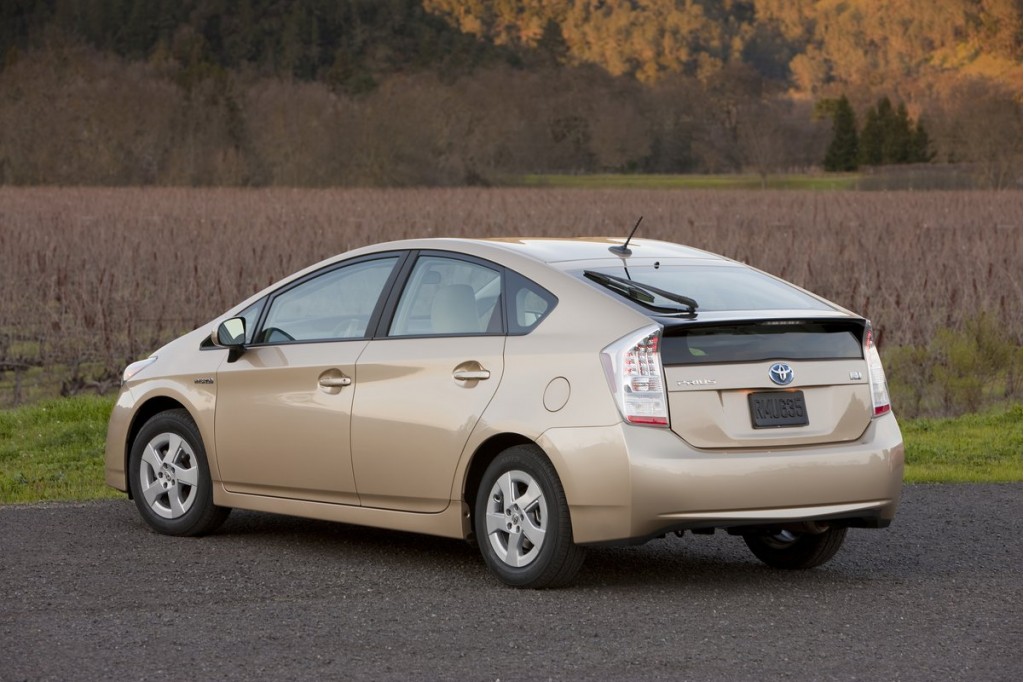
2011 Toyota Prius

2011 Toyota Prius

Enlarge Photo

There are also three plug-ins, the 2011 Chevrolet Volt, 2011 Nissan Leaf, and the 2011 Smart ForTwo Electric Drive. (There's also the $109,000 Tesla Roadster, but that's hardly a mass-market vehicle.)

More than half the respondents (58 percent) say they will pay more to get a car with higher gas mileage. Just under half (47 percent) would compromise on "size or capacity," and the same (44 percent) for giving up "amenities or comfort."

Safety is paramount

Acceleration is still seemingly important. Only 27 percent would sacrifice performance, and a mere 11 percent were willing to compromise on safety.

That last question is a ringer of sorts, though. Virtually any new car now comes with six or more airbags, traction control, anti-lock brakes, and a host of other electronic safety gear. Crash-test results from the NHTSA and IIHS are widely publicized, and any maker who doesn't score one of the top two ratings will modify future models to ensure they do.

Jeff Bartlett of Consumer Reports points out, however, that in general the most recently redesigned new cars do better on crash tests than models toward the end of their lifespan. So a car that's new for 2012 is likely to be safer than one first introduced in 2008.

Also, he says, for the six out of 10 buyers whose next car will be a used model, they should check safety ratings carefully.

2011 Chevrolet Equinox LTZ

2011 Chevrolet Equinox LTZ

Enlarge Photo

The survey group is slowly moving away from more-economical sedans and toward small and midsize crossover utility vehicles, which are less fuel efficient.

As the report noted, "Men prefer pickup trucks by a wide margin, while women lead small sport-utility vehicle interest."

[Consumer Reports]

+++++++++++

Follow GreenCarReports on Facebook and Twitter.


Follow Us


Have an opinion?

  • Posting indicates you have read this site's Privacy Policy and Terms of Use
  • Notify me when there are more comments
Comments (14)
  1. Surveys are always difficult and don't necessarily indicate confirmed consumer behavior.

    I wonder what percentage of these people even look at gas mileage or know their current gas mileage. I suspect most people don't know and don't care. They only number they are likely to know is the number of dollars it takes to fill their tank.
     
    Post Reply
    Vote
    Bad stuff?

     
  2. For a lot of my non-car friends.. there are two pieces to how their car performs on fuel economy.

    1. How much does it cost to fill it?
    2. How often do I need to fill it?

    And they want those two numbers to be as low as practical given the frequency of their driving etc. Yes, they could figure out the mileage on their current car ... but if they can get a week out of a tank of gas running the kids to soccer practice and piano lessons, doing the household errands and getting back and forth to work.. and that tank didn't cost $80 ... they're happy.

    I imagine a lot of consumers think this way.
     
    Post Reply
    Vote
    Bad stuff?

  3. Unless the survey was specific, most people think of highway mileage when asked about fuel economy. At least that was my experience selling cars last year. Still a small selection. Hyundai Elantra, Ford Fiesta, Ford Focus VW tdi and some GM options.
     
    Post Reply
    Vote
    Bad stuff?

  4. The answer to your question is simple. Horsepower. Give up horsepower and the mpgs will rise. Honda made an 80 horsepower, normally aspirated 4 cylinder for its CRX-HF that was rated at 57 mpg. That was over 20 years ago. Americans must get over their Nascar fixation. The days of 5 seconds to 60 must end. I'll make a deal with you. 1 foot pound of torque for every pound you fat lazy cretins can drop. How's that?
     
    Post Reply
    +1
    Bad stuff?

     
  5. The specs I found on line show 60BHP.

    But isn't part of this that its curb weigh is only 1713lbs and has no AC?
     
    Post Reply
    Vote
    Bad stuff?

  6. Your point is accurate, but the CRX-HF could not be sold today. It had nowhere near the safety structure or mandated features that would allow it to pass today's crash tests. I'd wager that if it were put through the new, tougher NHTSA crash tests, it would be deemed horribly unsafe. A large part of the weight gain in modern vehicles comes from stronger structures, up to 10 airbags, and the like--with the payoff that fewer people are injured or killed in car accidents.
     
    Post Reply
    Vote
    Bad stuff?

     
  7. Last I heard, adding seat belts to cars decreased traffic fatalities, but air bags did not. No one knows why. Do we now drive more recklessly and compensate for air-bag-safety.
     
    Post Reply
    Vote
    Bad stuff?

     
  8. Not sure what data you have, but the rate of fatalities per 100,000 miles driven has fallen to a new and historic low. That is largely attributed to better crash structures and more airbags. See here:
    http://www.reuters.com/article/2011/04/01/us-traffic-deaths-idUSTRE7306Y120110401
    and historic data here:
    http://www-fars.nhtsa.dot.gov/Main/index.aspx
     
    Post Reply
    Vote
    Bad stuff?

     
  9. John, Thanks for the lead in the data. I think it shows what I said quite clearly.

    Airbags started in 1989 and dual airbags in 1998.

    So do you seen a reduction in fatalities for that period? Nope, they increase from 1994 (36,000 deaths) all the way up to 2006 (39,000). So much for airbags saving lives.

    On the other hand, fatalities decreased rapidly and dramatically from 2006 (39,000) to 2009 (30,000). Why?

    Is this finally the result of airbags, is it improved crash worthiness, or is it more regulation on teen drivers, or drunk driving rules? We may never know.

    However, there is no clear data to show that airbags saved lives, if anything, the data shows the opposite.

    That said, I am sure airbags save lives.
    Vote
    Bad stuff?

  10. John: Your comment below doesn't have a "Reply" button on it, perhaps due to nesting limits. But:

    It's not the overall # of fatalities, it's the RATE per miles driven. If more miles are driven, of course # of fatalities will rise.

    In the 4th row from bottom of the FARS chart, 1994 rate is 1.73 deaths per 100M miles driven. By 2006 that has fallen to 1.42. Yes, overall deaths increased from 36K to 39K, but that's because miles driven rose from 2.4 to 3.0 trillion. Miles plateaued in 2007, then fell in '08 and '09. Combined with steadily falling rate, you get the 1st decreases in overall death numbers.

    It's about the rate. Cars have been getting safer, due to airbags & other technology.
    Vote
    Bad stuff?

  11. OK, John you have a point with the normalized data. But very slow rate of decrease in death/100mil miles during the time when air bags were added really begs the question of their effectiveness.

    This is not just my opinion. People reviewing the death statistics a few years ago were deeply dismayed by the slow to non-existent improvement in death rates. They had spent a lot of political capital on forcing airbags into cars and the statistics were (are) weak at best to show that airbags help.

    Too bad the chart doesn't show older data.
    Vote
    Bad stuff?

  12. There are more comments in this thread
  13. John : This article speaks exactly to the types of trade-offs I expected to make in downsizing from the 'stang to the Fiesta. Ok, sure, I lost heated seats (available on the Fiesta - I consciously lost them) and the convertible top and some torque/power. BUT, I gained a lot more than mileage: Sync, Electric Power Assisted Steering and a car that is a HECKUVA lot more fun to drive (for me). :)
     
    Post Reply
    +1
    Bad stuff?

     
  14. Good for you John Knox (too many John's here). Let Voelcker know that you gain things in these vehicles as well.
     
    Post Reply
    Vote
    Bad stuff?


Have an opinion?Join the conversation!

Advertisement
Advertisement

Find Green Cars

Go!

Advertisement

 
© 2013 Green Car Reports. All Rights Reserved. Green Car Reports is published by High Gear Media. Send us feedback. Stock photography by Homestar, LLC.