Advertisement

What Do YOU Want To Know About the 2011 Chevrolet Volt Electric Car?

 
Follow John

2011 Chevrolet Volt

2011 Chevrolet Volt

Enlarge Photo

Related Photo Galleries


See more photos »

After just shy of four years, two distinct body styles, much disbelief, and more press releases than we can count, the 2011 Chevrolet Volt extended-range electric car is here.

We'll be driving the 2011 Volt this week, and we have a lot of questions about what the car is like.

But we expect you do, too, so here's our offer: Send us your questions about the Chevy Volt--any aspect at all of the car, the charging process, or the launch of GM's first electric car since the late lamented EV1--and we'll do our best to provide you with answers.


To spark your thoughts, remember that we drove a pre-production 2011 Volt in January. At that time, we remarked on its smooth delivery of electric power and the consistent performance in both electric and range-extended modes.

As a range-extended electric car (known as a series hybrid, not a "hybrid" as the phrase is used by the car-buying public), the Chevrolet Volt runs solely on electricity that powers an electric motor driving the front wheels.
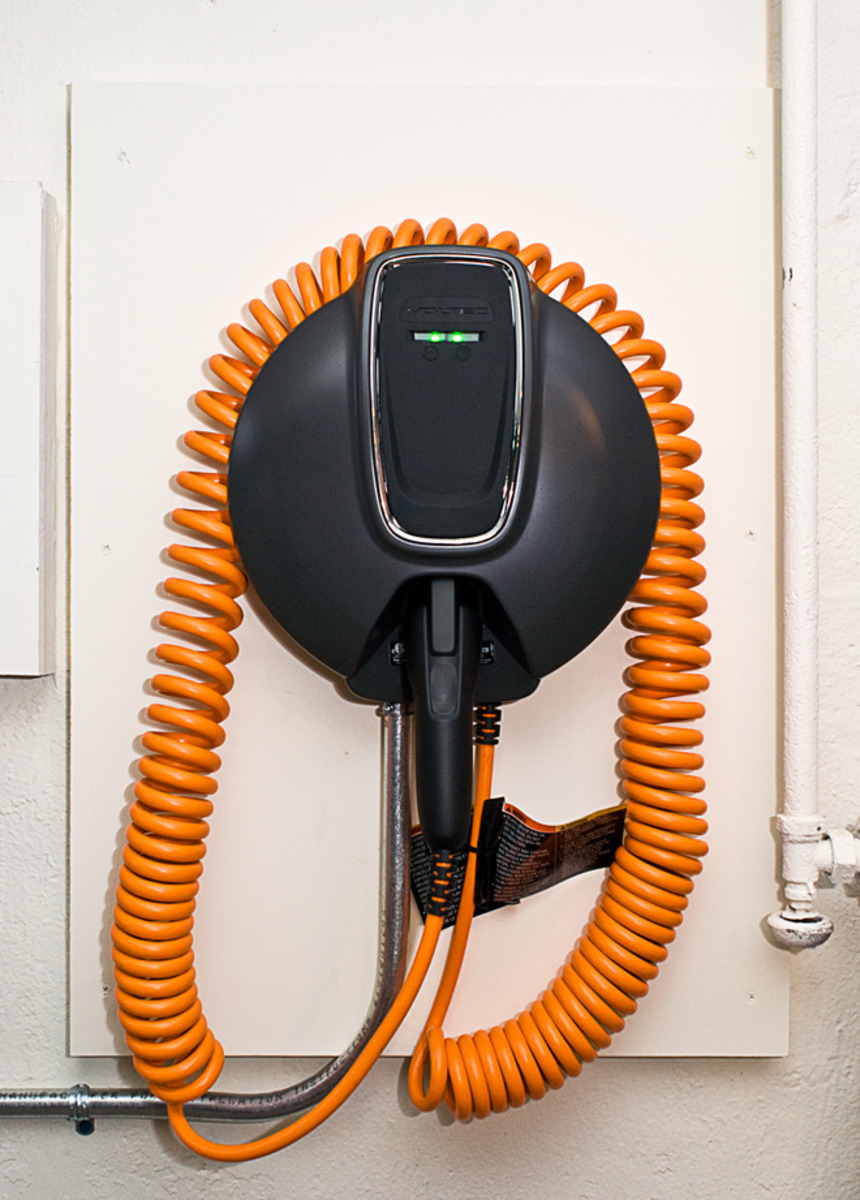
2011 Chevrolet Volt 240V charging station

2011 Chevrolet Volt 240V charging station

Enlarge Photo

The 16-kilowatt-hour lithium-ion battery pack can be recharged (in roughly five hours or less) by plugging it into a 110-Volt or 220-Volt wall outlet, although Chevrolet also offers a home charging station for $490 (plus $1,475 installation).

Once the battery pack is depleted (after 25 to 50 miles, depending on usage), the 1.4-liter range extender engine switches on to power a generator that provides power to continue running the car for another 300 miles or so.

Adding gasoline to Refueling the Volt is just like a standard vehicle; it has both a recharging port and a gasoline door, depending on which energy source you're using.

The 2011 Chevrolet Volt goes on sale in California and other regions next month for $41,000, and is eligible for a $7,500 Federal tax credit plus various state incentives.

To send us your questions, just leave them in the Comments section below. Or, you can e-mail them to: feedback (at) highgearmedia (dot) com.


 
Follow Us


Have an opinion?

  • Posting indicates you have read this site's Privacy Policy and Terms of Use
  • Notify me when there are more comments
Comments (18)
  1. Dude
    "Refueling the Volt is just like a standard vehicle; it has both a recharging port and a gasoline door,... "
    Yep, sounds just like any other vehicle on the road.
    Unfortunately, most of my concerns are probably not answerable quickly. I wonder about the reliability of the E-REV system and particularly the battery.
    Of course, everyone wants to know the MPG in charge sustaining mode.
     
    Post Reply
    Vote
    Bad stuff?

  2. The Volt obtains power from two sources gas and electric therefor it's a, HYBRID!
     
    Post Reply
    Vote
    Bad stuff?

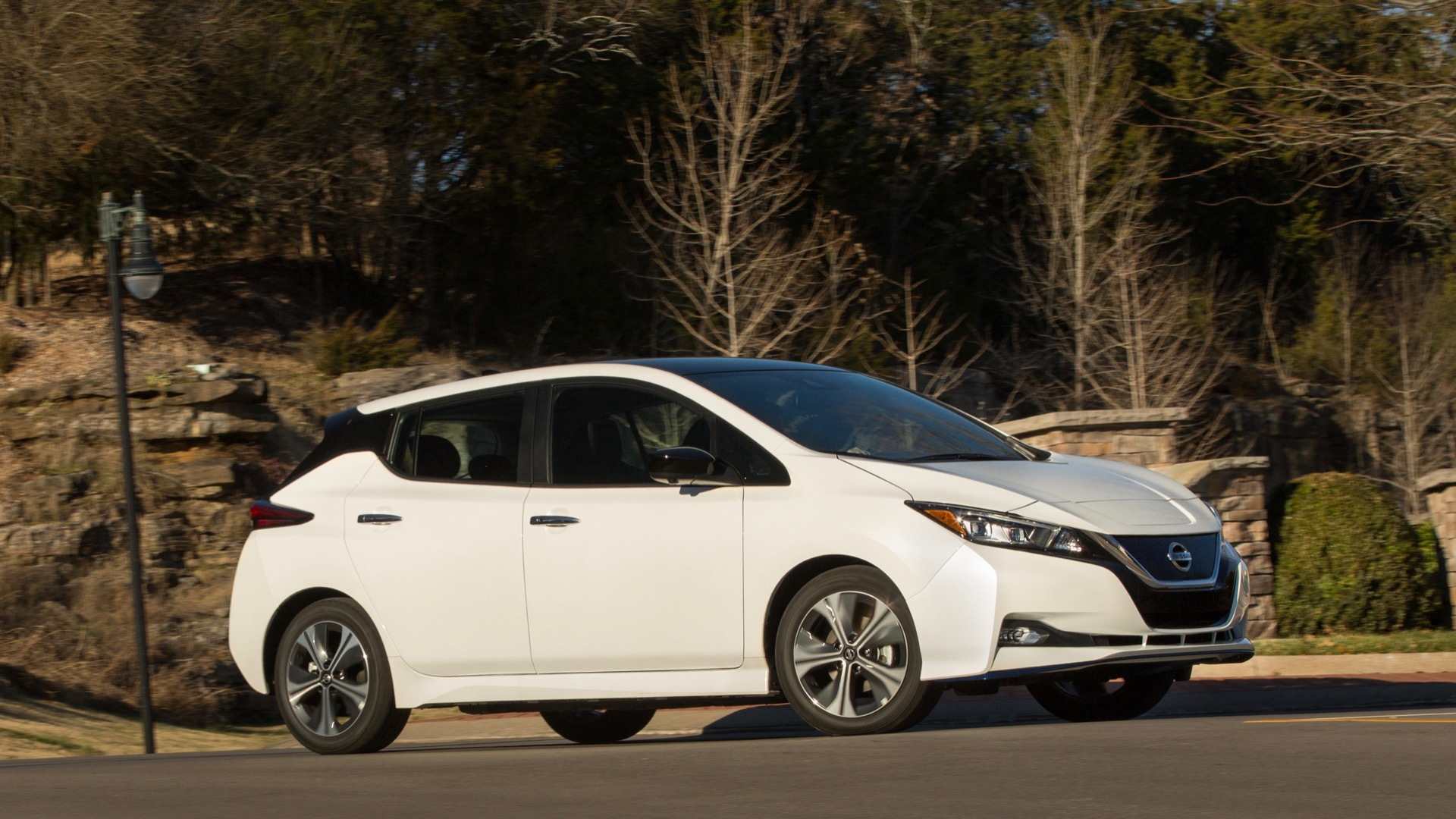
  3. @ cdspeed - That's not strictly true. Since the gasoline engine doesn't provide any motive power, it's effectively no different from using an external generator to charge an EV. You wouldn't call a Nissan Leaf charged via a diesel or gas generator a hybrid, so the fact the Volt carries it's generator around with it doesn't make it any different.
     
    Post Reply
    Vote
    Bad stuff?

  4. What kind of gas mileage could you expect driving cross country? Say, Portland to Salt Lake. No recharging the battery by plug-in.
     
    Post Reply
    Vote
    Bad stuff?

  5. @Antony Ingram Totally agree with you.
    If someone could make a backup generator the size of a woman's handbag, every EV driver would carry one around just as insurance against running out of electrons. Doesn't mean their EV is suddenly a hybrid.
    The Chevy Volt situation contrasts greatly with the Plug-in Prius. The Plug-in Prius is truly a hybrid. It does not have a true "electric only" mode and if it did, the range would be a meager 12-14 miles.
     
    Post Reply
    Vote
    Bad stuff?

  6. @John: I tweaked the wording to indicate more precisely what I was trying to convey.
    @CDspeed: I expanded the wording to explain why the Volt is not a "hybrid" in the sense that the term is understood by the car-buying public.
     
    Post Reply
    Vote
    Bad stuff?

  7. @John Voelcker,
    Your writing is marvelous, I really shouldn't pick on you.
     
    Post Reply
    Vote
    Bad stuff?

  8. You are still putting gas in it no matter what and the car has to carry the extra weight of the gas engine, tank, exhaust system, and various other components which EVs, don't. It's not like an external generator because you wouldn't need to carry it all of the time, and an external generator is really only for emergencies as you would have to stop to use it. But don't get me wrong I do like the technology, and it will aid us in the transition to a zero emissions future. Its like the patch for a smoker, in order to break the addiction they use the patch to go from a smoker to a non-smoker or in the case of our cars from gas to gas-free. So I say the Volt is a HYBRID because it carries and burns gasoline, it is still dependent on gasoline, making it more of a HYBRID.
     
    Post Reply
    Vote
    Bad stuff?

  9. great article John. I like the way that you explained series hybrid is different from tradition "hybrid". It was clear and short and accurate. most reporters seem to give away accurate for short. well done, that is great writing.
    You asked for questions, here are mine:
    1) why is the charge port on the side? and why the drivers side? for typical parallel street parking, the passenger side faces the curb. so the cord would drape over the car, or under the front and I have to step into the street traffic to plug in. also in my (typical) garage I would have to unplug to roll my trashcan out. GM has put the port on the front in the past (Chevy S10EV, EV1) and so has Toyota (Rav4EV). seems like they had this figured out before and have forgotten and did not think it through this time for real world use.
    2) what are their goals for the gen 2 Volt? Longer range, cheaper price, CA HOV qualified...?
    2a) what year can we expect a Gen 2?
    3) how long can fuel sit in the car unused? if my driving allows me to run on 'trons all the time, will the gasoline "go bad" (or damage the gas tank, or collect moisture, turn to jello...:-)
    3a) do I need to add a fuel stabilizer if I am not burning gasoline on a regular basis?
     
    Post Reply
    Vote
    Bad stuff?

  10. 4) I have heard that the genset will periodically do a maintenance run even, if the batteries are charged. is this true and if so, how often (assuming daily driving).
    4a) if the genset maintenance runs were the only fuel use (unlikely I know) how much fuel would be used annually?

    5) when can we expect to see Voltec in other vehicles. there has been talk of the Converj and Orlando in the past.
    6) how big is the gas tank?
    7) what is the MPG rating in charge sustaining mode?
     
    Post Reply
    Vote
    Bad stuff?

  11. @cdspeed
    It is worth pointing out that EVs like the Tesla carry around a huge heavy expensive battery pack that is not needed for day to day driving. This is very similar to the situation with the Volt which carries around a huge heavy expensive gasoline engine that hopefully it will seldom use.
     
    Post Reply
    Vote
    Bad stuff?

  12. @Patrick
    At least one reason GM has given for the location of the charge port is so the driver has to walk past it (or at least it will be in his field of vision if approaching from the back of the car) to get in, making it that much harder to try to drive away while still plugged in. Of course, an interlock can also prevent doing so (and I'm sure the Volt has one; Gen II EV1 got one after Gen I drivers yanked a few chargers off walls). But it alleviates even the frustration of getting in the car only to figure out you forgot to unplug. Not a huge deal, but happens.
    GM has said Gen II will be a 2013 MY, out in 2012. Haven't been more specific, but typically that means summer sometime.
    Gas tank is 9.3 gallons, according to the owner's manual. One of the CAB drivers spotted it during the visit to Detroit for that announcement: http://voltaday.com/2010/09/29/fuel-on-board/
     
    Post Reply
    Vote
    Bad stuff?

  13. My questions include:
    1) What is the actual (as opposed to claimed) charging time on 110? I'm particularly curious whether, if one could get a work site to agree to it, one could fully recharge in a work day.
    2) How does running accessories affect the range? I'd imagine that both A/C *and* heat have an impact.
    3) Does the generator only run when the vehicle is in motion, or will it continue to run until the vehicle finishes charging (e.g. will the generator run while the car is parked?).
     
    Post Reply
    Vote
    Bad stuff?

  14. http://www.caranddriver.com/reviews/car/10q4/2011_chevrolet_volt-feature_test
    According to Car and Driver it takes 13.4 KWH of electricity to put 9 KWH of electricity in the car. That is only 67% efficient charging. Ugh.
     
    Post Reply
    Vote
    Bad stuff?

  15. While the estimated battery only range is 40 miles, what is a ball park range, say at 55 mph vs. 75 mph on the highway? And when the gas engine provides power: what range at, say, 55 mph vs. 75 mph?
     
    Post Reply
    Vote
    Bad stuff?

  16. Will it take 3 car seats in the back??? ;-)
     
    Post Reply
    Vote
    Bad stuff?

  17. Thank you all for your questions. I've logged them and will try to get answers to all of them, though GM may not be commenting on some of the gas mileage issues until they finish negotiating with the EPA over the not-yet-designed window sticker.
    @Judy: Not a chance. Nope. No way. :)
     
    Post Reply
    Vote
    Bad stuff?

  18. Is there room in the hatchback for a very large dog? You could test this by having a smaller journalist climb into the hatch, and then close it on him/her. Photographic evidence posted in your gallery would be nice.
     
    Post Reply
    Vote
    Bad stuff?


Have an opinion?Join the conversation!

Advertisement
Advertisement

Find Green Cars

Go!

Advertisement

 
© 2013 Green Car Reports. All Rights Reserved. Green Car Reports is published by High Gear Media. Send us feedback. Stock photography by Homestar, LLC.