If you've been to New York City lately, you may have noticed an increasing number of hybrid taxis on the roads: mostly Ford Escape Hybrid SUVs, but also Toyota Camry Hybrid and Nissan Altima Hybrid sedans, and a scattering of others too.
It's part of a long-term plan to green the fleet of 14,000 yellow cabs operating in the city, since they rack up far higher mileage than private cars--close to 100,000 miles a year when running two 12-hour shifts a day.
City can't mandate MPGs
But on Tuesday, the Federal Court of Appeals for the Second Circuit ruled that the city's method for encouraging greener taxis that emit less exhaust emissions and greenhouse gases is illegal.
The city's Taxi & Limousine Commission (TLC) first required that new taxis put into service since last October must achieve an EPA rating of at least 30 miles per gallon on the city cycle.
When that was struck down, it altered the rules to require fleet owners to raise their daily lease rates for hybrids, but lower them for the de facto taxi, the Ford Crown Victoria sedan--which gets only 12 to 14 miles per gallon in urban use.
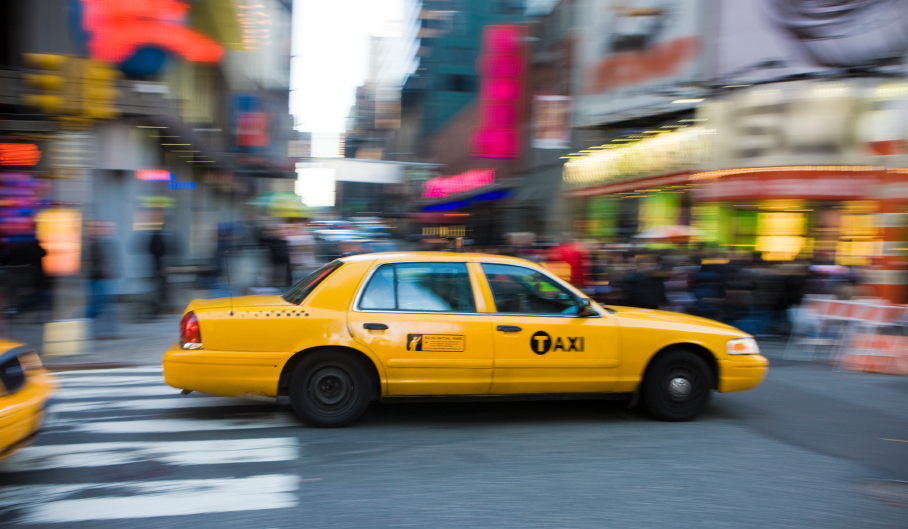
New York City taxi cab
That rule too was struck down, with the court again deciding that it effectively mandated fuel efficiency and emissions standards, which only the Federal government can do.
NYC is not alone
That's the same argument behind the lengthy legal battle between California and the auto industry over the state's limits on greenhouse gas emissions. That fight ended last spring with an agreement brokered by the White House for new national EPA and NHTSA limits.
Five others cities too want to green their taxi fleets: San Francisco, Los Angeles, Las Vegas, Boston, and Washington, D.C. But a "Green Taxi Act" introduced into the Senate and House last year by a New York senator and representatives has gotten no traction.
And those cities face the same ruling that New York City has been hit with, so it's unclear how the cities will accomplish their goals.

2011 Ford Transit Taxi
RIP Crown Vic
In New York's case, roughly 28 percent of the taxi fleet are now hybrids, clean diesels, or other green vehicles. And the Crown Victoria goes out of production at the end of the year, with Ford proposing a taxi version of its Transit Connect small commercial van in its place.
The Metropolitan Taxicab Board of Trade, which represents taxi owners, hailed the ruling. It said in a statement that the decision offers an "opportunity to work with the TLC on achieving a taxi fleet that is safe, durable, affordable and fuel efficient."
You will forgive us our extreme skepticism. The Board of Trade has fought every single rule ever proposed by the TLC, resulting in decades of rattletrap cabs that would shame a Third-World capital.

San Francisco Ford Hybrid Escape Taxi by Flickr user Ian Fuller
Rider comfort: Who cares?
It fought safety inspections, a five-year retirement rule, mandatory air-conditioning, automated meters, driver route logging, GPS tracking, customer information postings, and many other rules that have notably improved New York's taxi experience for actual riders.
The Board of Trade has not historically been concerned with the opinions or interests of riders, most of whom like the idea of riding in a more fuel-efficient and less-polluting cab. Lease drivers, of course, love the hybrids, since they cost less to refuel them at the end of the shift. That too is irrelevant to the owners' group.
In a previous lawsuit against the hybrid ruling, the group worried that hybrids cut passenger legroom up to 10 inches. It was the first time in recorded history that the taxi owners had professed concern over the comfort of paying customers, and it may be the last.
We suspect NYC's taxi fleet will continue to get greener. And we fully expect the Board of Trade to fight that process every single step of the way. Such, sadly, may be life in New York.