Nissan Slashes Leaf Price To Sell Electric Car...
VW Talks Future Tech: Plug-Ins, Natural Gas...
Could Small 2015 Chevy City Express Van Offer...
They pop up like weeds, these "Electric cars are failures" articles--and you just have to keep killing them.
The latest is an opinion piece titled, "Why the Electric Car Failed," published last week in U.S. News & World Report.
Author Michael Lynch identifies himself as a researcher for the petroleum industry.
To judge by his confrontational tone in the comments, Lynch may have been caught off-guard by a flood of contradictory responses to his piece.
This isn't uncommon when writers lack knowledge and perspective on how the auto industry works, and know little or nothing about the long-term cost curves of electric and gasoline cars.
Lynch's basic point--that the needs and desires of car buyers dictate which vehicles they buy--is absolutely correct.
But he deems plug-in electric cars a sales failure--after less than two years on the market--because, he says, consumers don't want them.
In fact, most car buyers have no idea that plug-in cars are on sale at all. It's early, early days yet.
Lynch trots out several hoary old chestnuts: Batteries have been with us more than 100 years, electric cars failed in the 1910s, so why would this time be any different?
He apparently doesn't know that only in the last 20 years have we moved beyond lead-acid battery chemistry. Large-format lithium-ion cells, with four times the energy density of lead-acid, entered production just in the last few years.
Fifteen years ago, the 16-kilowatt-hour lead-acid pack in GM's EV1 weighed 1,200 pounds. That same energy content in the Chevrolet Volt's lithium-ion pack weighs just over 300 pounds.
That weight reduction makes modern electric cars possible.
Then Lynch cites lower-than-expected sales of electric cars as proof that the concept has failed (along with Shai Agassi's resignation as Better Place CEO).
Well, last year, U.S. buyers took home roughly 17,500 plug-in cars. This year, that number will more than double. Next year, it may triple.
The overall proportion of plug-ins in the global fleet will remain low over this decade; most analysts project that plug-ins will be 1 to 2 percent of a 100-million-unit annual global output by 2020 or 2022.
But if Lynch were to look out 15 years, he might gain a broader perspective.
First, the EPA itself has estimated that gasoline car prices will rise $3,000 in real dollars from 2012 to 2025 to meet new CAFE standards.
Second, Li-ion cell costs will fall 6 to 8 percent a year on average, so starting in about 2020 you get some interesting numbers.
By 2020, gasoline cars will be more expensive, and gasoline will presumably cost more as well--though new cars will use less of it.
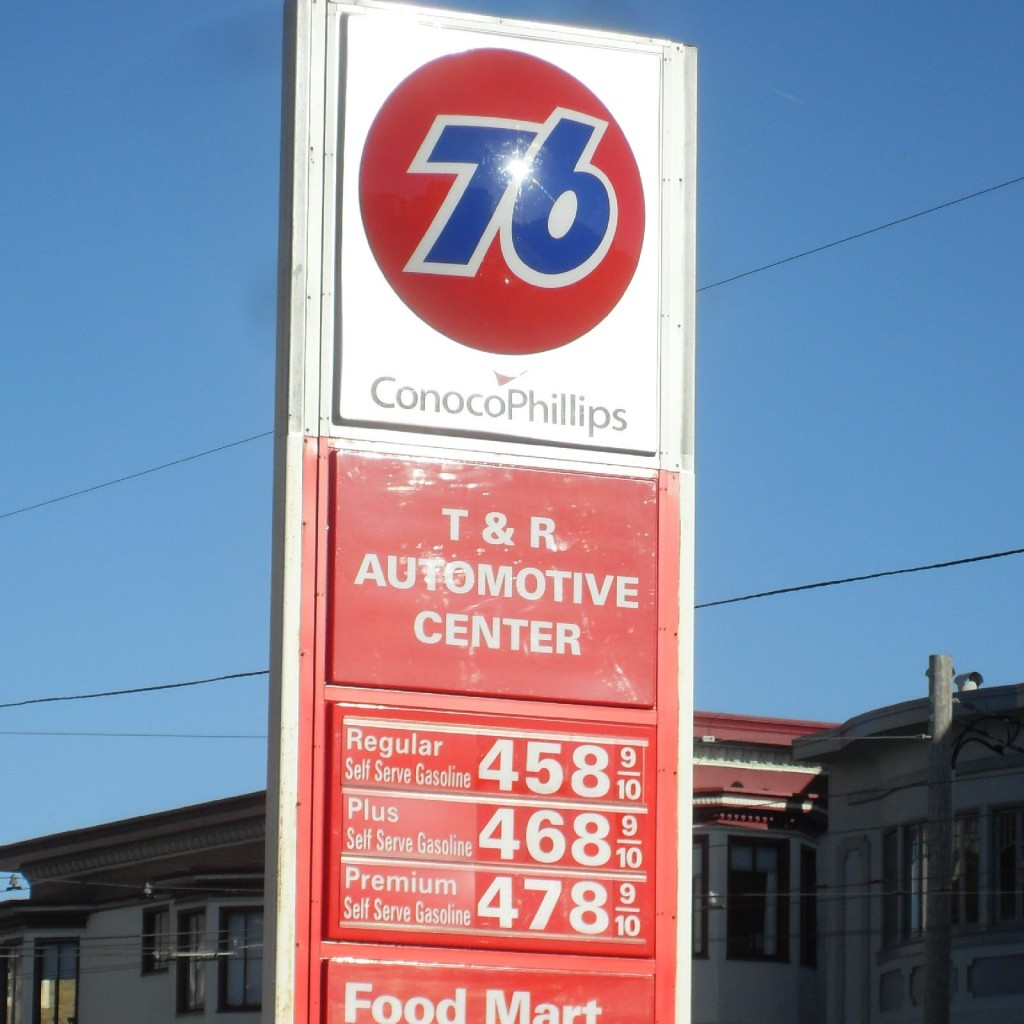
Plug-ins already cost one-third to one-fifth as much per mile to operate as gasoline cars, of course, depending on your local electricity rates.
Meanwhile, plug-in electric cars will cost significantly less and they may also have longer ranges. Most analysts feel 120 miles of "real-world" electric range is enough to assuage range anxiety and meet drivers' daily needs.
As those two cost lines come closer--and then cross, as they inevitably will--consumers will start to understand that plug-ins can be viable alternatives to gas cars on the basis of purchase cost.
When that happens--as many commenters pointed out--buyers will start to discover that electric cars are simply nicer to drive: smoother, quieter, and torquier than equivalent gasoline cars.
That's when everything starts to change.
It won't happen this year. It won't happen next year.
But technology innovations often take a long time to reach the mass market.
In the case of cars, they're often encouraged (or mandated) by regulation--as is the case for the first few years of modern plug-in electric vehicles.
But to Lynch's basic point, consumers will buy the car they feel is the best and cheapest way to meet their needs.
As electric cars get cheaper, and gasoline cars more expensive, that's exactly what will happen--perhaps 10 or 12 years from now, possibly sooner.
We might gently suggest Lynch take a longer look at the industry than simply scanning 22 months of sales.
If he did, he might come to a different conclusion.
+++++++++++

Follow GreenCarReports on Facebook and Twitter.
Have an opinion?
That's all you really needed to say to validate your point.
That's your return if you pay extra for a plug-in and break even at 6 years. Profits follow.
Last time I looked the bond market is returning a tiny percent of 12%. CDs are yielding about 1.5% for 6 years.
If I'm writing the checks, I'll take a new Corolla or Yaris over a new Prius (or Leaf or Volt) any day of the week - the economics are much better. I lose less on the boring old gas car.
Why is it that a reasoned economic viewpoint on these cars is so threatening?
If you need or really want a car you are going to invest some money in it and get your return mainly as utility. You need to broaden your understanding of investing.
Go ahead and buy a econobox. Enjoy getting jerked around by the oil companies. Other people are better at math.
Over the life of the cars, the Volt will cost you less than a Corolla to own and operate. The break-even point is roughly ten years. And that's assuming that gas goes up on 3% per year on average.
However, don't assume that leasing you a Leaf for $200 a month makes no economic sense for either Nissan or the government.
Nissan is building EV market position. They need to produce a lot of units in order to spread the cost of developing their EV as thinly as possible which reduces per unit cost. As Nissan drives their production rate higher their costs drop and they can drop the selling price of their EVs.
Taxpayers are spending a billion dollars a day and more on oil wars, keeping a military presence in the Middle East and homeland security. (ran out of space)
Moving a good portion of our personal transportation to electricity means that we lessen the ability of the "oil sheiks" to jerk us around. We can pull our military out of places that are upsetting people who want to attack us.
And we can save tax and insurance premium dollars by lowering health care costs.
The government, us taxpayers, have very good reasons for supporting EV development.
A billion dollars less per year going to purchase foreign oil. That billion sloshing around inside our borders, increasing revenues for stores and restaurants, generating taxes. That's a good thing.
Maybe it is time to "revisit" the business model. The short sightness of US auto makers are the exact reason how the big three got into trouble in the first place.
Also, the "hedging" against oil inflation and inflation in general is usually NOT accounted in the 4-7 years breakeven market.
I really think that the Volt has put GM on the leading edge of this technology and allows them to move in different directions at this point, if they desire. But no one should doubt GM's ability, and it should a great investment in their future.
The typical consumer trades in their car every 4-5 years. If you followed that typical pattern, you might not ever break even...and that's the problem with buying a hybrid or electric car right now.
It's not personal people - it's just math.
Jason, my Volt already is much cheaper for me to drive that whatever you drive. Is that simple enough for you? My lease is costing me a whopping $220/month after fuel savings and after electricity. I'm sorry that in your bizarro world, my Volt is seen as a poor economic choice. Please let me, and others here, know when you find a better vehicle for $220/month.
Because of the environmental lobby...? Uh, were they the people in the background pointing guns at me when I signed the lease? Like almost all consumers, I bought because of me, not the straw man you seem delighted to create.
It's not personal, it's just math.
Please understand - I'm not hating the concept, but let's not kid ourselves here: buying an economy car is cheaper and financially wiser than buying a Volt, Prius, etc. The 4-7 break-even period is a killer. When they get to 2-3 years, it will be a different story...
The fleet buyers will happily pay more upfront if there's a time-discounted payback in the final years. They are one of the reasons that electric and hybrid commercial trucks are starting to get very popular; they look strictly at the numbers, and aren't swayed by media coverage of doom & gloom or rainbows & unicorns.
So a 4- to 7-year payback is just fine for many. Including a whole lot of U.S. businesses. Nothing to do with the "environmental lobby".
Next?
It's cash flow 101, and for many companies, it's cheaper to pay less now and more later...and that fact is what keeps Chrysler alive, as their fleet vehicles generally have the highest long-term costs.
I have much to teach you sir. :-)
I'd suggst that the fleet buyers you describe and to whom you sold are doing a lousy job, however. I understand the cashflow argument--especially in these last few years--but smart management will spend now to reap rewards later. (Less during a recession, sure.)
The rotting fruits of cost-cutting now at the expense of higher costs "later" can be seen throughout our economy.
--James, a Prius Plug-In owner!
One reason that early EV's didn't take off was that it was mostly the city centers that were electrified, while you could buy gas in the countryside and rural towns, since it was used for farm machinery.
But, heck, almost ev'r where has 'lectricity now.....
Speaking of "hoary old chestnuts" let's look at "Plug-ins already cost one-third to one-fifth as much per mile to operate as gasoline cars,"
We now have EPA data on these new vehicles.
$600/year to fuel the Nissan Leaf
$1150/year to fuel the Toyota Prius.
This suggests a fueling cost advantage of not even as good as 1/2.
Sure, someone will correct me with some other vehicle or some other TOU rate. But the 1/3 to 1/7 thing needs to go if one wishes to pay attention to data.
I think people want what they want, and increasingly, they may want an EV (for many reasons) and the price will not be a problem and the fuel savings will not be the primary driver.
I did the math and our Leaf is 1/3 the cost to fuel as our 2005 Prius at $3.75/gallon. We have cheap electricity in San Antonio and that's not including the solar energy we produce here at the house.
Using 1/3rd as the worse possible case in the statement "1/3rd to 1/7th" is not really accurate and is likely to be a statement from an advocate not a journalist.
EVs are selling well in Japan, for example.
You also have zero clue about how subsidies work, so I'll save the effort there and ask you instead to do some basic research. The OEM isn't getting anything when I buy or lease an EV. GM doesn't get a penny from the govt. when it sells/leases a Volt, nor Tesla a Model S.
I fill up my Volt at home and pay for the electricity myself. Can you at least comprehend that?
The $7500 rebate was set BEFORE the price of the Volt was announced. So there is every chance that GM raised the price of the Volt by $7500 as a result. So in that way, GM gets the $7500, not the consumer.
More realistically, GM probably did adjust the price upward by some amount less than $7500 and thus benefits, but so does the consumer.
It really would have been better to wait until the vehicles were shipping before the rebates were announced. That is how the Prius rebates worked, making it all but impossible for Toyota to raise the price.
The lowest EPA running cost that I see is for the Mitsubishi "i" at $550/yr, which is not much different from the $600/yr for the LEAF. This still makes the comparison of costs at 1/2 rather than 1/3.
Also, comparing the "i" to the Prius is not reasonable given that one is a subcompact and the other is a midsized.
My point is John V, the author of this GCR article, is apparenlty using the fuel efficiency of all plug-ins vs all gas cars. You only used the most efficient gas only car...wrong comparison.
"Plug-ins already cost one-third to one-fifth as much per mile to operate as gasoline cars, of course, depending on your local electricity rates."
I have always said that Prius is the biggest threat to EV.
I am seriously considering the C-Max Energi as the next vehicle for me, despite its limited e-range.
C-Max Energi is a good choice. I am waiting for the Fusion Energi to come out and compare it with the Accord Plugin.
Soon or later, we would have to replace our old Accord with 150k miles. But it will have to be a decent "performan" sedan...
I've sat in Prius club meetings before. While obviously the members and most folks that own a Prius love or at least really like their Prii, what they really love/want is a vehicle that is the most safe, reliable, and efficient. The Prius has just happened to wear that crown unchallenged for most of last decade. They are now new, better vehicles that are today's safest, most reliable, and most efficient and Prius folk are leasing/buying them left n right.
Many commentors on this post, two of my family members, friends, etc. have a reg Prius AND a PIP, Leaf, or Volt now.
If you take the ev qualifying questionnaires for any of the current compact evs such as the Leaf, you'll see that they often ask directly if you own a Prius already. These ev makers see, rightfully so, that the natural progression of many new Prius owners from last decade will likely be ev buyers this decade
Yes, YMMV, and THAT is exactly what should suggest that an EV could be a very reasonable and cost-effective option in MANY AREAS where TOU rates are present. At $.08/kW,charging a Leaf costs about $1.60 for 75 miles, and many of us are getting rates closer to $.05/kW. At $.05/kw that is $160/year for power.....and IF you install SOLAR PV....as many of us already did/have....it goes to ZERO/yr! Try to find a way to put an oil well and refinery in your backyard, but many of us can install solar (or wind) and with TOU cost tradeoffs drive for ZERO actual energy costs.
Please George, I love solar, I have solar, but it is anything but "free". It is the most expensive form of electricity that is in use.
True, sometimes the cost of solar is paid by the government or cost shifting from other rate payers. But it is not free, it is other people paying for your electricity.
So the statement as written is accurate for the average U.S. car.
And to make the statement accurate for your specific case, it would have to read, "Plug-ins already cost about one-half as much per mile to operate as the single most efficient gasoline car of the several hundred models sold on the U.S. market this year."
I think my wording is more useful and more broadly applicable. :)
Secondly, why is this a range (1/3 to 1/5) that does not include the range that excludes hybrids. Why isn't it (1/2 to 1/5). Why exclude the most obvious vehicle to compare to electrics?
Thirdly, sure the Prius is the most efficient non-plug vehicle for sale, but it is hardly "singular." The Ford Fusion and C-Max hybrid would similarly results in a savings of 1/2.
Fourth. The statement does say "average" it just says gasoline cars which includes hybrids.
Fifth, at my $0.16/KWH versus $3.79/gallon, my savings would be less than 1/2.
The truth is, currently available electric cars are expensive and hard to justify for most vehicles owners, which is why they've been slow to market and aren't exactly setting the world on fire. However, in the next few years, the math is going to change.
My Leaf will cost me around $27k after I get my credit. Not too expensive if you consider that my 2010 TDI Golf was $28.5K.
My tax dollars go to your children tax credits
My tax dollars go to your mortgage interest deduction
My tax dollars go to your favorite charity donation deduction...
NOT FAIR!
No one on this site has been quipping about some global consipiracy but only a fool would miss that the petroleum industry funded the anti-ev author and has in interest in stalling evs becoming more abundant and popular. It makes perfect business sense for the oilies, and their paid accessories, to avoid US ev adoption as much as possible.
How about the 44MPG Prius? After the federal subsidy the Leaf is $25,280. The least expensive Prius is $23,520. Finance the extra at 4% (my credit union is offering
Monthly extra for Leaf = $32. (Until paid off)
1,000 miles per month with $4/gallon gas = $91.
1,000 miles per month with $0.12/kWh electricity = $37.
Fueling the Prius would cost you an extra $54. That's $22 more than the monthly payment difference.
They don't keep track on how much money they spend each month in gas. They don't keep track on how much money they spend each year in maintainence and they certainly don't know how much they spend on electricity.
How do you expect them to make "smart" decisions? Most people barely understand MPG. So, anything beyond that is just too much to think about.
People who want to sell EVs should produce "bar graphs" in terms of cost/miles to illustrate the cost of total ownership for potential buyers.
Right now, most of the EV buyers are already informed and well educated in terms of efficiency and cost. It is the next group of people who needs help in leaping over into the EV world. (beside the people who are on the fence who are waiting for better technology to mature and waiting for more choices)
Whether we'll get a 200-mile range car @ $25,000 in 10 years is not completely certain, but it seems possible. Figure you'd need about a 75 kw/hour battery pack @ roughly $10,000 to pull it off. That's somewhat less than half the lowest likely price that currently exists but not so far out there for us to doubt it's doable.
I wonder if the future isn't a matter of offering a 75kw/hour and a 150 kw/hour as the two choices. You either buy a "go all around town" vehicle or pay $10,000 more and carry some extra weight to "go anywhere".
2. Did you seriously mention "tax breaks"? Damn near every industry, and ESPECIALLY energy is subsidized through tax breaks, public research, and a plethora of other means available to government.
http://onlinelibrary.wiley.com/doi/10.1111/j.1530-9290.2012.00532.x/full
But its conclusion that electric vehicles are twice as bad for the environment (due to toxicity) seems based on some questionable assumptions.
MrEnergyCzar
As for liberals not paying their fair share of taxes, which way is it? Liberals are called elitists by conservatives and liberals, on average, both are more educated & have higher incomes than conservatives, thus paying both more in taxes than conservatives and also a higher rate as well. I pay a much higher rate than Mr. Romney, for example...
EV activists do care about non-EV ownerss. We wish you'd stop the war-of-the-week machismo and oil subsidies that cost far more than any temporary, short-term incentives for the first years of EVs.
Do you get tax breaks for having a mortgage? Why should others pay for your house?
Do you get tax breaks for donating to your favorite charity? Why should others pay for your favorite charity?
Do you get a tax break for having an education (loan)? Why should others pay for your education?
Well, EVs keep the air you breath in traffic cleaner. EVs use no gas so there will be more for you to burn...
Maybe those EV owners don't want to pay for the Trillions that we spend on "oil security". How about closing all the bases in the middle east and bring troops home? Why should others pay for those military spending?
Wake up. It's about pricing fairness of externalities, not rich vs poor.
Are you referring only to battery-electric vehicles, or to any vehicle with a plug?
Today in the U.S., plug-in vehicle sales are likely to hit about 40,000 this year, perhaps slightly more. That is one-third of 1 percent of a 13-million car market. By 2014 or 2015, they are likely to hit 1 percent. But it will take a decade, or more, to reach 10 percent.
So if your definition of "any market share" is 1 out of every 10 cars sold, I might agree.
Please define your terms so I have a better idea of what your statement means; I'm curious. Thanks in advance.
Also learn about the Rogers' adoption curve and why people are by nature conservative and prone to follow the masses (herd mentality). Even more so when it comes to an expensive item like a car. They just don't jump on it like that.
Furthermore, cars are not cell phones that see a new generation every 6 months or so. Technical progress is much slower.
Having said all that, the conclusion is that history will have to run its course. Some things just can't be sped up. Just wait and see.
Have an opinion?Join the conversation!