When it comes to service costs and fuel, everyone knows that electric cars are far cheaper to run than gasoline cars.
Even with a plug-in car, however, you still have to pay your local utility company for the electricity used to charge it.
Like gas prices, electricity prices are on a steady, upward rise in many places, meaning the cost of charging your electric car will gradually go up.
But what if you could charge your car from photovoltaic solar panels fitted to the roof of your home?
Investing in solar panels on the roof of your home isn’t cheap, but now a new online tool from WattPeople (via GreenCarCongress) aims to promote its series of specialist electric car and photovoltaic finance packages--and to highlight the claimed cost savings of its products over a conventional gasoline car.
Launched at last week’s SxSW Eco, the app offers a year by year financial breakdown of the costs involved in investing in home solar panels and an electric car.
It also details all of the usual finance package information you’d expect with any loan, such as loan interest rates, monthly payments, and installation costs.
It also predicts how much money you can save in the future.
Although the tool itself has been built to provide WattPeople a sales window for its specialist loans, it has enough functionality to provide at least a basic idea of cost breakdown for anyone considering a bank loan to buy an electric car and solar panels.
Robert Llewellyn Nissan Leaf Solar Panels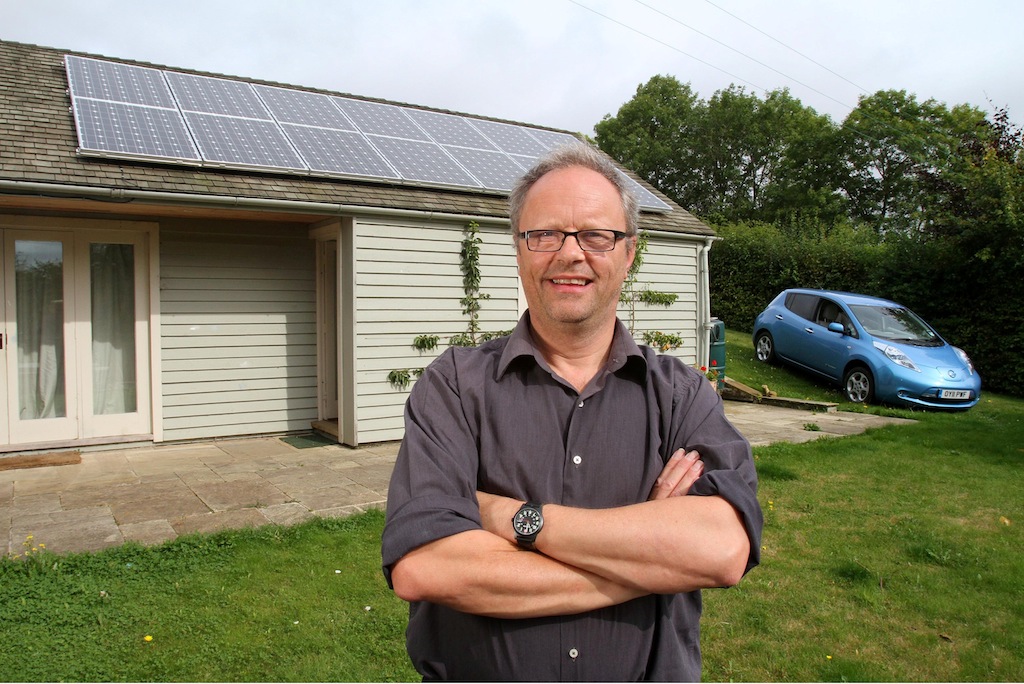
As those with solar panels and electric cars testify, the cost of driving is dramatically reduced once the initial outlay has been recouped. And having a solar panel in combination with an electric car can decrease the amount of time before a return on investment is guaranteed.
“After almost three years with a full solar array of both photovoltaic (5.1 kW) and solar hot water, and two years with both the Volt and Leaf feeding off that solar PV, we are most happy with the bottom line,” said George Parrott, GreenCarReports contributor.
“Before going solar PV, our monthly electric bills in a new house in West Sacramento never were lower than $250 and touched as high as $400,” he explained. “Our cars, prior to the Volt and Leaf were both Toyota Hybrids, and even with those frugal gas-sippers, we were still paying about $2,800 per year in fuel and upkeep costs.”
As Parrott explains however, the costs of running both the Volt and the Leaf--as well as home electricity costs--have dropped dramatically since making the switch.
“Since going solar and electric motive transport, our monthly electricity cost has average only $13, as this is the basic connect fee that PG&E charges to be on the grid,” he continued.
Thanks to clever use of time of use metering, Parrott says the home’s solar array feeds power to the grid during the day, while cheaper night-time electricity charges the family cars.
“Our solar array totally wipes out all of our actual home electricity costs AND with “time of use” metering for charging the cars at specific off-peak times, we have Zero energy costs for powering the cars,” he proclaimed.
With the costs of solar panels coming down, and gas and electricity prices rising, there’s never a better time to think about investing in solar panels and an electric car.
As with any financial commitment, you should seek professional financial advice before signing any installation or loan contracts, be sure you can cope with the financial investment, and shop around first to make sure you have the best deal.
+++++++++++