VW Talks Future Tech: Plug-Ins, Natural Gas...
2013 Nissan Leaf: Driven Through Tennessee...
Gasoline, Diesel, Hybrids And Plug-Ins: The...
It’s no secret that electric cars sales in the U.S.--and elsewhere in the world--aren’t as high as automakers and electric car advocates would like.
The reasons given for this are many and varied: some commentators say plug-in cars are simply too expensive; others say that the lack of charging infrastructure, combined with limited range per charge, means electric cars aren’t practical.
The recent unveiling of a network of proprietary supercharger rapid charge stations by electric automaker Tesla Motors [NASDAQ: TSLA] was a clear attempt to address the latter, finally making long-distance trips by electric car more feasible.
But is Tesla’s decision to move away from an already-agreed charging standard just muddying the waters? Should electric car fans and automakers focus on something else, like making more electric cars?
According to electric vehicle advocate Chelsea Sexton, the answer to those questions is a resounding yes.
Writing for Wired, Sexton argues that the battle between different automakers and charging station providers for the ultimate in charging technology is an unwelcome distraction from the real challenge facing the electric car world: getting more cars on the road.
As Sexton points out, electricity isn’t the problem: it’s ubiquitous, simple to use, and an ideal vehicle fuel.
Fighting over charging connectors by building new, unnecessary ones--simply because the existing standard is viewed as too large, inelegant, or not powerful enough--is making that electricity harder to use in cars.
Just like any other consumer product, fighting over proprietary connector technology adds extra complexity, keeps prices up, excludes competition, and frustrates customers.
“Not only is Tesla alienating the rest of the EV industry and community with its Supercharger, it is ensuring its own drivers won’t be able to use the vast majority of fast charging in this country,” Sexton notes.
“Many of them, in fact, will be left out altogether since fast charging capability is unavailable on the lowest-range Model S.”
Tesla, she says, like many other automakers, is preoccupied with proving that electric cars can do everything gasoline cars can do.
Instead, Sexton suggests, automakers should focus on making and selling electric cars, rather than bickering about the intricacies of charging connectors.
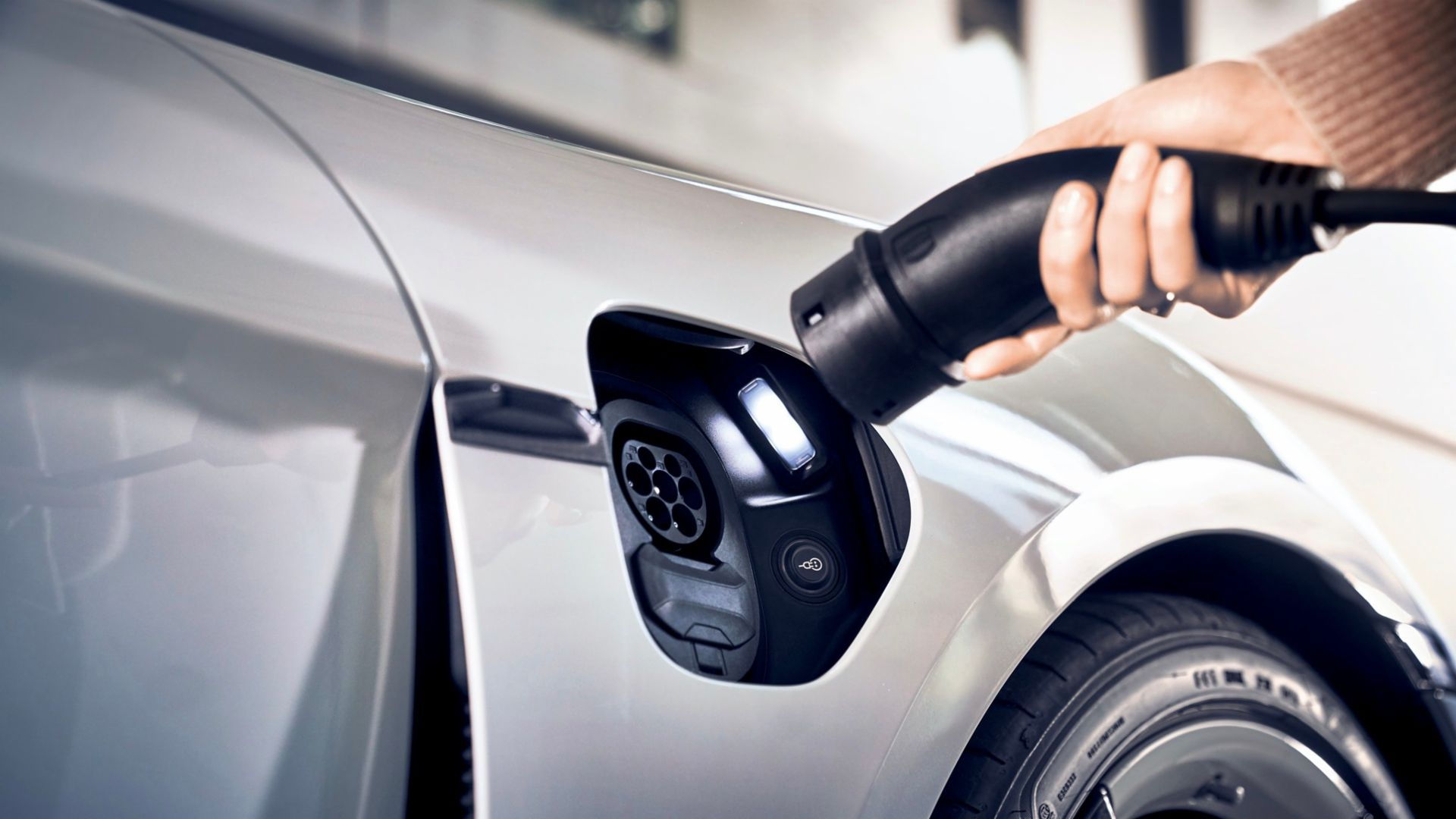
After all, she notes, a charging standard already exists: it’s called SAE J1772. It was put in place to standardize both the mechanical connections and electronic communications between a charging station and an electric car.
With the J1772 standard providing a ubiquitous standard for 240-Volt Level 2 charging--at either 3.3 or 6.6 kilowatts, depending on what charger automakers fit in their electric cars--arguments over fast charging standards risk confusing the public over whether it's possible to charge the cars at all.
For example, Tesla's Supercharger quick charge system isn't compatible with a Chademo quick charge system. And neither quick charge systems can be used with the slower, level 2 charging system commonly found on most Level 2, 240-volt, public charging stations.
The problem isn’t just relegated to Tesla either. Nissan and Mitsubishi both use the Chademo standard for rapid charging electric cars. Ratified as a standard in Japan, Chademo hasn't been officially acknowledged as a charging standard in the U.S.
Have an opinion?
Anyway, I blame John Voelcker for this mess after he called the SAE Combo connector a monstrosity. Dude, a SAE standard is preferable to the current mess.
Seriously, while a fast-charging standard is surely preferable to none, many Leaf + i-MiEV owners would say we already HAVE one, already installed + working: CHAdeMO.
SAE Combo backers offer many important long-term technical limitations in the CHAdeMO standard. I can't assess those.
But there is also a strong belief--with some justification, perhaps--that U.S. + German makers felt they could eliminate fast-charging as a competitive advantage for Japanese makers by allying to create a different, incompatible standard that would block global CHAdeMO use.
In the old days, we'd have called that FUD.
However... SAE combo offers one single connection with backward compatibility to J1772. That is what I call a winner and I hope it goes that way.
How is that a "fast" charger?
Even the theoretically fastest Chademo at around 60 kW is still nearly two hours to charge the big Model S pack
Chademo is only fast for a tiny little Leaf pack or similar.
Are you all not capable of math? Or not capable of seeing past the needs of your personal car to the needs of others or the future?
The reason few DCFC have been dialed down, sadly, is only to not trigger "demand charges" levied by some utilities. It's a financial decision, not a technological limitation.
Tesla's standard is faster and a more turnkey solution. Low cost, environmentally sound.
We can pillory Elon Musk for going his own way, but look at the results from the current charging standard: they clearly DO NOT inspire any confidence in the buying public.
Range anxiety (whether based in reality or in drivers' minds) is a fact of life and usually the first objection from a car buyer.
Unless electric cars are BETTER than ICE, then the shift will be glacial.
The Supercharger allows you to put 150 miles on your battery in 30 minutes. For free. Show me how SAE is better.
There is no such thing as fast Level 2 charging with a J-1772 connector. Tesla Motors is continually raising the bar by demonstrating what is possible with EV transportation. The existing public charging infrastructure is primarily 240V, 30A. This will give an EV driver 18miles of range per hour charged. This will never support mass adoption of EVs. Both Tesla & the gen. public know this. The only places those chargers really benefit drivers are places where the driver will spend a minimum of several hours (home/work/airports). Tesla's supercharger is welcome
The public will never accept an EV that takes hours to charge, people "perceive" a need to "fill up" quickly, while it may not always be needed, people buy products on what they perceive they need, not what they actually need.
The SuperCharger network was an absolutely brilliant move on Teslas part, 30 minute charging for 150 mies of range, and, it's free for life, and many will be powered by solar energy (taking care of another objection. "It's powered by dirty coal")
SAE wasn't defined at the time of the Model S's design, and it's rather unwieldy to handle, Teslas solution is much easier to use, and it's a single connector or both L2 up to 80A AC (62 MPH/hour of charge), or DCFC.
IMO the plug(s) used by the majority of vehicles on the road will set the standard. We don't see many paddle charges today as manufactures stopped using the form factor. The great thing about electricity, is it can be converted efficiently, so we are more likely to adapt. (via connectors/boxes).
With large network of J1772 chargers in existence, Tesla offers a J1772 adapter. How long before someone creates an adaptor to plug a J1772 into Tesla's free high power solar super chargers? (Does Tesla require a key-fob to access?)
Now, when will manufactures offer more EV models outside of California?
- The existing J1772 connector (not even Combo) is also rated up to 80A@240V = 19.2kW. Tesla drove this into the J1772 standard, but then didn't leverage it.
- Perhaps, the unique Tesla supercharger network is a brilliant strategy in another way. Tesla has J1772 adapters to their connector so they can use any public J1772 EVSE ..plus with their with unique connector, no one else besides Tesla drivers can use the Tesla Supercharger network. Tesla owners will not have to fight with any other PEV drivers for time slots on the Supercharger network but yet they can use everyone elses charging charging station.
As others have pointed out, most charging will be done at home. Longer trips (5% or less) will require supercharging. That's less than 50,000 trip needing supercharging. With each Supercharger having 4-8 chargers(expandable), there's just no need for gas station-like coverage.
CHAdeMO stations are actually battery chargers (unlike a j1772) that deliver directly what your battery needs to the battery. This lets the 400lbs box of power electronics to make a 50kW charger sit off-board the vehicle where it belongs rather than inside.
With an internal charger - and the Zoe can take up to 43kW fast charging - you can plug into almost any power source anywhere and it will use it appropriately to charge as fast as it can.
The little kids near a charging station stick their tongue into the connector? Nothing happens if it is J1772. Your solution? Dead kids.
You want millions of people to have have to remember to set the car to 12 amps when they plug into a home outlet and then 50 amps at an RV park?
It does not work. You get lots of tripped breakers (no charge at all) and lots of cars charging much more slowly than expected.
Might do nothing for you, but for Fred and Ethel and their little Johnny, it is necessary.
Chargiung at 3,3 kW responds to the needs of 99% of the users (drive at day time, charge at night time).
6,6 kW is nice, but for almost all unnecessary.
Anything above that is guilding the lily.
BEV's are short-distance means of transportation.
If you put >80 kWh into a car, you cater to the 1% who want, but do not need. And you need different technology. With a nuclear power plant nearby?.
Trucks also need higher output pumps than cars....
Everybody, and that certainly includes GM, Nissan, Renault, Daimler, the startups and the OEM's to follow will built what the market will take.
We are starting a paradigm change, that takes time. It will really work when everything else hurts
When you have the answer to that, you'll understand why FAST charging is a necessity.
AND
i can tell you, Fast charging is a game changer. i may not be able to drive across the country conveniently in my LEAF but the ability to drive from one end of Puget Sound to the other on electric is AWESOME!
Have an opinion?Join the conversation!