Ford’s all-new 2013 Escape compact crossover may have only been on sale for a few months, but it is already proving a strong seller at Ford dealerships across the U.S.
On paper, there’s little difference between the gas mileage figures of the entry-level 2.5-liter, four-cylinder Ford Escape S and the more efficient 1.6-liter EcoBoost engine offered as standard on the Escape SE and Escape SEL.
Costing $2,600 less than the Escape SE, losing just 2 mpg combined in gas mileage might make the Escape S seem like the best choice, but when it comes picking the right Escape for you, it’s important to look beyond gas mileage figures.
Less power
Because it uses an older, 2.5-liter, four-cylinder, naturally aspirated Duratec engine, the Escape S produces 168 horsepower.
That’s less than the 178 horsepower quoted for the 1.6-liter, four-cylinder, turbocharged EcoBoost engine offered as standard on the Escape SE and SEL. It's much less than the 240 horsepower quoted for the 2.0-liter, four-cylinder, turbocharged EcoBoost engine offered as an option on the Escape SEL and standard on the Escape Titanium.
2013 Ford Escape
It’s also worth noting that both the EcoBoost engines produce peak power at a much lower engine speed, making them less stressed and more refined at higher speeds than the 2.5-liter engine found in the Escape S.
Less torque
More importantly for those wanting to tow or carry large loads, the 2.5-liter Escape S produces far less torque than either the 1.6-liter or 2.0-liter EcoBoost Escapes.
At just 170 foot-pounds of torque, the Escape S can’t match the 184 foot-pounds and 270 foot-pounds offered by either of its EcoBoost engine options.
There’s also a difference between how the EcoBoost and no-EcoBoost engines deliver that torque.
In both EcoBoost engines, maximum torque is delivered around 2,500-3,000 rpm. In the 2.5-liter Duratec, peak torque is delivered at 4,500 rpm.
2013 Ford Escape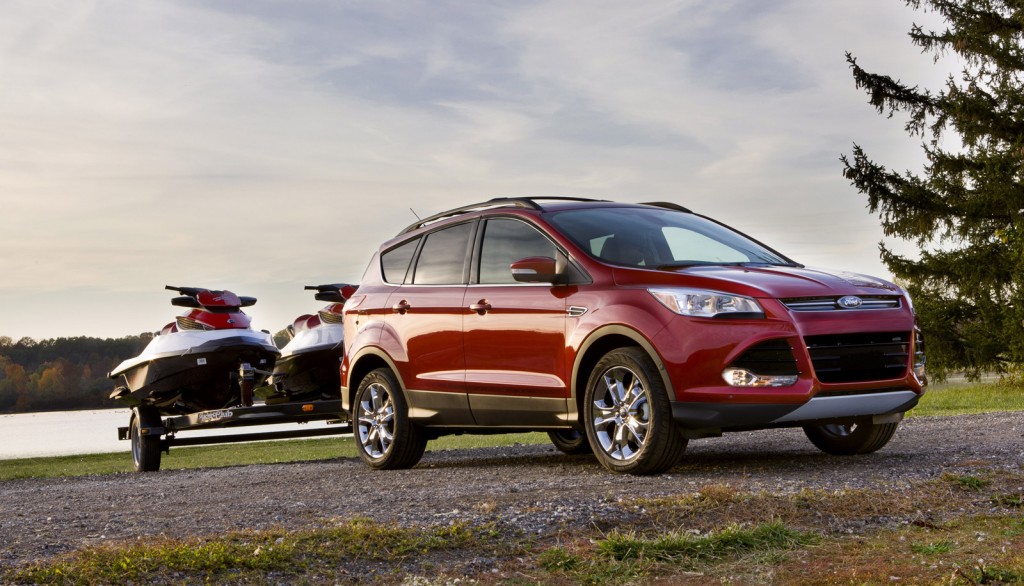
If you were to compare the Escape S and Escape SE side-by-side, pulling the same load, you’d find the SE both quicker from a standing start, and less stressed to match.
What’s your use?
If you’re just looking to buy a compact crossover to use around town and carry out light-duties like taking the kids to the weekly football practice, the 2013 Escape S might be the car for you.
After all, at $2,600 less, the Escape S more than compensates for the slightly worse gas mileage.
If you want to tow, carry heavy loads, or plan to use your Escape for longer-distance trips, the benefits of the EcoBoost engine are really worth the extra money.
Remember, while the 1.6-liter EcoBoost and 2.0-liter EcoBoost models are offered with optional all-wheel drive, it will diminish your gas mileage slightly over an identically-engined, front-wheel drive models.
While a good option for those who tow a lot -- and need the extra 500 pounds offered by the optional Class II tow package -- the Escape Titanium or optional 2.0-liter Escape SEL won’t reward you with the same gas mileage figures as the 1.6-liter Escape SE and SEL.
For us, the 2013 Escape SE and SEL offer the best value for money, combining good gas mileage and enough power to tow when you really need to.
Ultimately, the choice is down to you, but remember to take some time to figure out which engine option really offers you the best mix of power and economy before you judge the Escape lineup on gas mileage alone.
We think you’ll thank yourself in the future if you do.
+++++++++++